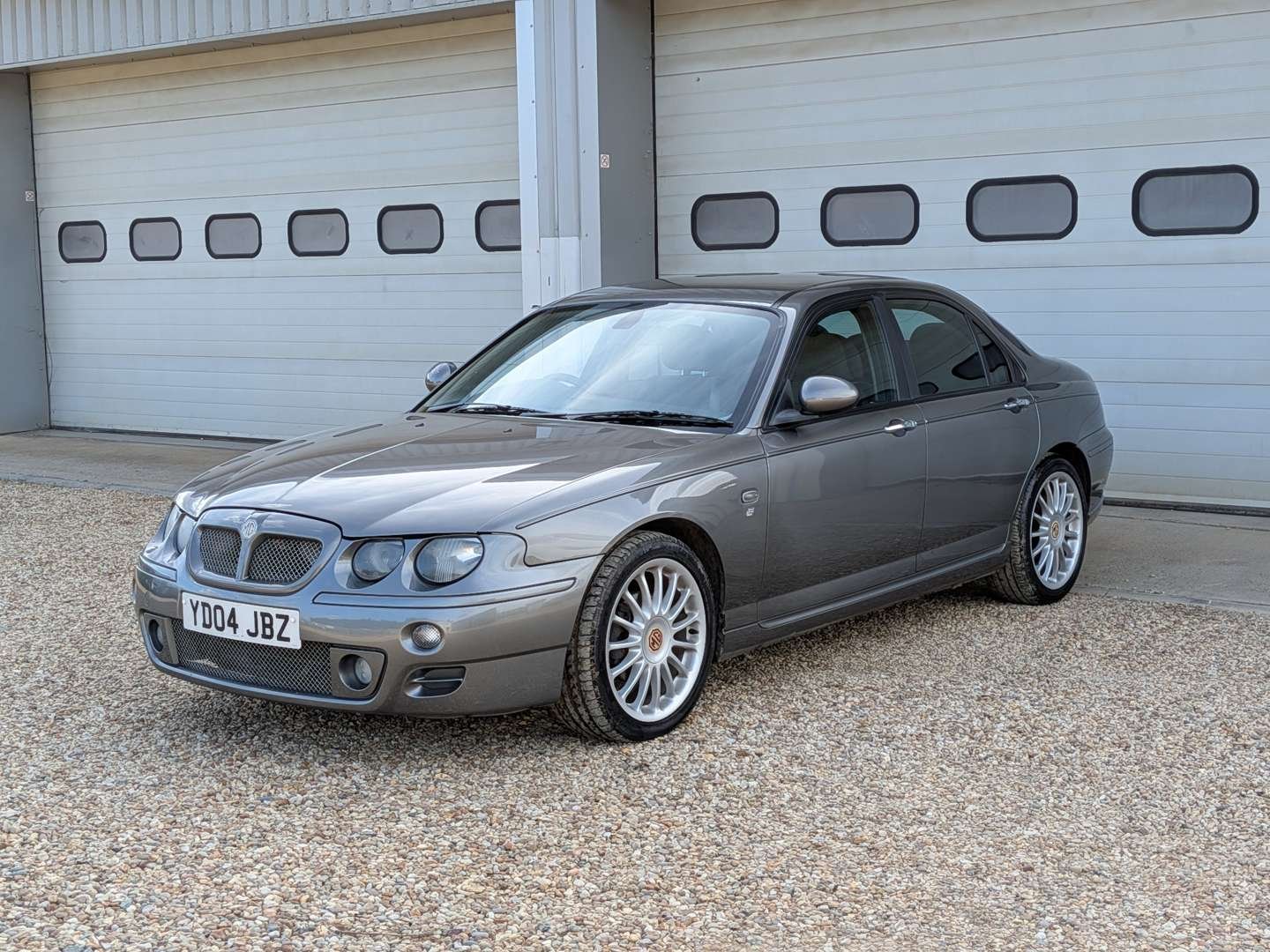
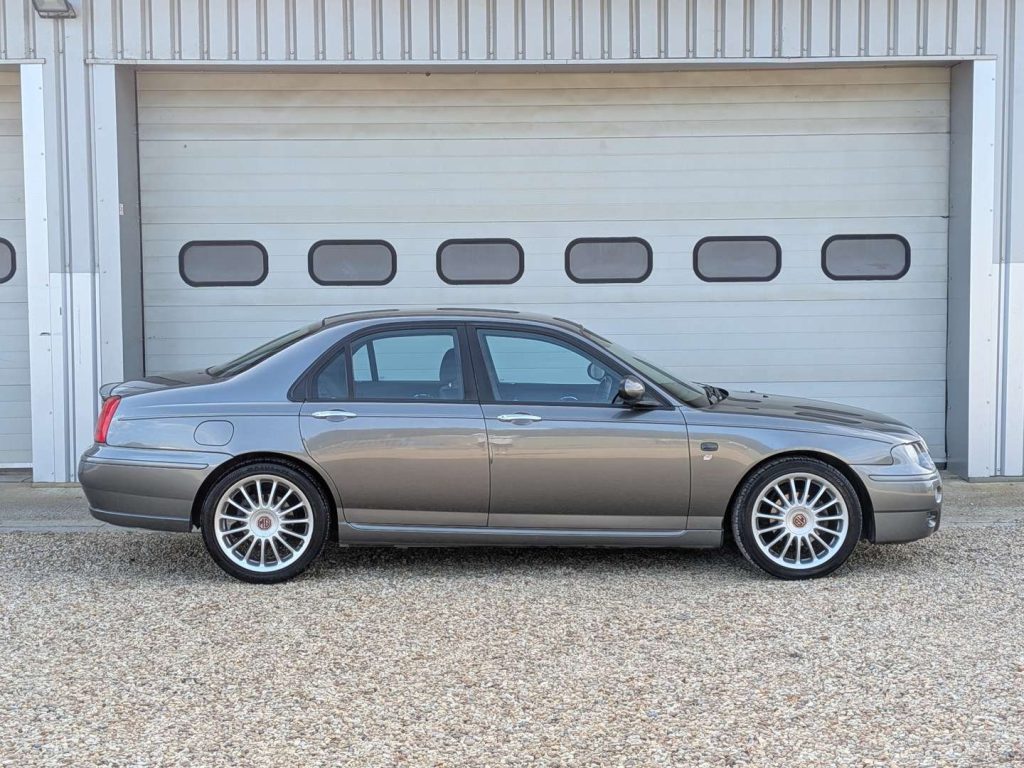
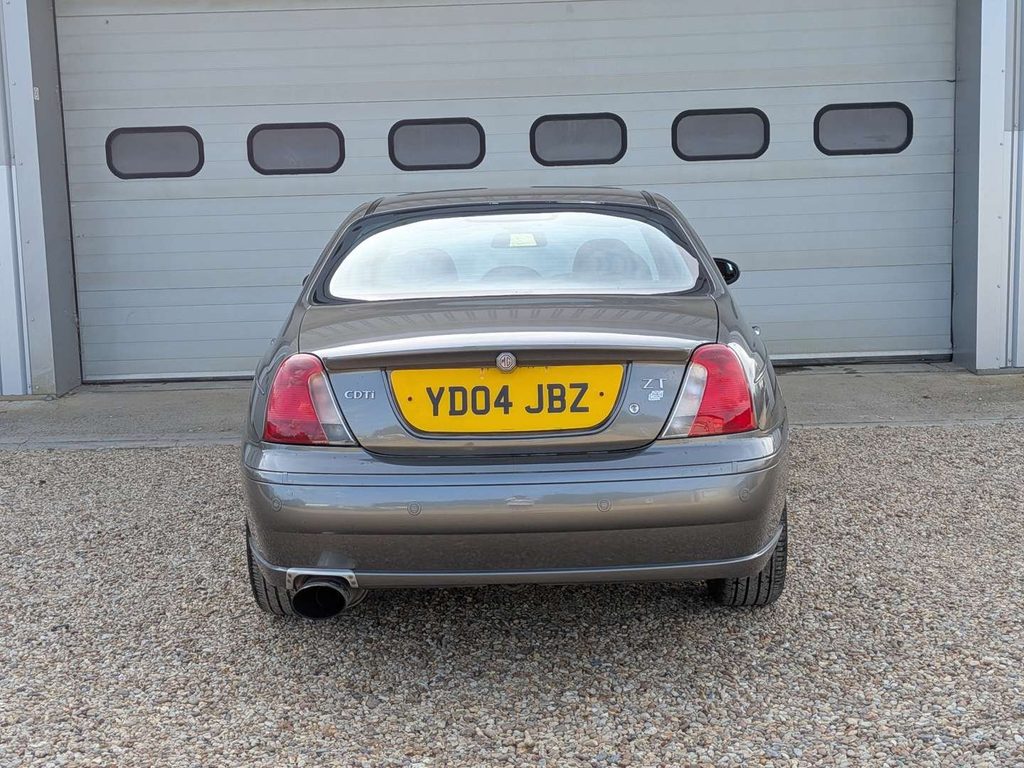
This MG ZT auction result raises a question we’ve been asking ourselves for a while.
Should these cars be worth more?
Because the MG ZT is now firmly into modern-classic territory.
It looks distinctive.
It has an interesting story.
It was built at Longbridge during one of the most fascinating and ultimately turbulent periods in the British motor industry.
And this particular example had just 63,193 miles showing.
So what would you pay for it?
A 2004 MG ZT+ CDTi Auto
This MG ZT+ CDTi Auto went through Anglia Car Auctions’ first Marketplace Classics sale in September 2026.
It’s a 2004 car, meaning it wears the later facelifted styling introduced during the ZT’s final full year of production.
Under the bonnet is the 1,951cc diesel engine, paired here with an automatic gearbox.
The odometer was showing just 63,193 miles.
ACA gave it an estimate of:
£1,200–£1,800.
Before we get to what actually happened, though, there’s a bigger question.
Why are MG ZTs still available for this sort of money at all?
The MG Version of the Rover 75
The ZT’s story starts with the Rover 75.
The 75 was developed while Rover was owned by BMW and arrived at the end of the 1990s as a very different sort of car from most of its rivals.
Where other manufacturers were increasingly chasing clean, modern and minimalist styling, Rover leaned heavily into its British heritage.
Wood.
Chrome.
Traditional-looking instruments.
A distinctly upmarket interior.
The whole thing was deliberately different.
Then MG Rover decided to do something rather clever with it.
Turn it into an MG.
More Than a Rover 75 With Different Badges
It would be easy to dismiss the ZT as simply a Rover 75 with some sporty trim attached.
It wasn’t.
MG Rover substantially changed the character of the car.
Suspension and chassis settings were altered.
The styling became much more aggressive.
Inside, the traditional Rover atmosphere was replaced with something deliberately sportier.
The ZT was launched in 2001, alongside the smaller MG ZR and ZS.
And suddenly MG had a range of sporting saloons and hatchbacks again.
Peter Stevens Had a Hand in It
There’s another reason the ZT deserves a little more respect.
Its styling transformation was handled by Peter Stevens.
That’s the same Peter Stevens whose CV includes the McLaren F1.
Turning the rather stately Rover 75 into something carrying an MG badge could easily have gone badly wrong.
Instead, the ZT managed to look genuinely purposeful.
More than two decades later, we’d argue the design has aged remarkably well.
This Is the Facelifted Version
In 2004, MG Rover substantially revised both the Rover 75 and MG ZT.
The ZT lost the earlier twin-headlamp appearance in favour of the cleaner single-unit lights you see on this car.
The bumpers and other exterior details were revised too.
It’s quite a different look.
Some enthusiasts prefer the earlier cars.
Others reckon the facelift made the ZT look sharper and more modern.
We’ll leave that argument to you.
The Diesel Has an Interesting Engine
The CDTi might not be the ZT enthusiasts immediately dream about.
We’ll get to the V8 in a moment.
But the diesel has an interesting story of its own.
The 1,951cc common-rail diesel was derived from BMW’s M47 engine and adapted for use in the Rover 75 and MG ZT.
That means this British sports saloon from one of the final years of MG Rover was running a BMW-derived diesel engine.
It’s one of those strange combinations that makes this period of British motoring history so interesting.
Sensible Rather Than Sensational
Nobody is going to pretend a diesel automatic ZT is the wildest member of the family.
It isn’t.
But perhaps that’s part of the appeal today.
This was the version you could actually use.
Diesel economy.
Automatic gearbox.
Cruise control.
Air conditioning.
And in this car, a black and grey half-leather and Alcantara interior.
It has enough MG character to feel interesting without necessarily making every journey an event.
Then There Was the ZT 260
At the opposite end of the spectrum sits one of the maddest cars MG Rover produced.
The ZT 260.
MG Rover took the front-wheel-drive Rover 75 platform, substantially re-engineered it for rear-wheel drive and installed a 4.6-litre Ford V8 related to the engine used in the Mustang.
Think about that for a moment.
A car originally developed under BMW ownership as a traditional British executive saloon ended up wearing an MG badge, driving its rear wheels and using a Ford V8.
You couldn’t make this stuff up.
And That’s Why the ZT Range Is Interesting
The V8 understandably gets much of the attention today.
But its existence adds interest to the whole ZT family.
The basic ZT shape could accommodate everything from an economical BMW-derived diesel to a rear-wheel-drive Ford V8.
There were four-cylinder petrol versions.
V6s.
Diesels.
Saloons.
ZT-T estates.
And the 260.
That’s quite a range for a car that only existed for a few years.
Built at Longbridge
There’s also the Longbridge connection.
Production of the Rover 75 moved from Cowley to Longbridge after BMW sold Rover in 2000.
The MG ZT followed in 2001.
That means these cars belong to the final chapter of large-scale MG Rover production at Longbridge.
And it was a short chapter.
MG Rover went into administration in April 2005.
ZT production ended with it.
Suddenly a car that had only appeared four years earlier was gone.
More Than 20 Years Later
And that’s where things become interesting from a classic-car point of view.
This ZT is now 22 years old.
The youngest original MG ZTs are already over two decades old.
MG Rover itself has been gone for more than 20 years.
Yet you can still buy some versions of the ZT for the sort of money people spend on a fairly ordinary second-hand hatchback.
Sometimes less.
Which brings us back to the question.
Should they be worth more?
Only 63,193 Miles Showing
This particular car certainly had a few things going for it.
The odometer showed:
63,193 miles.
ACA listed five former keepers, with the vendor having owned it since 2024.
The auction house also noted that it had been MoT tested for the road almost every year of its life.
That’s encouraging on an older car.
Long periods of complete inactivity aren’t necessarily your friend.
Plenty of Useful Equipment
The specification was pretty appealing too.
Cruise control.
Air conditioning.
Black and grey half-leather and Alcantara trim.
Automatic transmission.
It also came with its spare key and handbook pack.
There was a collection of previous MoT certificates and various receipts dating from 2019 onwards.
And there was even a set of new brake discs and pads sitting in the boot.
Not a bad little bonus for the new owner.
The Vendor Said It Ran Perfectly
According to the auction description, the vendor reported that the MG:
“starts & runs perfectly”.
As always with an auction car, that’s not the same as us personally carrying out a mechanical inspection.
ACA also makes clear that vehicles are sold as seen and that bidders should satisfy themselves as to condition before bidding.
And that’s particularly relevant to what happened with this one.
Because the winning bidder was in the room.
That’s Quite Important
Online bidding has transformed classic-car auctions.
You can now buy a car from your sofa without ever standing next to it.
We’ve done it ourselves.
Plenty of other people do too.
But there’s something interesting about a room bidder winning a relatively inexpensive old car like this.
They were there.
They’d had the opportunity to see it in person.
They could walk around it.
Look inside it.
Get a much better feel for its condition than somebody relying entirely on photographs.
And ultimately, somebody in that room decided they wanted this MG ZT.
The question is:
How badly?
What Would You Pay?
The guide was £1,200–£1,800.
So let’s put ourselves in the room.
It’s a 2004 MG ZT+ CDTi Auto.
63,193 miles showing.
Long MoT history.
Useful specification.
Vendor says it starts and runs perfectly.
A few bits of history.
And those spare brakes in the boot.
Would you give £1,500 for it?
£2,000?
More?
Or do you still look at cars like this and think they’re simply old MG Rovers?
That’s the fascinating bit.
Because that perception is exactly what changes when ordinary cars become classics.
Watch the Auction
Have a number in your head before you watch this.
And remember, the eventual buyer was standing in the room.
They’d had the opportunity to look at the car before deciding where their limit was.
So:
Would you have paid what they did?
£1,300 Hammer
The hammer fell at:
£1,300.
Right inside ACA’s £1,200–£1,800 estimate.
Under the introductory Marketplace Classics fee structure, the minimum buyer’s premium applied at this price.
That was £125 plus VAT.
So the winning bidder’s total was:
£1,450 including premium.
£1,450.
For the whole car.
Is That Cheap?
We think it sounds cheap.
That doesn’t automatically mean it was a bargain.
Those are two different things.
It’s a 22-year-old car and any vehicle of this age can produce bills.
A relatively inexpensive purchase can stop looking inexpensive remarkably quickly if it needs significant work.
We also haven’t inspected this car ourselves.
But purely on what was presented at auction, £1,450 including premium buys an awful lot of interesting motor car.
Particularly When Someone Had Seen It
And this is why the room bidder matters.
It doesn’t prove the car was perfect.
It doesn’t prove there aren’t faults waiting to appear.
And it certainly isn’t a substitute for a proper inspection.
But this wasn’t simply somebody looking at a handful of photographs on the internet and taking a punt.
The successful bidder had the opportunity to inspect the MG at the auction.
And they were prepared to keep bidding until £1,300 secured it.
That tells us something.
Perhaps the Diesel Is Part of the Reason
Would a V6 ZT attract more enthusiast interest?
Almost certainly.
Would a ZT 260 V8 be in a completely different league?
Of course.
The diesel automatic is the sensible ZT.
And sensible versions of interesting cars often spend longer in the bargain basement.
But that can make them appealing in their own right.
You get much of the appearance.
Much of the chassis character.
The same fascinating MG Rover history.
And potentially much lower running costs.
Does Every Classic Need to Be the Fast One?
We don’t think so.
There’s a tendency in the classic world to focus entirely on the halo models.
The GTI.
The RS.
The Cosworth.
The V8.
The fastest version becomes collectible first, then everyone starts looking further down the range when prices rise.
But ordinary variants often tell the story of a car just as well.
Sometimes better.
They’re the ones people actually used every day.
The MG ZT Has Something Else Going For It
It’s unmistakable.
Park this beside a row of anonymous modern saloons and there’s no confusing it for anything else.
The stance.
The grille.
The wheels.
The interior.
It comes from an era when MG Rover desperately needed its cars to have personality.
Whatever else you think about the company at that point, we’d argue the ZT certainly had that.
It Also Represents a Lost British Manufacturer
That inevitably adds another dimension.
MG as a brand still exists today.
But MG Rover doesn’t.
The company that built this car disappeared in 2005.
Longbridge changed dramatically afterwards.
The ZT therefore belongs to a closed chapter.
There will never be another new MG Rover ZT.
There won’t be another original Longbridge-built ZT emerging from that production line.
Survivors are now exactly that.
Survivors.
Are We Underestimating Them?
Possibly.
We’re not suggesting every diesel ZT is suddenly going to become valuable.
Nor does one £1,300 auction result establish what every MG ZT is worth.
Condition, specification, history, mileage and engine choice can make an enormous difference.
But that’s almost the point.
At £1,300 hammer, you’re not paying collector-car money.
You’re buying an interesting piece of British motoring history for remarkably little.
Compare It With Other Hobbies
£1,450 doesn’t go very far these days.
It certainly doesn’t buy much in the established classic-car world.
Yet here it bought a complete, running 2004 MG ZT+ with 63,000 miles showing, an automatic gearbox, air conditioning, cruise control and a BMW-derived diesel engine.
Even if it never appreciates by a penny, there’s an argument that this is simply an interesting way to spend £1,450.
Use it.
Take it to shows.
Talk to people about it.
Enjoy it.
That’s More Important Than Investment Potential
We’d rather see inexpensive modern classics bought by people who actually want to use them than have every discussion reduced to investment.
Could MG ZTs rise in value?
Yes.
Good ones probably have every chance of becoming more sought after as survivors disappear.
But that isn’t really why this one appeals.
It appeals because the entry price is so low.
You don’t need to predict what it’ll be worth in ten years.
You can simply enjoy owning something interesting now.
And Maybe That’s Their Problem
Perhaps the ZT is caught in an awkward middle ground.
It’s too young for some traditional classic enthusiasts.
Too old for somebody who simply wants dependable everyday transport without thinking about age-related maintenance.
And the MG Rover badge still carries memories of the company’s difficult final years.
But those things change with time.
Cars stop being old cars.
They become reminders of an era.
We’ve Seen This Before
It happens repeatedly.
Cars spend years being ignored.
The best ones disappear.
Cheap examples get broken for parts.
Others are modified beyond recognition.
Then suddenly people notice that clean, original survivors aren’t everywhere anymore.
By that point, the cheap buying opportunity has often gone.
We’re not saying that’s definitely about to happen to MG ZTs.
But we’d be surprised if really good survivors were still £1,300 cars forever.
So, Should MG ZTs Be Worth More?
We think there’s a strong argument that they should.
They’re distinctive.
They’re genuinely interesting to drive.
They have an extraordinary range of engines and specifications.
They have a direct connection to the final years of MG Rover and Longbridge.
And they come from an era that’s now moving rapidly into modern-classic territory.
The fact that you can still buy one for this sort of money almost makes them more interesting.
Would You Have Paid £1,450?
That’s ultimately the question.
The winning bidder had seen the car.
They were standing in the room.
They kept their hand in the air.
And at £1,300, the hammer came down.
Add the minimum buyer’s premium and the bill was £1,450.
For a 63,193-mile MG ZT+ CDTi Auto.
Would you have carried on bidding?
Or do you think the buyer stopped at exactly the right point?
Either way, it’s difficult to look at a car like this, at a price like that, without wondering whether the MG ZT’s time is still to come.
Join our newsletter
Get the best barn finds, projects and classic temptations direct to your inbox.
Related Posts
Discover More Classic Car Stories
Stay updated with the latest barn finds, auction news, and classic car adventures in our 'News & Waffle' section. Dive into rare discoveries, behind-the-scenes stories, and expert insights into the world of classic cars. Whether you’re a seasoned enthusiast or simply intrigued by the tales behind these treasures, this is your hub for all things classic and captivating.
This VW Golf Cabriolet auction result comes with a little bit of history attached to it. Not because the car once belonged to somebody famous. Not because it’s incredibly rare. And not because it broke any auction records. Quite simply, this was: Lot 1. The very first car through the very first Anglia Car Auctions [&...
This Ford Fiesta auction result raises a question we’ve been thinking about quite a lot recently. Do quality classic cars still sell well? There’s no shortage of gloomy talk around the classic-car market. Prices are down. Projects are harder to sell. Some cars that would once have attracted a queue of bidders are ...
This Citroën Saxo VTR auction result sent us into a part of the modern-classic world we’re still learning about. Because I’ll admit it. This era is slightly outside my comfort zone. Give me an old Ford, a British Leyland product or something that’s spent 30 years disappearing into a hedge and I’...