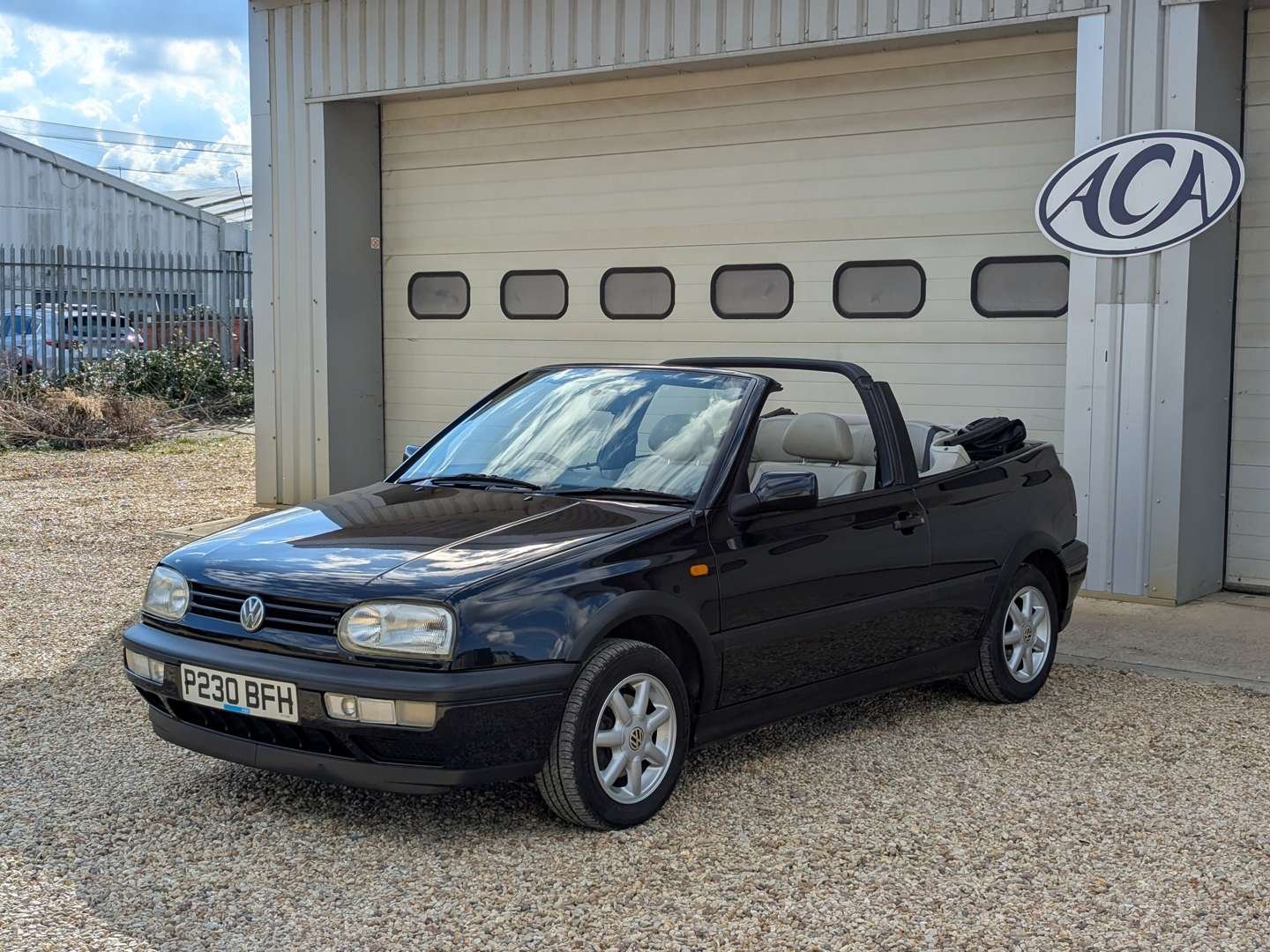
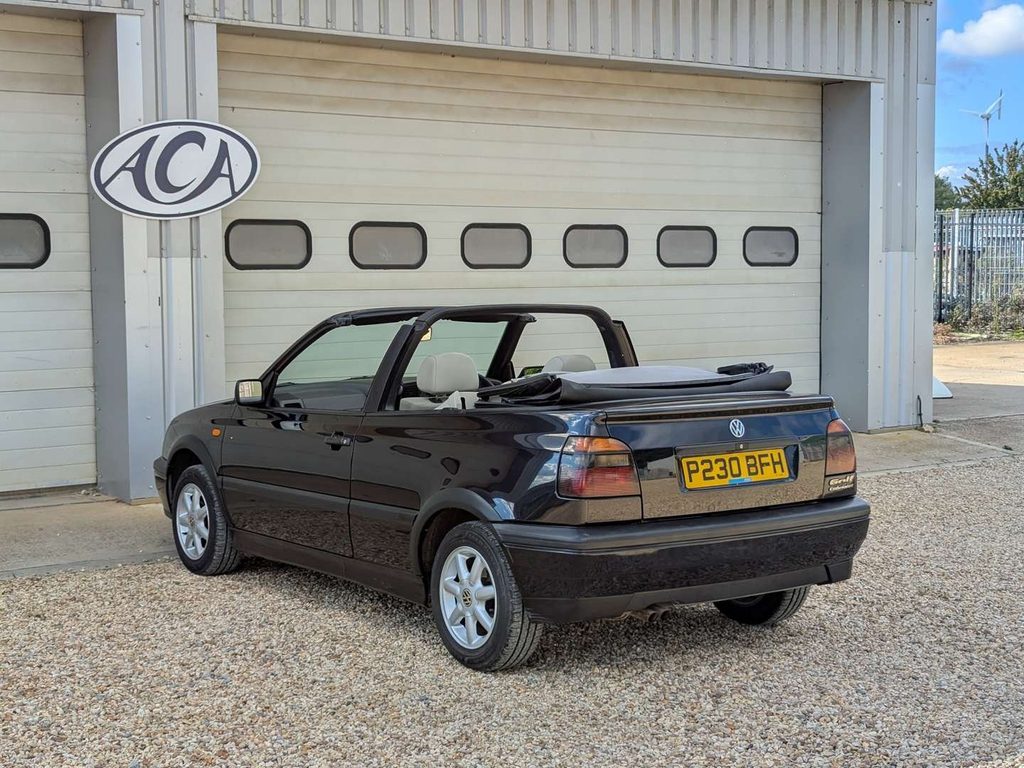
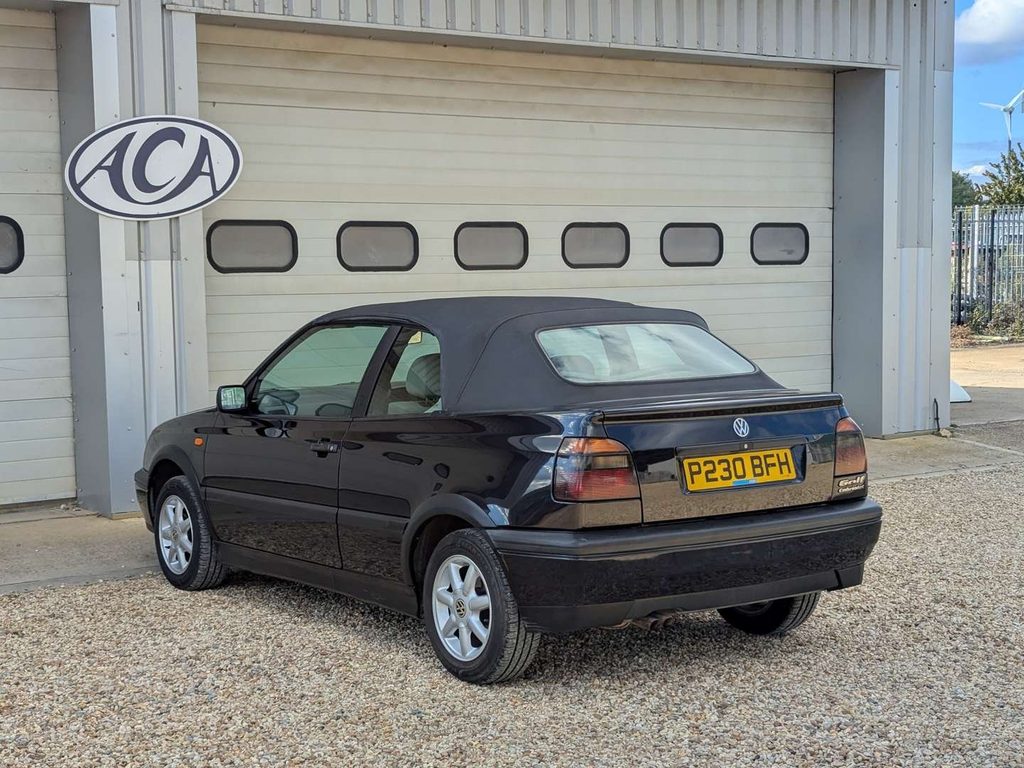
This VW Golf Cabriolet auction result comes with a little bit of history attached to it.
Not because the car once belonged to somebody famous.
Not because it’s incredibly rare.
And not because it broke any auction records.
Quite simply, this was:
Lot 1.
The very first car through the very first Anglia Car Auctions Marketplace Classics sale.
So if you watch the video further down this page, you’re witnessing a tiny piece of ACA history.
But there’s another question surrounding this 1997 Volkswagen Golf Avantgarde Cabriolet.
At 29 years old, is it still a future classic?
Or is it simply a classic now?
And when you see what it sold for, you might have another question.
Why didn’t I bid?
The First Ever Marketplace Classics Lot
Anglia Car Auctions launched Marketplace Classics on 26 September 2026.
The idea behind the new sale was straightforward.
Affordable classics.
Modern classics.
Projects.
And cars with future potential.
We’ve already featured quite a few cars from that inaugural auction, and it’s been fascinating to see the variety.
A Mercedes SL500.
A one-owner Toyota Corolla.
A Ford Puma.
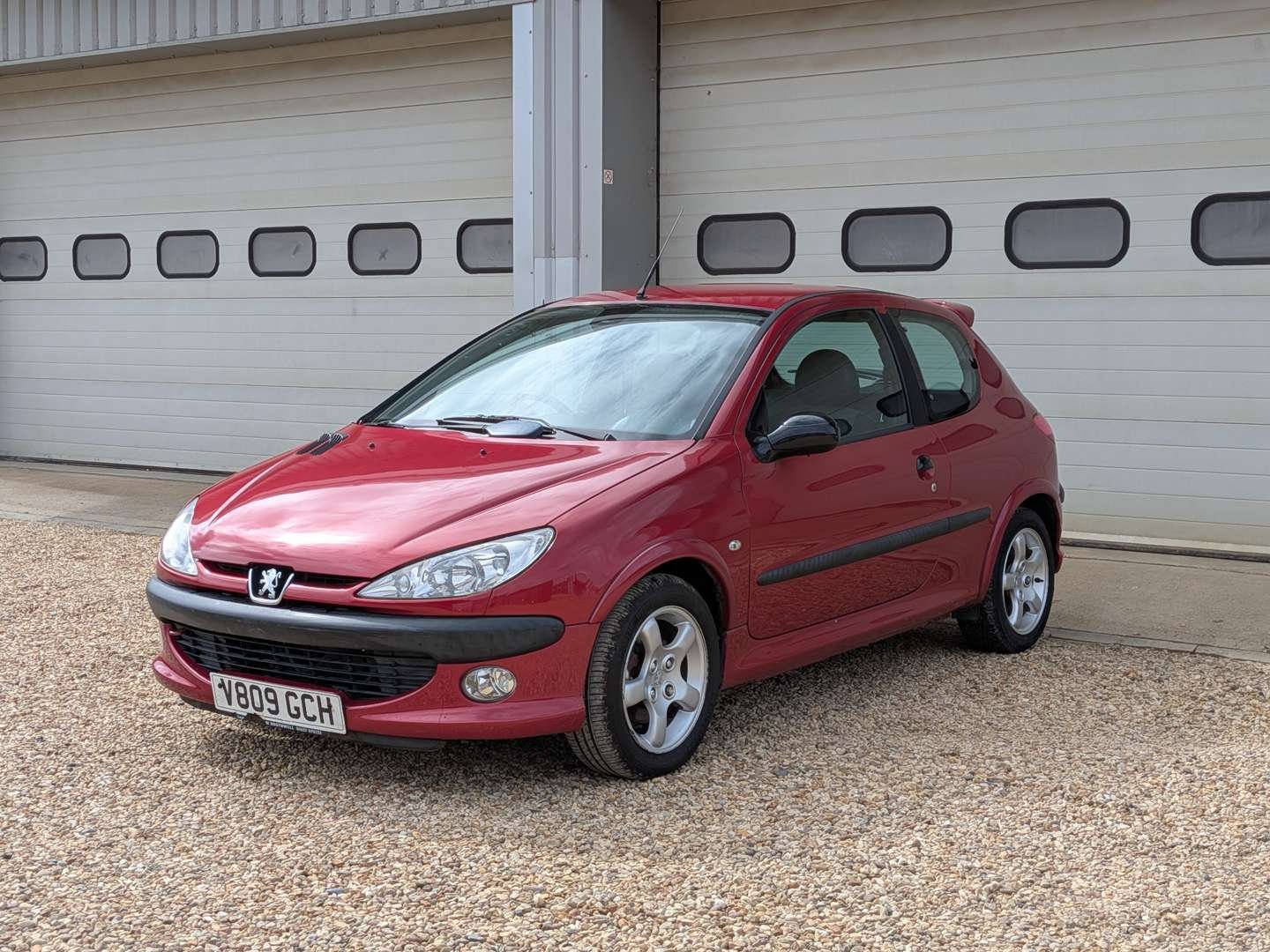
A Peugeot 206 GTI.
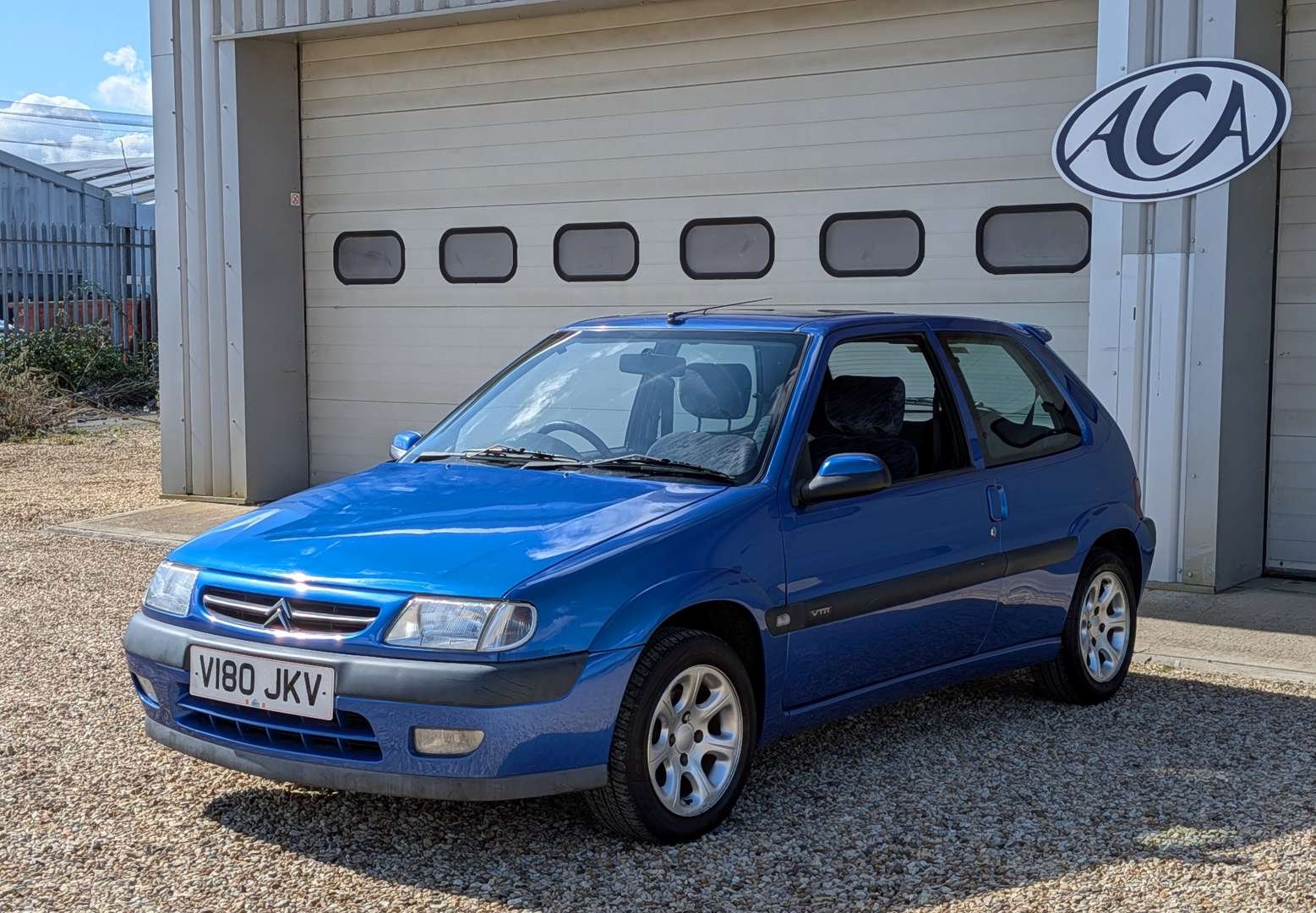
A Citroën Saxo VTR.
All very different cars, but all fitting somewhere into that increasingly interesting space between ordinary used car and established classic.
But somebody had to go first.
And this Golf did.
Lot Number One
There’s something quite satisfying about that.
Every Marketplace Classics auction from this point onwards will have its own Lot 1.
But there can only ever be one first Lot 1.
This 1997 Volkswagen Golf Avantgarde Cabriolet now has that distinction.
Will that make it worth more money in 20 years?
Almost certainly not.
But it’s a nice little piece of history to have attached to an otherwise relatively ordinary car.
And perhaps “relatively ordinary” is exactly what makes this one so interesting.
A 1997 Golf Cabriolet
This was a proper Mk3 Golf Cabriolet.
That’s worth pointing out because Volkswagen’s Golf Cabriolet history gets slightly confusing around this period.
The Mk3 Golf hatchback was coming to the end of its production life in 1997, with the Mk4 arriving soon afterwards.
The Cabriolet carried on.
In 1998 Volkswagen gave it a substantial facelift, grafting on styling cues from the Mk4 Golf and updating the interior.
It subsequently became known as the Golf IV Cabriolet.
But underneath, it remained closely related to the Mk3 Cabriolet.
This car predates all of that.
Registered in 1997, it still has the unmistakable original Mk3 appearance.
And we rather like that.
There Was Never a Mk2 Golf Cabriolet
Here’s another slightly odd bit of Golf history.
Volkswagen never actually produced a series-production Cabriolet based on the Mk2 Golf.
The original Mk1 Golf Cabriolet was so successful that Volkswagen simply kept building it.
The Mk1 hatchback had been replaced by the Mk2 in 1983.
Yet the Mk1-based Cabriolet carried on until 1993.
By the time Volkswagen finally replaced it, the company skipped straight to a Cabriolet based on the Mk3 Golf.
That’s quite a production run for the original.
The Mk3 Cabriolet Arrived in 1993
Volkswagen launched the new Golf Cabriolet in 1993.
Like its predecessor, it was built by Karmann in Osnabrück.
And Volkswagen retained one of the Golf Cabriolet’s most recognisable features.
That fixed rollover bar.
It’s the feature that led generations of Golf Cabriolets to acquire the affectionate “strawberry basket” nickname.
The Mk3 version was a much more modern car than the model it replaced.
It offered improved crash protection, more interior and luggage space and the sort of safety equipment expected from a 1990s Golf.
But the basic idea hadn’t changed.
Four seats.
Front-wheel drive.
A fabric roof.
And open-air motoring without turning the car into something wildly impractical.
This One Had the 2.0-Litre Engine
Under the bonnet of this particular Golf was Volkswagen’s 1,984cc petrol engine.
The 2.0-litre version of the Mk3 Cabriolet produced around 115PS.
Again, this isn’t a performance car.
That’s not really the point.
A Golf Cabriolet like this was about relaxed summer motoring rather than chasing hot hatchbacks down a B-road.
And with the roof down, 115PS is probably quite enough to get your hair untidy.
Assuming you still have some.
Moonlight Blue Pearl
This car was finished in Moonlight Blue Pearl.
And it wasn’t simply a standard colour picked from the normal palette.
ACA listed the paint as a factory special-order option.
Inside was a Pebble interior.
Other factory extras included:
Air conditioning.
Heated seats.
Front fog lamps.
For a 1997 Golf Cabriolet, that’s a rather pleasant specification.
It’s not difficult to imagine somebody walking into a Volkswagen dealership in the late 1990s and deliberately putting together a car they intended to keep.
Which, as it happens, appears to be exactly what happened.
Essentially With the Same Owner From New
This is probably the most interesting part of the Golf’s history.
The V5C recorded two former keepers and showed the current keeper acquiring it in April 1998.
Taken on its own, you’d assume somebody bought a year-old Golf Cabriolet.
But the history file tells a different story.
According to ACA, the vendor actually acquired the car new in 1997 through a company leasing arrangement.
So although the paperwork reflects the way the car was originally registered, it had effectively remained with the same person from new.
That’s a lovely bit of provenance.
Especially on a car that’s now approaching 30 years old.
And They Clearly Looked After It
The Golf was showing 114,208 miles.
That’s not ultra-low mileage.
And we don’t think it needs to be.
Sometimes a decent mileage combined with long-term ownership and good maintenance tells a far more appealing story than an old car that’s barely moved for decades.
The service book contained an impressive:
23 stamps.
The most recent recorded service was at 113,834 miles in February 2024.
There was also extensive MoT documentation covering the period from 2003 to 2026.
That’s the sort of history we like.
Not simply a low number on an odometer.
Evidence that somebody has actually used and maintained the car.
A Long MoT Too
The Golf also had an MoT until 30 June 2027.
The vendor told ACA that it started and drove well.
There was one notable fault.
The powered hood wasn’t working.
But ACA noted that the roof could be operated manually and was easy enough to put up and down.
On a cheap old convertible, that’s the sort of fault we’d probably prefer to a major mechanical problem.
You could use the car and decide later whether getting the powered mechanism working was worth the effort.
The Original Book Pack Survived
The car also retained its original Volkswagen owner’s manual.
Even the original saleroom brochure was still part of the book pack.
Little things like that become increasingly appealing as cars get older.
They’re not enormously valuable on their own.
But together with the service book, MoT history and long-term ownership, they help build a picture of a car that somebody actually cared about.
And that’s increasingly what we’d look for in an emerging modern classic.
But Is It Actually a Modern Classic Anymore?
Here’s the question I asked while filming it.
Classic or future classic?
Because 1997 doesn’t feel that long ago.
At least it doesn’t to me.
But this car is now 29 years old.
Twenty-nine!
At some point, we probably have to stop calling cars like this future classics.
The future has arrived.
Think About What 1997 Means
A car built in 1997 occupies an interesting place now.
It’s old enough to be nostalgic.
Old enough for its design and interior to feel unmistakably from another period.
Old enough for good survivors to have become noticeably less common.
And old enough that somebody who wanted one when they were young could now be looking for one purely because it reminds them of that time.
That’s classic-car territory.
It doesn’t necessarily need to be worth a fortune.
A Classic Doesn’t Have to Be Expensive
This is something we think gets lost in conversations about future classics.
People often use value as the deciding factor.
If prices are rising, it’s a classic.
If they’re still cheap, apparently it isn’t.
We don’t agree.
A car can become culturally interesting long before it becomes financially valuable.
Sometimes it never becomes particularly valuable at all.
That doesn’t stop it being a classic.
Plenty of cars we now happily accept at classic shows spent years being almost worthless.
The Mk3 Golf Is Reaching That Point
The Mk3 Golf itself has had an interesting journey.
For years it lived in the shadow of the Mk1 and Mk2.
The earlier cars had the stronger enthusiast following.
The Mk1 had the original GTI.
The Mk2 refined the formula and became an icon in its own right.
Then the Mk3 arrived.
Bigger.
Rounder.
Heavier.
More grown-up.
For a long time, enthusiasts didn’t necessarily regard it with the same affection.
But time changes things.
The Mk3 Was Important
Volkswagen launched the third-generation Golf in the early 1990s.
It represented a significant step forward in safety.
Airbags arrived.
ABS became increasingly important and was standard across Golf models by 1996.
There was the first Golf estate.
The VR6 brought six-cylinder power to the range.
Diesel technology moved forward rapidly.
And the Cabriolet returned after that unusual gap during the Mk2 era.
Nearly five million Mk3 Golfs were produced across the generation.
This wasn’t a niche car.
It was part of everyday European motoring.
Which Is Exactly Why Nostalgia Works
Nobody needs to explain why an exotic supercar becomes collectible.
It was special from day one.
Cars like this Golf work differently.
They become interesting because they were once normal.
Somebody’s dad had one.
Somebody’s mum wanted one.
Somebody went on holiday in one.
Somebody remembers seeing one outside the pub every Friday night.
And somebody spent the summer of 1999 driving around with the roof down pretending the British weather was better than it actually was.
Those memories create their own demand.
The Cabriolet Has Another Advantage
It’s also a convertible.
That immediately gives it something an ordinary Mk3 Golf doesn’t have.
You can buy it because you remember Mk3 Golfs.
But you can also buy it because you fancy a cheap open-top car for sunny weekends.
That makes the Cabriolet easier to justify as a toy.
You don’t necessarily need it to be an investment.
You just need the sun to come out occasionally.
Admittedly, that’s the more difficult part in Britain.
The Roll Bar Is Part of the Character
Modern convertibles tend to hide their rollover protection.
The Golf Cabriolet didn’t.
That substantial fixed bar is right there.
For years it was sometimes treated as an awkward styling necessity.
Now?
We think it’s part of the character.
You see the silhouette and immediately know what you’re looking at.
The same thing happened with plenty of styling details people once considered old-fashioned.
Survive long enough and awkward becomes distinctive.
The 1998 Facelift Makes This One More Interesting
There’s another reason we’d be drawn to this 1997 car.
In 1998, Volkswagen substantially updated the Cabriolet to make it resemble the Mk4 Golf.
New headlights.
Different bumpers.
Revised rear styling.
An updated dashboard and interior details.
It gave the Cabriolet a much newer appearance.
But that means a 1997 example like this represents the original Mk3 Cabriolet design before that transformation.
If you specifically want the 1990s Mk3 look, this is the one.
Then There’s the Price
Which brings us back to the hook on the reel.
Wish you’d bid at this price?
Because this Golf was offered at:
No reserve.
That makes things interesting immediately.
There was no minimum figure the seller had to achieve.
Once the bidding started, the car was going to find a new owner.
So what would you have paid?
Long-Term Ownership Versus 114,000 Miles
There was plenty to weigh up.
The mileage wasn’t especially low.
114,208 miles.
The electric roof wasn’t working.
And this was a 29-year-old Volkswagen, so naturally you’d still want to inspect it properly before getting carried away.
But look at the other side.
Effectively the same owner from new.
23 service stamps.
MoT history stretching back more than two decades.
MoT until June 2027.
2.0-litre engine.
Special-order Moonlight Blue Pearl.
Air conditioning.
Heated seats.
And the vendor said it started and drove well.
That sounds like a rather usable old convertible.
How Much Would You Bid?
£3,000?
£2,500?
Perhaps £2,000 because of the mileage?
Or would you go lower because you still see a Mk3 Golf Cabriolet as an old used car rather than a classic?
That’s exactly why cars like this are so interesting at auction.
Two people can look at the same vehicle and see completely different things.
One sees:
Old Golf.
Another sees:
29-year-old Karmann-built Cabriolet with effectively one person’s ownership from new and 23 service stamps.
Neither is necessarily wrong.
But they’ll arrive at very different numbers.
Watch the First Ever Marketplace Classics Lot
So here it is.
Lot 1.
The first car ever offered through Anglia Car Auctions’ Marketplace Classics sale.
Have a guess before the bidding starts.
And remember:
No reserve.
£1,300 Hammer
Yep.
£1,300.
That’s where the hammer fell.
Because the Marketplace Classics introductory buyer’s premium had a minimum charge of £125 plus VAT, the successful bidder paid:
£1,450 including premium.
For a 1997 Volkswagen Golf Cabriolet.
With 23 service stamps.
A long MoT.
Effectively long-term ownership from new.
And a 2.0-litre petrol engine.
Now you understand the hook.
Wish You’d Bid?
We do think that’s tempting.
Obviously, we’ve got to apply the usual auction-result common sense.
We didn’t carry out a full mechanical inspection.
We don’t know what the car looks like underneath beyond what was available at the sale.
It’s nearly three decades old.
And the powered hood already gives the new owner one job to investigate.
But £1,450 including premium doesn’t buy much interesting car these days.
Never mind an open-top one with this sort of history.
What Else Can You Buy for £1,450?
That’s where inexpensive auction results become fascinating.
At this end of the market, you don’t need a car to become enormously valuable for the purchase to make sense.
Imagine buying this.
Servicing it.
Sorting the hood if you want to.
Keeping on top of any age-related jobs.
Then using it on sunny weekends for a few years.
Even if it never becomes a £10,000 collector’s car, does that really matter?
You’ve had the enjoyment.
Maybe That’s the Point of Marketplace Classics
And perhaps that’s what ACA’s new sale gets right.
“Classic” doesn’t have to mean an immaculate £50,000 car under a dust cover.
There are still interesting cars at the affordable end of the market.
Cars you can actually use.
Cars you can improve.
Cars that are old enough to be nostalgic but not so valuable that every extra mile feels financially irresponsible.
This Golf seems almost tailor-made for that idea.
Would We Call It a Classic?
Yes.
At 29 years old, with unmistakably 1990s styling and a generation of people now nostalgic for cars like it, we’d struggle to call it merely a future classic.
It’s already there.
A modern classic, certainly.
But a classic nonetheless.
Whether the wider market eventually decides that good Mk3 Golf Cabriolets should be worth substantially more money is another question.
It doesn’t need to.
The History Makes This One
For us, the most appealing thing isn’t simply that it’s a Golf Cabriolet.
It’s the story.
Bought new through a company leasing arrangement.
Essentially retained by the same person afterwards.
23 service stamps.
More than two decades of MoT documentation.
Original book pack.
Special-order colour.
That’s the sort of provenance that becomes increasingly difficult to find as ordinary cars get older.
Mileage becomes only one part of the picture.
High Mileage Isn’t Always Bad News
Actually, 114,208 miles wouldn’t particularly frighten us when presented alongside this history.
A car that’s been driven and maintained can make far more sense than one that’s covered 30,000 miles but spent the last 15 years sitting outside unused.
Condition matters.
Maintenance matters.
History matters.
How the car reached its mileage matters.
A number on an odometer doesn’t tell you all of that.
And It Was £1,300
That’s the bit that’s difficult to ignore.
A Karmann-built Golf Cabriolet.
2.0 litres.
Long-term ownership.
23 service stamps.
MoT until June 2027.
£1,300 hammer.
Even with the premium taking the bill to £1,450, that feels like an awful lot of interesting old car for the money.
Could it need another £1,000 spending on it next month?
Of course.
It’s an old car.
That’s always possible.
But the initial entry price leaves some room for exactly that.
Perhaps These Are the Cars to Buy Now
Not necessarily because they’ll make you money.
We’d never suggest buying a car purely on the assumption that somebody will pay more for it later.
But because they’re currently in that sweet spot.
Old enough to be interesting.
Young enough to use.
Recognisable enough to have a following.
Yet still cheap enough that you don’t need to treat them like museum exhibits.
We’ve recently seen the same thing with cars such as the Ford Puma and Peugeot 206 GTI.
They’re crossing the line.
Yesterday’s used cars are becoming today’s modern classics.
The First Car of a New Auction
And whatever happens to this Golf from here, it now has one little line in its history that no other car can claim.
Lot 1, first ever ACA Marketplace Classics sale.
The hammer fell at £1,300.
The buyer paid £1,450 including premium.
And a 29-year-old Golf Cabriolet with effectively long-term ownership from new went off to begin another chapter.
Classic?
We’d say yes.
Bargain?
Providing there aren’t any nasty surprises, we’d be tempted to say yes to that too.
And if you’re now thinking you wish you’d bid…
That was rather the point.
Join our newsletter
Get the best barn finds, projects and classic temptations direct to your inbox.
Related Posts
Discover More Classic Car Stories
Stay updated with the latest barn finds, auction news, and classic car adventures in our 'News & Waffle' section. Dive into rare discoveries, behind-the-scenes stories, and expert insights into the world of classic cars. Whether you’re a seasoned enthusiast or simply intrigued by the tales behind these treasures, this is your hub for all things classic and captivating.
This Ford Fiesta auction result raises a question we’ve been thinking about quite a lot recently. Do quality classic cars still sell well? There’s no shortage of gloomy talk around the classic-car market. Prices are down. Projects are harder to sell. Some cars that would once have attracted a queue of bidders are ...
This Citroën Saxo VTR auction result sent us into a part of the modern-classic world we’re still learning about. Because I’ll admit it. This era is slightly outside my comfort zone. Give me an old Ford, a British Leyland product or something that’s spent 30 years disappearing into a hedge and I’...
This Peugeot 206 GTI auction result started with a very simple question. How much do you think this will sell for? Because this wasn’t an immaculate, low-mileage collector’s car. It wasn’t the later GTI 180. And it wasn’t being presented as something you could necessarily jump straight into and drive home. This was ...