This Ford Fiesta auction result raises a question we’ve been thinking about quite a lot recently.
Do quality classic cars still sell well?
There’s no shortage of gloomy talk around the classic-car market.
Prices are down.
Projects are harder to sell.
Some cars that would once have attracted a queue of bidders are struggling.
And we’ve certainly seen enough auctions ourselves to know that buyers are being careful.
But perhaps there’s another side to it.
Maybe buyers haven’t disappeared.
Maybe they’ve just become much more selective about what they’re prepared to spend proper money on.
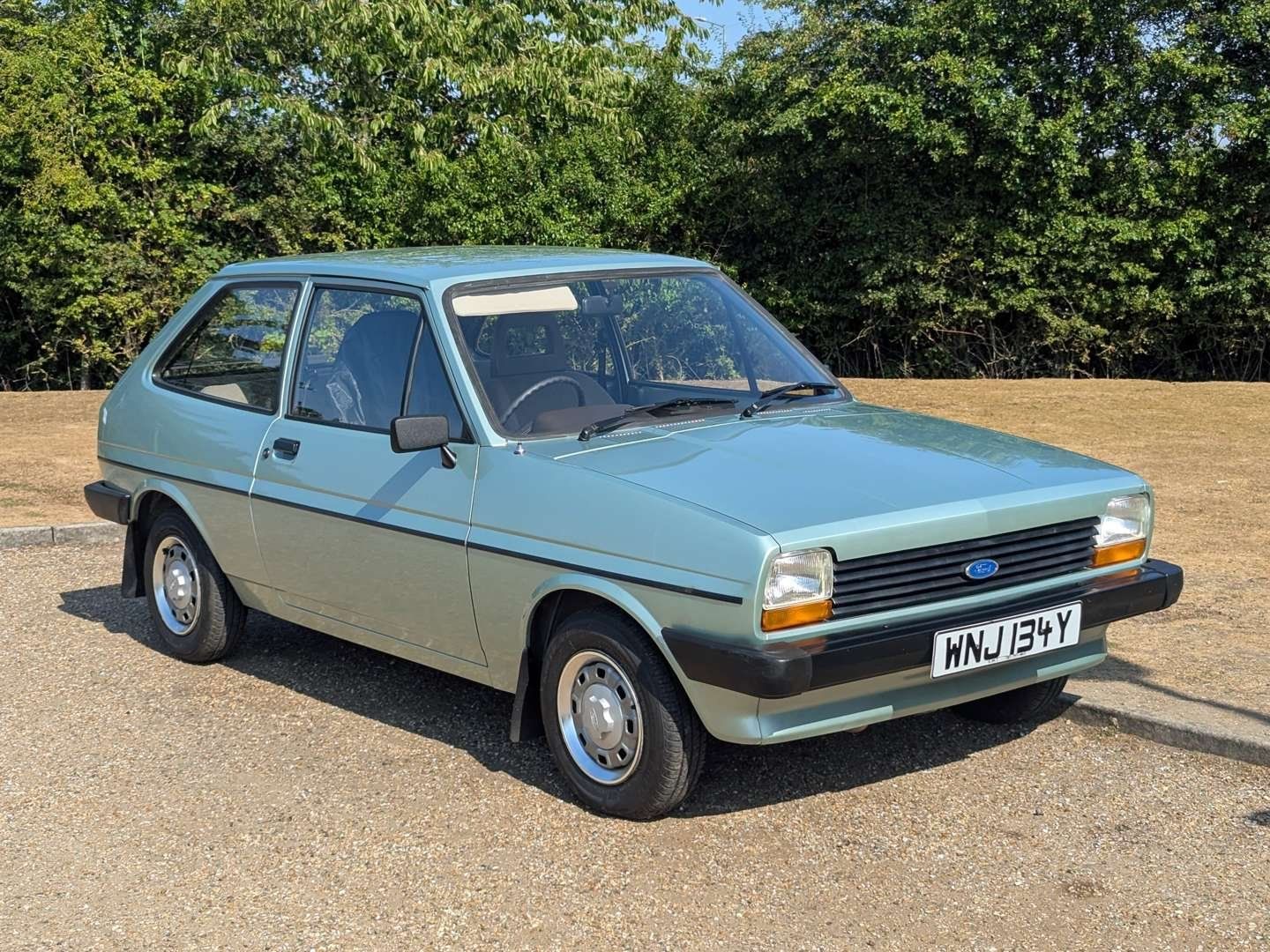
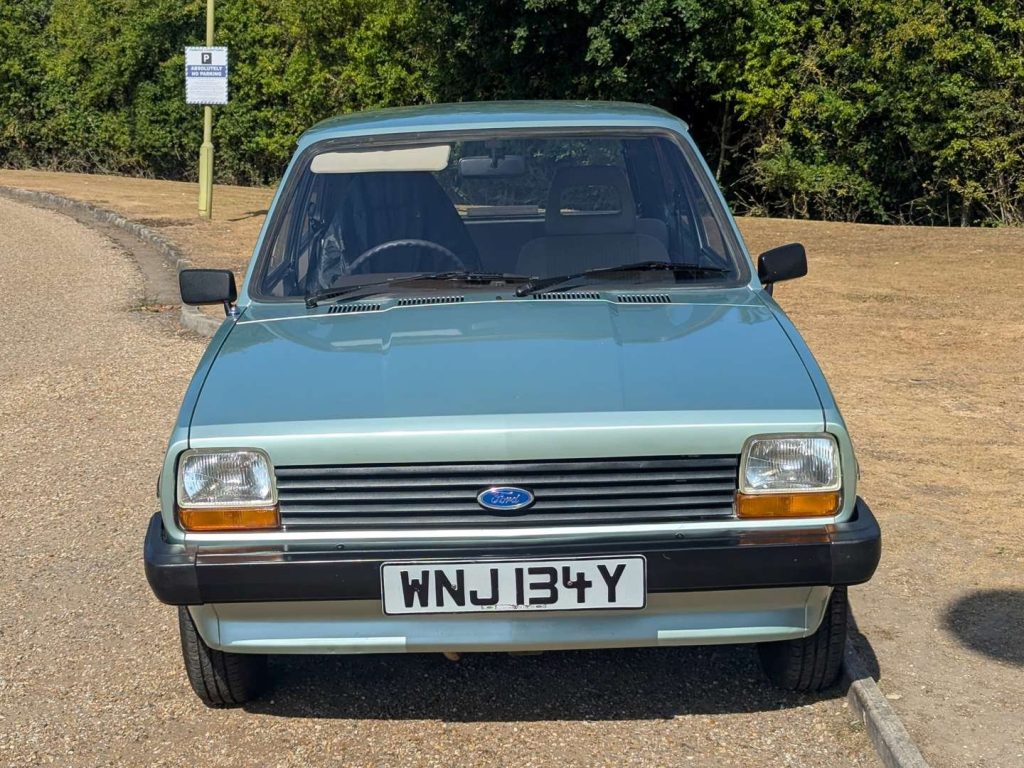
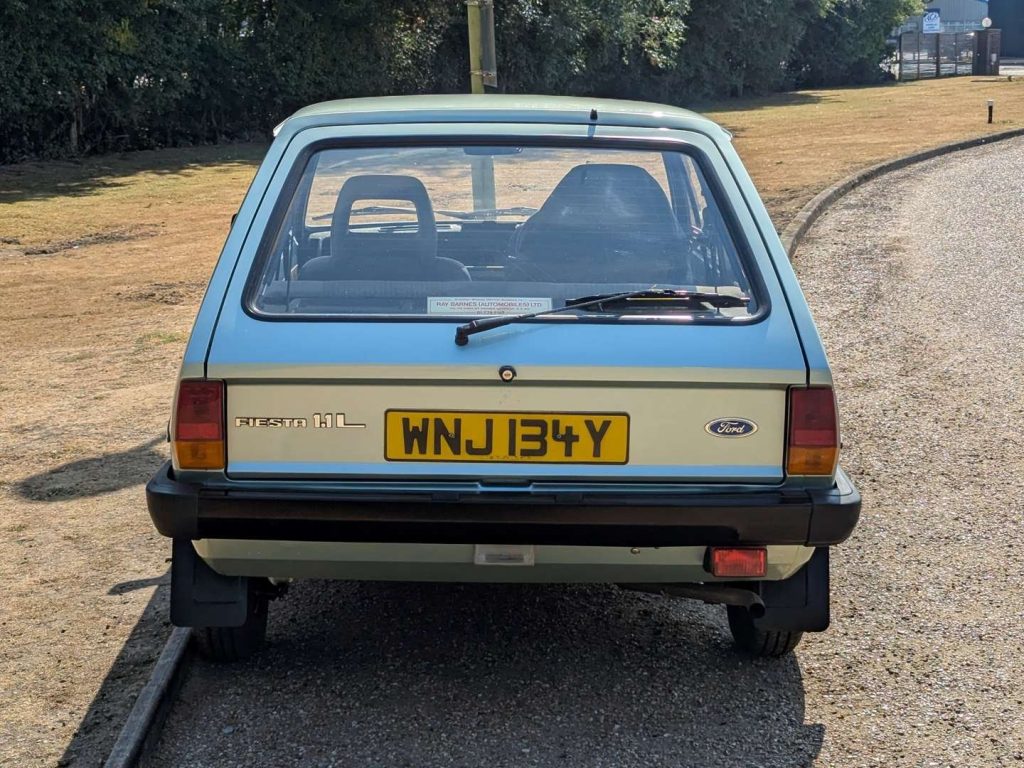
Because this 1983 Ford Fiesta L was a very nice car indeed.
And when it went under the hammer at Anglia Car Auctions, people were prepared to bid accordingly.
Not an XR2
Let’s get something out of the way immediately.
This wasn’t an XR2.
There was no sporting pedigree to push the price upwards.
No bodykit.
No performance engine.
No famous badge on the back.
This was an ordinary Ford Fiesta L.
An 1117cc three-door hatchback with a manual gearbox.
The sort of Fiesta that thousands of people simply used as everyday transport.
And that is precisely why we find it interesting.
The Ordinary Cars Are Becoming Extraordinary
We’ve said this before, but it’s worth repeating.
The cars most at risk of disappearing aren’t necessarily the exotic ones.
People save exotic cars.
People preserve performance models.
People spend money restoring XR2s because an XR2 is worth restoring.
It’s the ordinary versions that quietly vanish.
The 950s.
The 1.1s.
The Ls.
The cars bought for commuting, shopping, school runs and learning to drive.
For years they were simply old cars.
When they failed an MoT or needed welding, many weren’t worth repairing.
When something mechanical went wrong, another cheap Fiesta could be bought instead.
Nobody imagined that one day a basic Mk1 Fiesta would be the unusual sight.
Yet here we are.
This One Had Survived Remarkably Well
The Fiesta at Anglia Car Auctions was built in November 1982 and registered in January 1983.
So this was a very late Mk1, arriving during the final year of first-generation Fiesta production.
It was finished in metallic green with a grey cloth interior.
And according to ACA, it was believed never to have been welded or restored.
That’s quite a statement for a 43-year-old Ford.
The auction house described the paintwork and interior as beautifully preserved, and the photographs certainly suggested a car that had escaped the sort of hard life endured by most small Fords of its generation.
29,565 Miles Showing
Then there’s the mileage.
The odometer showed just 29,565 miles.
ACA couldn’t guarantee that figure, so neither will we.
But they did say it appeared authentic.
And the car had another useful piece of evidence in its favour.
Despite the low mileage, its MoT history showed that it had been tested almost every year.
That’s often exactly what you want to see with an old car.
A very low mileage figure on its own doesn’t tell you much.
A history that appears consistent with it is far more interesting.
It Started Life as a Demonstrator
The Fiesta’s history gets better.
It began life as a dealer demonstrator.
Then, according to the auction catalogue, its third owner acquired it in 1985.
She kept it until 2015.
That’s 30 years with one keeper.
And the reason for selling?
ACA says she reluctantly parted with it because she’d become too old to drive.
That sort of long-term history adds something to an ordinary car.
It starts to explain how it survived.
An Enthusiast Bought It Later
The vendor at the time of the ACA sale had owned the Fiesta for three years.
And he clearly liked his Fiestas.
ACA described him as an enthusiast who hadn’t been without one since 1986.
During his ownership, this car had apparently been used only for shows.
The V5C recorded seven keepers altogether.
Again, the number on the V5C only tells part of the story.
Thirty years in one person’s care is far more revealing.
It Wasn’t Completely Untouched
There were a few changes.
A more modern Ford-branded radio cassette player had been fitted.
It wore GL wheel centre caps.
There were genuine Ford mud flaps.
And a set of front driving lamps came with the car but wasn’t fitted.
Recent work included replacement rear shock absorbers and alternator, along with a new-old-stock steering wheel.
Three keys were included, as were the original handbooks and a collection of maintenance receipts dating from 2015 onwards.
So this wasn’t a museum piece frozen exactly as it left the factory.
It was simply a very well-preserved old Fiesta.
And perhaps that’s better.
An Advisory-Free MoT
There was another big tick in the box.
The Fiesta had an MoT until 1 June 2027.
And there were no advisories.
Obviously, an MoT isn’t a guarantee that a classic car is perfect.
Anyone buying an old Ford should still inspect it properly.
But when you’re comparing this with a project that’s been sitting in a garage for 20 years, a current advisory-free MoT makes the proposition very different.
This looked like a car you could actually enjoy.
And That’s Becoming Important
We think that’s one of the most interesting things happening in the market.
A few years ago, buyers seemed far more willing to take on projects.
Some still are.
We certainly are.
But restoring cars has become expensive.
Parts cost more.
Paint costs more.
Welding costs more.
Labour costs more.
And the amount of time involved hasn’t got any shorter.
Suddenly, paying more for the better car can make enormous sense.
The Cheap Project Isn’t Always Cheap
We’ve learned this lesson plenty of times.
A £2,000 car can very quickly become a £10,000 car.
And you can still end up with something that isn’t as original as the £7,000 car you decided was too expensive in the first place.
That doesn’t mean projects don’t make sense.
They absolutely do.
Some cars deserve saving.
Some people enjoy the restoration more than the finished car.
And sometimes the only way to own the model you want within your budget is to buy something needing work.
But purely financially?
Buying the best car you can afford has always had a lot going for it.
Imagine the Rough Version of This Fiesta
That’s where this particular sale becomes interesting.
Take the same basic car.
1983 Fiesta L.
1117cc.
But instead of preserved metallic paint and an advisory-free MoT, imagine faded paint, rusty arches, crusty sills, a scruffy interior and ten years off the road.
It’s still a Mk1 Fiesta.
It’s still increasingly unusual.
It’s still nostalgic.
But is it worth anything close to the same money?
We’d say no.
In fact, we wouldn’t be surprised if a genuinely poor project example struggled to make even a third of what this car eventually achieved.
Same model.
Completely different proposition.
Is That the Market We’re Seeing Now?
Perhaps this is the important distinction.
Saying:
“The classic-car market is down”
is very broad.
Which cars?
In what condition?
At what price?
A mediocre car with an ambitious reserve may struggle.
A major restoration project may struggle.
A common specification presented poorly may struggle.
But put something genuinely nice in front of buyers at a sensible estimate and the result can look very different.
This Fiesta appears to be a good example of that.
The Mk1 Fiesta Matters
There’s also the car itself.
The original Fiesta was a hugely important model for Ford.
Developed under the Project Bobcat programme, it represented an enormous investment in a new small front-wheel-drive car.
Production began in 1976 and UK sales followed in 1977.
The timing was right.
European buyers increasingly wanted economical, practical small cars.
Ford needed something to take on cars such as the Renault 5, Fiat 127 and Volkswagen Polo.
The Fiesta was the answer.
Ford Had a Hit
It didn’t take long.
The millionth Fiesta was built in January 1979, only 32 months after launch.
The Mk1 became the best-selling car in its class in Britain and Germany throughout its production run.
By 1983, the second-generation Fiesta was ready to take over.
What nobody knew at the time was just how important the name would become.
The Fiesta would eventually become one of the defining cars of British roads.
For decades, almost everybody knew somebody who owned one.
Quite often they’d owned one themselves.
This Is Where It Started
That’s what gives a Mk1 Fiesta something later generations can never quite replicate.
It’s the original.
The shape that established the name.
Small.
Simple.
Light.
Three doors.
Very little unnecessary complication.
The design now looks unmistakably 1970s and early 1980s.
And in standard L specification, this car arguably represents the Fiesta story better than a sporting derivative does.
The XR2 is the one enthusiasts traditionally chase.
But the 1.1 L is closer to the Fiesta most people actually knew.
What Did an L Give You?
The L sat above the most basic Fiesta models.
Period Ford literature for the Fiesta L lists details that sound wonderfully modest today.
Reclining front seats.
Fabric trim.
Door storage bins.
A detachable rear parcel shelf.
Carpet.
A passenger sunvisor.
A heated rear window.
An electric windscreen washer.
Intermittent wipers.
A tailgate wash/wipe.
None of that sounds remarkable now.
In an early-1980s small car, it mattered.
And that’s another lovely thing about preserving an ordinary specification.
It shows us what buyers actually considered equipment at the time.
The 1.1 Wasn’t About Performance
Under the bonnet was Ford’s 1117cc four-cylinder engine.
This wasn’t trying to be an XR2.
The point was economical, uncomplicated everyday transport.
And the whole car weighed somewhere in the region of only 700-odd kilograms depending on specification.
That’s almost difficult to comprehend alongside today’s small cars.
Modern cars are safer, quieter, faster and vastly better equipped.
But they are also much bigger and heavier.
A Mk1 Fiesta reminds you just how small a small car used to be.
Then Came the XR2
Of course, Ford eventually discovered that the little Fiesta could be fun as well as sensible.
The Supersport helped point the way.
Then the XR2 arrived in 1981 with its 1.6-litre engine, stiffer suspension and unmistakable sporting treatment.
Ford described it as the first 100mph Fiesta.
The XR2 became the poster car.
And today good Mk1 XR2s command serious attention.
But that makes surviving ordinary Fiestas more interesting, not less.
You expect enthusiasts to save the XR2.
Who saved the L?
Ford Ended Fiesta Production in 2023
There’s another reason the earliest cars feel different now.
The Fiesta story has finished.
After millions of cars and multiple generations, Ford ended Fiesta production in 2023.
For decades it seemed almost impossible to imagine Ford without a Fiesta in the range.
Now there isn’t one.
That inevitably changes the way we look at the older cars.
The Mk1 is no longer simply the first version of a model that’s still being made.
It’s the beginning of a completed story.
Which Brings Us Back to Value
ACA estimated this 1983 Fiesta L at:
£6,000 to £8,000.
That felt like a meaningful amount of money for an ordinary 1.1-litre Fiesta.
But look at what was being offered.
A late Mk1.
29,565 miles showing and appearing authentic.
Thirty years with one keeper in its history.
Believed unwelded and unrestored.
Nicely preserved paint and interior.
A current advisory-free MoT.
And a vendor who was clearly a Fiesta enthusiast.
If you wanted a really nice standard Mk1, how many comparable cars would you have to choose from?
That’s the question that matters.
Watch It Go Under the Hammer
Before we tell you what happened, watch the bidding.
And think about the wider question.
Are buyers really deserting older classics?
Or are they simply prepared to pay strongly for the cars that justify it?
£7,400 Hammer
The Fiesta sold for:
£7,400.
With Anglia Car Auctions’ buyer’s premium added, the final price was:
£7,992.
That’s comfortably within the £6,000 to £8,000 estimate.
And for a 1.1-litre Fiesta L, we’d call that a strong result.
But Was It Expensive?
That’s where things get interesting.
Nearly £8,000 including premium for a humble Fiesta L sounds substantial.
Particularly if you remember buying cars like this for hundreds of pounds.
But those days aren’t coming back.
And neither are all the Fiestas that disappeared when they were worth hundreds of pounds.
The relevant question isn’t:
“What did one of these cost 20 years ago?”
It’s:
“What would it cost to find or create another one this good today?”
Those are two very different questions.
Try Restoring One for Less
Imagine buying a £2,500 Mk1 Fiesta project.
It needs welding.
Paint.
A tired interior sorting.
Brakes.
Suspension.
Tyres.
A service.
Various bits of trim.
Maybe an engine refresh.
You can see where this is going.
By the time you’ve finished, £7,992 might suddenly look rather sensible.
And even after spending the money, you’ve got a restored car.
This one was believed never to have needed restoration in the first place.
For some buyers, preservation carries a premium of its own.
Originality Is Difficult to Recreate
You can repaint a car beautifully.
You can retrim an interior.
You can rebuild an engine.
You can replace almost every mechanical component.
What you can’t easily manufacture is 43 years of careful survival.
Originality isn’t always objectively better.
A properly restored car can be magnificent.
But there is something compelling about an ordinary old car that simply managed to make it through.
The wear.
The materials.
The details.
The way everything fits.
They’re part of its history.
Buyers May Be Getting More Selective
This is why we’re increasingly cautious about broad statements on classic values.
Yes, some prices have softened.
Yes, we’ve watched cars struggle.
And yes, projects can be particularly difficult unless they’re priced realistically.
But that doesn’t automatically mean nobody wants classics anymore.
Perhaps buyers have simply realised they can afford to wait.
When money was cheap and the market was flying, people chased cars because they feared missing out.
In a quieter market, the buyer has more power.
They can be choosy.
And if they’re going to spend proper money, they may want a proper car.
Condition Can Create a Huge Price Gap
We’ve seen this across several different models.
Two cars can look almost identical in an auction catalogue headline.
Same year.
Same model.
Same engine.
Yet one can be worth several times what the other is.
Condition.
History.
Originality.
Mileage.
Colour.
Specification.
Usability.
Presentation.
All of it matters.
Perhaps it matters more now than it did during a rising market when almost everything was being pulled upwards together.
That’s Good News for Good Cars
And perhaps that’s not a bad thing.
A market that rewards genuinely good examples encourages preservation.
It gives owners a reason to look after original cars rather than modify or neglect them.
It rewards history.
It rewards careful maintenance.
And it reminds buyers that the cheapest example isn’t necessarily the best value.
This Fiesta wasn’t cheap for an L.
But it looked like a quality car.
And quality attracted bidders.
Would the Result Have Been Different for a Project?
Almost certainly.
Put a rusty, non-running Fiesta L into the same auction and we wouldn’t expect anything remotely close to £7,400.
Even though, theoretically, the finished car could become something similar.
That’s the gulf between potential and reality.
A project buyer has to price in everything that might be hiding underneath.
The buyer of this Fiesta was paying for a car that had already survived.
That’s valuable.
Is £7,400 the New Value of a Mk1 Fiesta L?
No.
And that’s important.
One auction result doesn’t suddenly mean every 1983 Fiesta L is worth £7,400.
This result belongs to this car.
Its condition.
Its history.
Its mileage.
Its presentation.
And the bidders in the room and online on that particular day.
Use auction results as evidence.
Don’t turn one result into a universal price guide.
That’s particularly important in a market where condition can create such enormous differences.
But It Does Tell Us Something
It tells us somebody was prepared to pay £7,400 hammer for a really nice, ordinary Mk1 Fiesta.
And presumably somebody else was bidding close behind them.
That’s meaningful.
Especially when we keep hearing that older cars are becoming harder to sell.
Maybe the question isn’t whether people still want them.
Maybe the question is:
Which ones do they want?
We’d Take This Over a Rough XR2
Here’s another interesting thought.
Imagine you had roughly £8,000 to spend.
Would you rather have this beautifully preserved Fiesta L?
Or a rough XR2 requiring a substantial amount of work?
There’s no universally correct answer.
The XR2 has the performance badge and considerably more upside if restored properly.
But if the objective is to go to shows, enjoy Sunday drives and own a really good surviving Mk1 Fiesta?
We can absolutely see the appeal of the L.
Sometimes condition beats specification.
It’s a Snapshot of Ordinary Britain
That’s ultimately why we like cars like this.
An exotic car tells you about aspiration.
An ordinary car tells you how people actually lived.
This was the sort of thing sitting outside houses in the 1980s.
It went to supermarkets.
Workplaces.
Schools.
Seaside holidays.
It was the family car, the second car or somebody’s first car.
Nobody stopped to photograph them because they were everywhere.
Now people stop and look precisely because they aren’t.
The Market Has Changed
We don’t think it’s sensible to pretend everything is booming.
It isn’t.
We’ve seen enough evidence ourselves to know that.
But equally, we’re not convinced the answer is simply:
“Classic cars aren’t selling anymore.”
This Fiesta suggests something more nuanced.
Buyers still appear willing to spend.
They just need convincing.
And a well-preserved, usable, interesting car at a sensible estimate gives them a reason to put their hand up.
Quality Still Sells
So, back to the question we started with.
Do quality classic cars still sell well?
This one did.
£7,400 hammer.
£7,992 including premium.
For an ordinary 1.1-litre Ford Fiesta L.
A poor example might have achieved a fraction of that.
But this wasn’t a poor example.
It was the sort of survivor that’s becoming increasingly difficult to replace.
And perhaps that’s where the market is heading.
Not every old car automatically becoming more valuable.
Not every project being chased simply because it’s rare.
Instead, a widening gap between the best cars and everything else.
If that’s true, condition may matter more than ever.
And this little green Fiesta might be a very good example of why.
Join our newsletter
Get the best barn finds, projects and classic temptations direct to your inbox.
Related Posts
Discover More Classic Car Stories
Stay updated with the latest barn finds, auction news, and classic car adventures in our 'News & Waffle' section. Dive into rare discoveries, behind-the-scenes stories, and expert insights into the world of classic cars. Whether you’re a seasoned enthusiast or simply intrigued by the tales behind these treasures, this is your hub for all things classic and captivating.
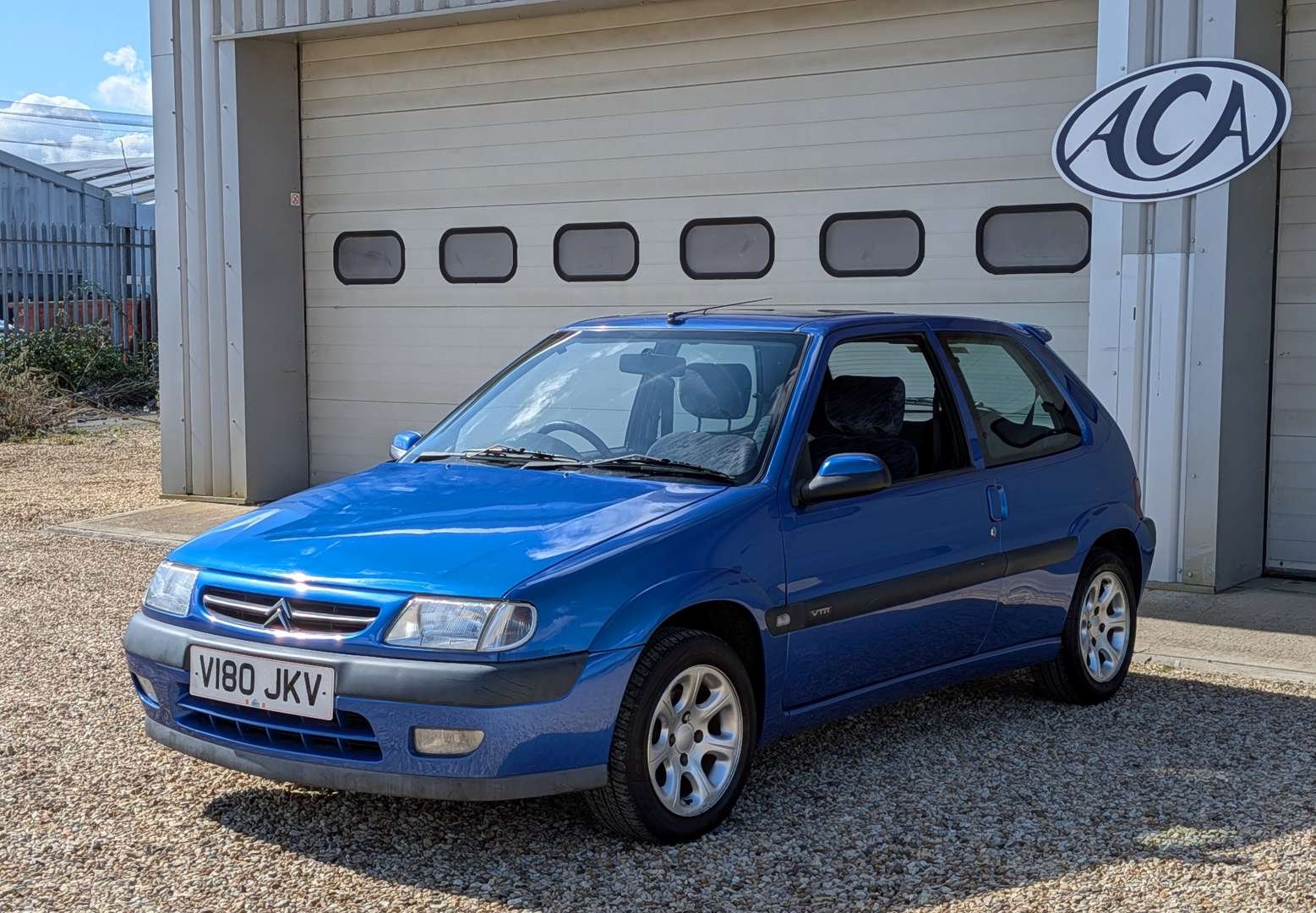
This Citroën Saxo VTR auction result sent us into a part of the modern-classic world we’re still learning about. Because I’ll admit it. This era is slightly outside my comfort zone. Give me an old Ford, a British Leyland product or something that’s spent 30 years disappearing into a hedge and I’...
This Peugeot 206 GTI auction result started with a very simple question. How much do you think this will sell for? Because this wasn’t an immaculate, low-mileage collector’s car. It wasn’t the later GTI 180. And it wasn’t being presented as something you could necessarily jump straight into and drive home. This was ...
I was today years old when I discovered that Esso once sold spark plugs. We’ve been working on our 1956 Ford Popular and, after removing the four plugs from its little sidevalve engine, something caught our eye. ESSO. Printed clearly around the white ceramic insulators. We’re used to seeing names such as Champion, Lodge, ...