Think of all the extraordinary cars produced over the last sixty years.
Ferraris, Porsches, Jaguars and countless other machines that have become icons of the motoring world.
Yet the car that has outsold them all is something rather less exotic.
The Toyota Corolla.
First introduced in 1966, the Corolla celebrates its 60th anniversary this year, having achieved something no other car nameplate has managed.
More than 57 million examples have been sold worldwide.
That’s an extraordinary number, particularly for a car that has spent much of its life doing something rather unglamorous.
Taking people to work.
Collecting the children from school.
Going shopping.
And generally providing dependable everyday transport.
But behind those enormous sales figures lies a surprisingly interesting history.
Twelve generations, an extraordinary variety of body styles, successful rally and racing cars, and one particular rear-wheel-drive Corolla that has become a Japanese motoring legend.
It All Started In 1966
The Corolla arrived at a time when Japan was experiencing enormous economic growth.
Car ownership was becoming increasingly accessible, and Toyota recognised the opportunity to develop a family car that offered more than basic transportation.
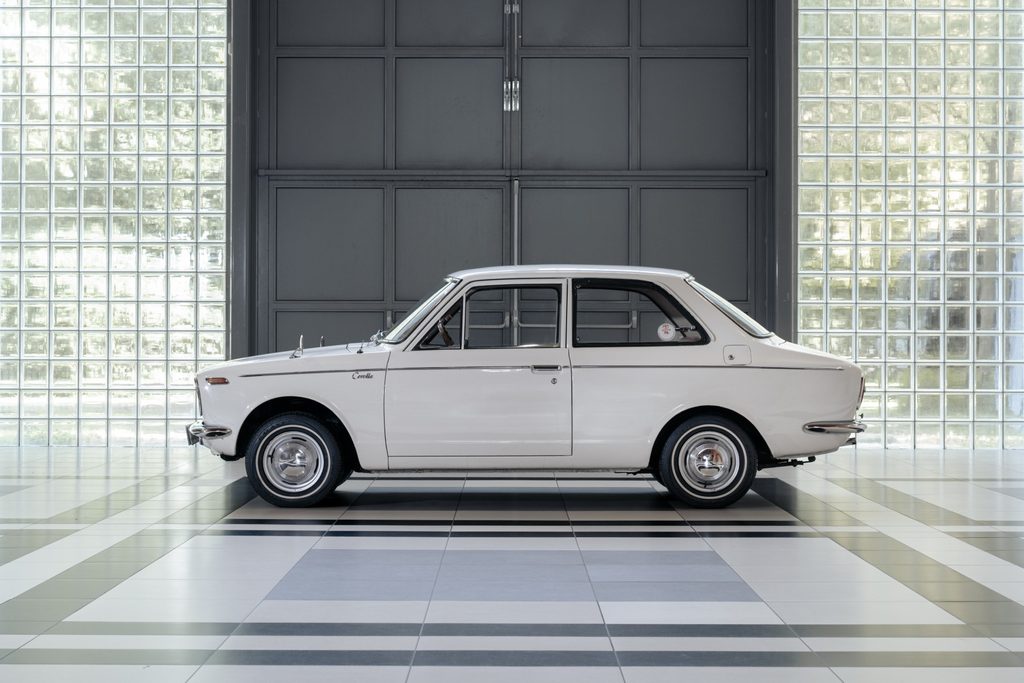
The original Corolla was launched in Japan in November 1966, having made its debut at the Tokyo Motor Show.
Chief engineer Tatsuo Hasegawa oversaw the project, with Toyota establishing a dedicated factory at Takaoka to manufacture the new model.
The original car was a compact two-door saloon powered by a 1.1-litre engine producing 60bhp.
That might not sound particularly exciting today, but the Corolla offered a specification that was impressive for an affordable Japanese family car.
A floor-mounted four-speed manual gearbox, front disc brakes, bucket seats and two-speed windscreen wipers were among its features.
Toyota added a four-door saloon and estate in 1967, followed by the sportier Sprinter fastback coupé in 1968.
And the name?
Corolla refers to the crown of petals surrounding the centre of a flower.
Within three years of its launch, the Corolla had become Japan’s best-selling car.
The original Toyota Corolla arrived in 1966, beginning a story that would span six decades and 12 generations. Photo: Toyota.
When Japanese Cars Began Winning British Buyers
For British motorists, the Corolla became part of a much bigger change in the car market.
Throughout the 1970s, Japanese manufacturers steadily established themselves as serious alternatives to the familiar British and European marques.
Cars such as the Corolla offered a combination of reliability, equipment and value that appealed to people who simply wanted dependable transport.
They weren’t necessarily bought to make a statement.
They were bought to do a job.
And many did that job for years.
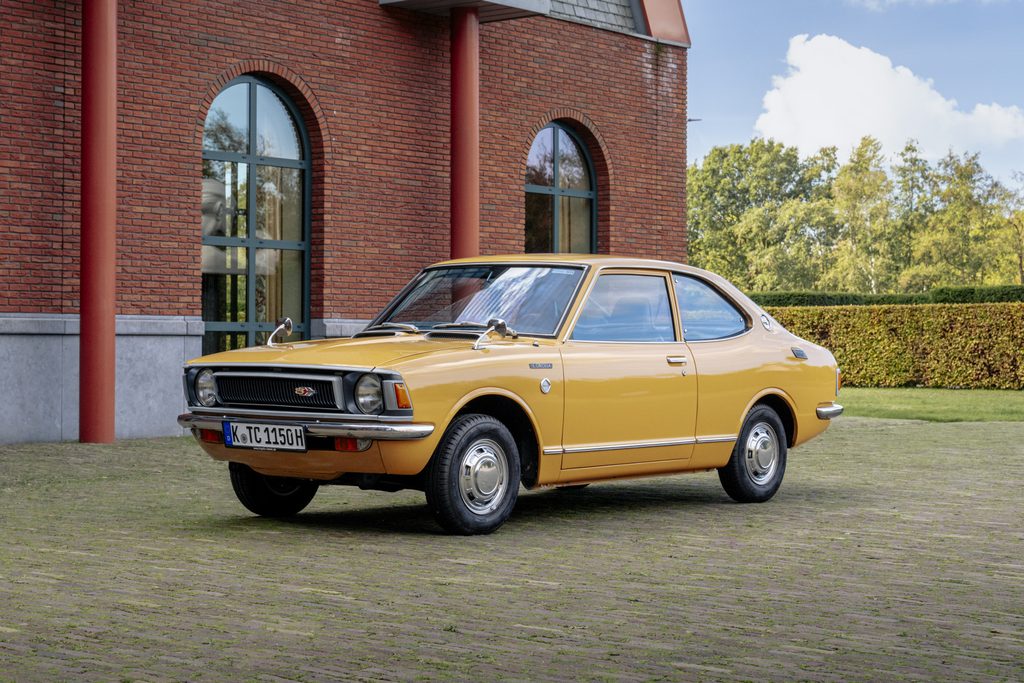
The second-generation Corolla arrived in 1970, just as the model passed its first million sales.
A wider choice of body styles followed, including coupés and the sporting Levin.
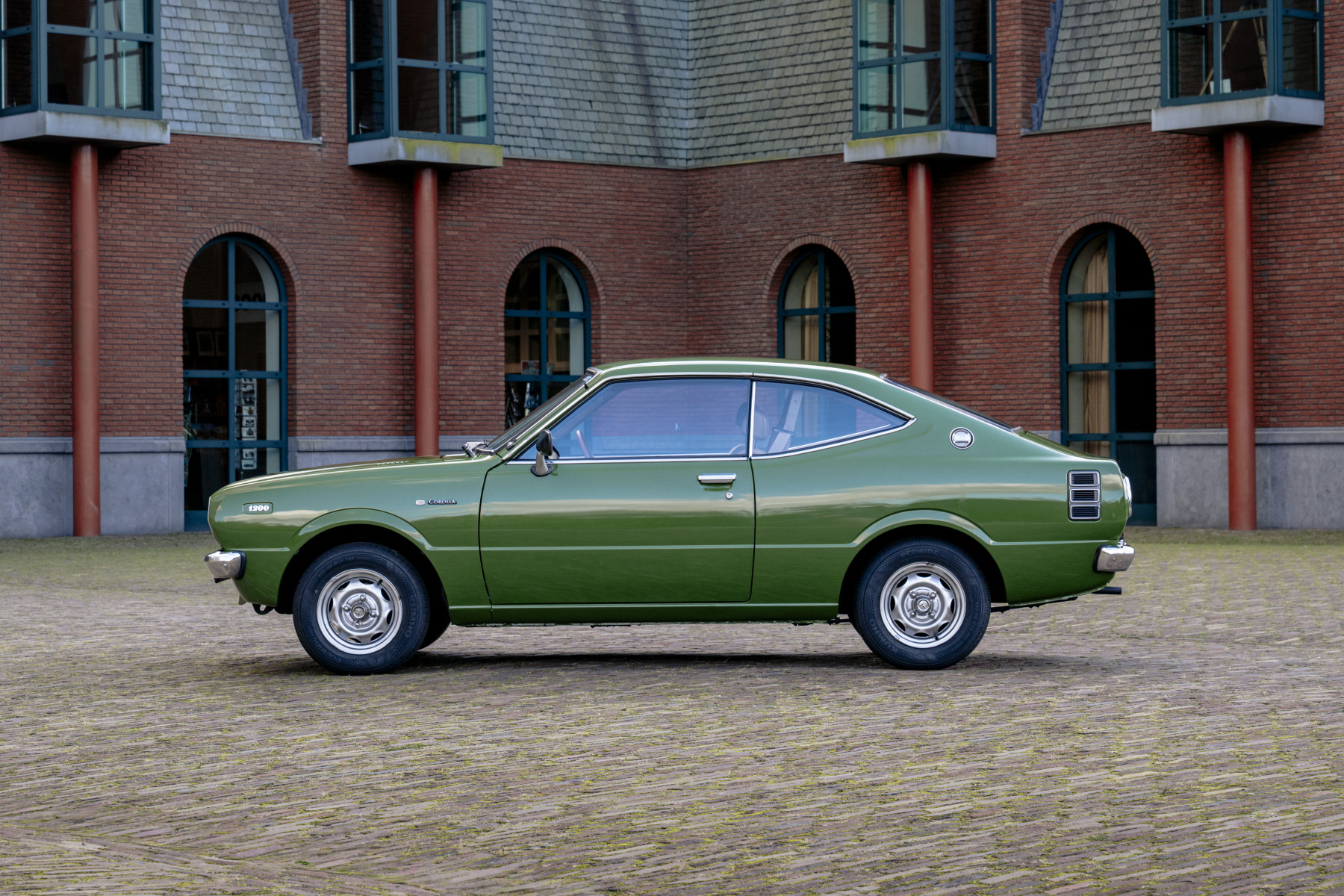
By the third generation in 1974, Toyota was offering an increasingly varied line-up, with more attention paid to passenger safety, comfort and aerodynamics.
The fourth-generation cars arrived in 1979 with revised suspension, rack-and-pinion steering and, eventually, a diesel engine option.
These are the Corollas that particularly interest us today.
The ordinary saloons, estates and coupés that once sat outside thousands of British homes.
Most were used, repaired, traded in and eventually scrapped.
Finding an original, well-preserved example now is a very different proposition from spotting one in a supermarket car park forty years ago.
The second-generation Toyota Corolla arrived in 1970, building on the success of the original model. Photo: Toyota.
The Corolla AE86 – A Family Car With A Cult Following
Of all the Corolla models produced over six decades, one has developed a following that extends far beyond Toyota enthusiasts.
The AE86.
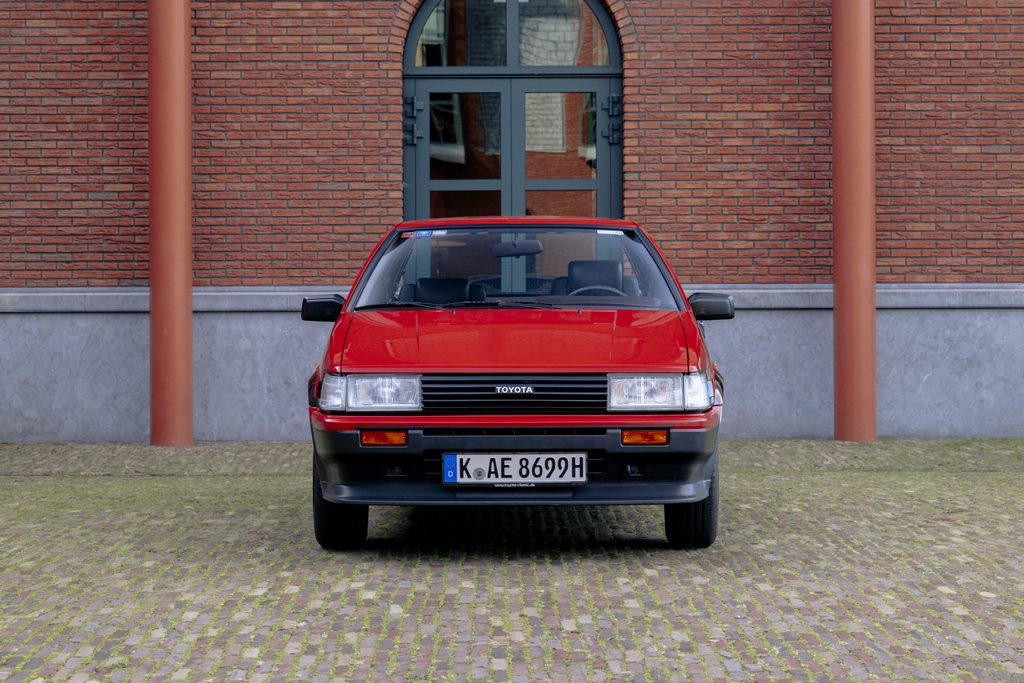
Introduced as part of the fifth-generation range in 1983, the AE86 retained a traditional front-engine, rear-wheel-drive layout at a time when many ordinary family cars were moving towards front-wheel drive.
In Britain it became known as the Corolla GT Coupé.
Under the bonnet was Toyota’s high-revving 1.6-litre 4A-GE twin-cam, 16-valve engine, producing around 124bhp in UK specification.
Combined with a kerb weight of less than a tonne, excellent balance and a relatively simple mechanical layout, it made for an enormously entertaining driver’s car.
The AE86 went on to enjoy success in motorsport, particularly rallying and circuit racing.
It also became closely associated with drifting, helped considerably by its appearance in the Japanese manga and anime series Initial D.
In that story, the central character uses an AE86 for tofu deliveries before demonstrating its abilities on mountain roads.
It’s a rather unlikely route to worldwide motoring fame.
But it worked.
Today, the AE86 is one of the most recognised Japanese performance classics of its era.
And the connection lives on through Toyota’s later GT86 and GR86 sports cars.
Toyota’s Gazoo Racing division even produces replacement heritage components to help keep surviving AE86s on the road.
Not bad for a car that started life as a sporting version of an everyday family model.
The rear-wheel-drive Corolla AE86 became one of Toyota’s most celebrated sporting models during the 1980s. Photo: Toyota.
From Family Transport To World Rally Champion
The Corolla’s competition history goes considerably further than the AE86.
A second-generation Corolla helped Toyota secure its first World Rally Championship victory at the Press-on-Regardless Rally in America.
In 1975, Hannu Mikkola drove a Corolla Levin to victory on Finland’s 1,000 Lakes Rally, another important milestone in Toyota’s international rallying development.
Later, Toyota’s rally programme became more closely associated with the Celica.
But the Corolla returned to the world stage during the 1990s.
The Corolla WRC made its competition debut in 1997 and went on to secure the World Rally Championship manufacturers’ title for Toyota in 1999.
Corollas have also competed successfully in touring car racing, including the British Touring Car Championship.
It’s an interesting contrast.
The same name that became synonymous with dependable family transport also appeared on some very serious competition machinery.
When The Corolla Became The Auris
British motorists will remember that the Corolla name disappeared from Toyota’s European hatchback range for a period.
In 2007, the Auris arrived as the replacement for the Corolla hatchback, although the Corolla name continued in other markets and on saloon models.
The Auris represented another stage in Toyota’s efforts to adapt its family cars to European tastes.
It was also an important step in the introduction of hybrid technology.
In 2010, Toyota began producing the Auris Hybrid in Britain, making it the company’s first hybrid vehicle to enter mass production in Europe.
The Corolla name eventually returned to British showrooms in 2019 with the twelfth-generation range.
By then, the car had changed almost beyond recognition.
But the basic idea remained remarkably similar.
Practical, accessible family transport designed to appeal to a broad range of motorists.
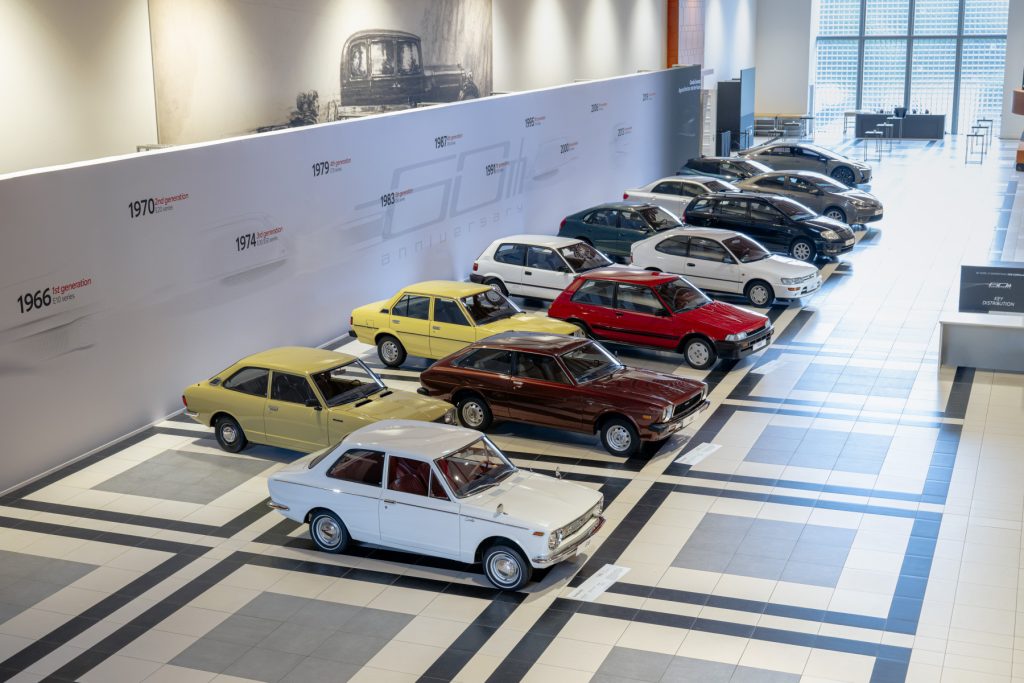
Six decades of Corolla history, with successive generations displayed together to illustrate the model’s evolution. Photo: Toyota.
The British Connection – Built In Derbyshire
There’s another reason the Corolla deserves recognition in Britain.
Toyota’s manufacturing operation at Burnaston, Derbyshire, has played an important role in the model’s European history.
Corolla production began there in 1998 with the eighth-generation models.
The factory went on to build later Corollas and the Auris before returning to the Corolla nameplate.
Today, Burnaston produces Corolla hatchback and Touring Sports models, maintaining a direct British manufacturing connection with one of the world’s most successful cars.
Across Europe, Toyota says almost 9.5 million Corollas have been sold since the model first arrived in the region.
That’s a remarkable contribution from a car whose original ambition was simply to provide good-quality transport at an affordable price.
A Special Corolla To Mark The 60th Anniversary
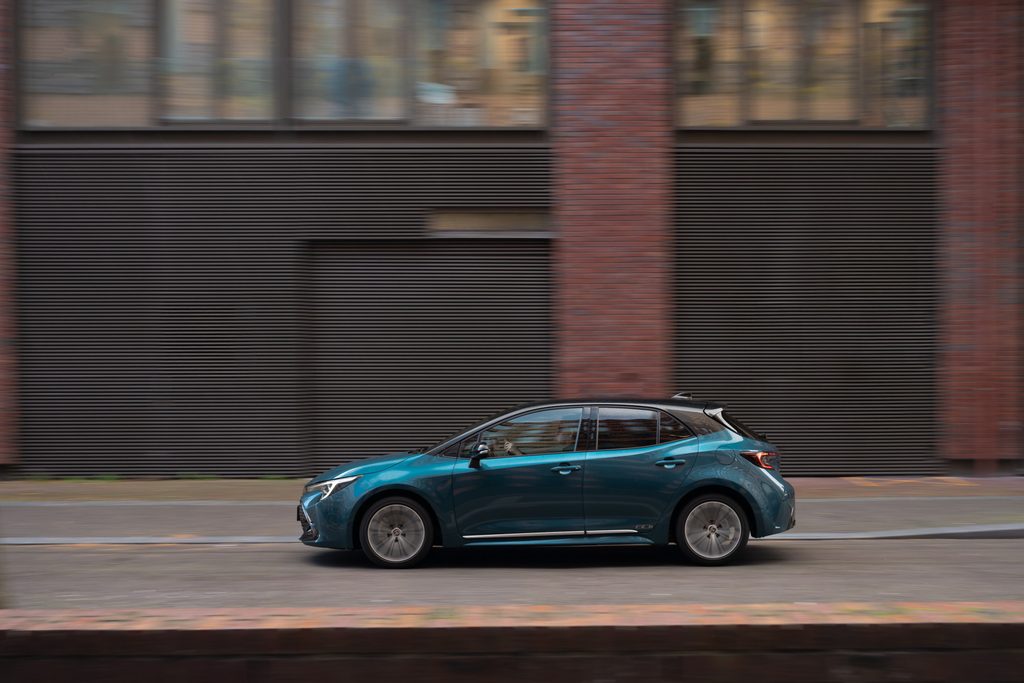
Toyota is celebrating the anniversary with a limited-edition version of the current Corolla.
The British-built 60th Anniversary Hatchback is finished in exclusive Boreal Blue metallic paint, combined with a contrasting Eclipse Black roof and pillars.
It also receives distinctive 17-inch alloy wheels, silver exterior details, commemorative decals and special interior trim.
Power comes from Toyota’s 1.8-litre hybrid system, producing 138bhp.
Inside, there’s a 12.3-inch digital driver’s display and a 10.5-inch multimedia touchscreen.
It’s an extraordinary comparison with that first 60bhp Corolla of 1966.
Both were designed to be practical everyday transport, but the technology, performance and equipment have changed almost beyond recognition.
The special edition is being offered in limited numbers through Toyota’s dealer network.
Six decades after the first Corolla appeared, the model continues with modern hatchback designs such as this 2026 example. Photo: Toyota.
Sixty Years Of Ordinary Cars Doing Extraordinary Things
When a manufacturer celebrates an anniversary, the attention usually falls on its most glamorous creations.
The sports cars.
The racing victories.
The rare special editions.
And Toyota certainly has plenty of those stories to tell.
But perhaps the Corolla’s greatest achievement is much simpler.
For sixty years, it has provided transport for millions of people around the world.
It has been a first car.
A family car.
A taxi.
A company car.
And, eventually, for some fortunate survivors, a cherished classic.
At UK Barn Finds, we have a particular appreciation for the everyday cars that most people once took for granted.
It’s easy to admire a beautifully preserved exotic.
But there’s something equally fascinating about finding an ordinary 1970s Corolla that has survived when nearly all the others have disappeared.
The cars that were once everywhere often become the ones we miss most.
And looking through Toyota’s anniversary photographs, with generation after generation parked together, is a wonderful reminder of just how much the motor car has changed since 1966.
More than 57 million sales.
Twelve generations.
Sixty years.
And still going.
Not bad for a humble family car.
All photographs courtesy of Toyota.
Join our newsletter
Get the best barn finds, projects and classic temptations direct to your inbox.
Related Posts
Discover More Classic Car Stories
Stay updated with the latest barn finds, auction news, and classic car adventures in our 'News & Waffle' section. Dive into rare discoveries, behind-the-scenes stories, and expert insights into the world of classic cars. Whether you’re a seasoned enthusiast or simply intrigued by the tales behind these treasures, this is your hub for all things classic and captivating.
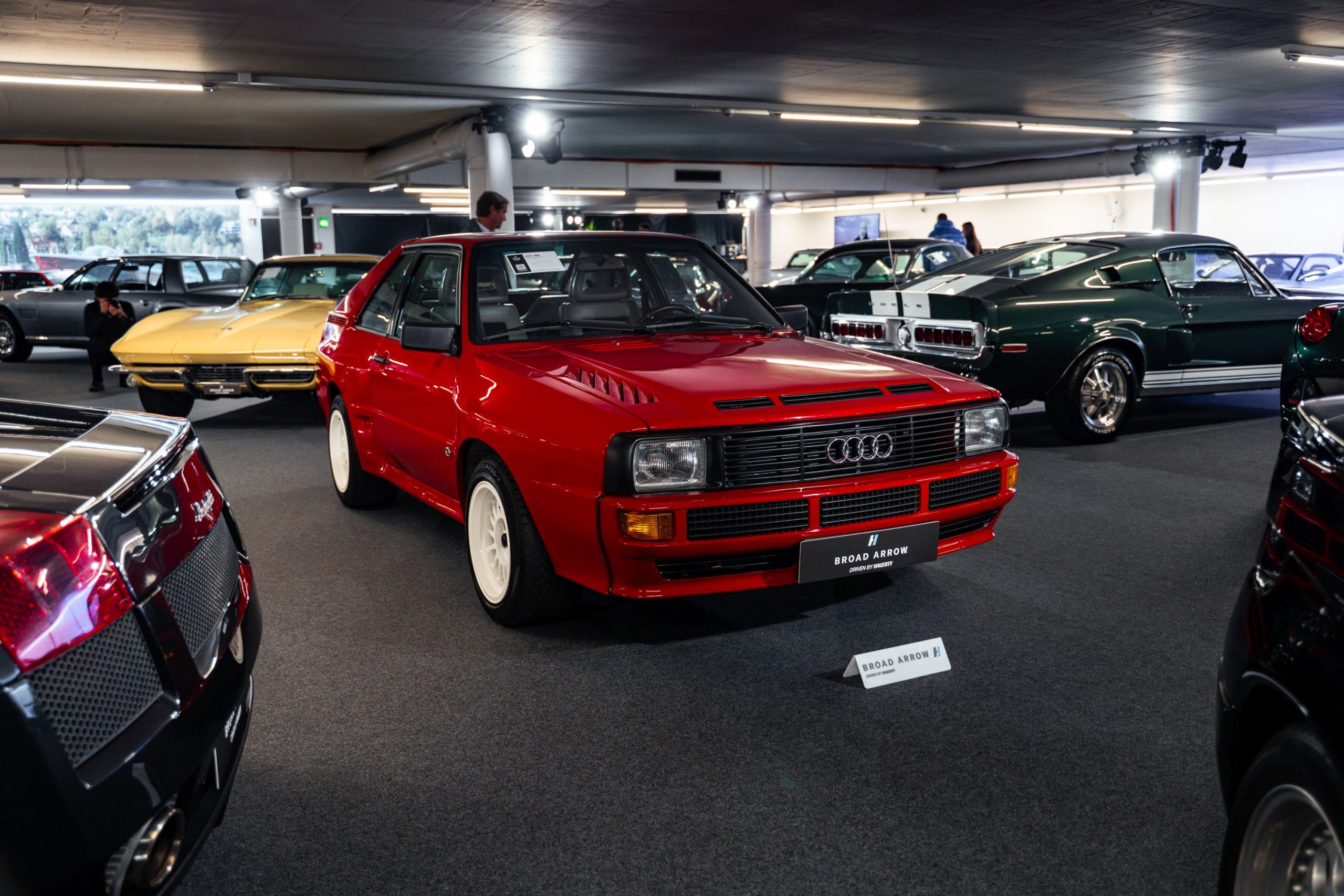
You know you’re watching a serious collector-car auction when a 1985 Audi Sport quattro sells for nearly £640,000 – and still only manages ninth place in the auction house’s top ten results. That was the extraordinary situation at Broad Arrow Auctions’ Zürich sale on 7 November 2026, where some of the world’s most desirable collector […]
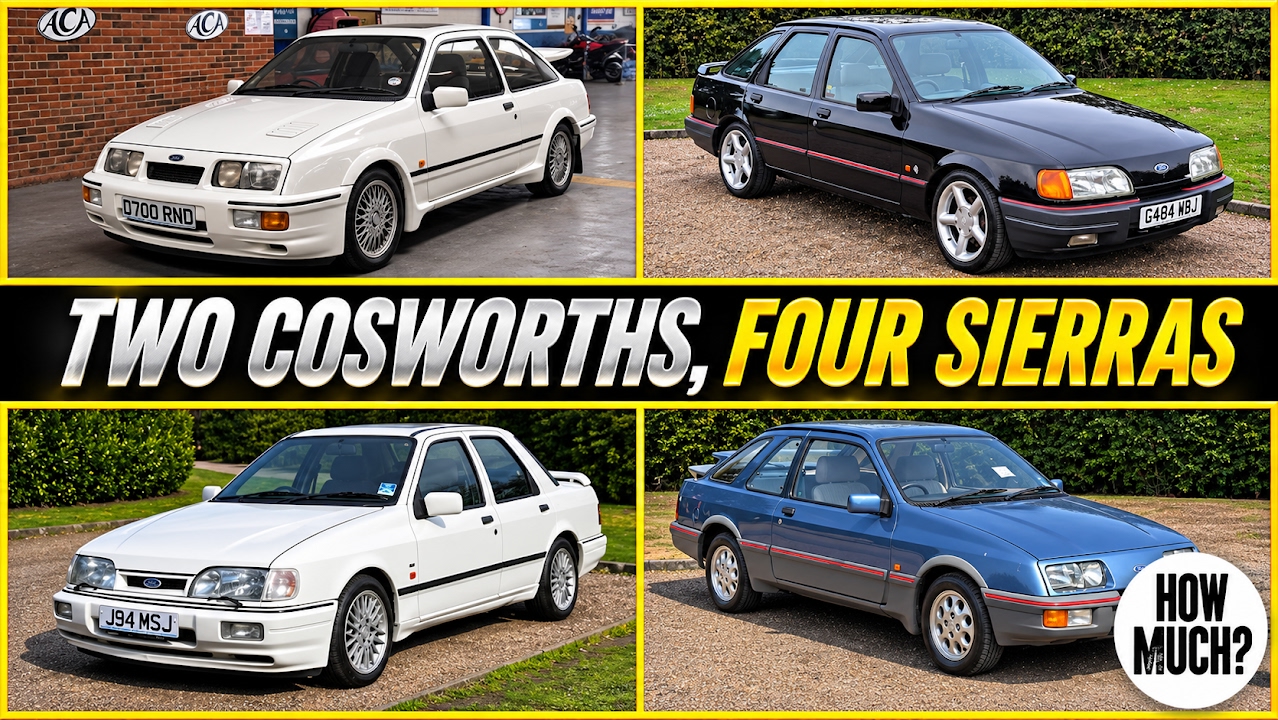
Four Ford Sierras, two RS Cosworths and four very different auction stories. From a low-mileage Sapphire to a three-door Cosworth that had spent more than a decade off the road, our latest How Much?! Classics compilation asks a simple question: are Fast Fords still commanding big money? The answer isn’t necessarily as straightforward as ...
Four classic Minis, four very different histories and four auction results. From a Cooper that had been laid up for more than 40 years to a beautifully restored early Mini, our latest How Much?! Classics video offers a fascinating glimpse into the world of classic car auctions. But there’s more to these sales than the [&...