Two Ford Focus ST170s sold at the same auction achieved markedly different prices. We explore the appeal of this affordable performance Ford and its potential as a future classic.
There was a time when sporty Ford Escorts were relatively inexpensive second-hand cars. Many of us remember them being advertised for the sort of money that wouldn’t buy a decent set of original wheels for one today.
Could the Ford Focus ST170 be one of those cars we’re destined to look back on in a similar way?
We’ve long had a soft spot for these first-generation sporty Focus models. They’re practical, entertaining to drive and still relatively affordable, but finding a really good example is becoming a different proposition from simply finding an ST170.
Two examples that we filmed at Anglia Car Auctions’ inaugural Marketplace Classics sale on 26th September 2026 illustrated that distinction rather nicely.
Where did the Ford Focus ST170 sit in the range?
When the Ford Focus arrived in 1998, replacing the Escort, it represented a significant change of direction for Ford.
Its striking New Edge styling divided opinion initially, but the car soon established a reputation for excellent handling, particularly thanks to its sophisticated independent rear suspension.
It was an impressive driver’s car, even in its more modestly powered forms, so expectations were understandably high for a sporting version.
The Focus ST170 arrived in early 2002, initially sitting at the top of the Focus performance range.
Its position changed later that year when the limited-production, turbocharged Focus RS arrived. The RS became the headline-grabbing performance model, while the ST170 occupied the space between the mainstream Focus range and its more expensive, specialised sibling.
However, the ST170 was considerably more than a standard Focus with some sporting accessories.
Its naturally aspirated 2.0-litre engine featured variable valve timing and was coupled to a six-speed manual gearbox. Revised steering, suspension and brakes complemented the additional performance.
The ST170 was available as a three-door or five-door hatchback, with an estate version joining the range in 2003.
That last option was particularly appealing for anyone who wanted a performance Ford without compromising on everyday practicality.
Ford Focus ST170 specifications
Specification
Details
UK introduction
2002
Engine
1,988cc, four-cylinder, 16-valve petrol
Aspiration
Naturally aspirated
Power
Approximately 170bhp
Torque
145lb ft (197Nm)
Transmission
Six-speed manual
Driven wheels
Front
0–60mph
7.9 seconds (manufacturer’s claim)
Standard wheels
17-inch alloy wheels
Body styles
Three-door hatchback, five-door hatchback and estate
In its original March 2002 road test, the AA praised the ST170’s agile handling, excellent grip and everyday usability.
Written before the Focus RS arrived, the review highlighted the ST170’s ability to combine sporting performance with practicality in a relatively understated package.
Who bought a Ford Focus ST170 when they were new?
We often wonder about the people who originally bought the cars we now see appearing at classic car auctions.
Imagine someone who had owned an Escort XR3i in the 1980s or an RS Turbo in the early 1990s. By 2002, they might have had a young family, a mortgage and rather different motoring requirements.
They still enjoyed driving, though, and weren’t necessarily ready to give up on sporty Fords.
The ST170 would have been an appealing proposition. It could comfortably accommodate the family, undertake the daily commute and provide some entertainment on a favourite stretch of road at the weekend.
It was also relatively understated, particularly when compared with the more extrovert Focus RS.
Fast-forward nearly a quarter of a century and some of those same motorists may now have the space, time and disposable income to indulge their enthusiasm for the cars they remember from that period of their lives.
Equally, there will be younger enthusiasts who grew up travelling in the back of a Mk1 Focus and are now looking to buy a sporting example of their own.
It’s a process we’ve watched happen with numerous generations of Ford performance cars.
A 2004 Ford Focus ST170 at Anglia Car Auctions
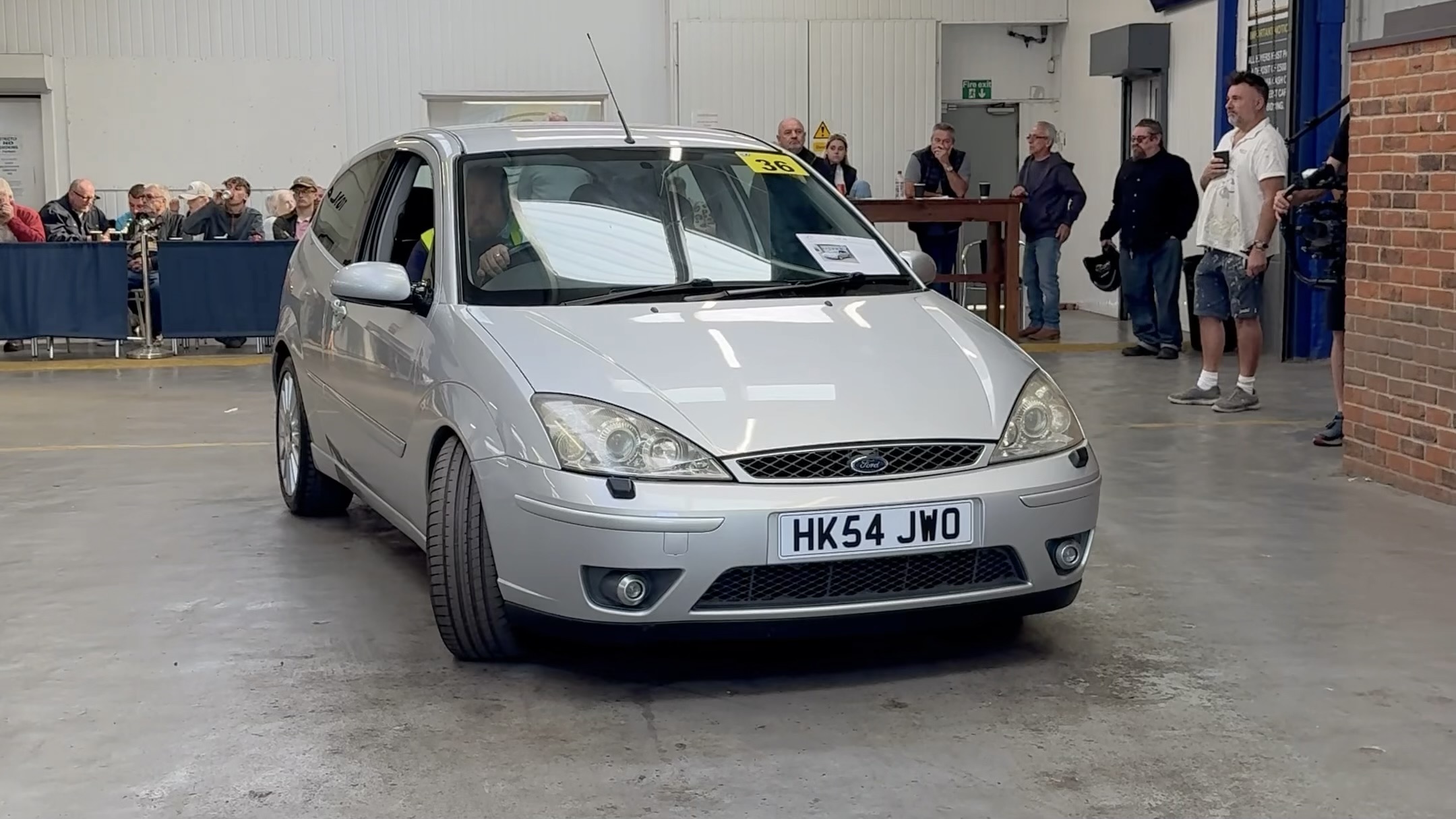
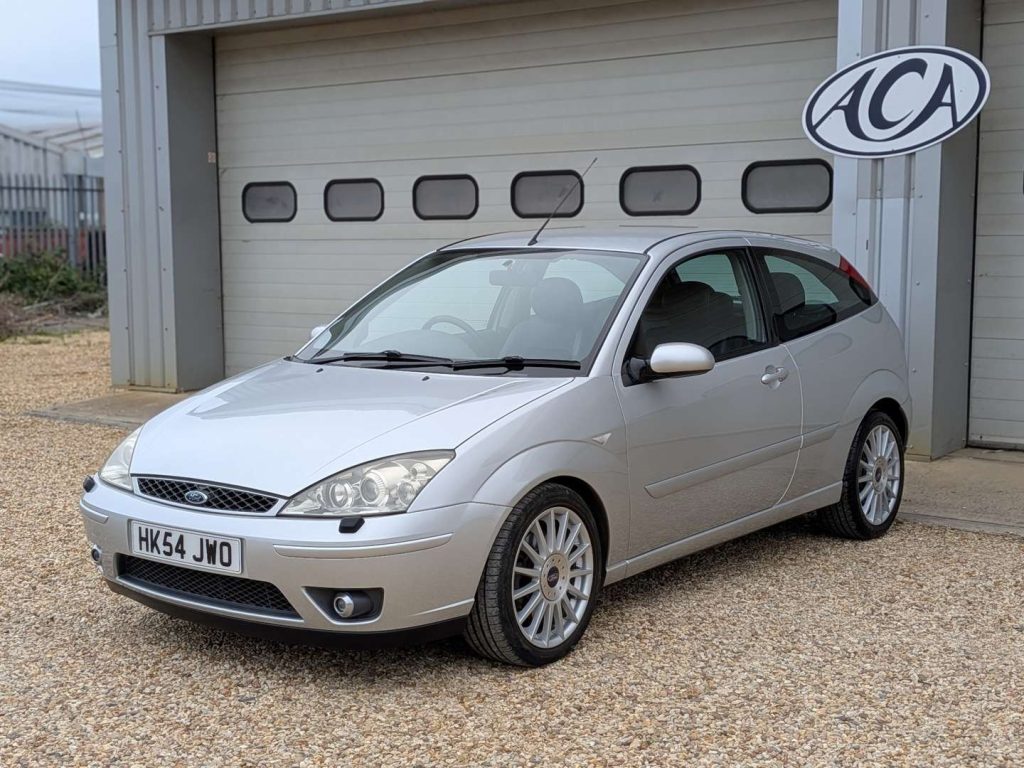
The first of our two ST170s was a 2004 example offered as Lot 36 at Anglia Car Auctions in King’s Lynn.
It had been with its most recent owner for six and a half years, during which time it had reportedly been driven regularly but covered relatively few miles.
The recorded mileage was 88,728, and the accompanying paperwork included numerous maintenance and repair receipts, a February 2019 purchase invoice recording 86,000 miles and even its original December 2004 handover checklist.
There were also MOT certificates dating back to 2007.
That sort of paperwork is something we particularly like to see when looking at potential modern classics. It helps tell the story of a car and provides prospective buyers with a better understanding of its past.
Anglia Car Auctions had placed an estimate of £2,500 to £3,000 on this ST170.
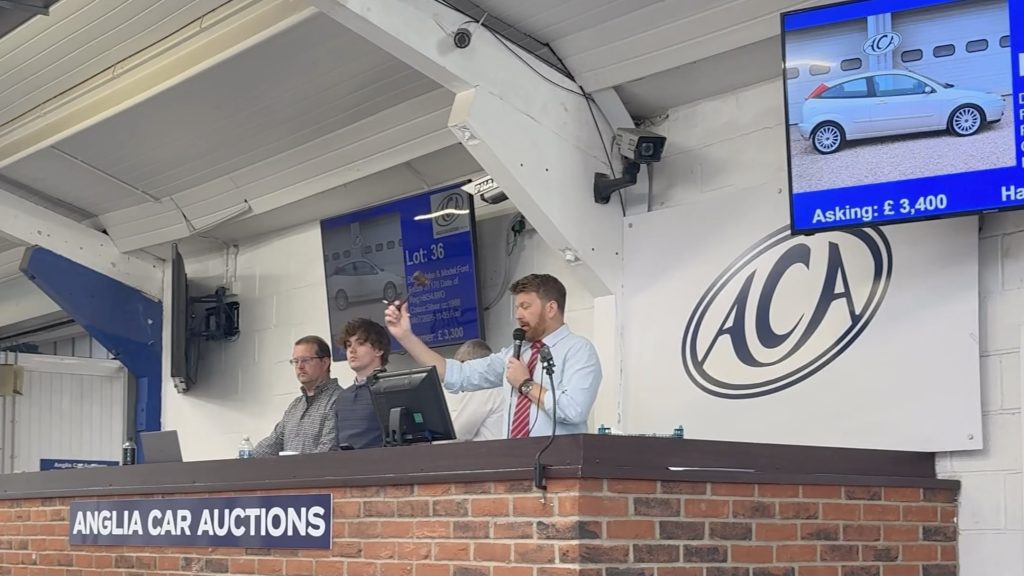
A determined bidder in the auction room
Something particularly interesting happened during the bidding for this Focus.
When we’re filming classic car auctions, we often see internet bidders responding almost immediately to bids placed by people in the auction room.
On this occasion, it seemed to be the other way around!
There was clearly a keen bidder in the room who was responding to the internet bids almost as soon as they came in.
As we commented during the sale, it was rather refreshing to see.
Watch our video below to see how the bidding unfolded.
How much did the Ford Focus ST170 sell for?
Despite the enthusiasm of the bidder in the auction room, it was ultimately the internet bidder who secured the car.
The hammer fell at £3,600, some £600 above the upper auction estimate. That’s 20% more than the top of the guide price, before any applicable buyer’s fees.
For somebody looking for an ST170 to enjoy and preserve, that still seems a relatively modest amount of money for an interesting piece of Ford’s performance car history.
However, the result becomes considerably more interesting when compared with another ST170 offered at the same auction.
Another Ford Focus ST170 sold for just £500
Earlier in the sale, a 2003 Ford Focus ST170 had gone under the hammer as Lot 11.
Finished in blue with a matching half-leather interior, this car had a recorded mileage of 96,739. According to information supplied to the auction house, it had been in daily use until the summer of 2026.
However, it had been recorded as a Category N insurance write-off in 2020. It had subsequently passed MOT tests, although it had also spent a period off the road between 2023 and 2025.
Offered without reserve, this ST170 sold for a hammer price of just £500.
Two Ford Focus ST170s, offered at the same venue on the same day, with fewer than 10,000 miles separating their recorded mileages, yet one achieved more than seven times the hammer price of the other.
Vehicle
Recorded mileage
Auction estimate
Hammer price
2003 Ford Focus ST170 (Cat N)
96,739
No reserve
£500
2004 Ford Focus ST170
88,728
£2,500–£3,000
£3,600
A Category N insurance record does not necessarily mean that a car is unsuitable for purchase. It denotes a write-off involving damage classified as non-structural, although the extent of that damage and the quality of subsequent repairs should always be investigated.
There were also differences in the cars’ documented histories and the way they were offered for sale, so we cannot attribute the entire price difference to the insurance record alone.
Nevertheless, the two results suggest that enthusiasts can be very selective when buying these cars.
They aren’t necessarily looking for just any ST170. They’re looking for the right one.
What should you look for when buying a Ford Focus ST170?
If you’re considering buying an ST170 to enjoy and preserve, we’d be inclined to prioritise condition, originality and maintenance history over finding the cheapest example available.
There are a number of areas worth paying particular attention to:
Corrosion: Inspect the sills, wheelarches, floor, jacking points and underside carefully. Structural repairs can quickly become expensive.
Timing belt: Look for documentary evidence of replacement in accordance with the manufacturer’s servicing requirements.
Variable intake system: The inlet manifold runner control system can develop faults, potentially affecting performance and triggering engine warning lights.
Clutch and gearbox: Check that the clutch operates correctly, that there are no unusual noises from the flywheel and that all six gears engage smoothly.
Suspension: Worn bushes and tired suspension components can detract from one of the ST170’s greatest attributes – its handling.
Originality: Correct alloy wheels, interior trim, bodywork details and engine components are particularly desirable when buying for long-term preservation.
Vehicle history: Check previous MOT records, insurance history and evidence of maintenance or accident repairs.
A well-maintained car with a slightly higher mileage may be a considerably better purchase than a neglected low-mileage example.
Remember, too, that some ST170-specific components may become increasingly difficult to source as the cars get older.
Is the Ford Focus ST170 a future classic?
The argument for the ST170 becoming an increasingly appreciated classic is quite compelling.
It wears the Ford badge, belongs to a generation of cars celebrated for their handling and has a distinctive engine and transmission combination. It also represents an interesting chapter in the transition from the sporty Escorts of the 20th century to the more modern generation of Ford ST and RS models.
Perhaps its greatest appeal, though, is that it remains accessible to many enthusiasts.
That’s an advertised asking price rather than a confirmed transaction, but it illustrates how relatively inexpensive these cars can still be.
We’ve seen what has happened to the values of numerous sporting Fords over the years, including some models that were never considered particularly special when they were commonplace on British roads.
That doesn’t mean the same will inevitably happen to the Focus ST170, nor would we suggest buying one purely as a financial investment.
However, if you’ve always fancied owning one, there is certainly an argument for finding a particularly good example while they’re still within reach.
Many ordinary performance cars become desirable classics partly because so few people thought to preserve them when they were inexpensive.
Wouldn’t it be nice to be the person who tucked one away before everybody else decided they wanted one?
Get the best barn finds, projects and classic temptations direct to your inbox.
Related Posts
Discover More Classic Car Stories
Stay updated with the latest barn finds, auction news, and classic car adventures in our 'News & Waffle' section. Dive into rare discoveries, behind-the-scenes stories, and expert insights into the world of classic cars. Whether you’re a seasoned enthusiast or simply intrigued by the tales behind these treasures, this is your hub for all things classic and captivating.
From the earliest Isle of Man TT races to the legendary Commando, Norton has played a remarkable part in British motorcycling history. Its racing successes, engineering innovations and sometimes turbulent commercial fortunes have made it one of the most recognisable names in the motorcycle world. Now, that history is the subject of Motorcycle Legends 3: […]
A 2005 Ford GT with a claimed 1,000bhp and links to the 2023 Hollywood blockbuster Gran Turismo is among the headline cars in Car & Classic’s forthcoming Collector’s Edition auction. The American supercar, which has covered an indicated 12,328 miles, has been extensively modified by Heffner Performance and is reportedly the only Ford GT used […]
Certain Jaguars from the early 2000s continue to attract enthusiastic bidders. We explore the appeal of the supercharged XKR and film one exceeding its auction estimate.