Others quietly did the jobs that kept everything moving.
This Standard Series UV Light Utility is one of the latter.
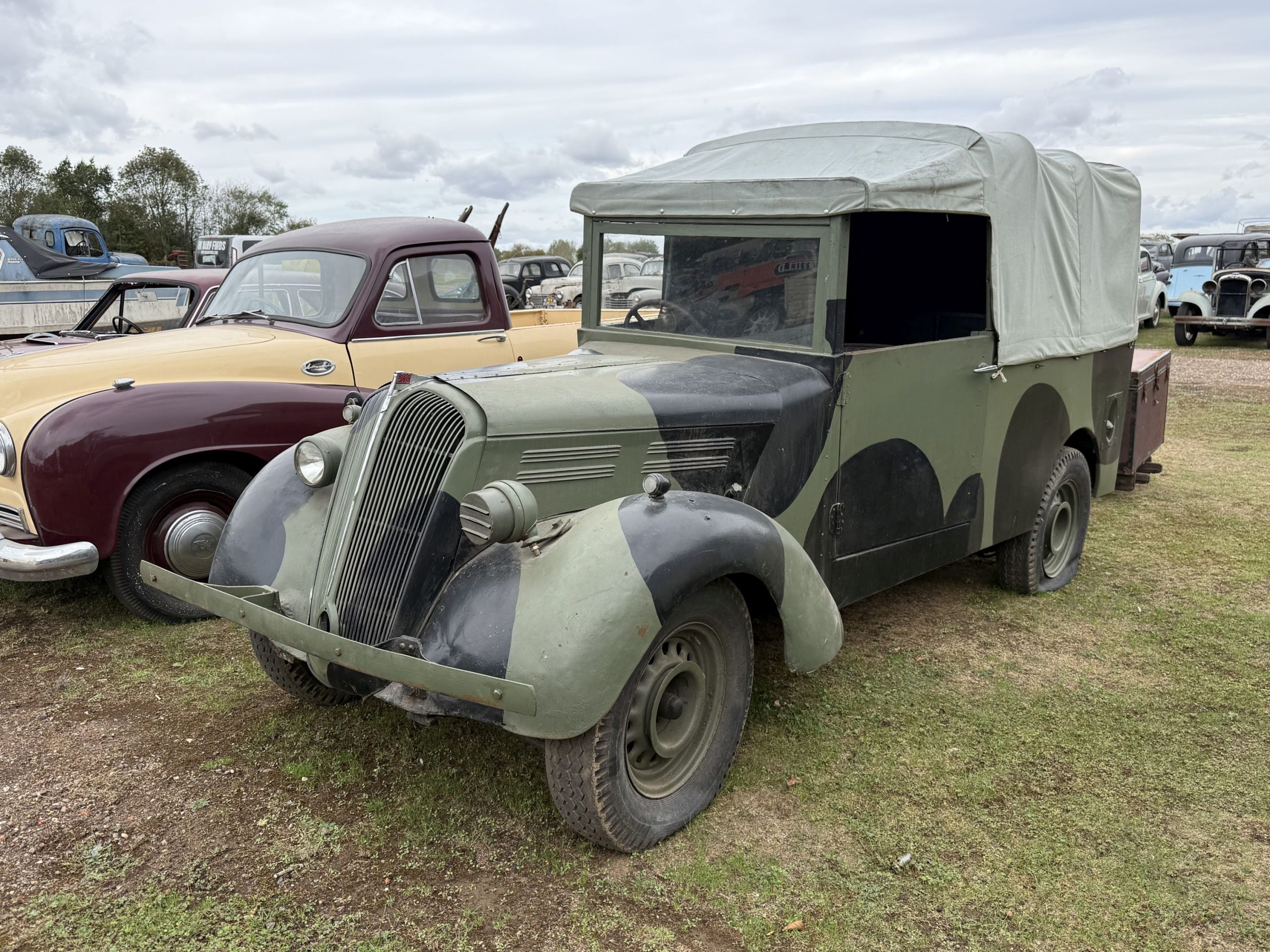
Better known simply as a “Tilly”, it was part of a generation of small British military utility vehicles created during the Second World War by adapting civilian car designs for military use.
Austin, Hillman, Morris and Standard all produced their own versions.
Today, Jeeps tend to dominate the popular image of wartime light transport.
But vehicles like this one were every bit as important to the British war effort.
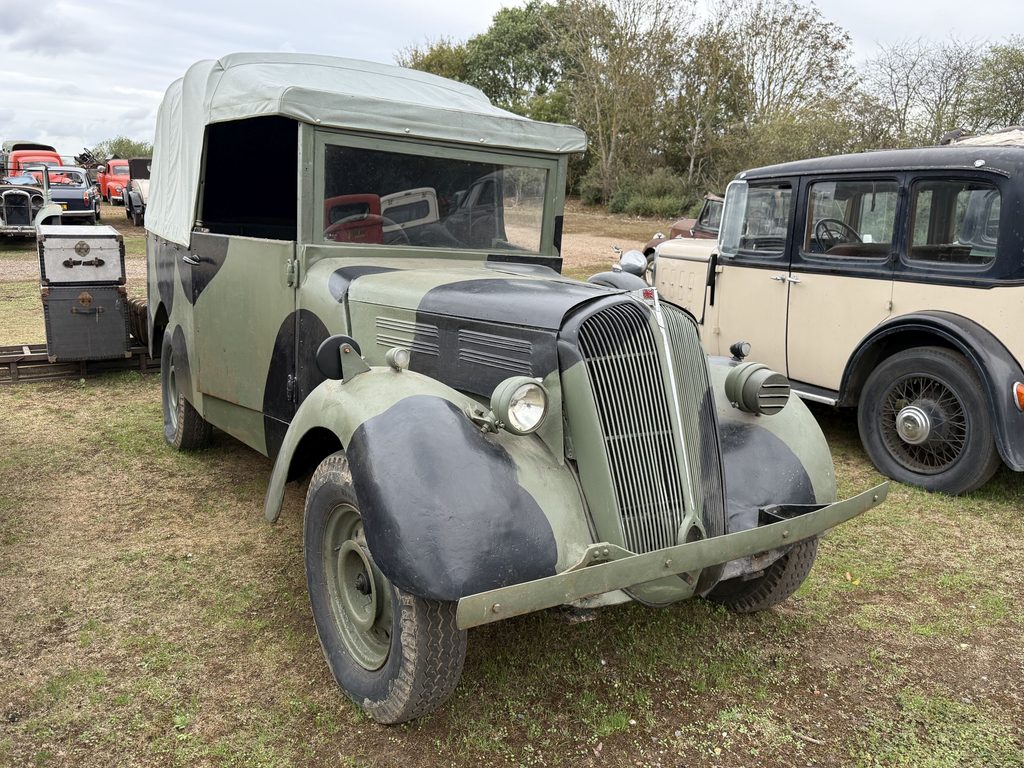
A Standard Series UV Tilly
Cheffins identifies this example as a Standard Series UV Light Utility with a 1609cc engine.
Its chassis number is UV6513 and its WD number is M6176043.
The Standard Tilly was based on the company’s pre-war Flying Twelve family, although the later Series UV evolved into a tougher military specification than the earliest examples.
Where Austin, Hillman and Morris light utilities generally retained more of their civilian car underpinnings, the later Standard UV used the larger 14hp frame, with a rigid front axle and semi-elliptic leaf springs.
That gave it a notably robust foundation for military use.
More Than A Car With A Canvas Back
The basic idea behind the British “Tilly” was simple.
Take a civilian car platform and turn it into a light military utility capable of carrying personnel, equipment and supplies.
Officially, these vehicles were classified as Car, Light Utility 4×2.
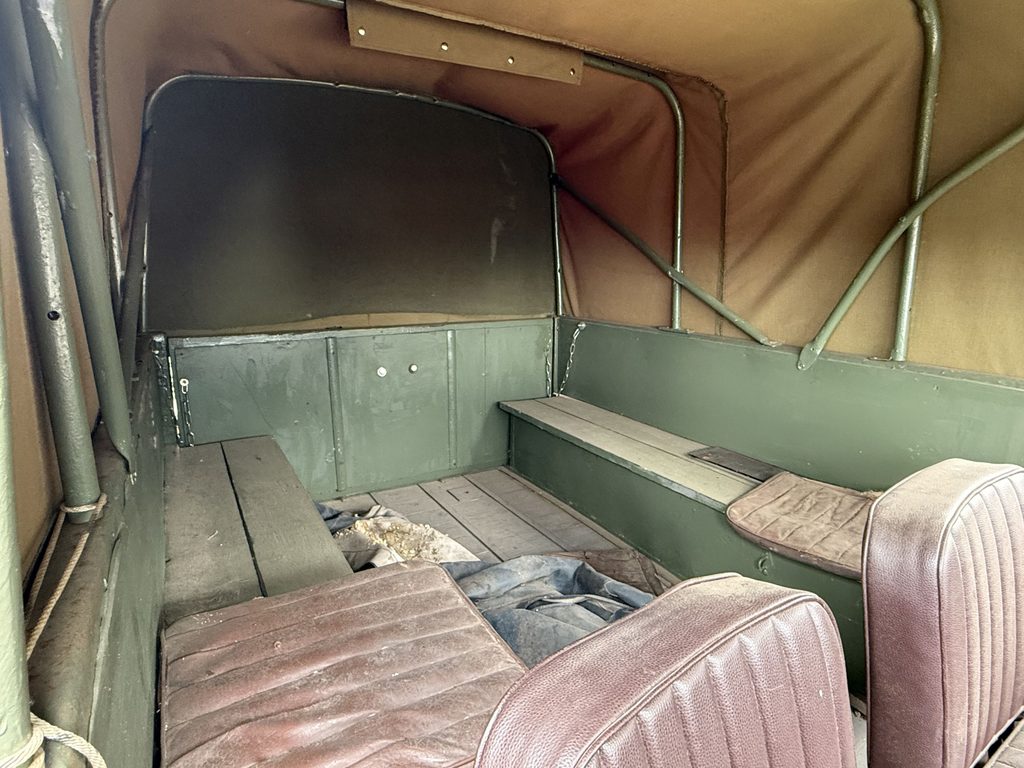
In broad terms, the civilian rear body was replaced by a simpler military load area, usually with a canvas tilt over the top and folding seating inside.
The result was something halfway between a car and a small truck.
The Standard version was slightly different in execution from its Austin, Hillman and Morris counterparts.
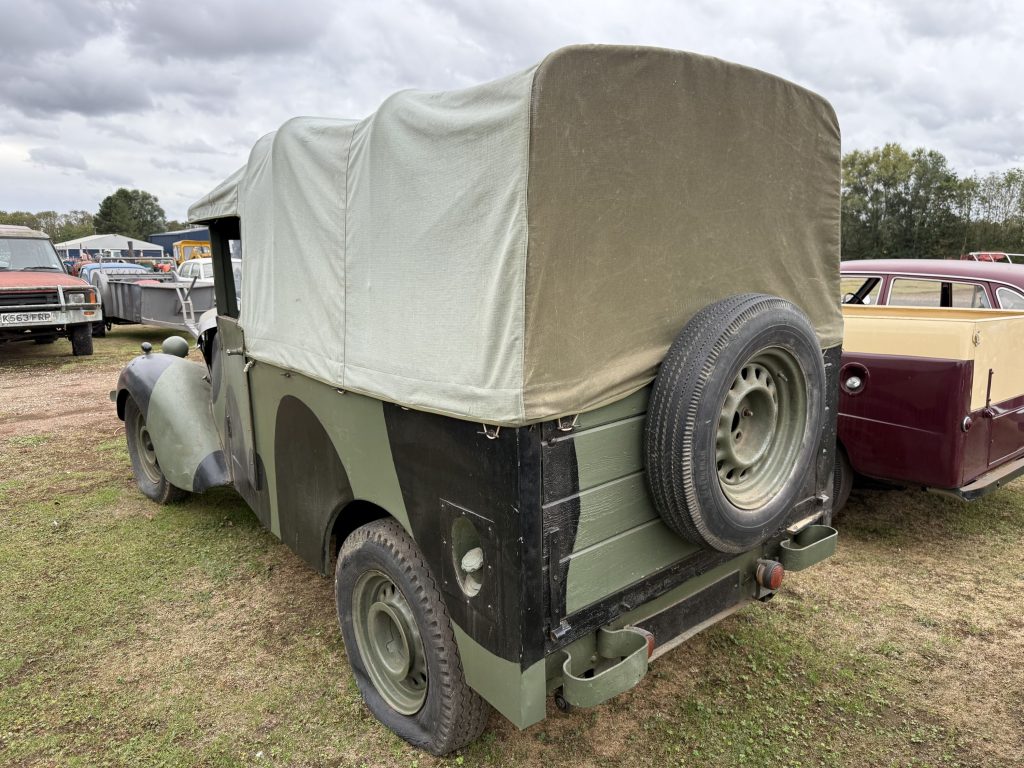
The Series UV had an integral cab and body, a flat windscreen, military-style front end, pierced wheels and the spare wheel mounted at the rear.
Its appearance is far more purposeful than elegant.
And that is exactly the appeal.
Built For Wartime Service
The Series UV arrived in 1943 as the main-production Standard Light Utility.
It was more angular and austere than the earlier Standard DC version, reflecting wartime priorities rather than civilian styling.
Period military transport records describe the Series UV as using the 14hp chassis with the 12hp engine, rigid front axle and leaf-spring suspension.
Cheffins describes this example as having a 1609cc engine, consistent with the side-valve Standard unit fitted to these wartime utilities.
Ease of maintenance mattered enormously.
These were not prestige vehicles.
They were designed to be useful, simple and repairable.
The Forgotten Alternative To The Jeep
It is tempting to compare every light wartime utility with the Jeep.
But that slightly misses the point.
The Jeep was purpose-designed as a compact four-wheel-drive military vehicle.
The Tilly was something different.
It was a British expedient born from existing civilian car production, adapted quickly to meet the enormous demand for small transport vehicles after the outbreak of war.
Junior officers, ground crews, communications units and support personnel needed vehicles that could move men and equipment between bases, workshops, airfields and depots.
For that kind of work, a simple light utility made a great deal of sense.
The British Army and RAF used large numbers of them.
They lacked four-wheel drive and were not intended to match the Jeep off-road, but they filled an essential transport role.
Around 9,000 Series UV Standards
The later Standard Series UV was built in significant numbers during the war.
Military transport records suggest around 9,000 of the UV type were supplied to the armed forces and Ministry of Supply.
That sounds plentiful.
Survival is another matter.
By 2009, the Tilly Register had recorded only 31 surviving Standard light utilities, including earlier DC models and examples overseas.
That figure is now historical rather than a current survival total, but it gives some indication of how scarce Standard Tillys had already become.
Which makes this one considerably more interesting than its simple appearance might suggest.
Chassis UV6513, WD Number M6176043
This particular vehicle comes with two useful identity references.
Cheffins lists the chassis number as UV6513 and the wartime WD number as M6176043.
The “M” military registration series is exactly the sort of marking used on wartime British vehicles.
Unlike a modern civilian registration, a WD number was a military identity rather than an ordinary road registration.
That matters with vehicles like this because their post-war paperwork can sometimes be incomplete, changed or entirely separate from their wartime identity.
Here, we at least have a chassis number and military number to work from.
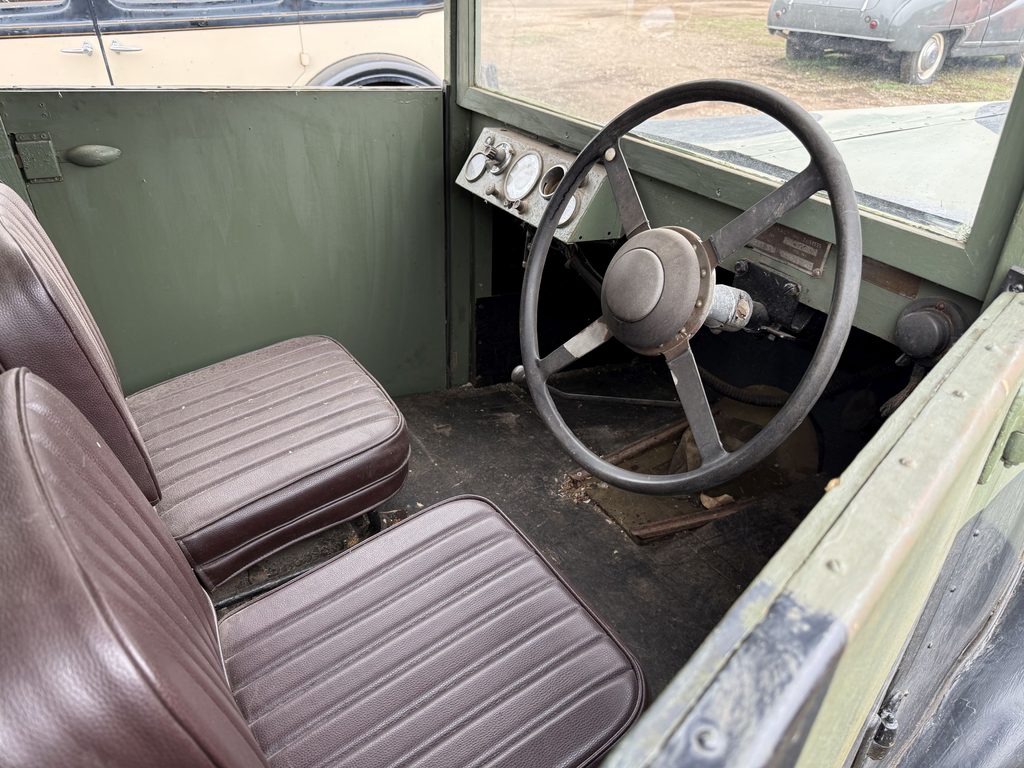
Remarkably Complete Inside
The photographs show a vehicle that appears surprisingly complete.
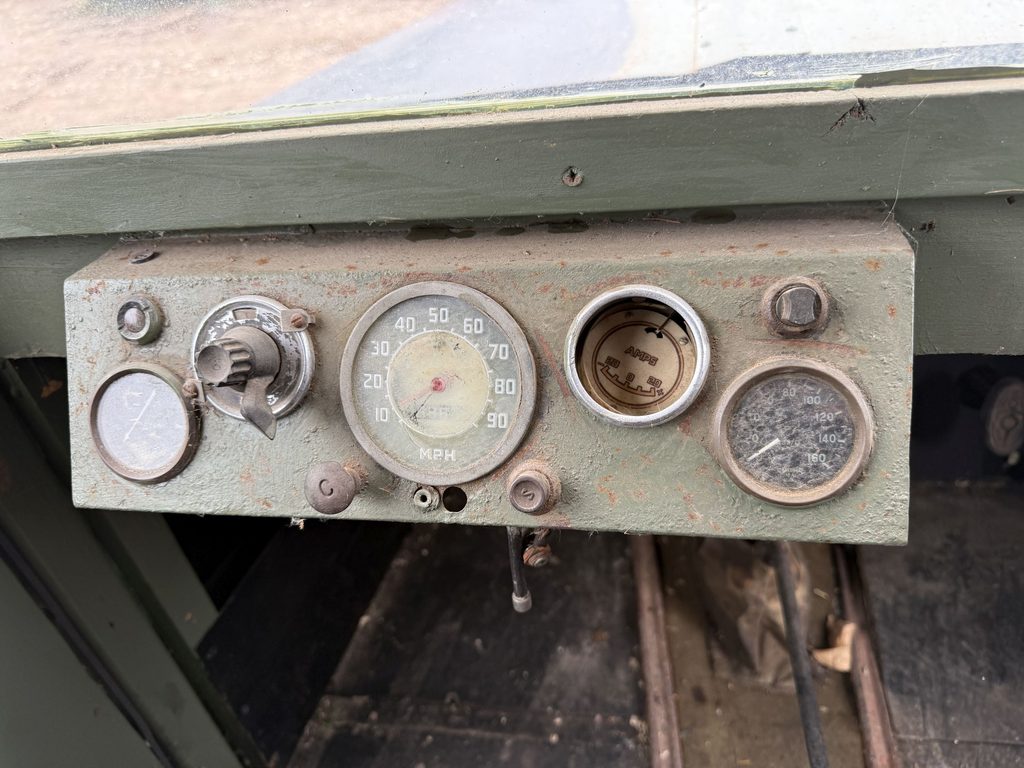
The cab retains its simple military dashboard, large steering wheel and basic individual seats.
Instrumentation is wonderfully sparse.
A central speedometer dominates the small metal panel, accompanied by an ammeter and temperature gauge.
There is almost nothing there that does not need to be there.
Behind the seats, the rear compartment retains its simple bench arrangement and timber floor beneath the canvas tilt.
The canvas itself looks remarkably presentable from the outside.
Again, we have not mechanically inspected the vehicle, but visually it has the feel of something that has been preserved rather than heavily modernised.
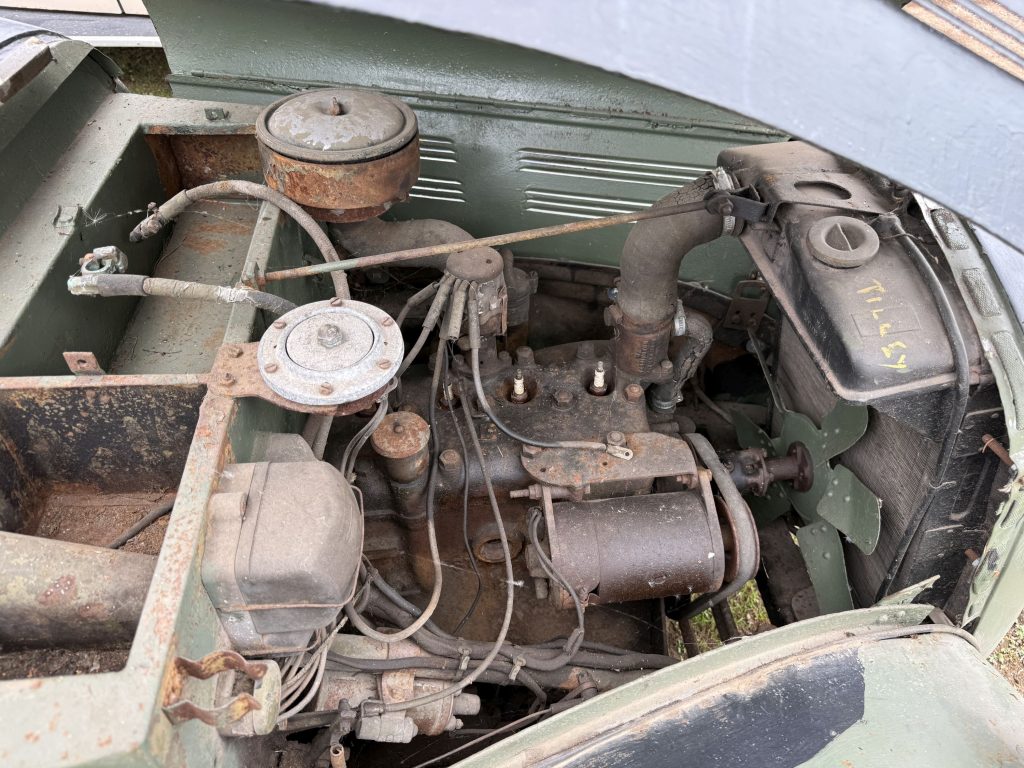
The Engine Bay Tells The Same Story
Under the bonnet, the Standard’s side-valve engine looks exactly as utilitarian as the rest of the vehicle.
There is no decorative engine cover, no polished alloy and nothing remotely glamorous.
Just simple mechanical components designed to be reached, understood and repaired.
Cheffins highlights the 1609cc engine’s reputation for straightforward maintenance.
That was not a trivial advantage in wartime service.
Vehicles could be far from a specialist workshop, parts supply could be inconsistent and the men maintaining them needed straightforward machinery rather than complexity.
Previously Shown At Dorset
Cheffins says this particular Tilly has previously been shown at the Dorset Steam Fair in 2022.
It has been dry stored since.
That recent show history adds an interesting layer to the car.
This is not simply an anonymous wartime project dragged out of long-term neglect.
It has already been preserved and displayed as a historic military vehicle.
That doesn’t tell us its current mechanical condition, but it does suggest that somebody valued it enough to keep its wartime character intact.
Offered Without Reserve
The Standard Tilly is one of the more historically significant vehicles in the huge private collection being dispersed by Cheffins.
The collection includes cars, commercial vehicles and around 70 tractors, with a remarkable variety of machinery represented.
The cars and road vehicles go through on Saturday 17 October 2026.
This Standard Series UV is being offered without reserve.
That makes it especially interesting because genuine surviving wartime light utilities are not easy vehicles to value by comparison.
There simply are not many Standard Tillys around.
More Important Than It Looks
At first glance, this is just a small green military utility with a canvas back.
Look a little deeper and it represents a very British solution to wartime transport.
Take an existing car.
Strengthen it.
Simplify it.
Give it a load area.
Send it to work.
The Jeep became an icon.
The Tilly became a tool.
And perhaps that is exactly why surviving examples like this deserve more attention than they usually receive.
Join our newsletter
Get the best barn finds, projects and classic temptations direct to your inbox.
Related Posts
Discover More Classic Car Stories
Stay updated with the latest barn finds, auction news, and classic car adventures in our 'News & Waffle' section. Dive into rare discoveries, behind-the-scenes stories, and expert insights into the world of classic cars. Whether you’re a seasoned enthusiast or simply intrigued by the tales behind these treasures, this is your hub for all things classic and captivating.
This Ford Fiesta Ghia X auction result took us straight back to the days when a cheap first car really could be cheap. Who had one of these? Or perhaps more importantly, who had something like this as their first car? Because for an enormous number of British drivers, a Ford Fiesta was where it [&...
The latest H&H Classics Kelham Hall auction results include a remarkably original Aston Martin DB5 selling for £365,625. The 1963 car was one of five lots to break the six-figure mark during a busy sale which saw 176 classic, collector and performance cars offered alongside 72 lots of automobilia. In total, 112 cars found new […]
There probably aren’t many three-wheelers in Britain more instantly recognisable than this. APL 911H is a 1969 Reliant Regal Supervan III dressed in the familiar yellow Trotters Independent Trading Co livery from Only Fools and Horses. And unlike many of the Reliants associated with the programme over the years, this one has a particularly strong [&...