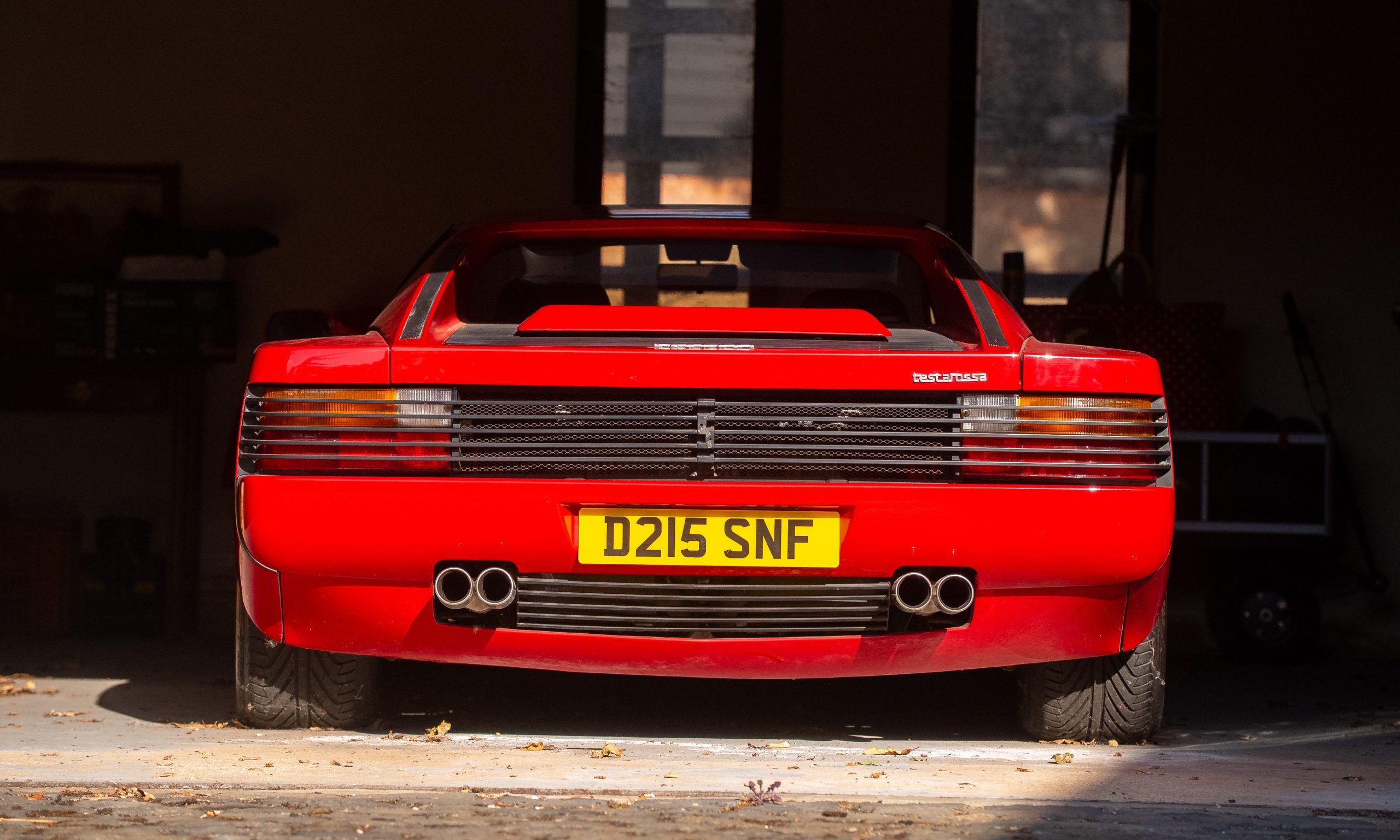
A Ferrari Testarossa barn find isn’t something that appears at auction every day.
Yet that’s exactly how Historics is describing this 1986 example, which is heading to its Pace of Autumn sale at Ascot Racecourse on 12 September with an estimate of £100,000 to £120,000.
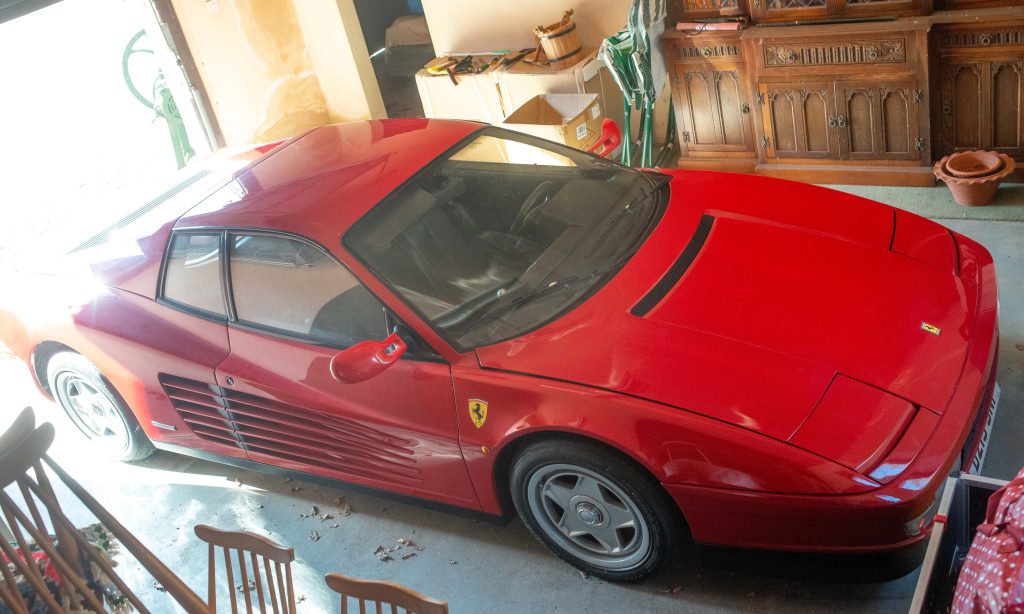
Finished in Rosso Corsa, powered by that glorious 4.9-litre flat-12 and sitting on centre-lock wheels, it certainly isn’t your average barn find.
But there’s an interesting history behind it.
And despite the photographs showing it tucked away indoors, Historics suggests this may be more a case of careful recommissioning than embarking upon a full restoration.
A Ferrari Testarossa barn find
This left-hand-drive Testarossa was originally supplied to Japan, where Historics says it spent a period in storage between 2005 and 2015.
Its service book contains six stamps, five recording maintenance carried out in Japan through to 2005.
The Ferrari was imported to the UK in 2015 and received further attention that year, including replacement cambelts and clutch together with a general service.
Then, in August 2016, something rather more substantial happened.
Its flat-12 has already been rebuilt
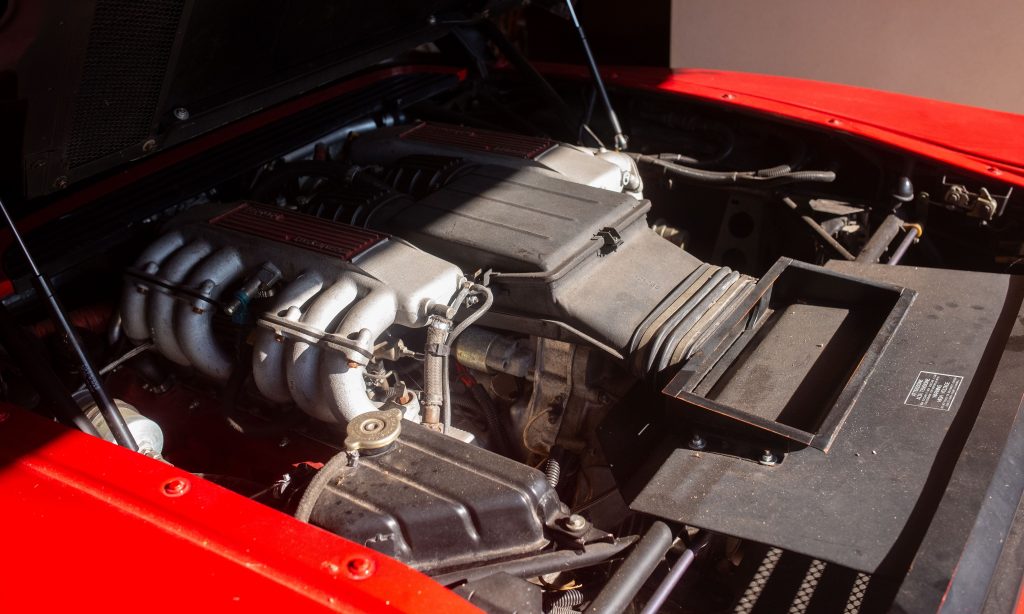
The Testarossa’s 4.9-litre engine was rebuilt by Grimaldi Engineering Ltd in August 2016, with an invoice for £5,848.56 included in the history.
That’s a particularly interesting piece of paperwork to find with a car like this.
Historics says the Ferrari will require mechanical inspection and recommissioning before returning to regular road use, but also describes it as apparently complete.
In fact, the auction house suggests that sympathetic recommissioning, rather than comprehensive restoration, may be all that’s required.
Anyone contemplating spending six figures on a Testarossa that’s been sitting will obviously want to establish its condition for themselves.
But there’s quite a difference between recommissioning a complete Ferrari and beginning a full-scale restoration.
Last MoT’d in 2021
We’ve also checked the Ferrari’s UK MoT history.
Registration D215 SNF was last MoT tested in July 2021.
That adds some useful context to the barn-find description.
This isn’t a Testarossa that disappeared into storage in Japan in 2005 and hasn’t seen the road since.
It came to Britain in 2015, received mechanical work after its arrival and remained active enough to be presented for an MoT as recently as 2021.
Five years later, however, Historics is clear that mechanical inspection and recommissioning will be required before it returns to regular road use.
For us, that actually makes the car more interesting.
It’s a sleeping Testarossa, but one with some significant mechanical work already documented in its relatively recent history.
What makes the Ferrari Testarossa so special?
Few cars shout 1980s quite as loudly as a Testarossa.
Ferrari unveiled it at the Paris Salon in 1984 as the successor to the Berlinetta Boxer.
The Pininfarina styling became almost instantly recognisable.
Those enormous side strakes weren’t merely there to make bedroom walls look better.
Moving the radiators from the front to positions ahead of the rear wheels improved cooling and reduced heat entering the cabin, while creating the need for those extraordinary side intakes.
Then there’s the width.
The stance.
The pop-up headlights.
And, of course, that enormous rear deck covering one of Ferrari’s most famous engines.
Nearly five litres and 390bhp
Behind the occupants sits a 4,942cc flat-12 producing around 390bhp, driving through a five-speed manual gearbox.
Contemporary testing quoted by Historics put the Testarossa’s top speed at 181mph, with 0-60mph taking around 5.3 seconds.
Those were spectacular numbers when the car appeared in the mid-1980s.
They’re hardly embarrassing today.
But outright performance is only part of the Testarossa’s appeal.
This became one of the defining supercars of its generation.
Even people with little interest in cars tend to know what one is.
Rosso Corsa, black leather and centre-lock wheels
This particular example has the specification many of us probably picture when someone says “Ferrari Testarossa”.
Rosso Corsa paintwork.
Black leather inside.
And those fabulous centre-lock wheels.
The original-style toolkit remains with the car, along with its stamped service book and V5 registration document.
The odometer currently shows 57,745 kilometres.
And then there are the photographs.
Historics has published more than 50 of them, giving potential bidders a good opportunity to look closely at the Ferrari before deciding whether to inspect it in person.
It doesn’t present as a stripped, dismantled or obviously derelict project.
Instead, it looks like an exotic car that’s been sleeping and is waiting for somebody to wake it up properly.
How much is a barn-find Testarossa worth?
Historics has given the Ferrari an estimate of:
£100,000 to £120,000.
That’s serious money for a car being offered as requiring recommissioning.
But this is also a Ferrari Testarossa.
Values of good examples have risen considerably from the days when these were simply ageing used supercars, and particularly desirable examples now command substantial sums.
This car therefore presents bidders with an interesting calculation.
There’s the desirable Rosso Corsa and black colour combination, centre-lock wheels, history file and documented engine rebuild on one side.
On the other is the uncertainty that inevitably comes with buying a Ferrari that has been out of regular use and requires recommissioning.
And with something as mechanically complex as a Testarossa, that uncertainty matters.
Restore it or preserve it?
From what we can see, we’d resist the temptation to immediately pull this Ferrari apart.
The car appears complete.
The engine has a documented rebuild in its history.
Its toolkit and stamped service book remain with it.
And Historics itself suggests sympathetic recommissioning may be sufficient.
There’s something appealing about preserving a car’s existing character rather than automatically trying to make every component look as though it left Maranello yesterday.
Get it mechanically sorted.
Find out exactly what it needs.
Use it.
Then make the cosmetic decisions.
A Testarossa can always be restored later.
Its existing character can only be original once.
See the Ferrari at Historics
The 1986 Ferrari Testarossa is Lot 214 in Historics’ Pace of Autumn sale at Ascot Racecourse on Saturday, 12 September 2026.
Viewing takes place at Ascot from Wednesday 9 September through to Friday 11 September, with the auction beginning at 9.30am on Saturday.
You can see the full Ferrari Testarossa auction listing and more than 50 photographs on the Historics website:
We’re accustomed to barn finds being rusty Escorts, forgotten MGs and cars requiring years of welding.
This time it’s a Ferrari Testarossa.
It was last MoT’d in July 2021.
The estimate stretches to £120,000.
Behind the seats is a 390bhp flat-12.
And before its next owner can properly enjoy it, there’s some recommissioning to do.
Would that make you nervous?
Or is waking up a sleeping Testarossa exactly the sort of project you’d want if the budget allowed?
We’ll be particularly interested to see where the hammer falls.
Join our newsletter
Get the best barn finds, projects and classic temptations direct to your inbox.
Related Posts
Discover More Classic Car Stories
Stay updated with the latest barn finds, auction news, and classic car adventures in our 'News & Waffle' section. Dive into rare discoveries, behind-the-scenes stories, and expert insights into the world of classic cars. Whether you’re a seasoned enthusiast or simply intrigued by the tales behind these treasures, this is your hub for all things classic and captivating.
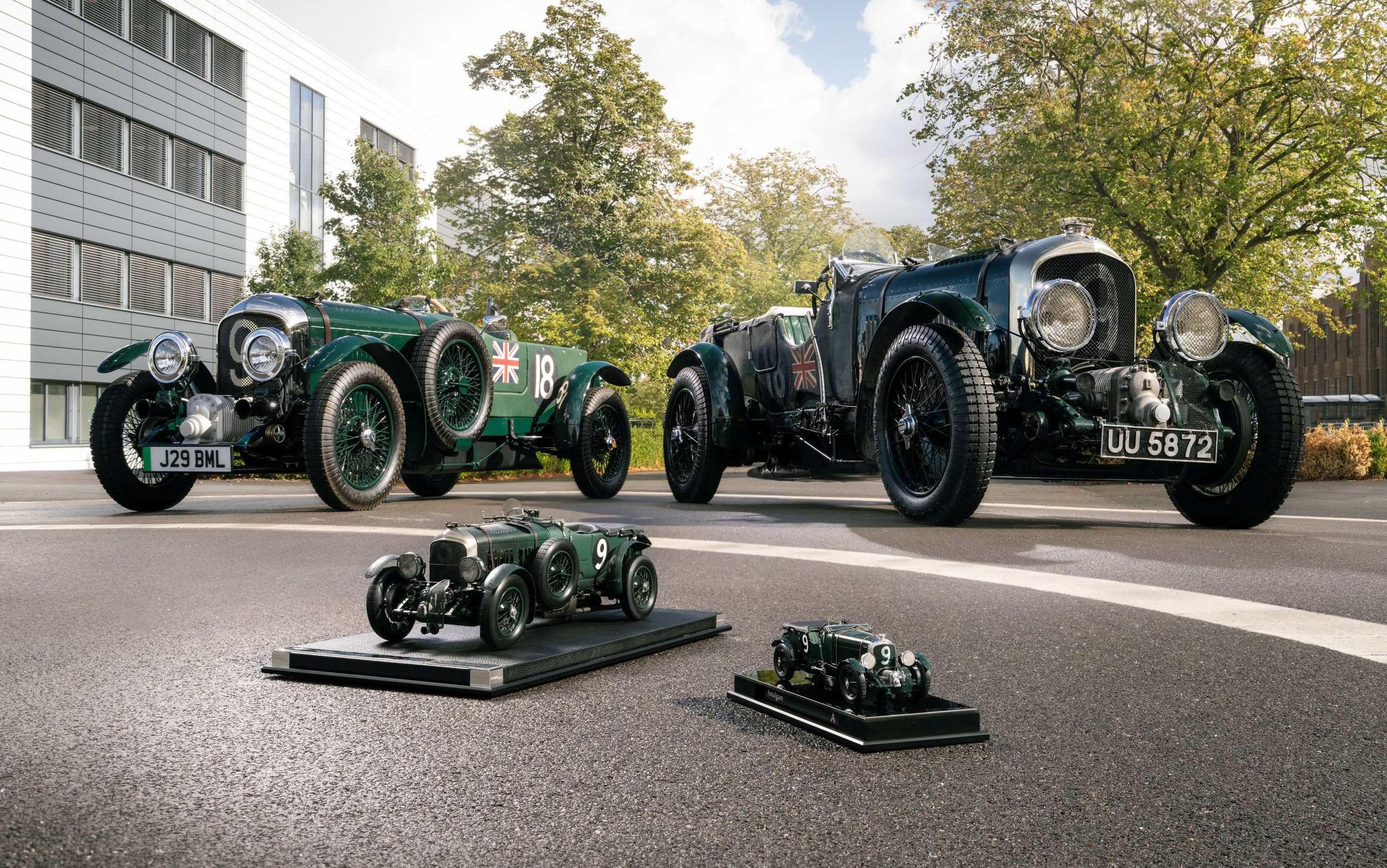
It looks like somebody has been playing with the scale settings. Parked together at Bentley’s headquarters in Crewe are four versions of one of the most famous racing cars ever built. There’s the genuine 1929 Bentley Blower, an enormously important survivor from the Bentley Boys era. Beside it is a slightly smaller interpretation that ...
This Quantum Xtreme auction result left us asking two questions. What exactly is a Quantum Xtreme? And why were so many people bidding on it? Because when this rather unusual-looking little sports car appeared at Anglia Car Auctions, the bidding was already getting lively before the auctioneer even turned his attention to the room. By [&...
Asking prices are one thing, but what are people actually prepared to pay for classic cars? Spend any time browsing classic car adverts and you’ll find some ambitious prices. But it’s when the bidding starts at auction that things can get particularly interesting. We’ve seen immaculate-looking classics struggle to attract buyers, while ...