Mention the Morris Marina in a room full of classic car enthusiasts and you’re almost guaranteed a reaction.
Some will remember them fondly. Others will recall their shortcomings. And there will inevitably be somebody ready with a joke about British Leyland.
But show those same enthusiasts a Marina-based pick-up and something rather interesting happens.
Suddenly, everybody seems to want one.
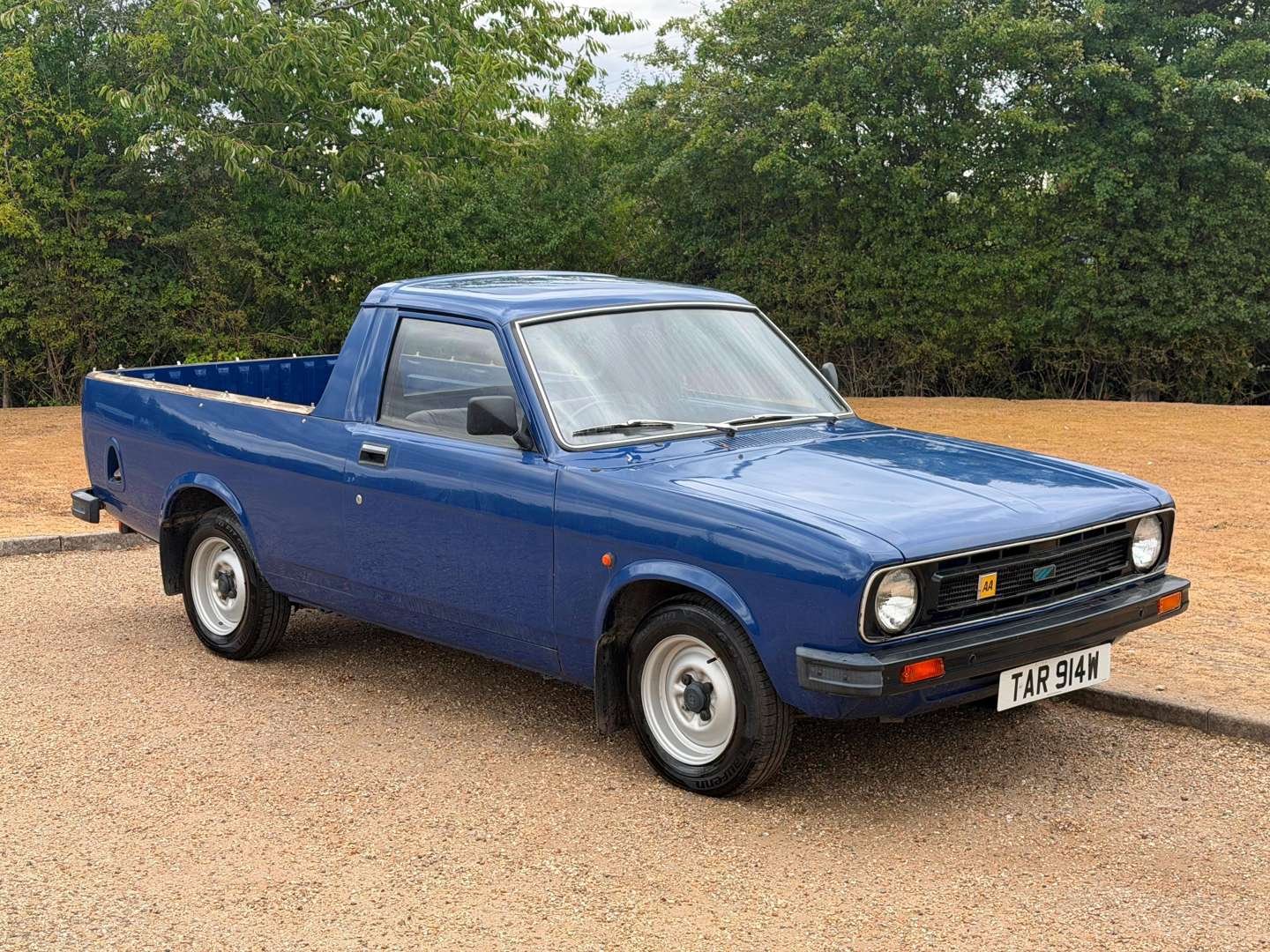
That’s certainly how it felt when this 1981 Morris 575 Pick-up crossed the block at Anglia Car Auctions in August 2026.
We were filming as the bidding unfolded, and at one point we counted at least four different bidders competing for the little Morris.
It was a wonderful reminder that the appeal of a classic vehicle isn’t always determined by its performance, sophistication or reputation when new.
Sometimes, it’s about the memories.
And few vehicles can stir memories quite like an old British commercial.
The Morris Marina – A Car That Became a Punchline
When the Morris Marina was introduced in 1971, British Leyland needed a straightforward, affordable car that could compete with the likes of the Ford Escort and Cortina.
It was designed to be conventional, practical and relatively inexpensive to produce.
Rear-wheel drive, familiar mechanical components and a range of saloon and coupé models were intended to appeal to ordinary motorists and fleet buyers.
And despite the criticism that would follow, the Marina was a commercial success in Britain during much of the 1970s.
They were everywhere.
On suburban driveways, outside factories, in company car parks and on the daily commute, the Marina was part of the everyday British motoring landscape.
Of course, the car had its weaknesses.
Its handling, engineering compromises and sometimes questionable build quality attracted criticism, while later television programmes helped turn the Marina into something of a national joke.
But the reputation of a car in retrospect isn’t necessarily the same as the experience of everyone who owned one.
For many families, a Marina was simply the car that took them to work, on holiday or to visit relatives.
It was affordable transport that did the job it had been bought to do.
And that everyday usefulness became even more important when Morris developed commercial versions.
The Little Pick-up That Earned Its Living
The Marina-based pick-up was a very different proposition from the family saloon.
It retained the familiar front-end styling and much of the mechanical character of the passenger car, but replaced the rear bodywork with a practical load bed.
The result was a compact working vehicle suited to businesses that didn’t need a full-sized van or larger pick-up.
Imagine the sort of jobs these little Morris commercials might have undertaken in the late 1970s and early 1980s.
A local garage collecting parts from a motor factor.
A builder carrying tools and materials between jobs.
A gardener heading off with equipment in the back.
A small business making deliveries around town.
Or perhaps a tradesman whose Morris spent more time parked outside customers’ houses than it ever did on his own driveway.
These are examples of the roles such vehicles were suited to, rather than claims about the history of this particular pick-up.
But they’re exactly the sort of everyday scenes that make old commercials so evocative.
They were working vehicles, bought to be useful rather than admired.
And when they became worn out, many simply disappeared.
Why Do We Love Old Commercials So Much?
There’s something wonderfully appealing about a small commercial vehicle that has survived long enough to become a classic.
Perhaps it’s because we remember them from a time when local businesses were more visible on our streets.
Builders’ merchants, hardware shops, independent garages, greengrocers and countless small firms relied on practical vehicles to keep things moving.
Many had their names painted on the doors.
Others carried a ladder, a toolbox or a collection of equipment that seemed to live permanently in the back.
They weren’t glamorous, and nobody expected them to be.
But they were part of the scenery of everyday life.
Today, a tidy example can attract far more attention at a classic car show than it ever did when new.
And there’s another important factor.
Commercial vehicles generally had a harder life than privately owned cars.
They were used for work, exposed to the weather, loaded and unloaded, and often repaired only when necessary.
Once their working lives were over, preservation wasn’t usually a priority.
That helps explain why surviving examples are so appealing today.
A Marina saloon might remind somebody of their father’s company car.
A Morris pick-up might remind them of an entire way of life.
A 1981 Morris 575 Pick-up
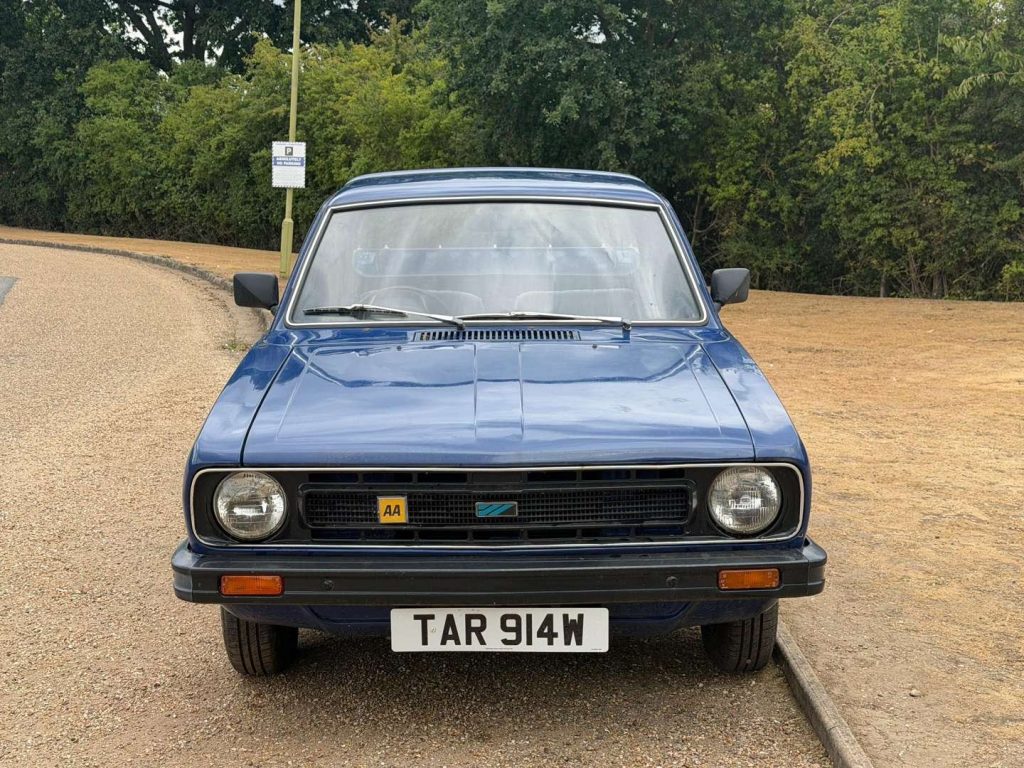
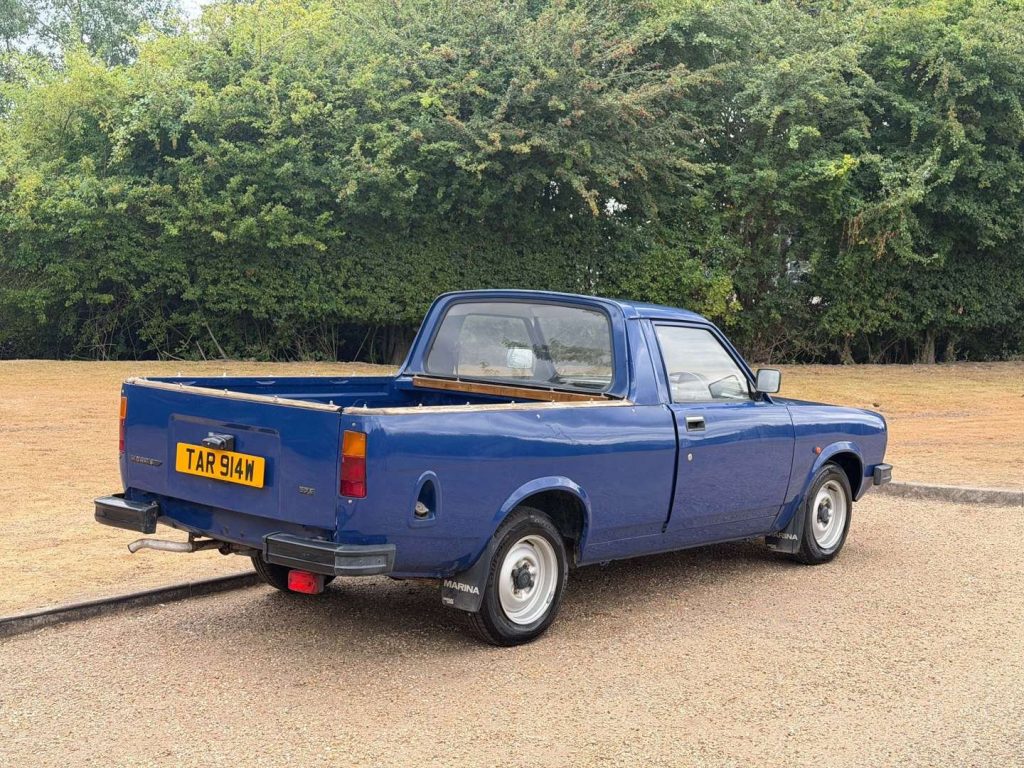
The vehicle offered at Anglia Car Auctions was registered in February 1981 and was catalogued as a Morris 575 Pick-up.
Under the bonnet was the familiar 1,275cc A-series petrol engine, coupled to a manual gearbox.
The odometer showed 60,906 miles, although the catalogue didn’t establish that figure as a verified lifetime total.
The auction house described the Morris as appearing mostly tidy inside and out.
It also had an MOT valid until 25 May 2027, despite being old enough to qualify for historic vehicle MOT exemption.
Its three most recent MOT tests had reportedly been passed without advisories.
That’s encouraging information for prospective buyers, although it doesn’t replace a proper inspection of a vehicle of this age.
There was one important limitation to the paperwork.
Anglia Car Auctions stated that no maintenance history accompanied the pick-up, with only the V5C available.
So, while the vehicle appeared presentable and had recent MOT evidence, its earlier working life remained something of a mystery.
Was it used by a small business? Did it spend years tucked away in a garage? Had it always been cherished, or had somebody brought it back to life after years of hard work?
The catalogue didn’t provide those answers.
And perhaps that’s part of the fascination with surviving old commercials.
Every one of them has a story, even if much of that story has been lost.
Four Bidders for a Morris Marina?
The Morris entered Anglia Car Auctions’ August 2026 classic sale as Lot 562, carrying a guide price of £6,000 to £8,000.
That’s already an interesting indication of how attitudes towards these vehicles have changed.
There was a time when an ageing Marina-based pick-up would have been regarded as little more than cheap working transport.
Now, a tidy survivor can be a desirable classic in its own right.
But an estimate is one thing.
Finding people willing to put their hands in their pockets is another.
As the bidding got under way, we were struck by just how much interest the little Morris was attracting.
At one point in our commentary, we observed that at least four different bidders appeared to have been involved.
And that rather summed up the whole auction for us.
The Marina might have its critics, but there was no shortage of people interested in this particular pick-up.
Watch the bidding unfold in our original auction footage below.
What Did the Morris 575 Pick-up Sell For?
The hammer finally fell at £7,100, equivalent to £7,668 including the buyer’s premium.
That placed the result comfortably within the auction house’s £6,000–£8,000 guide.
So this wasn’t an example of a wildly underestimated vehicle suddenly making several times its expected value.
Instead, it was something perhaps more revealing.
A relatively humble British commercial attracted multiple bidders and achieved a substantial sum, despite having little documented maintenance history.
The price suggests that the market for attractive surviving examples is very different from the one these vehicles inhabited when they were merely ageing workhorses.
Of course, one auction result doesn’t establish what every Morris 575 is worth.
Condition, originality, history and presentation all influence the value of individual vehicles.
But it certainly demonstrates that these little pick-ups have an enthusiastic following.
And when several people want the same vehicle, an auction can become a fascinating spectacle.
Sometimes the Working Vehicles Are the Real Stars
We film all sorts of vehicles going through classic car auctions.
Expensive sports cars, rare performance models, beautifully restored saloons and unusual barn finds all have their appeal.
But we have a particular affection for the vehicles that once formed the background to everyday life.
The cars that took people to work.
The vans that delivered the shopping.
The pick-ups that carried tools, timber and everything else a small business needed.
For years, nobody thought they were particularly special.
And perhaps that’s precisely why they’re so interesting now.
This Morris 575 Pick-up may not have the performance or prestige of many other classics, but it represents a disappearing part of Britain’s motoring and working history.
And judging by the enthusiasm at Anglia Car Auctions, plenty of people feel the same way.
Did you ever own, drive or work with a Marina-based pick-up? Perhaps your family business had one, or you remember a local tradesman who used one for years.
And would you have been tempted to bid £7,100 for this example?
Join our newsletter
Get the best barn finds, projects and classic temptations direct to your inbox.
Related Posts
Discover More Classic Car Stories
Stay updated with the latest barn finds, auction news, and classic car adventures in our 'News & Waffle' section. Dive into rare discoveries, behind-the-scenes stories, and expert insights into the world of classic cars. Whether you’re a seasoned enthusiast or simply intrigued by the tales behind these treasures, this is your hub for all things classic and captivating.
Imagine walking into a British hardware shop seventy years ago. Behind the counter are tins of polish, bottles of paraffin, boxes of screws, brushes, mousetraps and all manner of things that once seemed essential to everyday life. And somewhere among them, perhaps, is a brightly coloured metal contraption bearing a name familiar to almost every [&...
Sometimes an auction result makes perfect sense. The car is desirable, the estimate looks sensible, the bidders know what they’re buying and the hammer falls somewhere around the expected figure. And sometimes you get an auction like this. A striking 1980 Triumph TR7 Convertible, professionally converted to V8 power, arrived at Anglia Car Auctions with [&...
Imagine driving from London to Edinburgh in 1911. The roads are rough, punctures are a constant possibility and motoring remains an expensive adventure rather than an everyday activity. Now imagine making that journey without changing gear. That’s precisely the sort of challenge Rolls-Royce undertook to demonstrate just how remarkable its motor cars had become. And [&...