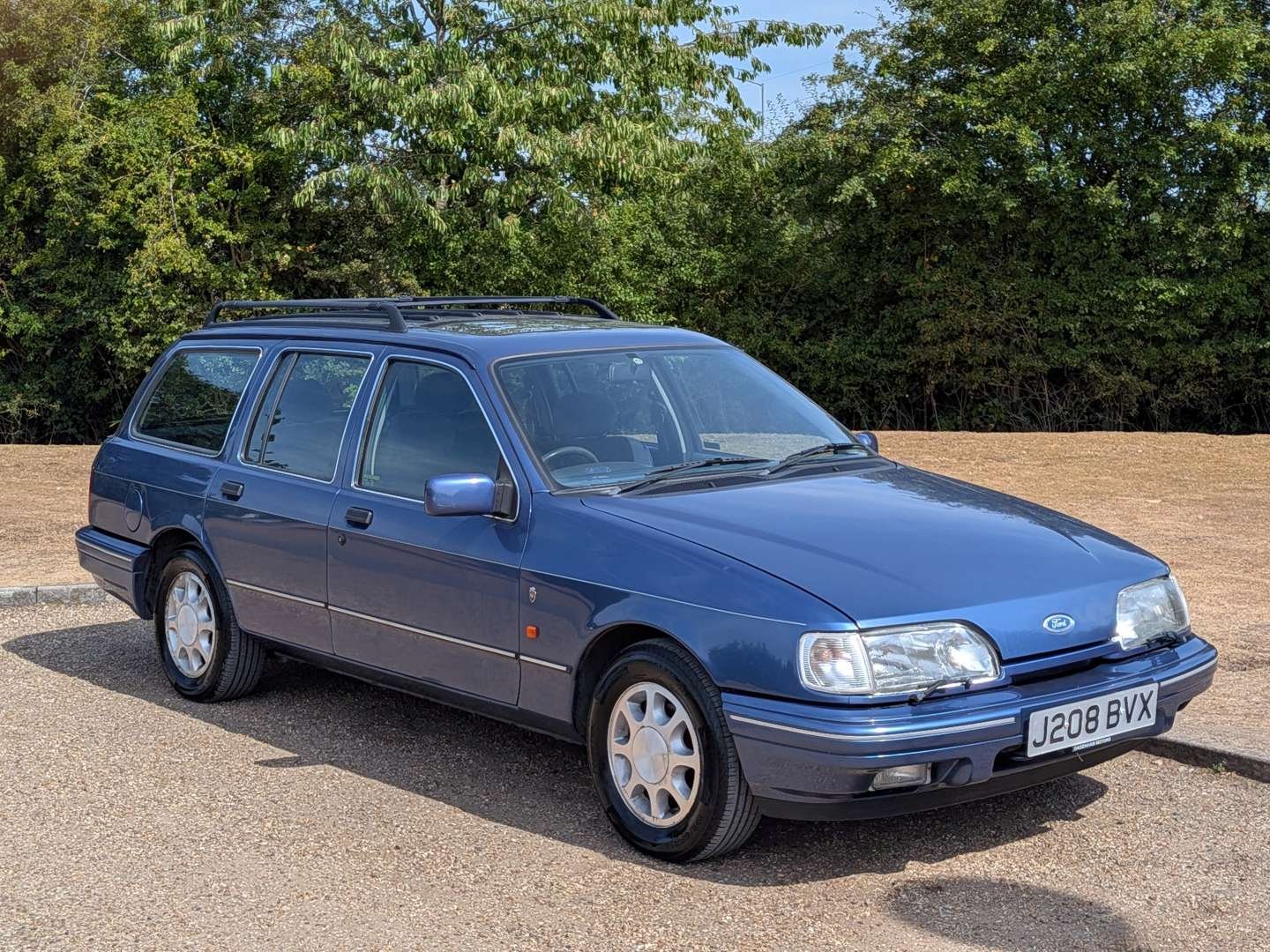
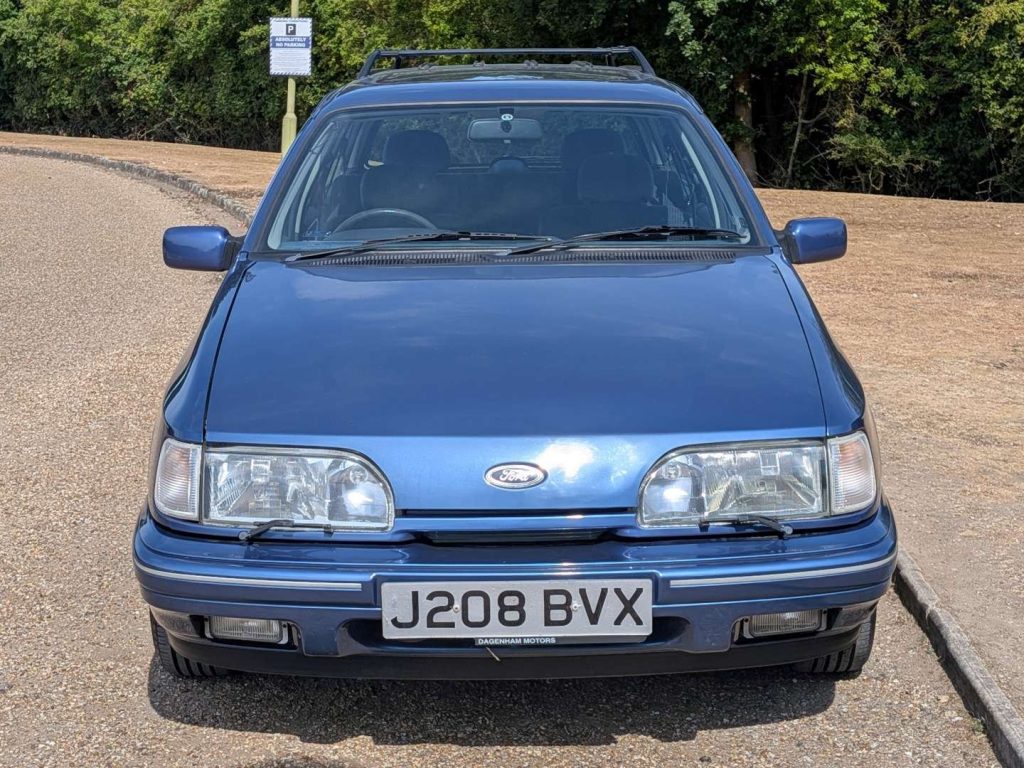
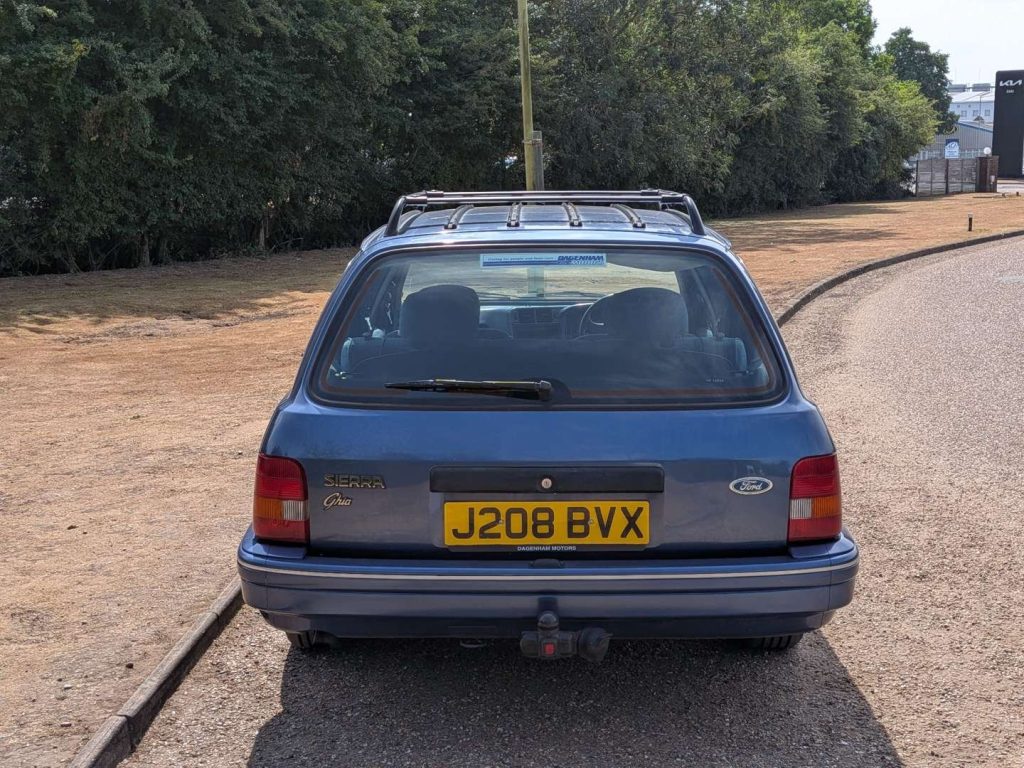
Finished in Tasman Blue metallic, with just 37,809 miles showing, it was an interesting survivor in its own right.
And there was something else that caught our attention.
It was being offered with NO RESERVE.
Whatever happened when the bidding started, this Sierra was going to find a new home.
But what would somebody be prepared to pay for an increasingly uncommon example of a once-everyday Ford?
The Car That Replaced the Cortina
To understand why the Sierra is such an important part of British motoring history, we need to go back to 1982.
That was the year Ford introduced its radical replacement for the Cortina.
And radical it certainly was.
The Cortina had spent two decades establishing itself as one of Britain’s favourite family cars.
With its relatively conventional styling, straightforward mechanical layout and enormous popularity among private buyers and company fleets, it had become part of everyday life.
Replacing it was never going to be easy.
But Ford decided not to play safe.
Instead of producing another familiar-looking three-box saloon, it introduced the Sierra.
With its rounded, aerodynamic bodywork and hatchback layout, it looked like something from the future.
Not everybody was impressed.
The Sierra famously acquired the nickname ‘jelly mould’, thanks to its smooth, rounded styling.
Some buyers found it too different from the Cortina they knew and loved.
But the Sierra gradually won people over.
And before long, it became just as much a part of the British motoring landscape as its predecessor.
Remember the Sierra Estate?
The estate version offered something particularly useful.
Space.
Lots of it.
The Sierra estate became a familiar choice for families, businesses and anybody who needed more room than a conventional saloon or hatchback could provide.
It was the sort of car that might spend Monday to Friday carrying tools or work equipment, then head off on a family holiday at the weekend.
Camping gear.
Suitcases.
Pushchairs.
Dogs.
And whatever else needed transporting.
For many families, an estate car was far more practical than anything else available at the time.
And the Sierra was a popular choice.
Today, of course, SUVs and crossovers occupy much of the market that traditional family estates once dominated.
But back in the 1980s and early 1990s, the Sierra estate was exactly the sort of car you could find parked outside almost any house.
Which makes its relative absence from today’s roads rather noticeable.
By 1992, the Sierra Had Come a Long Way
The example we’re looking at was registered in 1992, towards the end of Sierra production.
By then, the model had undergone considerable development since its controversial launch.
The styling had been updated, the range refined and the equipment improved.
Ford had also developed the Sierra into a remarkably diverse family of cars.
At one end were straightforward models designed to provide dependable everyday transport.
At the other were performance versions such as the XR4i, XR4x4 and, of course, the legendary RS Cosworth.
But the majority of Sierras weren’t performance cars.
They were ordinary family vehicles.
And this particular estate was one of the more luxurious versions.
A Ghia.
When Ghia Meant Something Special
For many Ford enthusiasts, the Ghia badge brings back memories of an era when trim levels had a particularly strong identity.
Ghia models were generally positioned towards the more luxurious end of Ford’s range.
They offered additional equipment, more comfortable interiors and styling details intended to distinguish them from less expensive versions.
This 1992 Sierra Ghia i estate certainly had some appealing features.
According to the Anglia Car Auctions catalogue, its equipment included alloy wheels, a sunroof, fog lamps and roof bars.
It also retained a nicely preserved cloth interior.
And the paintwork was an attractive shade of Tasman Blue mica metallic.
It’s a colour that suits the Sierra’s later styling rather well.
Perhaps most importantly, this was a car that looked like the sort of Sierra many people would have aspired to own when it was new.
A comfortable, well-equipped estate with an automatic gearbox.
Not particularly exotic.
But a very appealing everyday car.
A 2.0-Litre Engine and Automatic Gearbox
Under the bonnet was Ford’s 1,998cc petrol engine, coupled to an automatic transmission.
It was a combination well suited to the Sierra Ghia’s intended role.
This wasn’t a sporting XR4i or a turbocharged Cosworth.
It was a comfortable, practical family estate.
The sort of vehicle designed to cover long distances without fuss.
By 1992, the Sierra range was approaching the end of its production life, with the Mondeo due to replace it the following year.
And while the Mondeo would become an enormous success in its own right, there’s something appealing about these late Sierras.
They represent the final development of a car that had been such a familiar part of British life for more than a decade.
Just 37,809 Miles Showing
Now here’s where this particular Sierra becomes especially interesting.
Its odometer showed just 37,809 miles when it appeared at Anglia Car Auctions.
That’s remarkably little for a car that was already 34 years old.
Of course, mileage readings on older vehicles always deserve a little investigation.
And Anglia Car Auctions was careful to explain that the figure couldn’t be guaranteed.
However, the catalogue noted that several MoT certificates dating from 1996 onwards provided supporting evidence.
That’s encouraging.
While it doesn’t establish a complete, independently verified mileage history, it offers more reassurance than an unsupported odometer reading.
The car also came with various maintenance receipts and its V5C registration document.
And there was an interesting story about its previous owners.
Possibly Three Keepers From the Same Family
According to the auction catalogue, the vendor had owned the Sierra since 2021.
They also believed that the three previous registered keepers had all been members of the same family.
If correct, that’s a rather appealing detail.
A car that may have remained within one family for much of its life before passing to its most recent keeper.
It’s exactly the sort of ownership history that can add interest to an otherwise ordinary vehicle.
We should stress that the family connection was reported as the vendor’s belief, rather than independently verified by the auction house.
Nevertheless, when combined with the relatively low mileage showing and the car’s preserved interior, it adds to the picture of an interesting survivor.
And there were a few other encouraging details in the catalogue.
An MoT Until July 2027
At the time of the auction, the Sierra had an MoT certificate valid until 20 July 2027.
That’s an important distinction from the many classic cars sold as non-running projects or requiring extensive recommissioning.
An MoT certificate isn’t a guarantee of condition, and prospective buyers should always inspect a car carefully.
But having a current certificate can provide some reassurance about its recorded condition at the time of testing.
The Sierra was also accompanied by a few useful extras.
Two oil filters.
An air filter.
And two Haynes workshop manuals.
Hardly glamorous items.
But they’re exactly the sort of things that might prove useful to somebody intending to maintain and enjoy an older Ford.
There’s something rather satisfying about buying a classic car that comes with a workshop manual.
Especially one from an era when owners were often encouraged to undertake straightforward maintenance themselves.
Where Have All the Sierras Gone?
It’s a question we’ve found ourselves asking more often in recent years.
Where have all those everyday cars disappeared to?
Not just Sierras.
Montegos.
Cavaliers.
Maestros.
Orions.
And countless other vehicles that were once so familiar.
For years, many were simply used until they became uneconomical to repair.
Some were scrapped after relatively minor failures.
Others disappeared because their value didn’t justify the cost of keeping them on the road.
And, of course, rust claimed plenty.
The special performance models were more likely to be preserved because enthusiasts recognised their significance.
But an ordinary Sierra estate?
For a long time, it was simply an old car.
And old cars don’t always survive.
Which is why examples like this 1992 Ghia are becoming increasingly interesting.
They remind us of the vehicles that people actually used.
Not just the exciting ones featured in motoring magazines.
But the cars that formed the background to everyday life.
Is Nostalgia Changing the Classic Car Market?
There’s an interesting shift in the sorts of cars attracting attention at auctions.
Performance Fords have been desirable for many years.
But there’s also growing enthusiasm in some quarters for ordinary models that were once taken for granted.
A basic Escort.
A tidy Orion.
A well-preserved Sierra.
They might not offer spectacular performance or particularly exotic engineering.
But they can evoke memories in a way that much more expensive cars sometimes cannot.
Perhaps somebody’s father had one as a company car.
Perhaps they learned to drive in one.
Or maybe a Sierra estate was the family car that took them on countless holidays during the 1980s and 1990s.
Those memories matter.
And as surviving examples become less common, the opportunity to own one can become increasingly appealing.
Of course, nostalgia doesn’t automatically translate into high auction prices.
Condition, specification, history and the number of interested bidders all matter.
Which brings us to this particular Sierra.
No Reserve – So What Would It Make?
The 1992 Sierra Ghia estate appeared as Lot 310 at Anglia Car Auctions’ sale on 22 August 2026.
And unlike vehicles carrying a guide price or a minimum reserve, this one was offered without reserve.
That meant the highest bid would be enough to buy it.
There was no hidden minimum figure for bidders to reach.
For anybody watching an auction, no-reserve lots can be particularly entertaining.
They remove much of the uncertainty about whether a car will actually sell.
And they can create opportunities for buyers who are prepared to take a chance.
But they can also lead to some surprising results.
Sometimes a car attracts considerably more interest than expected.
Other times, it sells for a figure that makes everyone wonder whether they should have been bidding.
So what would happen with this low-mileage Sierra?
The Bidding Opened at £2,900
We filmed the Sierra going through Anglia Car Auctions.
By the time the auctioneer opened bidding to the room, the figure had already reached £2,900.
That’s where things became interesting.
A 34-year-old Ford estate.
Automatic gearbox.
Ghia specification.
Just 37,809 miles showing.
And no reserve.
Would the bidding keep climbing?
Or would somebody walk away with a relatively unusual survivor for surprisingly little money?
Before we reveal the result, have a guess.
What would you have paid for this Sierra?
And would you have been tempted to take it home?
Watch the No-Reserve Auction
Here’s our footage of the Sierra going under the hammer at Anglia Car Auctions.
See what you think of the bidding, and whether the result surprises you.
£3,700 Hammer – £3,996 Including Premium
The bidding eventually stopped at £3,700.
That’s what the 1992 Ford Sierra Ghia estate achieved before the buyer’s premium.
Anglia Car Auctions recorded the final result, including premium, as £3,996.
So the buyer acquired this late Sierra estate for just under £4,000 including the auction premium.
Given the Ghia specification, the relatively low mileage showing, the surviving documentation and the car’s increasingly uncommon body style, we can understand why it attracted interest.
But was £3,996 good value?
That’s where opinions are likely to differ.
Was It Worth the Money?
For some people, almost £4,000 might sound like a surprising amount for an old Ford Sierra estate.
After all, there was a time when cars like this were available for a few hundred pounds.
But those days are becoming increasingly distant.
Finding a surviving example with the right combination of condition, specification and history isn’t necessarily easy.
And while the Sierra estate was once commonplace, the cars that remain are now part of Britain’s motoring history.
That doesn’t mean every Sierra is suddenly worth a fortune.
Nor does it mean that spending thousands on an ordinary model is necessarily a good investment.
But for somebody who remembers these cars fondly, the appeal can be considerable.
A Ghia estate in an attractive period colour, showing fewer than 38,000 miles, with an MoT and some supporting paperwork?
There’s certainly something to like.
And at £3,996 including premium, it remains considerably more affordable than many of the performance Fords that dominate auction headlines.
Would You Have Bought It?
We rather like seeing cars such as this Sierra attract attention.
Not because they’re especially rare in the same way as a competition homologation special.
And not because they’re capable of enormous performance.
But because they represent a period of British motoring that so many people remember.
The Sierra was part of everyday life.
It was the family car.
The company car.
The holiday car.
The vehicle parked outside thousands of ordinary homes.
And now, more than four decades after the model first appeared, seeing a well-preserved Sierra estate is becoming something of an event in itself.
This 1992 Ghia has found a new home.
And we’re pleased to see another example of a once-familiar Ford attracting interest at auction.
But we’re particularly interested in your memories.
Did your family have a Ford Sierra?
Was one your first car?
Did you own an estate, a Ghia, or perhaps one of the sporting models?
And what do you think of £3,996 for this example?
We’d love to hear your Sierra stories.
Looking to Sell a Classic Ford?
At UK Barn Finds, we’re always interested in hearing about classic Fords and other vehicles from the 1970s, 1980s and 1990s.
Whether it’s an immaculate survivor, a cherished family car, a long-forgotten restoration project or something that hasn’t moved for years, we’d love to know about it.
If you’re thinking of selling a classic car, get in touch with UK Barn Finds and tell us what you’ve got.
Join our newsletter
Get the best barn finds, projects and classic temptations direct to your inbox.
Related Posts
Discover More Classic Car Stories
Stay updated with the latest barn finds, auction news, and classic car adventures in our 'News & Waffle' section. Dive into rare discoveries, behind-the-scenes stories, and expert insights into the world of classic cars. Whether you’re a seasoned enthusiast or simply intrigued by the tales behind these treasures, this is your hub for all things classic and captivating.
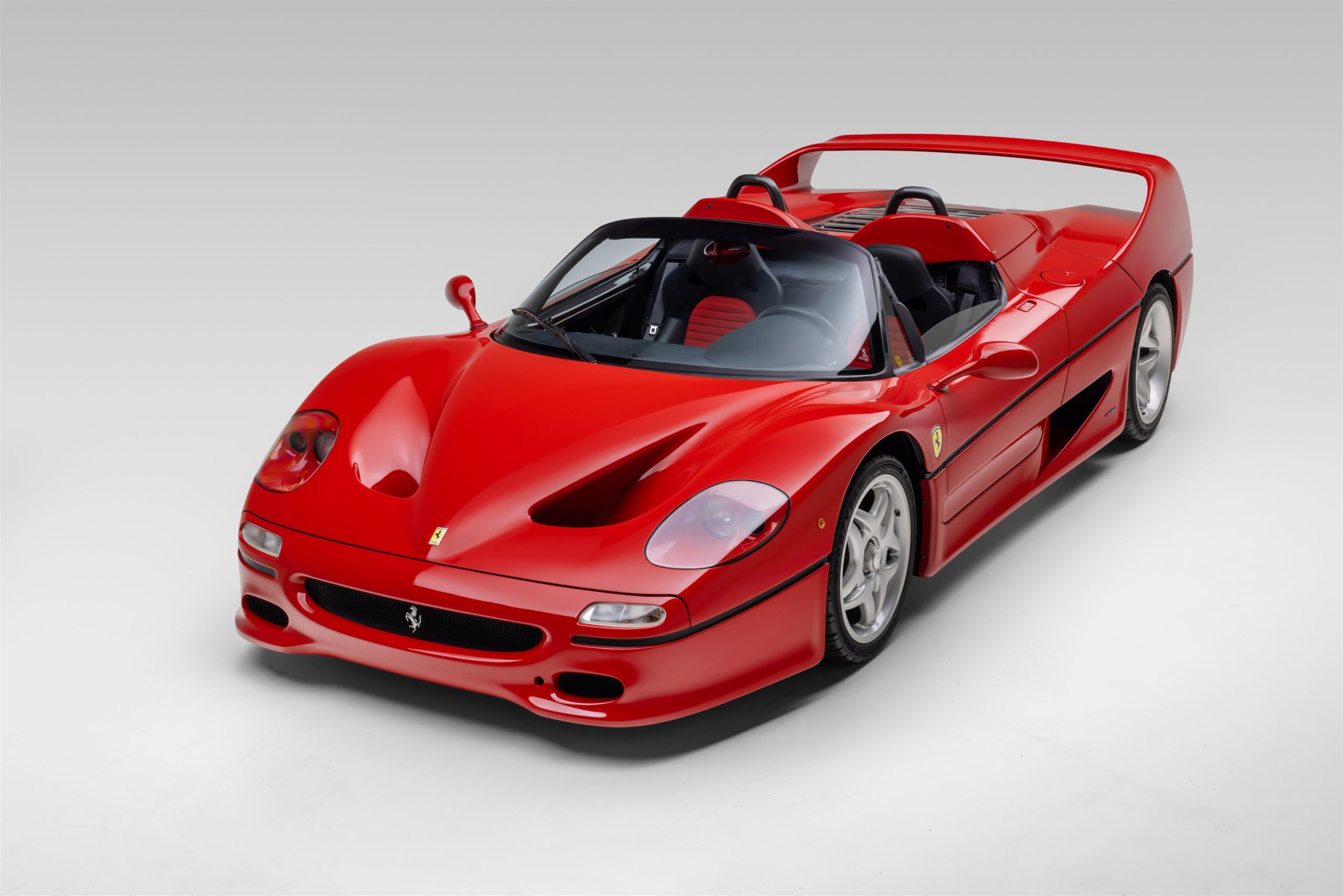
Just 106 miles. That’s the astonishing distance showing on the odometer of this 1997 Ferrari F50, one of the most celebrated supercars ever produced. And now this remarkable example, originally delivered new in Britain, is preparing to cross the auction block in Las Vegas. Broad Arrow Auctions expects it to achieve more than $20 million […]
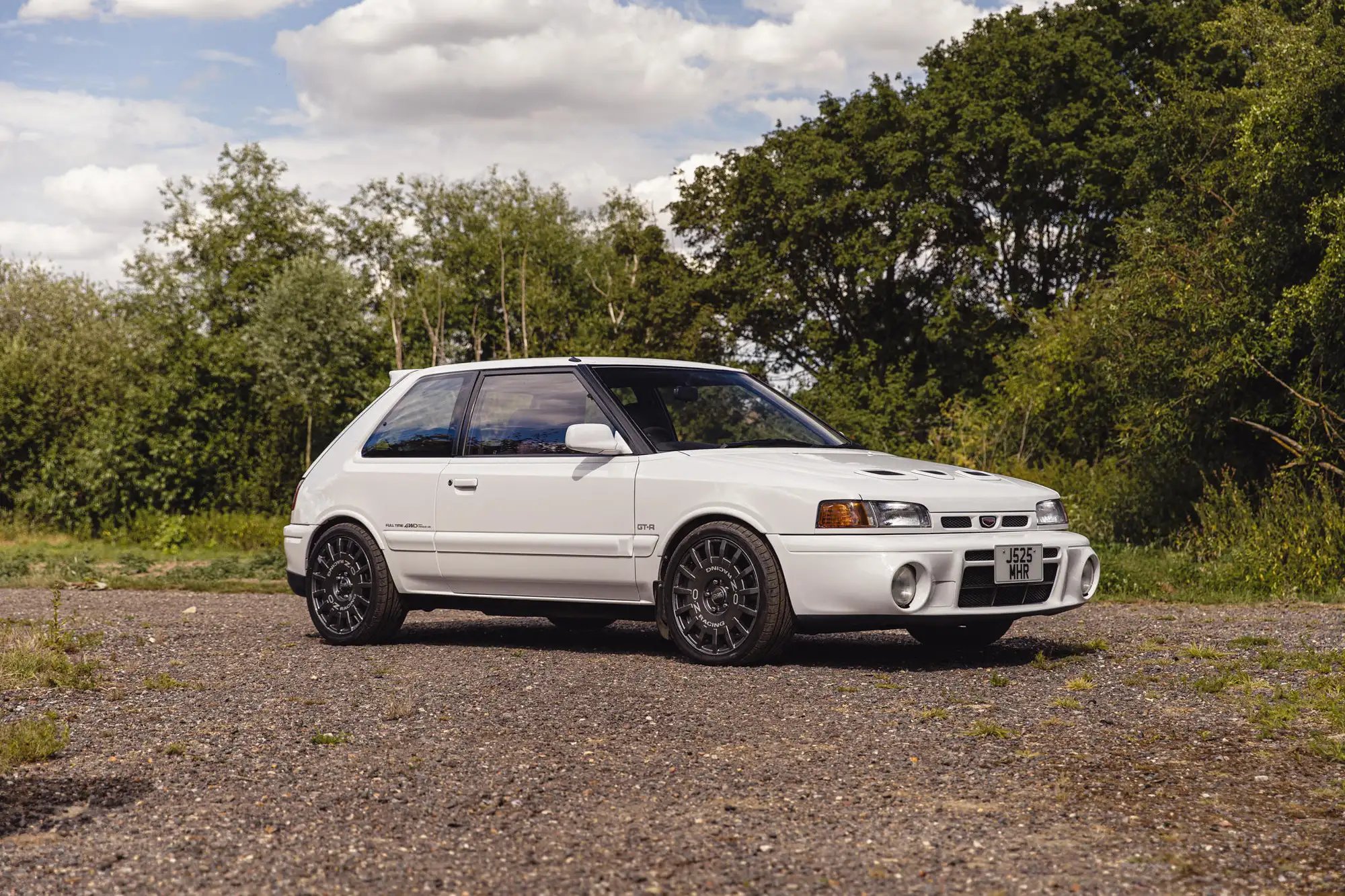
There was a time when Japanese manufacturers were building some extraordinary performance cars. Turbochargers, four-wheel drive, sophisticated engineering and a determination to win on the world’s rally stages. Some became legends. The Subaru Impreza Turbo. The Mitsubishi Lancer Evolution. The Toyota Celica GT-Four. And then there was this. The Mazda 323 GT-R. Remember it? We [&...
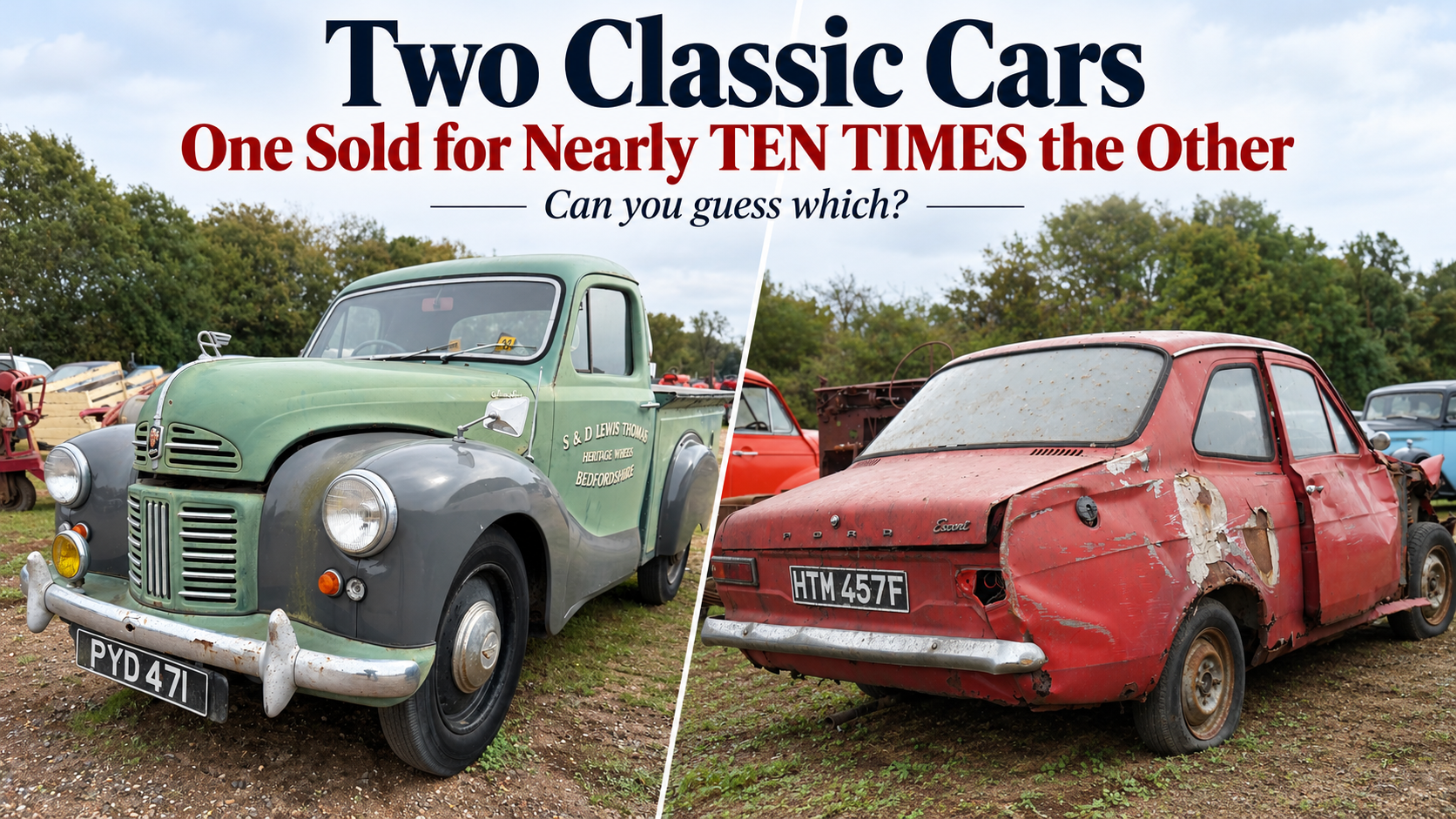
We’re constantly being told that the market for older classic cars is changing. Traditional British classics are supposedly falling out of favour, while anything wearing a Ford badge seems to attract increasingly enthusiastic buyers. Especially if it’s a Mk1 Escort. But something happened at Cheffins on Saturday 17 October 2026 that left us scratching our [&...