We’re constantly being told that the market for older classic cars is changing.
Traditional British classics are supposedly falling out of favour, while anything wearing a Ford badge seems to attract increasingly enthusiastic buyers.
Especially if it’s a Mk1 Escort.
But something happened at Cheffins on Saturday 17 October 2026 that left us scratching our heads.
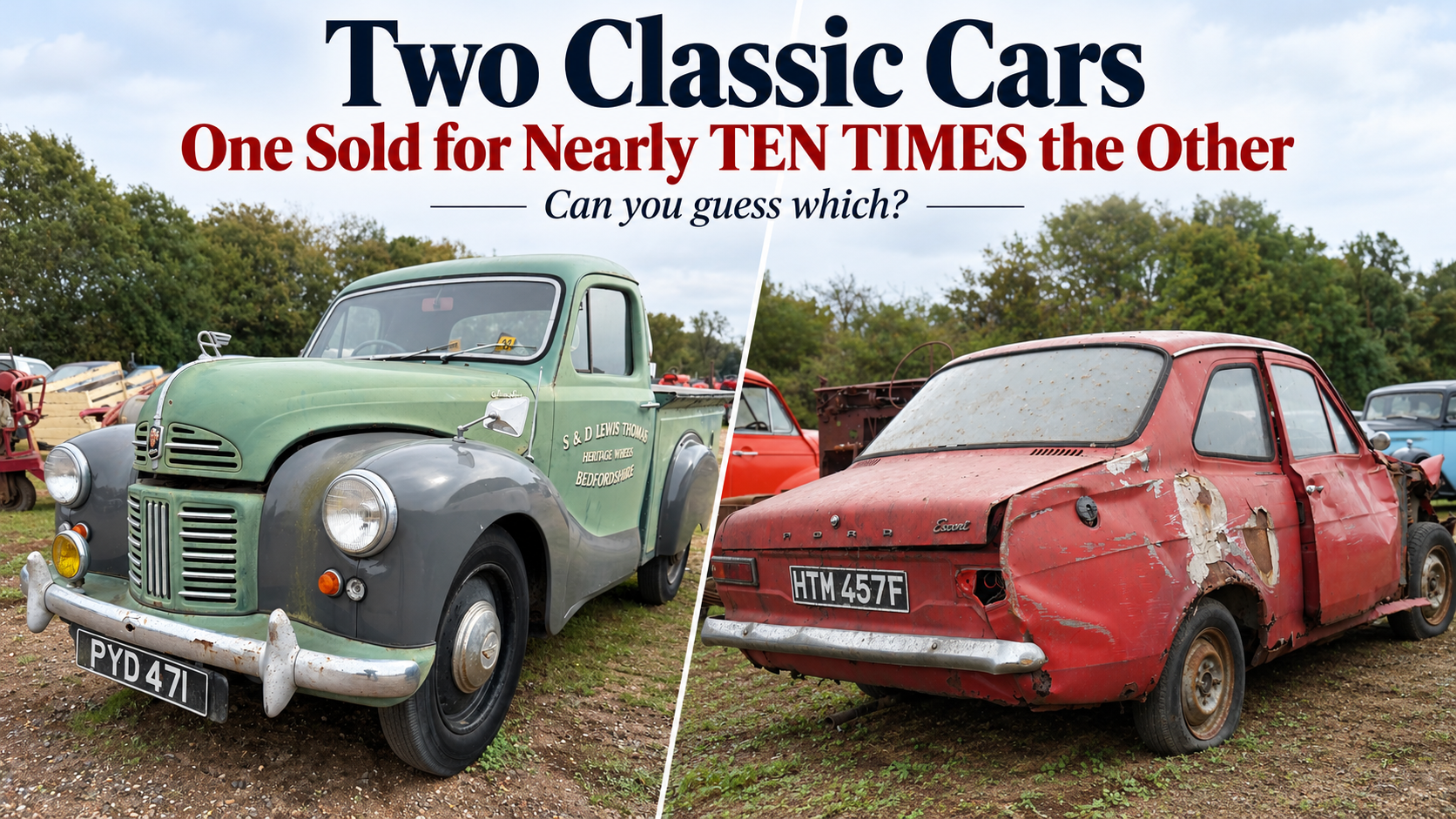
Two British classics, separated by roughly two decades.
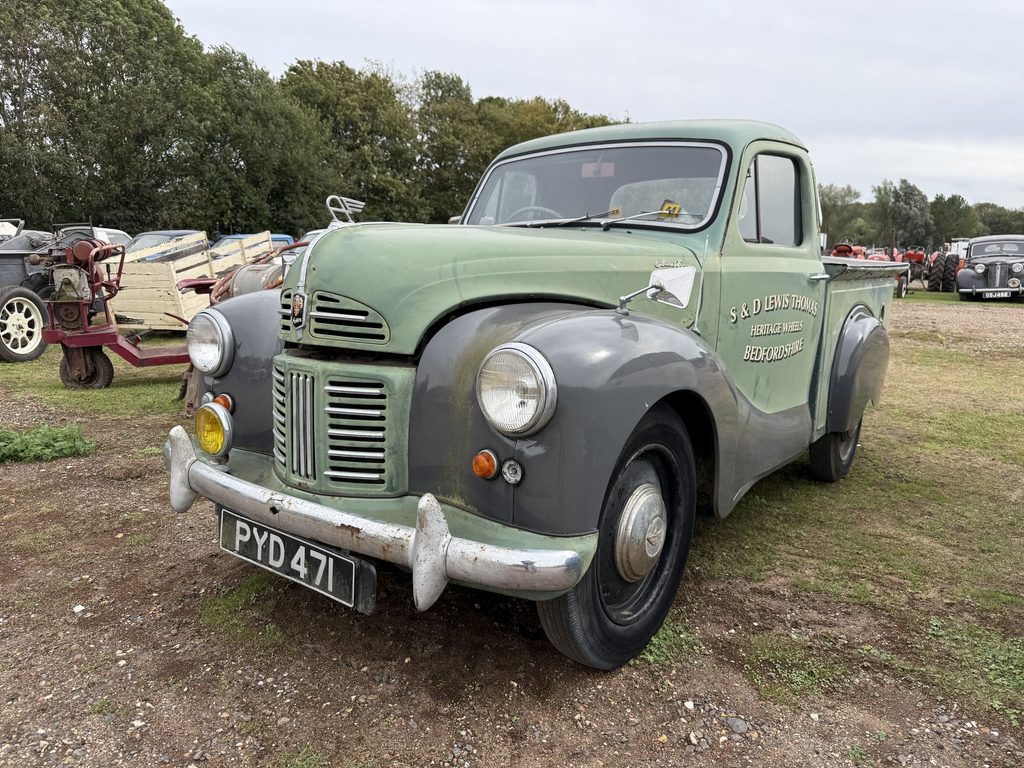
One was an Austin A40 pickup, a charming survivor from the early post-war years.
The other was a remarkably early 1968 Ford Escort Mk1 two-door, a car we’ve actually featured on UK Barn Finds before.
Both were offered without reserve.
Both attracted interest.
And we watched both sell.
Yet one eventually made nearly TEN TIMES the price of the other.
Before we tell you which one came out on top, there’s quite an interesting story behind both vehicles.
And perhaps an even more interesting question about the way classic cars are bought and sold.
Two Very Different British Classics
We were at Cheffins for their October vintage auction, an event that brings together everything from classic cars and commercial vehicles to tractors, machinery and agricultural equipment.
It’s a fascinating place to spend a day.
You’ll find vehicles that would look perfectly at home at a traditional classic car show sitting alongside machinery that spent its working life in fields, farms and workshops.
And among the many lots offered were two vehicles that particularly caught our attention.
The other was an exceptionally early example of one of Britain’s most celebrated family cars.
If you’d asked us beforehand which would make the most money, we’d have had a fairly definite answer.
As it turned out, we’d have been completely wrong.
The Austin A40 Pickup – A Rare Survivor
Let’s start with the Austin.
The A40 Devon arrived in 1947, part of Austin’s first generation of genuinely new post-war cars.
Britain was emerging from the Second World War, and manufacturers were beginning to replace the pre-war designs that had served them for so long.
The A40 was an important step forward.
It featured a 1,200cc overhead-valve four-cylinder engine, independent front suspension and a separate chassis.
By modern standards, its performance was modest.
But that wasn’t the point.
These were practical, dependable vehicles intended to help get Britain moving again.
Alongside the familiar saloon versions, Austin also produced commercial derivatives, including vans and pickups.
And it’s those commercial vehicles that can be particularly interesting today.
Why the Pickup Is Different
Think about what happened to most light commercial vehicles of the period.
They worked for a living.
They carried tools, equipment, produce and materials.
They were used in all weathers, often maintained only as much as necessary, and eventually discarded when they became uneconomical to repair.
Nobody was necessarily thinking about preserving them for future generations.
Which makes the survival of an old Austin pickup rather appealing.
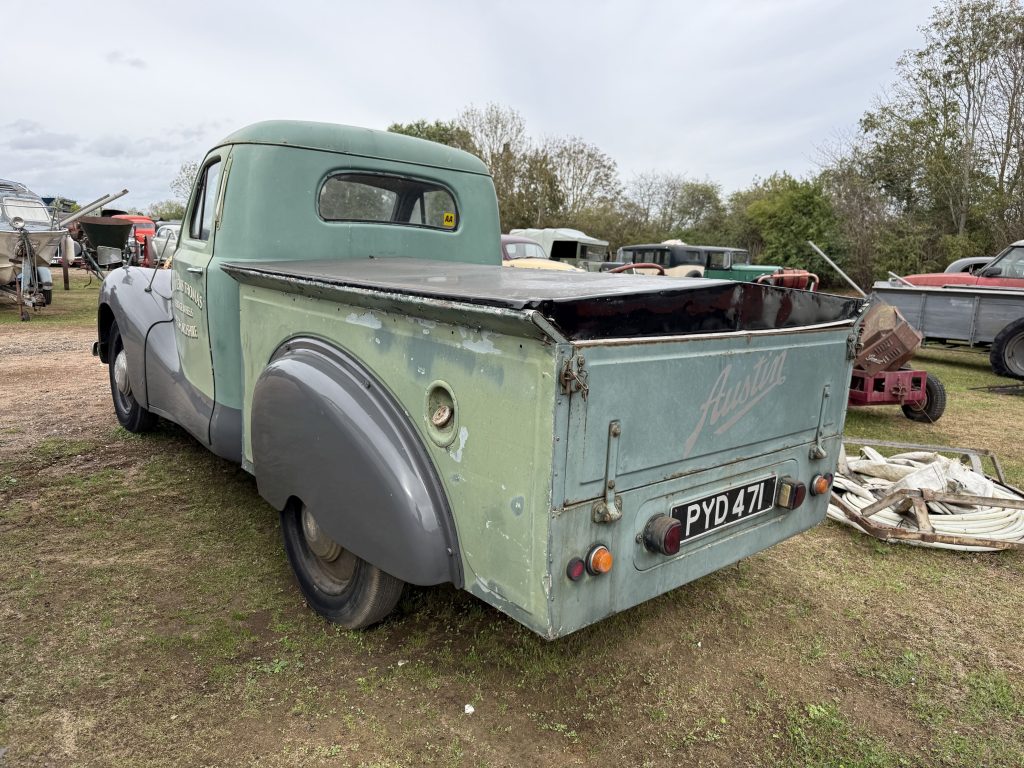
The example at Cheffins was finished in green with contrasting grey front wings and carried period-style signwriting for S & D Lewis Thomas of Bedfordshire.
It also had a cover over the load bed.
The vehicle retained plenty of visible age and character, both inside and out.
We particularly liked its simple dashboard, large steering wheel and the sort of basic interior that reminds you just how different motoring was 70 years ago.
There’s something enormously appealing about vehicles like this.
Not because they’re fast.
Not because they’re glamorous.
But because they represent a part of everyday British history that has largely disappeared.
Was It Really a 1953 Austin?
There’s an interesting detail in the Cheffins catalogue.
The pickup was listed as a 1953 Austin A40, but with an asterisk against the year.
The auctioneers explained that no vehicle identification plate had been found.
They also noted that research suggested the recorded chassis number, taken from an HPI report, might contain a transcription error.
More significantly, their research indicated that the vehicle was probably manufactured in 1951 rather than 1953.
That would certainly fit the earlier A40 Devon period.
The catalogue recorded the registration as PYD 471 and noted that a V5C, keys and some old MoT certificates were held by the auction office.
It’s worth mentioning these details because they illustrate something important about older vehicles.
Registration dates, chassis records and surviving paperwork don’t always tell a completely straightforward story.
And where an identification plate is missing, we’d always want to establish exactly what documentation supports a vehicle’s recorded identity.
Nevertheless, it was certainly an unusual survivor.
And one that we thought would attract interest.
What Would We Have Paid for the Austin?
Before the auction, we’d mentally put the Austin somewhere around £4,000 to £5,000.
Not a formal valuation.
Just our own expectation, based on what we could see and our experience of buying and watching older vehicles sell.
It was clearly an interesting pickup.
The commercial bodywork made it more unusual than a conventional Devon saloon.
And we could imagine it attracting a collector, vintage commercial enthusiast or perhaps somebody looking for an eye-catching period vehicle to promote a business.
But we weren’t expecting anything extraordinary.
As it happened, the buyers had rather different ideas.
Then There Was the 1968 Mk1 Escort
Now this is where things become particularly interesting.
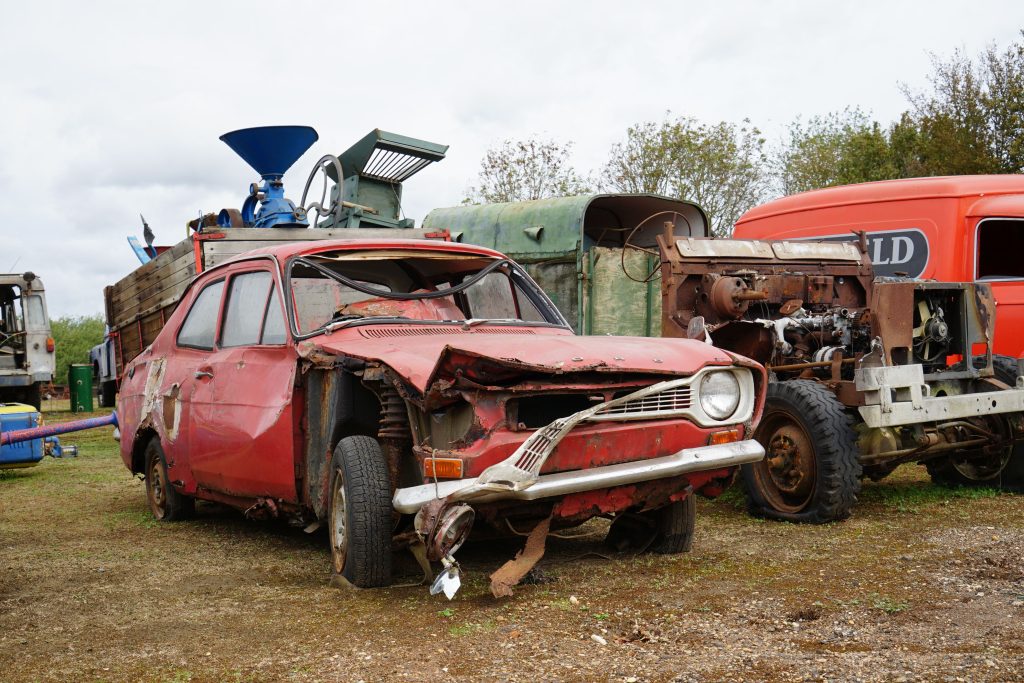
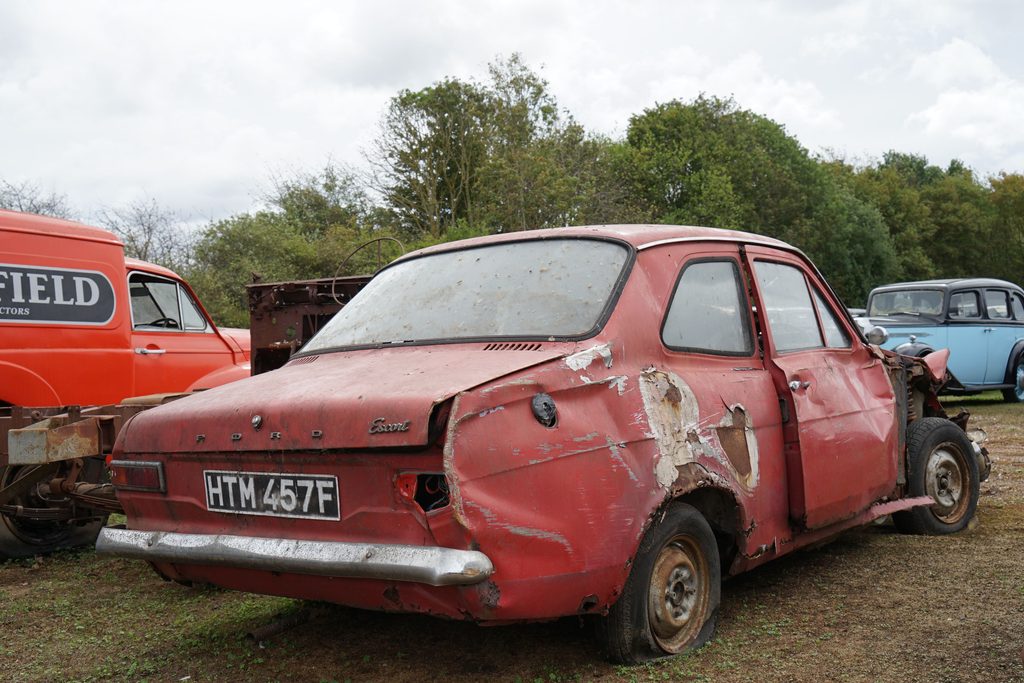
The other vehicle was a red Ford Escort Mk1 two-door.
And not just any Mk1 Escort.
Registration HTM 457F belongs to a remarkably early example.
We’d actually featured this car on UK Barn Finds before the auction, after taking a detailed look at its history and surviving identification details.
It was first registered on 15 March 1968.
The chassis number, BB42HA57055, points to a British-built, Halewood-produced two-door Escort De Luxe dating from March 1968.
That’s right at the beginning of the model’s extraordinary story.
And Cheffins reported that the car had remained in family ownership from new.
For anybody interested in early Fords, those are fascinating details.
The Escort That Helped Change Ford’s Fortunes
The original Escort arrived in Britain at the beginning of 1968 as the replacement for the Anglia.
It was a completely different-looking car.
Out went the Anglia’s distinctive rear window and much of its 1950s character.
In came Ford’s new compact family saloon, with its famous dogbone grille, simple mechanical layout and attractive lines.
Initially, the range included modest 1100 and 1300 versions.
The more powerful sporting Escorts, and eventually the rally-inspired machines that enthusiasts know so well, helped establish the model’s enduring reputation.
But it’s easy to forget that most early Escorts were ordinary family cars.
They took people to work.
They carried children to school.
They went shopping, visited relatives and spent years performing the everyday tasks that cars were built to do.
The 1100 De Luxe was very much part of that story.
And this particular example dates from the model’s first months of production.
That’s an appealing piece of Ford history in its own right.
But This Escort Was a Major Project
Now, we need to be realistic.
The red Escort was in a very different condition from the Austin.
The photographs show extensive deterioration and damage.
The front end was incomplete, with substantial damage around the wings and front panel.
There was obvious corrosion, including serious-looking deterioration to the lower bodywork.
The interior also showed the effects of long-term exposure and deterioration.
And there were missing components.
Cheffins catalogued the car as being for spares.
That’s a significant description.
This wasn’t a straightforward recommissioning project where somebody might fit a battery, replace a few components and head off for an MoT.
Returning a vehicle in this condition to the road could involve extensive structural repairs, major panel replacement and considerable expenditure.
Potential buyers would need to inspect it carefully and decide whether restoration was viable.
But it was still an exceptionally early two-door Mk1 Escort.
And we all know how much interest those can generate.
The Interest Was Certainly There
Here’s something we think is particularly important.
The Escort didn’t go unnoticed.
Far from it.
There had been considerable interest before the auction, both online and from people examining the car in person.
We saw plenty of attention around it.
And when it came time to sell, it was surrounded by a very interested crowd.
That makes what happened next all the more intriguing.
You couldn’t simply say nobody knew it was there.
The car had been seen.
Its history was interesting.
Its early production date was documented.
And people were clearly curious about it.
We’d expected it to make somewhere around £3,000.
Given the amount of restoration work required, that already involved a degree of optimism about its future.
But we didn’t think that estimate was unreasonable for such an early two-door Escort.
Two Different Ways of Selling Cars
There’s another aspect to these results that deserves some attention.
Although both vehicles were offered at the same Cheffins event, they were sold in different auction settings.
The Austin went through the sale conducted from the rostrum in the marquee.
The Escort was sold outside in the ring, with the auctioneer moving between lots.
Both approaches are familiar at large vintage and agricultural sales.
And both have their place.
But they create rather different experiences for bidders.
At a conventional classic car auction, buyers are generally accustomed to watching a vehicle presented to an auctioneer who conducts the bidding from a fixed rostrum.
There’s time to follow the bids, watch the room and decide whether to continue.
The field-based auction format can be much faster-paced.
The auctioneer moves from one lot to another, often with a crowd following.
It’s particularly familiar to people who regularly buy agricultural machinery, equipment and commercial vehicles.
And it’s a very effective way of selling large numbers of varied lots.
But for somebody more accustomed to traditional classic car auctions, the experience can feel quite different.
Could the Auction Format Have Made a Difference?
We think it’s a fair question.
Not because either method is wrong.
Cheffins has considerable experience conducting these sorts of sales, and the variety of vehicles and machinery involved makes different auction arrangements entirely understandable.
But buyers don’t necessarily respond in identical ways to different selling environments.
Some thrive on a fast-moving outdoor auction.
Others may prefer the more familiar atmosphere of a rostrum sale, particularly when considering a classic car that could represent a substantial financial commitment.
Could the faster pace have influenced the competition for the Escort?
Possibly.
Could the Austin have benefited from a different concentration of bidders in the marquee?
Again, possibly.
But we wouldn’t pretend to know that either was the deciding factor.
We can’t know what the same cars would have made if their selling positions had been reversed.
And that distinction matters.
It’s an interesting part of the story, not proof that one auction format produces better prices than another.
Two Different Types of Buyer
There’s another possibility.
Perhaps the two vehicles simply appealed to very different audiences.
The Austin was a relatively complete and visually appealing vintage commercial vehicle.
Its unusual pickup bodywork gave it a character quite different from a conventional saloon.
For somebody wanting a collectible vintage commercial, or perhaps a vehicle for displays and events, there was plenty to like.
The Escort, meanwhile, presented a far more complicated proposition.
Its appeal lay in its early production history, its two-door bodyshell and its potential future.
But that potential came with substantial work attached.
And restoration costs can quickly overwhelm the apparent value of a project.
A buyer might love the idea of saving an early Escort while being considerably less enthusiastic about funding the necessary repairs.
That’s understandable.
Are Old Fords Really Where the Money Is?
We’re often told that classic Fords are among the safest places to put money in the older car market.
Certainly, there’s no shortage of impressive prices for desirable Escorts, Cortinas and other sporting Ford models.
But there’s a danger in treating all examples as though they’re interchangeable.
An Escort Twin Cam or Mexico in excellent condition is not the same proposition as a badly deteriorated 1100 De Luxe.
Just as a rare Austin pickup isn’t necessarily comparable with an ordinary A40 saloon.
Condition matters.
Body style matters.
History matters.
And, perhaps most importantly, the number of people who genuinely want a particular vehicle at a particular auction matters.
Sometimes two determined bidders can transform a result.
Sometimes an interesting car simply doesn’t find enough competition on the day.
Which brings us to what actually happened at Cheffins.
So, Which One Made the Most?
By this point, you may already have made up your mind.
A rare Austin A40 pickup, with its period character and unusual commercial bodywork.
Or a March 1968 Ford Escort Mk1 two-door, a fascinating early survivor requiring extensive restoration.
Both sold without reserve.
Both attracted interest.
And both found buyers at the same Cheffins event.
We’d expected the Ford to have the advantage.
But the recorded results told a completely different story.
The Austin Made £13,600. The Escort Made £1,400.
Yes, you read that correctly.
The Austin A40 pickup, Lot 1546, achieved a final bid of £13,600.
The 1968 Ford Escort Mk1, Lot 2720, achieved just £1,400.
That’s a difference of £12,200.
Or, to put it another way, the Austin made approximately 9.7 times as much as the Escort.
Nearly ten times the money.
And we genuinely weren’t expecting that.
We’d thought the Austin might make around £4,000 to £5,000.
Instead, it achieved almost three times the upper end of our expectation.
We’d expected the Escort to reach somewhere around £3,000.
Instead, it finished at less than half that figure.
The results are even more striking when you consider that one was an old commercial Austin and the other was a very early two-door Mk1 Escort.
For clarity, these were the final bids recorded by Cheffins, before the applicable buyer’s premium and VAT.
Did Somebody Get a Bargain?
That’s the obvious question about the Escort.
At £1,400, it sounds remarkably inexpensive for a March 1968 two-door example.
But the purchase price is only the beginning.
Anybody hoping to restore it would need to assess the bodyshell carefully, establish what parts were missing and calculate the likely cost of the work.
For a project of this magnitude, labour and specialist panel repairs could easily represent a very substantial financial commitment.
If the buyer intends to use it for parts, the calculation is different again.
Nevertheless, we suspect plenty of Ford enthusiasts will look at that result and wonder whether they missed an opportunity.
And what about the Austin?
At £13,600 before fees, somebody was clearly prepared to pay considerably more than we’d expected.
Perhaps they particularly wanted an A40 pickup.
Perhaps they valued its surviving character, commercial bodywork or suitability for their own collection.
Or perhaps it was simply one of those moments when the right vehicle met the right bidders.
Without knowing the successful buyer’s intentions, we can only speculate.
What Does This Tell Us About the Classic Car Market?
Possibly less than you might think.
And possibly rather more.
It certainly doesn’t prove that Austin pickups are suddenly worth ten times as much as early Mk1 Escorts.
The vehicles were very different in condition, presentation and the type of work they might require.
Neither result should be treated as a definitive valuation for every other example of the same model.
But what these sales demonstrate is that the classic car market doesn’t always behave as enthusiasts expect.
Recognisable badges aren’t everything.
Rarity alone isn’t everything.
And even substantial pre-sale interest doesn’t guarantee a strong result.
Sometimes an unusual vehicle captures the attention of exactly the right buyers.
Sometimes a car with enormous historical interest faces a more difficult sale because of the work ahead.
And sometimes the outcome simply surprises everyone.
Including us.
Which Would You Have Bought?
We came away from Cheffins with a renewed appreciation of just how unpredictable classic car auctions can be.
The Austin was a lovely old commercial survivor with plenty of charm.
The Escort was an exceptionally early example of one of Britain’s best-loved cars, albeit in need of a great deal of attention.
Both deserved interest.
Both found buyers.
But we certainly wouldn’t have predicted such an enormous difference between their final bids.
Now we’re interested in what you think.
Would you have spent £13,600 on the Austin pickup?
Would you have taken a chance on the £1,400 Escort?
Or would you have left both for somebody else?
And do you think the different auction settings might have played a part?
We’d be interested to hear your thoughts.
If you’ve got an old Austin, Ford, commercial vehicle, restoration project or something else interesting tucked away, UK Barn Finds would love to hear about it.
We’re always looking for unusual vehicles to buy, whatever their condition.
Join our newsletter
Get the best barn finds, projects and classic temptations direct to your inbox.
Related Posts
Discover More Classic Car Stories
Stay updated with the latest barn finds, auction news, and classic car adventures in our 'News & Waffle' section. Dive into rare discoveries, behind-the-scenes stories, and expert insights into the world of classic cars. Whether you’re a seasoned enthusiast or simply intrigued by the tales behind these treasures, this is your hub for all things classic and captivating.
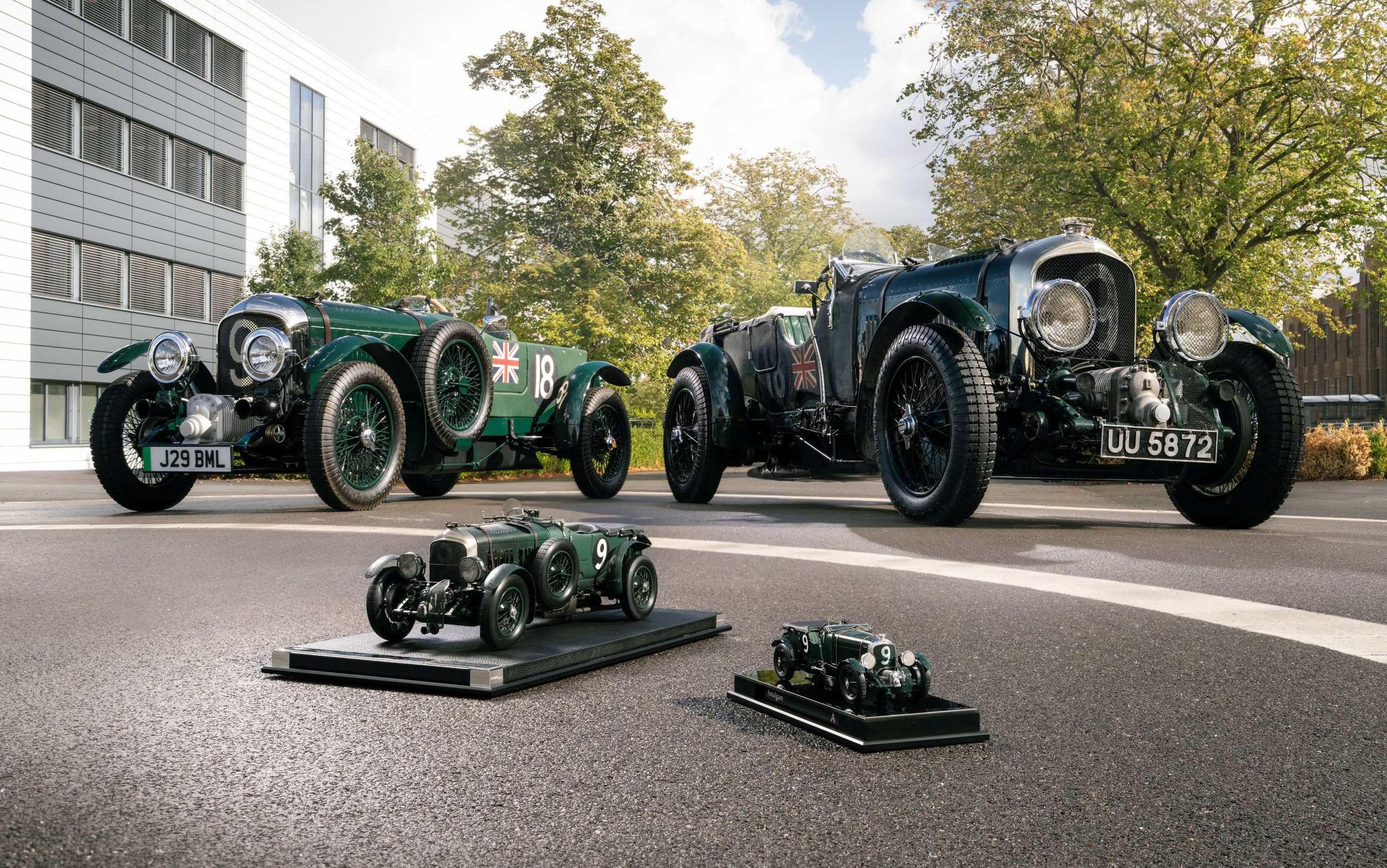
It looks like somebody has been playing with the scale settings. Parked together at Bentley’s headquarters in Crewe are four versions of one of the most famous racing cars ever built. There’s the genuine 1929 Bentley Blower, an enormously important survivor from the Bentley Boys era. Beside it is a slightly smaller interpretation that ...
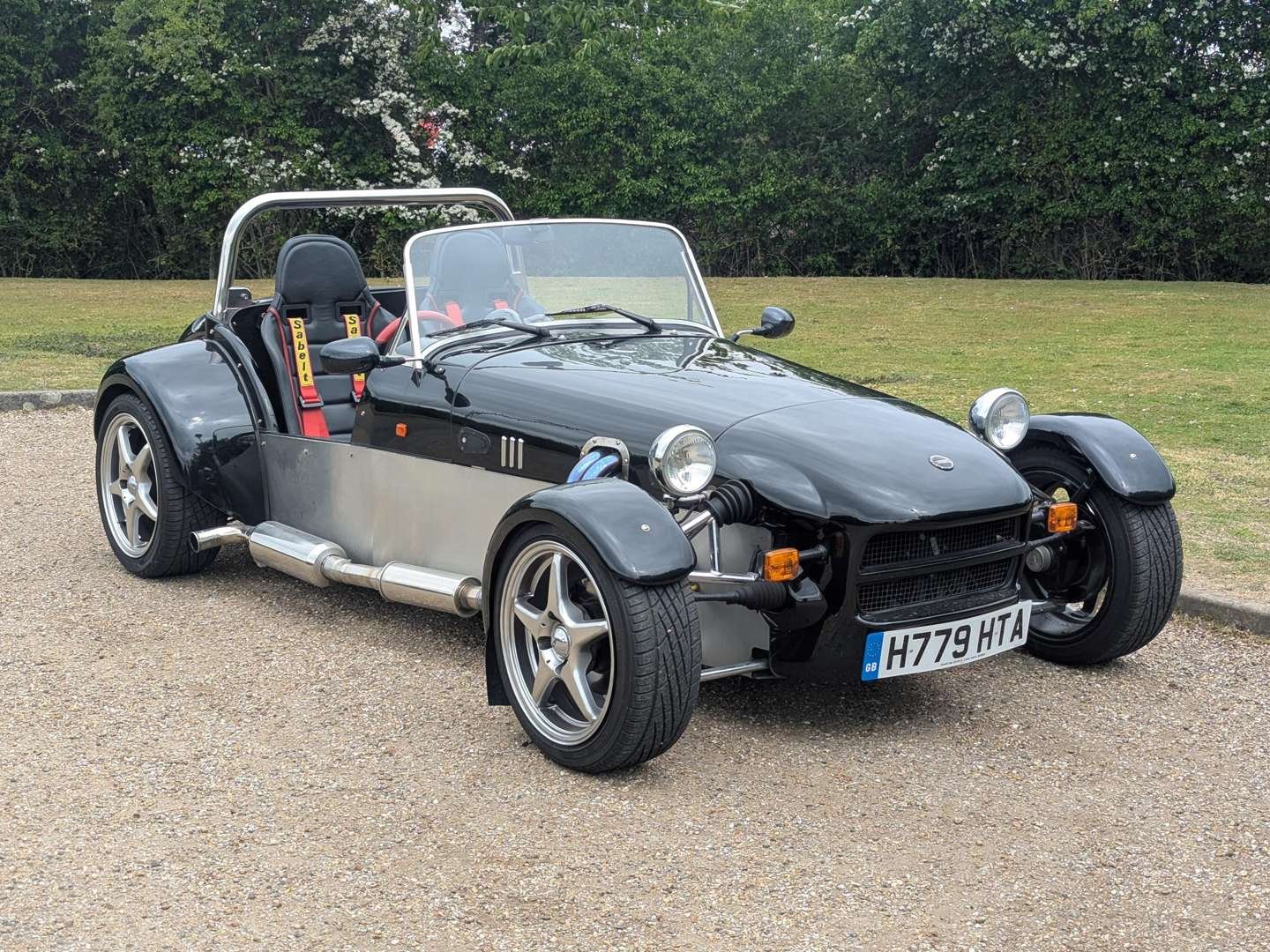
This Quantum Xtreme auction result left us asking two questions. What exactly is a Quantum Xtreme? And why were so many people bidding on it? Because when this rather unusual-looking little sports car appeared at Anglia Car Auctions, the bidding was already getting lively before the auctioneer even turned his attention to the room. By [&...
Asking prices are one thing, but what are people actually prepared to pay for classic cars? Spend any time browsing classic car adverts and you’ll find some ambitious prices. But it’s when the bidding starts at auction that things can get particularly interesting. We’ve seen immaculate-looking classics struggle to attract buyers, while ...