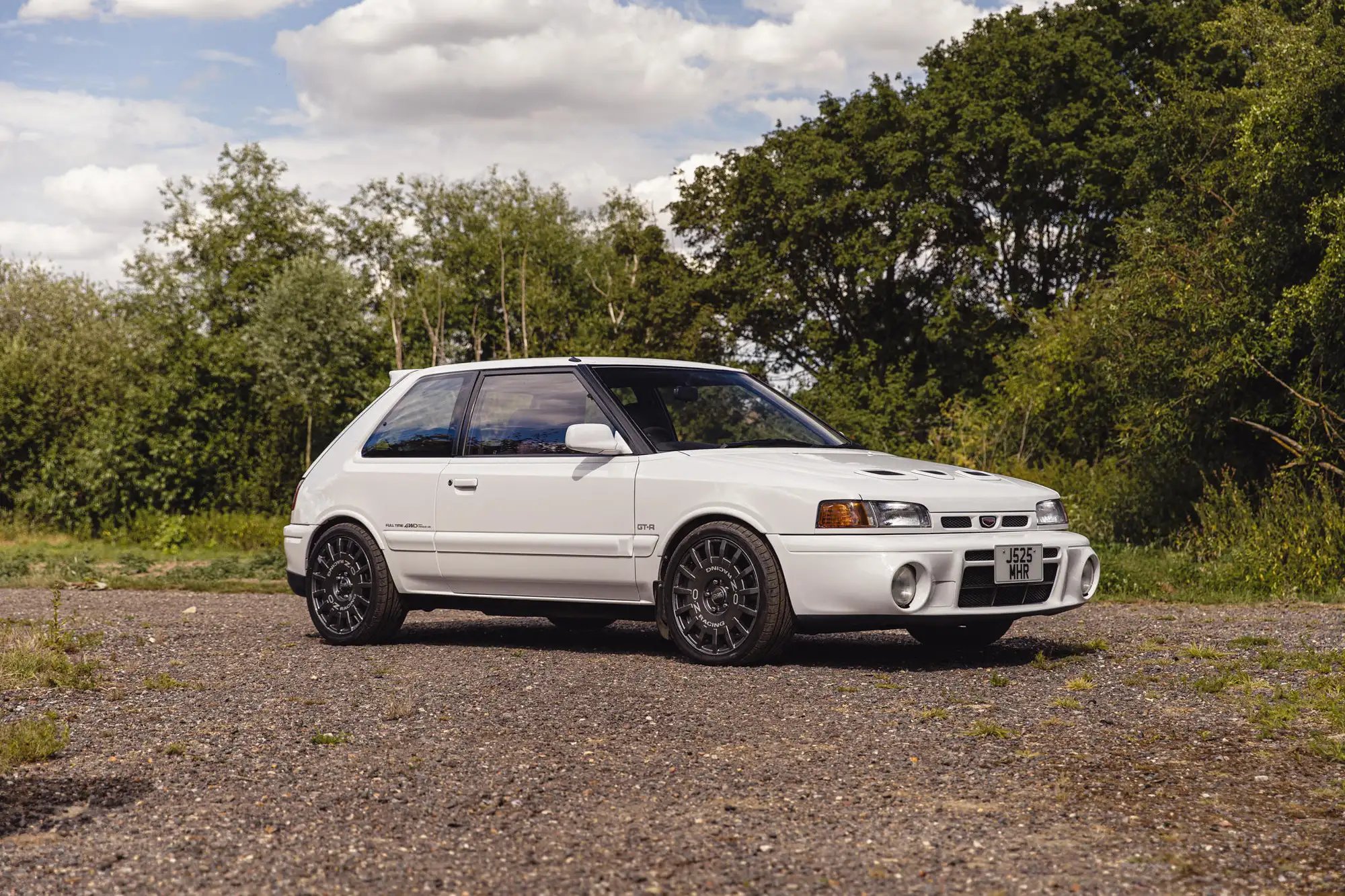
There was a time when Japanese manufacturers were building some extraordinary performance cars.
Turbochargers, four-wheel drive, sophisticated engineering and a determination to win on the world’s rally stages.
Some became legends.
The Subaru Impreza Turbo. The Mitsubishi Lancer Evolution. The Toyota Celica GT-Four.
And then there was this.
The Mazda 323 GT-R.
Remember it?
We suspect plenty of people have forgotten that Mazda once built a rather serious four-wheel-drive turbocharged hatchback of its own.
But when this remarkably rare 1992 example appeared at Classic Car Auctions, part of Iconic Auctioneers, we were particularly interested to see what it would fetch.
Especially when we discovered just how much money had reportedly been spent bringing it back to its former glory.
The Mazda Most People Have Forgotten
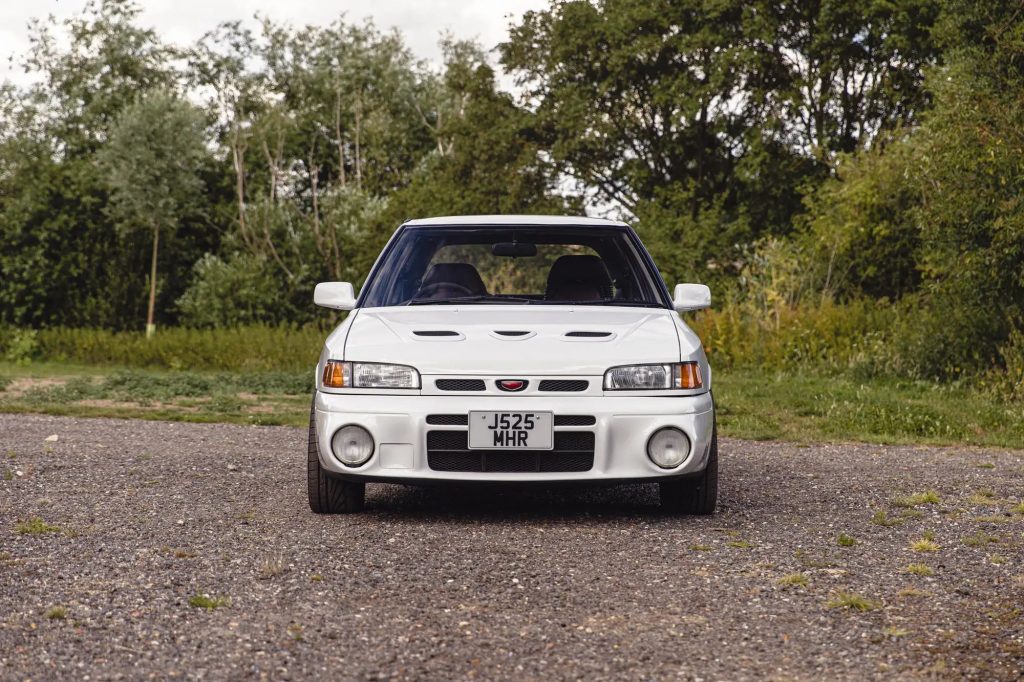
At first glance, it looks like a fairly ordinary early 1990s Mazda 323 that’s been treated to some rather aggressive bodywork.
A deeper front bumper.
Large auxiliary driving lamps.
Bonnet vents.
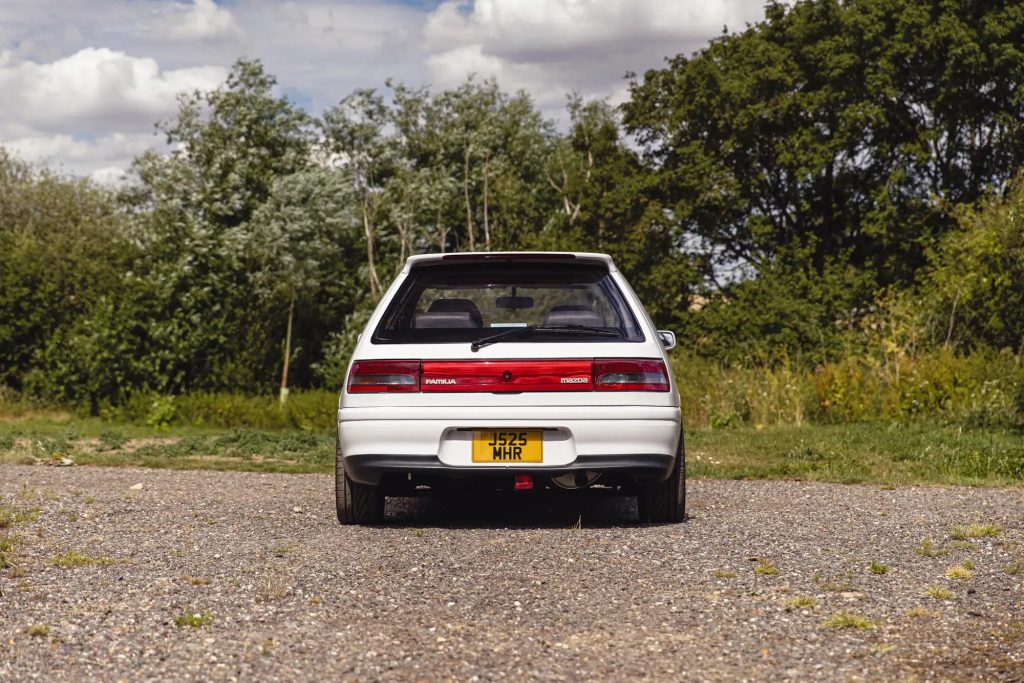
A rear spoiler.
And those unmistakable early 1990s Japanese performance-car proportions.
But the GT-R was something much more interesting than a sporty trim level.
This was a genuine rally homologation special.
A road car built because Mazda wanted to compete at the highest levels of international rallying.
And it had the engineering to back up its appearance.
When Mazda Wanted to Take on the Rally World
Mazda already had considerable experience in rallying by the time the GT-R appeared.
The earlier four-wheel-drive 323 GT-X had competed internationally, but the company needed something more competitive for the changing Group A era.
The result was the 323 GT-R, introduced in 1992.
Known as the Familia GT-R in Japan, it was based on Mazda’s compact 323 hatchback but featured extensive mechanical development.
This wasn’t simply a case of fitting a bigger engine and attaching a spoiler.
The GT-R was developed with competition in mind.
Its rally development programme even involved legendary Finnish driver Hannu Mikkola, whose achievements included winning the 1983 World Rally Championship.
The ambition was certainly there.
Unfortunately, the timing wasn’t ideal.
The Rally Car That Never Had Its Proper Chance
Here’s what makes the Mazda 323 GT-R particularly interesting.
Despite developing the car for Group A competition, Mazda withdrew its factory rally programme around the time the GT-R was ready to compete.
The manufacturer had enjoyed some notable results with the earlier 323, but the works programme came to an end after the 1992 season.
Consequently, the GT-R never received the sustained factory-backed World Rally Championship campaign that might have established its reputation.
It wasn’t entirely absent from competition.
The model subsequently appeared in privateer hands and achieved some respectable rally results.
But imagine how differently things might have turned out if Mazda had continued developing and promoting it.
Would we remember the 323 GT-R alongside the Impreza and Lancer Evolution?
Perhaps.
We’ll never really know.
Just 2,500 Built
Homologation requirements meant manufacturers needed to produce road-going examples of their competition machinery.
According to the auction catalogue, Mazda produced just 2,500 examples of the 323 GT-R.
That’s a remarkably small number compared with many of the better-known Japanese performance cars.
And this particular example was rarer still.
Finished in Clear White, paint code UF, it was described as one of only 200 GT-Rs produced in that colour.
Two hundred.
Across the entire production run.
Of course, rarity doesn’t automatically make a car desirable.
But when that rarity is combined with interesting engineering, genuine motorsport connections and a relatively small surviving population, things become rather more interesting.
A 1.8-Litre Turbo With 210bhp
The GT-R’s performance was impressive for a compact hatchback launched in 1992.
Underneath the bonnet was Mazda’s turbocharged 1.8-litre, twin-cam, 16-valve four-cylinder engine.
The Japanese-market specification was rated at approximately 210PS, broadly equivalent to 207bhp, although the auction catalogue quotes 210bhp.
Power was delivered through a five-speed manual gearbox to a permanent four-wheel-drive system incorporating a viscous limited-slip differential.
This wasn’t an ordinary front-wheel-drive hatchback struggling to put its power onto the road.
It was designed to make use of that performance in considerably more demanding conditions.
Mazda also gave the GT-R substantial mechanical upgrades, including stronger engine components and improved braking.
In a car weighing relatively little by modern standards, the result promised some serious performance.
And, perhaps more importantly, considerable driving enjoyment.
The Problem With Being a Forgotten Performance Car
Think about the Japanese performance-car market today.
Certain names attract enormous attention.
Escort Cosworths, although British rather than Japanese, occupy a similar place in the minds of enthusiasts looking for early 1990s rally-inspired machinery.
Subaru Imprezas and Mitsubishi Evolutions have become increasingly collectable.
Even ordinary examples of some Japanese performance cars can now command substantial sums.
But the Mazda 323 GT-R has never enjoyed quite the same level of recognition.
Part of that is undoubtedly down to the small production run.
There simply weren’t enough of them around to become a common sight.
And without a major, sustained works rally campaign, the model missed out on the publicity that helped make some of its rivals famous.
There’s also the small matter of its appearance.
To somebody unfamiliar with the model, it’s still a Mazda 323.
It was a right-hand-drive example, registered J525 MHR, finished in the rare Clear White colour.
The odometer showed 74,625 kilometres.
That’s approximately 46,370 miles.
The auction house described it as a remarkably original example, with one UK owner since its importation and around £15,000 spent on cosmetic and mechanical recommissioning.
That’s a significant amount of expenditure.
And looking through the catalogue, it wasn’t difficult to see where some of the money had gone.
£15,000 Spent Bringing It Back to Its Best
According to the auction description, the Mazda had undergone substantial attention.
This included a glass-out, bare-metal respray carried out by MW Bodyshop.
Numerous genuine Mazda components had reportedly been sourced directly from Japan.
That’s particularly relevant with something as uncommon as a GT-R.
Finding replacement parts for a mainstream hatchback is one thing.
Finding model-specific components for a low-volume Japanese homologation special, more than 30 years after it was built, can be quite another.
The recommissioning also included mechanical work.
A major service had reportedly been completed around 3,000 kilometres before the auction.
The work included a genuine Mazda cambelt and water pump, replacement fluids for the engine and transmission components, NGK platinum spark plugs, an air filter and new brake discs and pads.
These are exactly the sorts of jobs we’d want to see documented when considering an older performance car.
Especially one with a turbocharged engine and a permanent four-wheel-drive system.
A Few Carefully Chosen Upgrades
Although the auction house described the car as mechanically close to factory specification, it wasn’t entirely standard.
The Mazda had been fitted with Bilstein coilover suspension.
There were also 17-inch OZ Rally alloy wheels wearing Toyo TR1 tyres.
Inside, the improvements included a Mazdaspeed carbon gear knob, an Alcantara-trimmed steering wheel and a retrimmed headlining.
A remote immobiliser and alarm system had also been fitted.
Importantly, the catalogue stated that the car retained its original Mazda catalytic converter and exhaust system.
That’s an interesting detail.
Many Japanese performance cars were extensively modified when they were cheaper and more readily available.
Finding one that hasn’t been subjected to major engine alterations can be attractive to buyers who prefer something closer to its original specification.
The Paperwork Matters, Too
As we often say, the history accompanying an unusual car can be almost as interesting as the vehicle itself.
And this Mazda was offered with some useful documentation.
According to the auction catalogue, it included its original Japanese Export Certificate, HMRC NOVA confirmation, service history and V5C.
There was also an original Mazda owner’s handbook and Japanese Familia book pack.
These things matter.
Particularly with an imported Japanese performance car, where verifying its history and understanding its previous life can sometimes be difficult.
Documentation won’t necessarily tell you everything.
But a substantial history file is certainly preferable to having very little information about a car’s past.
What Would You Pay for a Rare Mazda 323 GT-R?
Now we get to the interesting bit.
Classic Car Auctions placed an estimate of £18,000 to £24,000 on this 1992 GT-R.
That’s quite a substantial sum for something wearing a Mazda 323 badge.
Or is it?
Consider what was being offered.
A genuine Group A homologation special.
One of just 2,500 reportedly produced.
One of only 200 said to have been finished in this particular colour.
Around 46,000 miles showing.
A significant amount of recent recommissioning work.
And useful original documentation.
Suddenly, the estimate starts to look rather more understandable.
But would the bidders agree?
The Auction Gets Underway
We filmed the Mazda going through the auction at Silverstone.
And, unlike some of the more dramatic bidding battles we’ve witnessed, this was a relatively straightforward affair.
There were a few bids, but nothing resembling a frantic contest between determined collectors.
Sometimes that’s how auctions unfold.
An interesting car appears.
A small number of people are prepared to bid.
And the hammer falls without any great theatrics.
But that doesn’t necessarily make the result any less interesting.
Particularly when we’re talking about a car as uncommon as this one.
Before watching, have a guess.
Would you have been tempted at £15,000?
Perhaps £20,000?
Or would you rather spend the money on a more familiar Japanese performance car?
Watch the Mazda 323 GT-R Go Under the Hammer
Here’s our footage of the auction.
See what you think of the bidding and, more importantly, whether you’d have been tempted to join in.
£18,000 Hammer – £20,250 Including Premium
The bidding eventually stopped at £18,000.
Exactly the bottom of the pre-sale estimate.
With the buyer’s premium included, Classic Car Auctions recorded a final selling price of £20,250.
So, not a runaway result.
Not a bidding frenzy.
But a successful sale at the lower end of the guide.
And given the car’s rarity and the reported £15,000 expenditure on recommissioning, it raises an interesting question.
Did somebody buy a particularly appealing Japanese performance car for relatively sensible money?
Was It a Bargain?
That’s difficult to answer without inspecting the Mazda and examining the supporting paperwork in detail.
Rare cars can be particularly awkward to value.
There often aren’t enough recent sales to establish a reliable market price.
Specifications vary.
Condition matters enormously.
And the difference between a well-maintained example and one requiring extensive specialist work can be substantial.
We also wouldn’t assume that £15,000 spent on a car automatically adds £15,000 to its market value.
It rarely works like that.
But there’s certainly something appealing about buying a car after somebody else has undertaken much of the expensive recommissioning.
Assuming the work has been carried out to a good standard, of course.
At £20,250 including premium, this Mazda cost considerably less than many of the more celebrated rally-inspired performance cars of the same era.
Whether that makes it a bargain depends on what you want from your classic.
Would You Rather Have an Impreza or an Evolution?
This is where things become interesting.
For similar money, there are numerous Japanese performance cars that might tempt you.
A Subaru Impreza Turbo.
A Mitsubishi Lancer Evolution.
Perhaps a Toyota Celica GT-Four.
All have strong enthusiast followings.
And all offer their own particular combination of performance, engineering and character.
But the Mazda has something many examples of those cars don’t.
Extreme rarity.
It’s also a little different.
You’re unlikely to arrive at a classic car show and find half a dozen other 323 GT-Rs parked in the same field.
In fact, you might be surprised to find anybody else who knows exactly what it is.
For some owners, that’s precisely the attraction.
Perhaps the Mazda Deserved Better
We can’t help thinking that the 323 GT-R deserved a bigger place in motoring history.
It had the ingredients.
Turbocharged performance.
Four-wheel drive.
Rally development.
Low-volume homologation production.
And the backing of a manufacturer that certainly knew how to build an entertaining car.
What it didn’t have was the sustained competition exposure that helped make some of its rivals household names.
Had Mazda remained committed to its factory rally programme, perhaps we’d be discussing the 323 GT-R in the same breath as the Impreza WRX and Mitsubishi Evolution.
Instead, it remains something of a forgotten chapter in Japanese performance-car history.
But that’s not necessarily a bad thing for the enthusiast who knows what they’re looking at.
Sometimes the most interesting cars are the ones that never quite received the recognition they deserved.
Would You Have Bid?
So there we have it.
A 1992 Mazda 323 GT-R.
Just 74,625 kilometres showing.
One of only 200 reportedly finished in Clear White.
Approximately £15,000 spent on recommissioning.
A guide of £18,000 to £24,000.
And a final price of £20,250 including premium.
We suspect a few enthusiasts watching this auction will be wondering whether they should have put their hands up.
Others will probably think that’s an extraordinary amount of money for an old Mazda 323.
And that’s what makes the classic car market so fascinating.
One person’s forgotten hatchback is another person’s dream car.
Would you have bid on this rare Mazda?
Or would your £20,000 be going towards something rather more familiar?
We’d be interested to hear what you think.
And if you’ve got an unusual classic, Japanese performance car, forgotten project or something else tucked away, UK Barn Finds is always interested in hearing about vehicles that might be available to buy.
Get in touch and tell us what you’ve got.
Join our newsletter
Get the best barn finds, projects and classic temptations direct to your inbox.
Related Posts
Discover More Classic Car Stories
Stay updated with the latest barn finds, auction news, and classic car adventures in our 'News & Waffle' section. Dive into rare discoveries, behind-the-scenes stories, and expert insights into the world of classic cars. Whether you’re a seasoned enthusiast or simply intrigued by the tales behind these treasures, this is your hub for all things classic and captivating.
There was a time when you couldn’t travel very far on British roads without seeing a Ford Sierra. They were everywhere. On driveways. Outside schools. In supermarket car parks. And, of course, filling up the outside lane of the motorway. Company cars, family cars, everyday transport. But when did you last see a Sierra ...
Just 106 miles. That’s the astonishing distance showing on the odometer of this 1997 Ferrari F50, one of the most celebrated supercars ever produced. And now this remarkable example, originally delivered new in Britain, is preparing to cross the auction block in Las Vegas. Broad Arrow Auctions expects it to achieve more than $20 million […]
We’re constantly being told that the market for older classic cars is changing. Traditional British classics are supposedly falling out of favour, while anything wearing a Ford badge seems to attract increasingly enthusiastic buyers. Especially if it’s a Mk1 Escort. But something happened at Cheffins on Saturday 17 October 2026 that left us scratching our [&...