This Quantum Xtreme auction result left us asking two questions.
What exactly is a Quantum Xtreme?
And why were so many people bidding on it?
Because when this rather unusual-looking little sports car appeared at Anglia Car Auctions, the bidding was already getting lively before the auctioneer even turned his attention to the room.
By the time the hammer fell, it had sailed past its £3,000–£5,000 estimate.
But before we reveal what it made, there’s an interesting story behind this relatively obscure British kit car.
You’d Be Forgiven for Not Recognising It
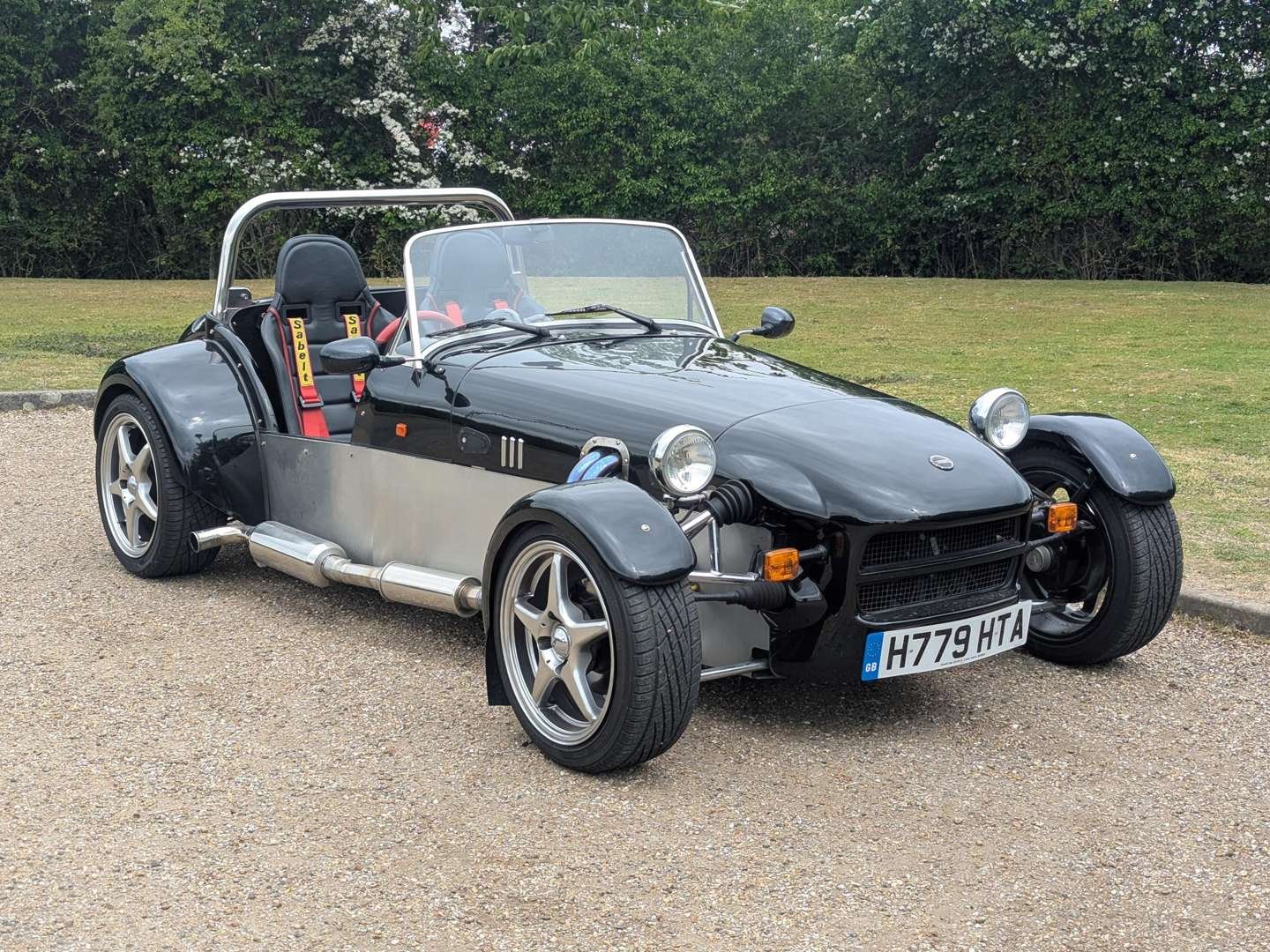
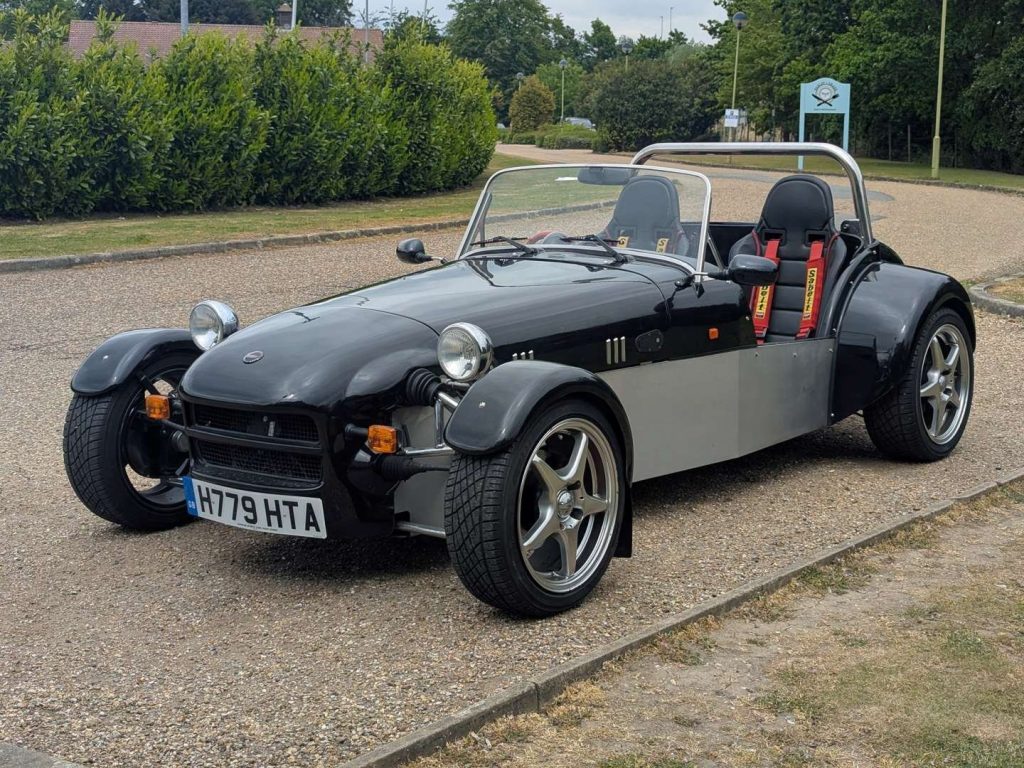
It’s a 2007 Quantum Xtreme.
And unless you’re particularly familiar with the British kit-car scene, there’s every chance you’ve never seen one before.
At first glance, you might assume it’s another variation on the Lotus Seven theme.
Two seats.
Long bonnet.
Open wheels.
Minimal bodywork.
A car designed to make driving feel like an occasion rather than simply getting you from one place to another.
And you’d be partly right.
But there’s rather more to the Quantum Xtreme than its appearance suggests.
A British Kit Car With an Interesting History
Quantum Sports Cars was established in the 1980s by brothers Mark and Harvey Wooldridge.
The company’s early cars were based largely around Ford Fiesta mechanical components.
There was the Quantum Coupé, followed by the Saloon and the 2+2 convertible.
These were rather different from the traditional open-wheeled kit cars.
The company became particularly well known for using glass-reinforced plastic monocoque construction rather than the conventional steel spaceframe chassis found beneath many kit cars.
But the Xtreme took things in another direction.
The Xtreme Wasn’t Originally a Quantum
Here’s something you might not know.
The car that became the Quantum Xtreme was originally developed as the Savant 175 by Sector Three Engineering.
Its design was the work of Richard Ashby and Steve Greenwood.
Quantum acquired the project around 2000 and renamed it the Xtreme.
And while it followed the familiar Lotus Seven-inspired formula, its construction was rather unusual.
A Stainless Steel Monocoque
Most people familiar with Caterhams, Westfields and similar cars will know about tubular spaceframe chassis.
The Quantum Xtreme uses something different.
A stainless steel monocoque.
Instead of relying on a conventional framework of welded tubes, the Xtreme’s structure uses formed stainless steel panels to create a rigid chassis.
According to the Quantum Owners Club, the design was tested to a torsional stiffness of more than 4,000Nm per degree.
That’s an impressive figure for a lightweight, open-top sports car.
The stainless steel construction also offers obvious potential advantages when it comes to corrosion resistance.
It was a distinctive engineering approach in a market already full of different interpretations of the Seven formula.
Ford Sierra Connections
The Xtreme was designed to use components from the Ford Sierra as its donor vehicle.
That helped make the project attractive to home builders.
Ford mechanical parts were familiar, widely available and relatively straightforward to work with.
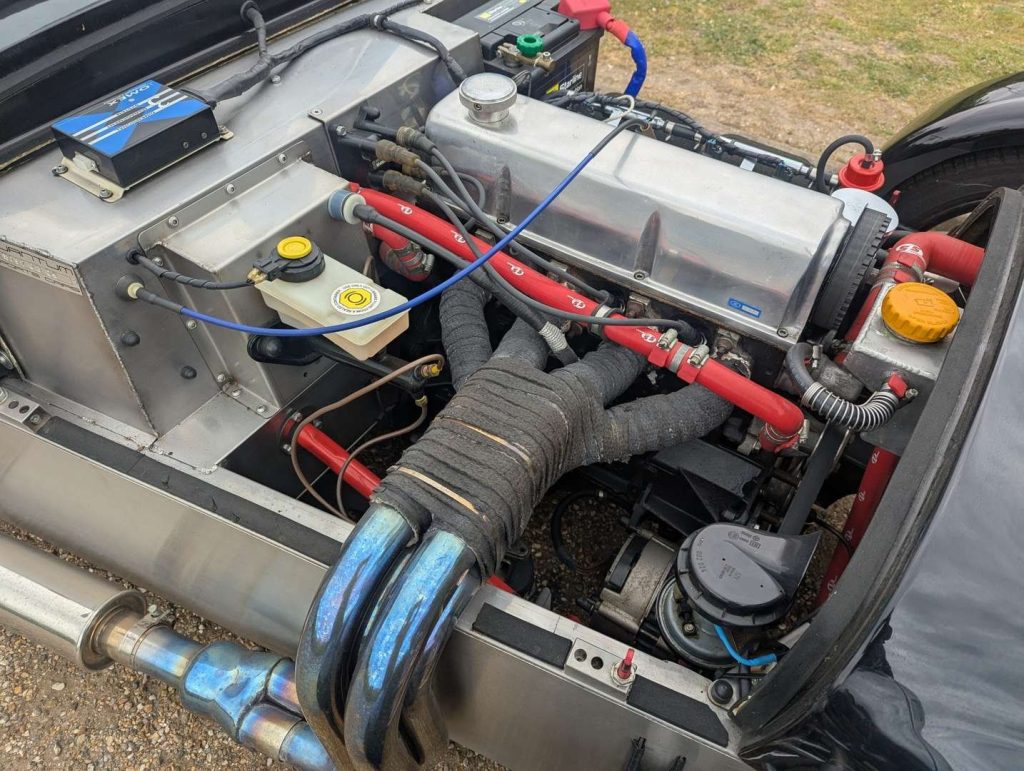
The standard engine option was a 2.0-litre Ford Pinto, although numerous other engines have found their way into Xtremes over the years.
The design also featured purpose-built independent suspension rather than simply transplanting the Sierra’s complete suspension arrangement.
Rear-wheel drive, a manual gearbox and a lightweight chassis made for a very appealing combination.
Especially if your idea of a good Sunday involves finding a quiet country road.
Surprisingly Practical, Too
Here’s another interesting detail.
The Xtreme was designed with a larger cockpit than some of its rivals.
It also had something you might not expect to find on a car like this.
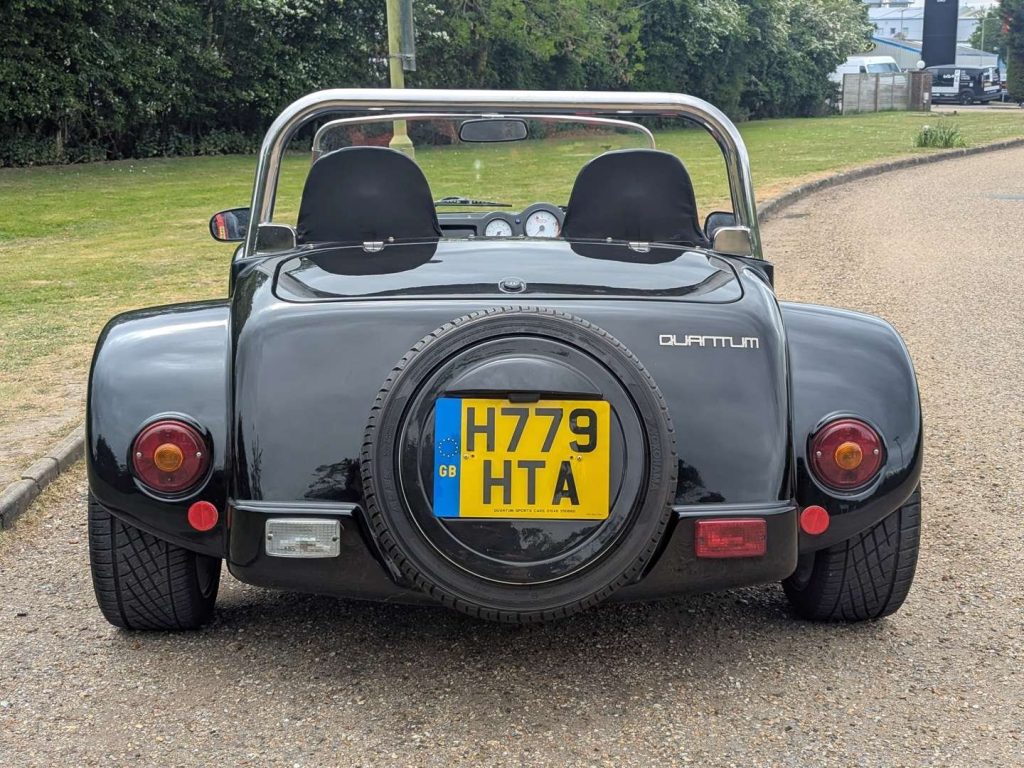
A proper, lockable boot.
The Quantum Owners Club quotes a capacity of 160 litres, with enough space for weather equipment and a weekend bag.
That’s actually quite useful.
You could conceivably take one away for a weekend without having to wear every item of clothing you own.
Although we’d still recommend checking the weather forecast.
The 2007 Quantum Xtreme at Auction
The car we’re looking at here was registered in 2007.
It had a 1,993cc engine and an odometer reading of just 2,995 miles.
Now, with a kit car, we’d always be careful about drawing conclusions from an odometer reading alone.
The construction history, donor components and documentation can be just as important.
But there were some encouraging details in the auction catalogue.
And one of them was particularly significant.
Correctly Registered With DVLA
Anglia Car Auctions specifically noted that this car was correctly registered with DVLA as a Quantum Xtreme.
That might sound like a small detail.
But with kit cars, it really isn’t.
The way a vehicle is registered can have a substantial bearing on its desirability.
Some older kit cars retain the identity of their donor vehicle, while others have registration records that don’t clearly describe what the car actually is.
This can create complications for buyers.
Here, the paperwork identified the car as a Quantum Xtreme.
The V5C also recorded that it had been assembled from parts, some or all of which were not new.
Its SVA/IVA approval certificate was issued in May 2007.
For somebody looking to buy an unusual kit car, that sort of documentary history is reassuring.
It doesn’t guarantee every aspect of the vehicle is perfect, but it removes one potentially significant area of uncertainty.
Eight MoTs Without Advisories
There was another encouraging detail.
According to the auction catalogue, the Quantum had passed its previous eight MoT tests without advisories.
Its current certificate was valid until 21 April 2027.
The vendor also reported that the car had recently received a new battery and spark plugs.
Again, none of this replaces an inspection.
But it all helps build a picture of a car that might be ready to enjoy rather than a half-finished project requiring months of work.
And with kit cars, that distinction can make an enormous difference.
Why Do People Buy Cars Like This?
We suspect the answer is quite simple.
Fun.
Not necessarily outright speed.
Not impressive figures on a specification sheet.
Just the experience of driving something small, light and direct.
Modern performance cars can be extraordinarily capable.
But capability isn’t always the same as enjoyment.
A car doesn’t need 500bhp to make you smile.
Sometimes the appeal is being close to the road, hearing the engine and feeling every corner.
And the Quantum Xtreme certainly looks like it could deliver plenty of that.
The Lotus Seven Formula Still Works
It’s remarkable how enduring the basic Lotus Seven concept has proved to be.
Colin Chapman’s original Seven appeared in 1957.
Nearly 70 years later, the idea of a lightweight, open-top, rear-wheel-drive sports car remains enormously appealing.
Caterham continues to develop the concept.
Westfield built its reputation around a similar philosophy.
And countless smaller manufacturers have produced their own interpretations.
The Quantum Xtreme is one of the more unusual examples.
Its stainless steel monocoque construction gives it an engineering identity of its own.
But the basic appeal remains timeless.
Keep the weight down.
Keep the driver involved.
And make the journey more entertaining than the destination.
What Would You Pay for One?
Now things get interesting.
Anglia Car Auctions gave this 2007 Quantum Xtreme an estimate of:
£3,000–£5,000.
That sounded like a potentially affordable way into some serious open-top entertainment.
The car had its registration paperwork.
It had a long run of advisory-free MoTs.
It had very low mileage showing.
And it looked enormous fun.
But kit cars can be difficult to value.
There’s No Simple Price Guide
With a mainstream classic, there are usually plenty of comparable cars.
You can look at recent auction results, classified advertisements and specialist sales.
With something like a Quantum Xtreme, things become much less straightforward.
How many have actually changed hands recently?
How many were built to a comparable specification?
How much does the quality of the original build affect the price?
And what premium should a buyer place on a correctly registered, usable example?
Those questions don’t always have easy answers.
Which is why an auction can be such an interesting place to discover what people are prepared to pay.
The Bidding Was Already Flying
By the time the auctioneer opened bidding to the room, the Quantum was already at:
£5,100.
That’s £100 above the top estimate before the room had even had its chance.
And the bidding didn’t stop there.
It continued in £100 increments.
Another bid.
And another.
And another.
Watching the auction unfold, we couldn’t help thinking how much fun the car looked.
Clearly, we weren’t the only ones who found it appealing.
But how far would the bidders go?
Watch the Full Auction Play Out Below:
Before watching, have a guess.
Would you have stopped at £5,000?
Gone to £5,500?
Or would you have kept bidding for something this unusual?
£6,600 Hammer!
That’s where the bidding finally stopped.
£6,600.
The Quantum had exceeded its £5,000 upper estimate by £1,600.
That’s 32% above the top of the guide.
And with the auction premium included, the successful bidder’s total came to:
£7,128.
Quite a result for a car that many people probably wouldn’t recognise.
Was It Worth That Much?
Well, somebody clearly thought so.
And they weren’t alone.
The important thing about an auction like this is that the final price wasn’t simply a number somebody had written on an advertisement.
It was established through competitive bidding.
Several people were prepared to keep going.
And that’s a useful reminder that an obscure car isn’t necessarily an undesirable one.
Sometimes the exact opposite is true.
Could You Have More Fun for the Money?
That’s an interesting question.
At £7,128 including premium, you’re into the territory of all sorts of second-hand sports cars.
An older Mazda MX-5.
An MG TF.
A BMW Z3.
Perhaps even an early Porsche Boxster, depending on condition.
All interesting cars in their own right.
But none offers quite the same experience as a lightweight, open-wheeled kit car.
And that’s where the Quantum’s appeal becomes easier to understand.
You’re not simply buying performance.
You’re buying a particular type of driving experience.
An Unusual Car With a Following
One of the things we enjoy about auctions is seeing cars like this attract genuine enthusiasm.
It’s easy to assume that only well-known classics will bring strong bidding.
Fords.
Minis.
MGs.
Triumphs.
The cars everybody recognises.
But there are plenty of smaller enthusiast communities with a deep appreciation for much more unusual machinery.
And those enthusiasts often know exactly what they’re looking at.
To somebody unfamiliar with the Quantum Xtreme, it might simply be a strange little kit car.
To somebody who understands the design, it could be a very desirable lightweight sports car with some clever engineering.
That’s quite a difference in perspective.
Correct Registration Matters
We also think the registration deserves another mention.
If you’re buying a specialist vehicle, having its identity correctly recorded is important.
A car with questionable documentation can be difficult to sell later.
It may also create unnecessary complications with insurance, inspections or future registration enquiries.
This Quantum’s recorded identity and approval paperwork were positive points in its favour.
For a buyer who wants to concentrate on enjoying the car rather than sorting out paperwork, that matters.
Perhaps the Estimate Was Simply Too Low
Or perhaps the bidders knew something the estimate didn’t fully reflect.
Auction estimates aren’t guarantees of value.
They’re guides.
Sometimes a car fails to reach them.
Sometimes it lands neatly within them.
And occasionally, a few determined bidders decide that the car is worth considerably more.
This Quantum certainly fell into the latter category.
The bidding had already passed the top estimate before the room became involved.
From there, it just kept climbing.
A Lot of Fun for £7,128?
We think so.
Obviously, we’d want to inspect any kit car carefully before buying.
Build quality varies.
Mechanical specifications can differ considerably between examples.
And specialist vehicles often need a little more owner involvement than an ordinary production car.
But assuming this one was as appealing in person as its history suggested, we can understand why the bidders were interested.
It’s distinctive.
Lightweight.
Rear-wheel drive.
Correctly registered.
And designed with driving enjoyment firmly in mind.
Would You Have Kept Bidding?
That’s the question we’re left with.
A 2007 Quantum Xtreme.
Just 2,995 miles showing.
Eight consecutive advisory-free MoTs.
Correct DVLA registration.
A £3,000–£5,000 guide.
And a room full of bidding activity that helped push the hammer price to £6,600.
We started by asking what on earth it was.
By the end of the auction, we were wondering whether we’d underestimated it ourselves.
Would you have paid £7,128 for this much fun?
Or would you rather spend the money on something a little more conventional?
Either way, it’s another reminder that some of the most entertaining cars at auction are the ones you weren’t expecting.
Join our newsletter
Get the best barn finds, projects and classic temptations direct to your inbox.
Related Posts
Discover More Classic Car Stories
Stay updated with the latest barn finds, auction news, and classic car adventures in our 'News & Waffle' section. Dive into rare discoveries, behind-the-scenes stories, and expert insights into the world of classic cars. Whether you’re a seasoned enthusiast or simply intrigued by the tales behind these treasures, this is your hub for all things classic and captivating.
Asking prices are one thing, but what are people actually prepared to pay for classic cars? Spend any time browsing classic car adverts and you’ll find some ambitious prices. But it’s when the bidding starts at auction that things can get particularly interesting. We’ve seen immaculate-looking classics struggle to attract buyers, while ...
Some of the most interesting things we see at auctions are not cars at all. They are signs. Not necessarily famous Shell, Castrol, BP or Michelin signs either. Sometimes it is a brewery name nobody outside the local area remembers. An old car park notice. A railway warning. A shop sign. An industrial plate. Something [&...
Some old motoring names have disappeared almost completely. Pratt’s is different. Go to enough automobilia auctions, rummage through enough old garages or spend enough time looking at vintage enamel signs and sooner or later you are likely to encounter that name. PRATT’S. Usually in enormous lettering. Often against a bright yellow background. And ...