Some links in this article are affiliate links and may earn UK Barn Finds a commission.
Some of the most interesting things we see at auctions are not cars at all.
They are signs.
Not necessarily famous Shell, Castrol, BP or Michelin signs either.
Sometimes it is a brewery name nobody outside the local area remembers.
An old car park notice.
A railway warning.
A shop sign.
An industrial plate.
Something from a farm.
Or a battered enamel notice that has spent 80 years screwed to a wall and looks, at first glance, like scrap.
And those are often the things that surprise people.
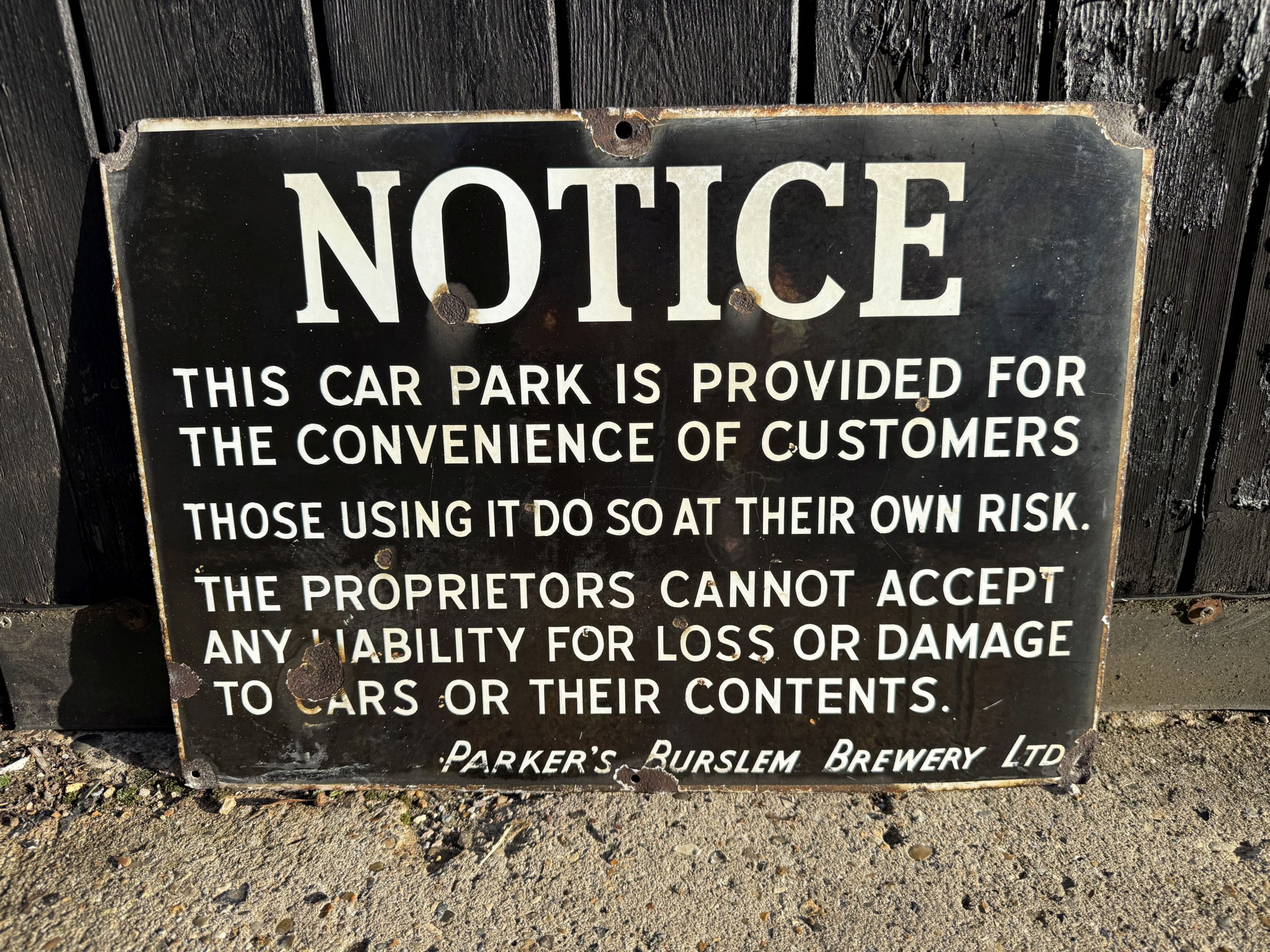
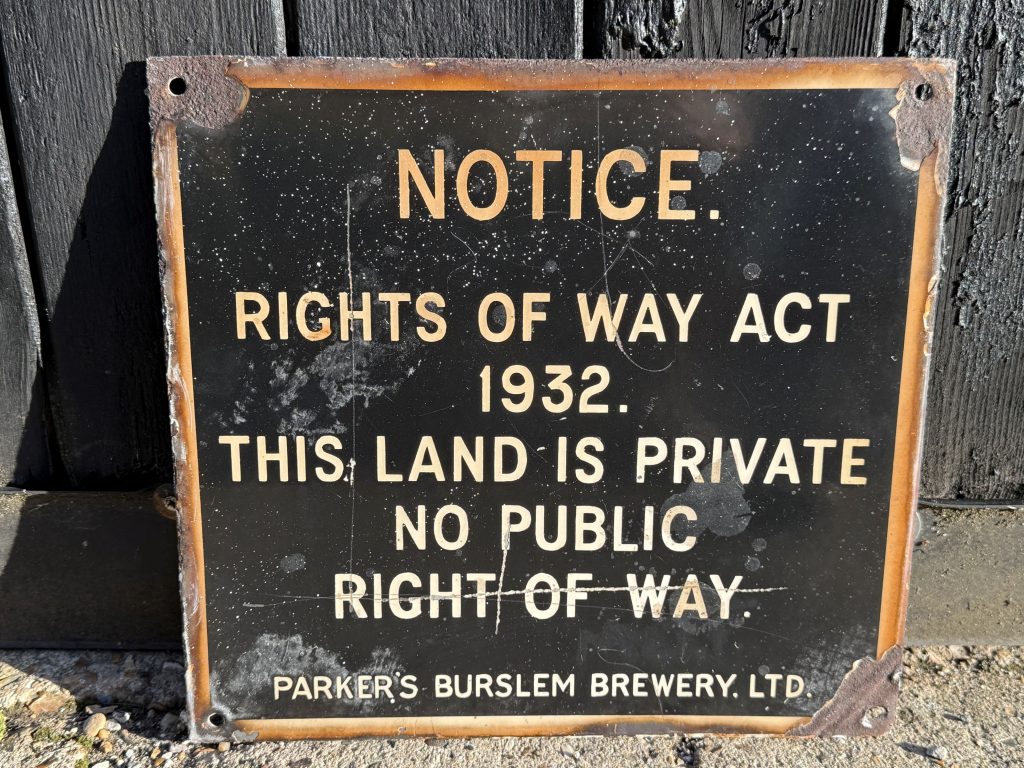
We recently picked up two old single-sided enamel signs from Parker’s Burslem Brewery.
One is an old car park notice, approximately 50cm by 36cm.
The other is a much smaller Rights of Way Act 1932 notice, approximately 30cm by 29cm.
Neither is glamorous.
Neither advertises a famous motoring brand.
And yet both are exactly the sort of thing that can attract serious interest from collectors.
That is why we always say the same thing when somebody is clearing an old garage, workshop, pub, shop or outbuilding:
Don’t throw old signs away until you know what they are.
Parker’s Burslem Brewery
The name on our two signs gives them an immediate local-history connection.
Parker’s Burslem Brewery Co. Ltd operated from Pitt Street East in Burslem, Stoke-on-Trent.
The brewery was founded in 1860 and formally registered under the Parker’s Burslem Brewery name in 1889.
Over the following decades it expanded substantially, acquiring other breweries and tied public houses.
By the time Ind Coope acquired Parker’s in 1949, the business had 468 tied houses.
Brewing at Burslem finally ceased in 1963.
So these are not simply anonymous old enamel notices.
They are surviving pieces from a once substantial Staffordshire brewery whose name would once have been familiar across pubs throughout the region.
The Car Park Sign
The larger of our two Parker’s signs is wonderfully practical.
It reads:
PARKER’S BURSLEM BREWERY LTD
and then explains that vehicles are parked entirely at the owner’s risk.
There is no colourful bottle of beer.
No cheerful advertising mascot.
No clever slogan.
It is essentially a liability notice.
And that is precisely what makes it interesting.
These are the signs people used every day and then stopped noticing.
They were screwed to pub walls, brewery yards, garages and car parks because they served a purpose.
When the premises changed hands or were demolished, most were simply discarded.
Decades later, that everyday quality is part of the attraction.
The Rights Of Way Act 1932 Sign Is Even More Interesting
Our smaller Parker’s sign refers specifically to the Rights of Way Act 1932.
That is not decorative wording.
It had a legal purpose.
The 1932 Act dealt with the circumstances under which long public use of a route could result in it being treated as a public highway.
Crucially, the legislation allowed a landowner to display a visible notice showing that there was no intention to dedicate a route to the public.
In other words, if people regularly crossed brewery-owned land, Parker’s could make it clear that their use of the route did not automatically create a public right of way.
That is why old brewery, factory and estate signs sometimes carry wording referring to the Rights of Way Act 1932.
It is a very ordinary-looking sign carrying a surprisingly specific bit of British legal and social history.
The Act itself has since been repealed, but the principle of long public use and presumed dedication remains part of modern rights-of-way law.
These Signs Were Not Unusual
Parker’s was certainly not alone in using signs like this.
Other breweries produced very similar notices.
A Wolverhampton and Dudley Breweries Rights of Way Act 1932 sign, for example, sold at auction for £120 back in 2017.
Surviving examples from other brewery companies show the same basic purpose: making it clear that private land was not being dedicated as a public right of way.
That tells us something useful.
These signs were once practical legal notices.
Today they have crossed over into collectables.
Why Do Obscure Old Signs Sell?
This is the part that continually surprises people.
A sign does not need to advertise a globally famous brand to be desirable.
Collectors may be interested because of:
Local history.
A brewery name.
A railway company.
A vanished shop.
A factory.
A town or village.
Typography.
Colour.
Unusual wording.
The maker of the sign.
The age.
The subject matter.
Or simply because they have never seen another one.
That last point matters enormously.
A Shell sign may have a huge collecting audience.
But an obscure sign from a long-gone local business can have two determined bidders who both desperately want it.
And auctions only need two people.
Local Interest Can Be Extremely Powerful
Local history is one of the strongest forces in this market.
Somebody may collect everything connected with one brewery.
Another person might collect signs from Stoke-on-Trent.
Someone else may be restoring an old pub formerly owned by Parker’s.
A collector might have spent years looking for anything carrying the name of a business their family worked for.
That is why apparently obscure signs can produce unexpectedly strong results.
Auctioneers themselves regularly point out that unusual advertising material and items with strong local interest can be particularly sought after.
Brewery Signs Can Make Serious Money
The market for brewery and advertising signs is incredibly broad.
A 1930s Anglo-Bavarian Ales enamel sign sold through Auctioneum in 2024 for £800.
A vintage Mew’s Brewery enamel sign sold through Stamford Auction Rooms in 2025 for £240.
Other specialist advertising auctions regularly produce results ranging from tens of pounds to hundreds or even thousands, depending on the subject and the sign itself.
Those figures are not valuations for our Parker’s signs.
They simply show why it is dangerous to look at an unfamiliar old brewery or business name and assume nobody will want it.
Condition Matters – But It Is Not Everything
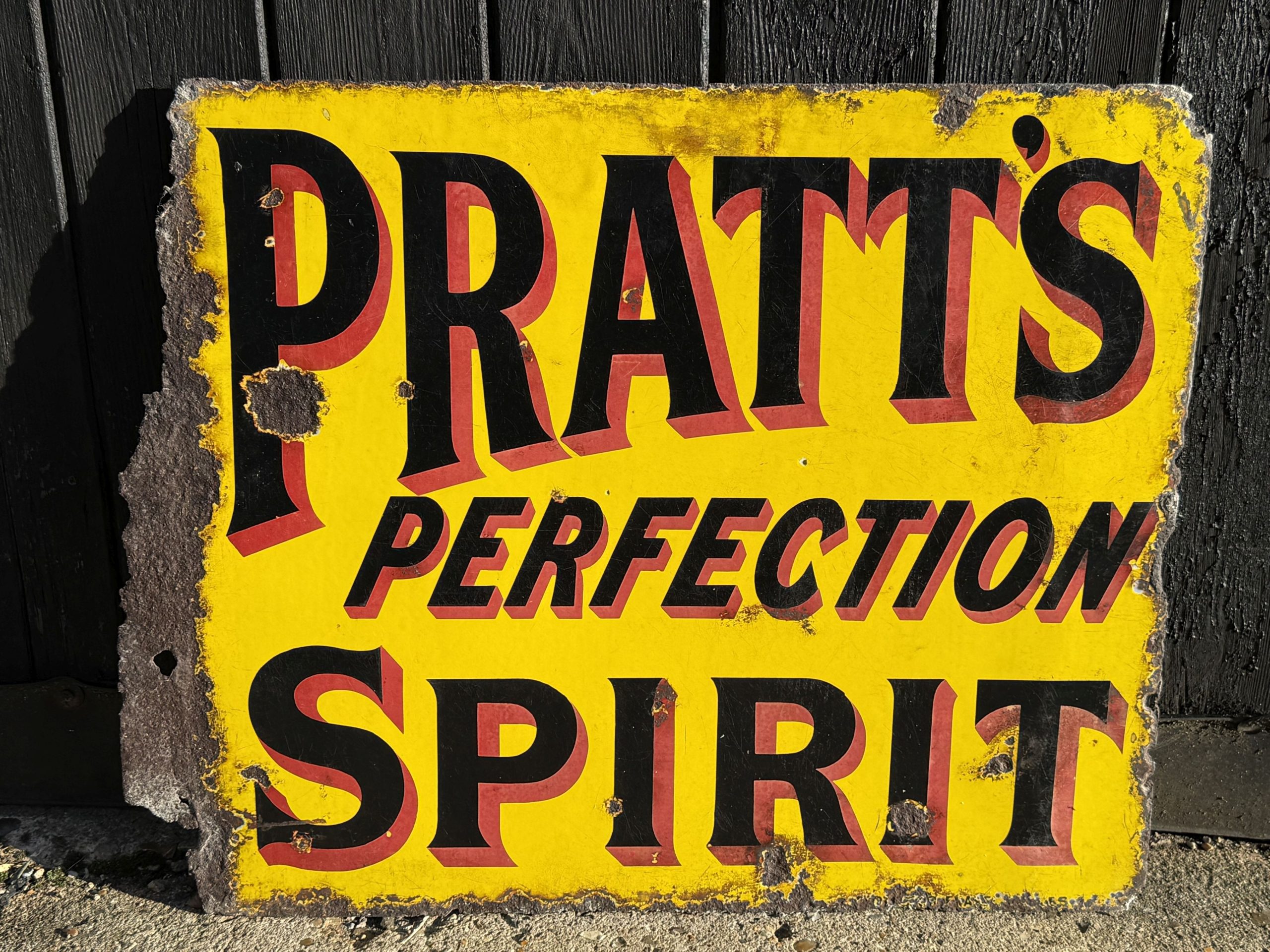
As we found with our Pratt’s signs, condition can make a huge difference to value.
Collectors generally prefer:
Strong original colour.
Good gloss.
Minimal enamel loss.
Clean lettering.
Straight edges.
No unnecessary restoration.
And as much originality as possible.
But condition is not the only thing that matters.
Rarity can outweigh damage.
Local interest can outweigh damage.
A particularly good design can outweigh damage.
And sometimes the battered condition is part of what makes an old industrial or brewery sign visually appealing.
We regularly see automobilia that looks almost beyond saving still attract bids.
That does not mean every rusty sign is valuable.
It means rusty is not the same thing as worthless.
Even Boring Signs Can Become Collectable
This is probably the most important lesson from our two Parker’s signs.
Neither one was created as a decorative object.
One tells you where liability lies if you park your car.
The other protects the brewery’s rights over private land.
That is about as mundane as signage gets.
And yet decades later, they tell us something about:
The brewery that owned them.
The property it controlled.
The people using that property.
The law of the period.
The language businesses used.
And the everyday environment around British pubs and breweries.
The boring stuff often becomes fascinating once enough time has passed.
What Other Old Signs Are Worth Looking For?
Almost anything old and original is worth checking before it goes in a skip.
That includes:
Old brewery and pub signs.
Shop signs.
Garage signs.
Petrol and oil advertising.
Railway notices.
Bus and tram signs.
Industrial factory signs.
Agricultural and farm signs.
Insurance plaques.
Old council notices.
Warning signs.
Road and direction signs.
Dealer signs.
Workshop notices.
Trade signs.
Cinema and theatre signs.
Soft-drink and food advertising.
Tobacco signs.
Electrical and battery advertising.
Even plain enamel notices with no obvious decorative appeal can be worth investigating.
Old advertising signs have been reproduced extensively.
Some reproductions are sold perfectly openly as decorative items.
Others can cause confusion.
Age alone should never be assumed simply because something looks rusty.
Things worth examining include the construction, enamel surface, fixing holes, back, edge wear, lettering, manufacturer’s marks and whether the design itself is known from period examples.
Artificial ageing exists.
So does restoration.
If there is potentially serious money involved, proper specialist opinion can be worthwhile.
But if you are simply clearing a garage or shed, you do not need to become an expert first.
That is the whole point.
Photograph it before you throw it away.
Don’t Clean An Old Sign To Make It ‘Better’
This is another important one.
Please resist the temptation to attack an old enamel sign with aggressive cleaners, abrasives or paint.
Collectors generally want originality.
Removing decades of dirt carefully may be one thing.
Polishing, repainting, touching in damaged enamel or trying to make a 90-year-old sign look new can be quite another.
The same applies to old tins, cans, advertising boards and other memorabilia.
If you are unsure, leave it alone.
It is much easier for somebody to clean an original object later than to undo an enthusiastic restoration.
We See This Stuff Everywhere
Because we spend so much time around classic-car and automobilia auctions, we see old signs constantly.
Some are obvious.
A big enamel petrol sign is hardly going to escape anyone’s attention.
But others are much easier to overlook.
Small notices.
Old brewery signs.
Bits of painted metal.
Advertising from companies nobody recognises anymore.
And it is often these obscure pieces that make us stop and look.
You never quite know what will suddenly make two bidders decide they absolutely have to own it.
Because sometimes the most ordinary-looking sign on the wall is the thing everybody ends up bidding on.
Affiliate Disclosure
When you click on links to various merchants on this site and make a purchase, we may earn a commission. Our affiliate partnerships include, but are not limited to, the eBay Partner Network and Amazon.
Join our newsletter
Get the best barn finds, projects and classic temptations direct to your inbox.
Related Posts
Discover More Classic Car Stories
Stay updated with the latest barn finds, auction news, and classic car adventures in our 'News & Waffle' section. Dive into rare discoveries, behind-the-scenes stories, and expert insights into the world of classic cars. Whether you’re a seasoned enthusiast or simply intrigued by the tales behind these treasures, this is your hub for all things classic and captivating.
Some old motoring names have disappeared almost completely. Pratt’s is different. Go to enough automobilia auctions, rummage through enough old garages or spend enough time looking at vintage enamel signs and sooner or later you are likely to encounter that name. PRATT’S. Usually in enormous lettering. Often against a bright yellow background. And ...
This Vanden Plas Princess auction result proves that first impressions don’t always tell the whole story. When this rather lovely 1968 Vanden Plas Princess 1300 was called into the auction room at Anglia Car Auctions, things didn’t quite go according to plan. Instead of driving in under its own power, it had to be pushed. [&...
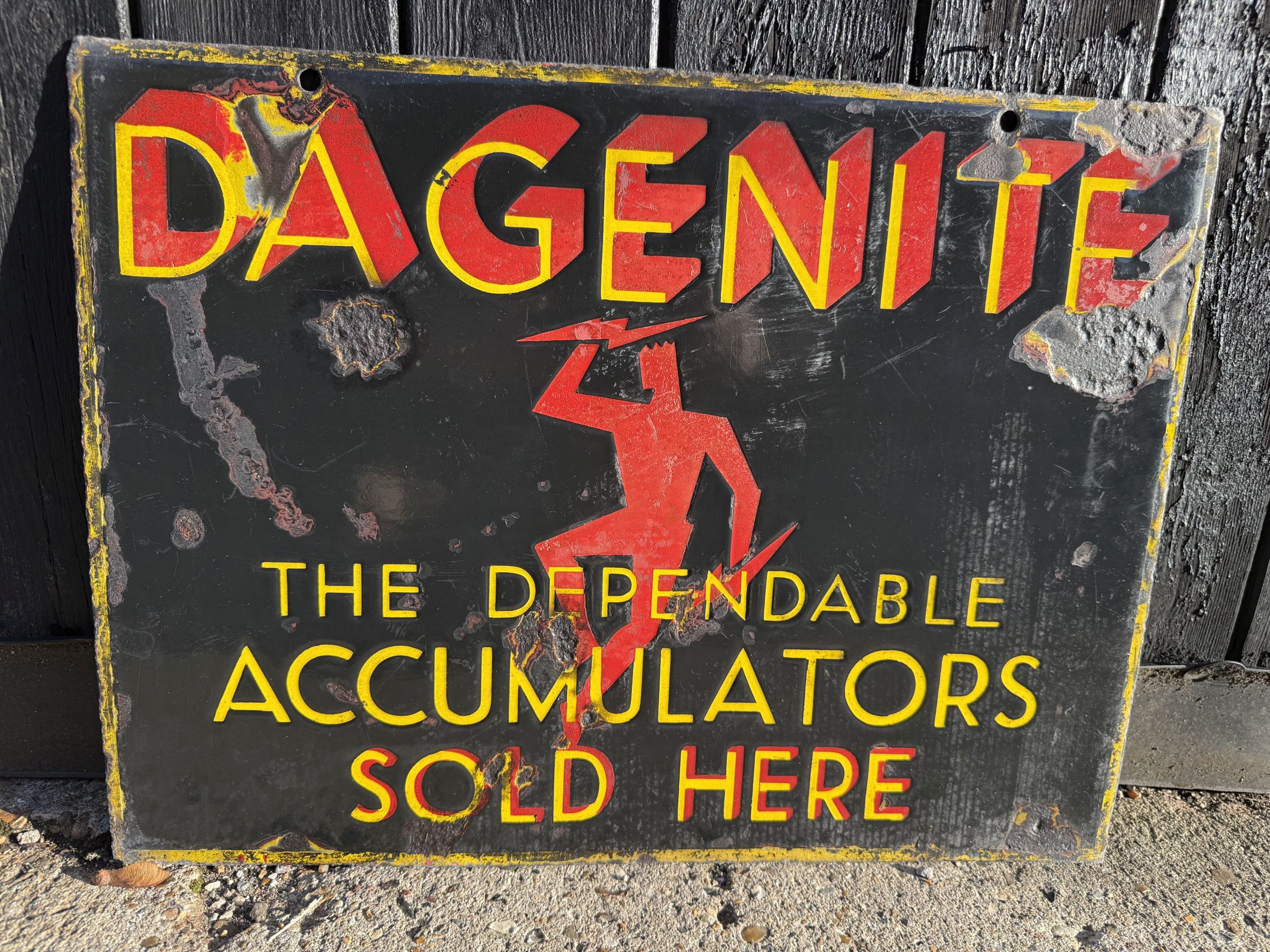
Some old garage signs need no introduction. Shell. Castrol. Esso. Dunlop. Then there are the names which were once familiar to motorists all over Britain but have quietly slipped out of everyday memory. Dagenite is one of them. We recently picked up this wonderfully worn, double-sided enamel sign measuring approximately 51cm by 38.5cm. One side [&...