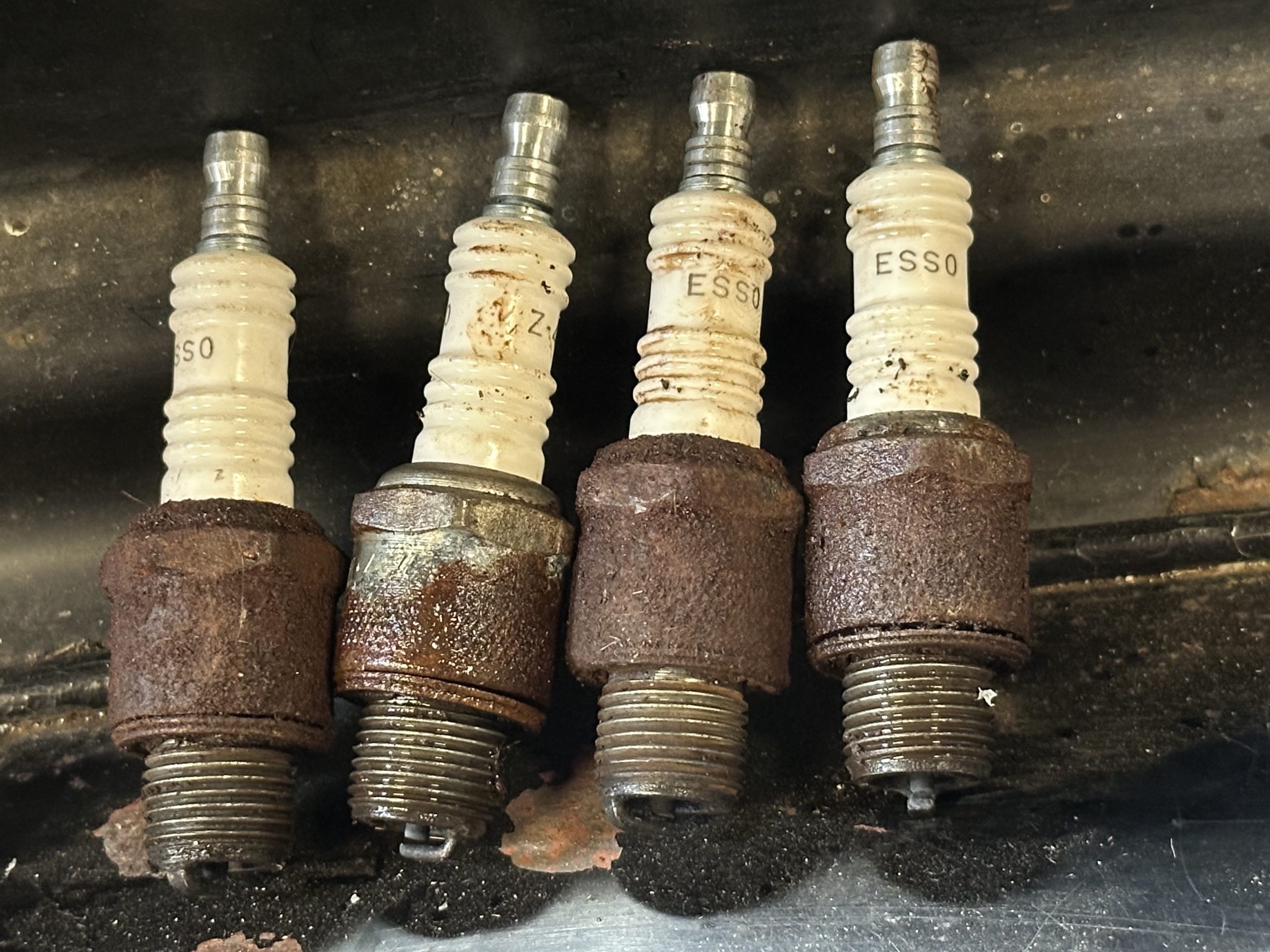
Although they carry the famous Esso name, specialist vintage spark-plug sources indicate that Esso-branded plugs were made by KLG.
That makes considerably more sense.
The KLG Connection
KLG was one of the great British spark-plug names.
The company grew from the work of racing driver Kenelm Lee Guinness, who became closely associated with the development of KLG spark plugs in the early days of motoring.
By the middle of the 20th century, KLG was a major British manufacturer, supplying spark plugs for both automotive and aviation use.
That wider reputation is well documented. Period Rolls-Royce records, for example, include correspondence and testing involving KLG spark plugs, showing just how established the company was as an engineering supplier long before our Ford Popular was built.
Specialist vintage spark-plug references also state that Esso plugs were made by KLG.
So describing these as Esso spark plugs is absolutely correct from a branding point of view.
But the manufacturing expertise behind them appears to have come from KLG.
Ours Are Esso Z-42 Spark Plugs
These particular four plugs came from our 1956 Ford Popular 103E.
That’s the wonderfully basic little Ford powered by the familiar 1,172cc sidevalve four-cylinder engine.
And now we know exactly what we’ve got.
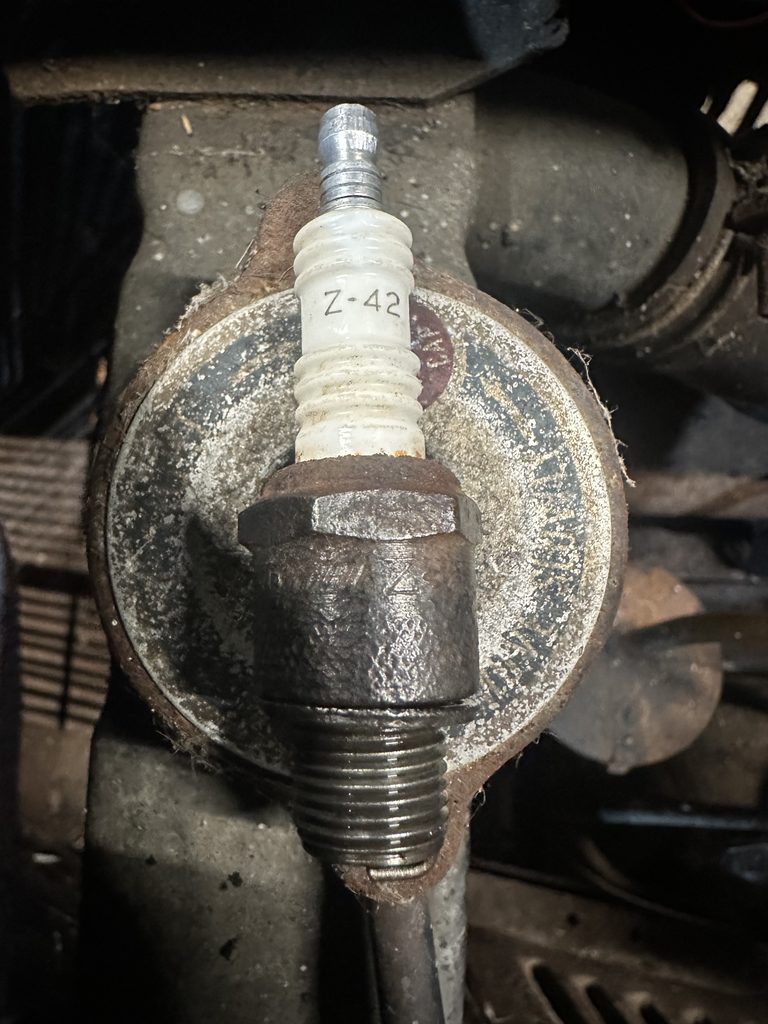
The plugs are clearly marked:
ESSO Z-42
on their ceramic bodies.
We haven’t found a reliable period Esso application chart that definitively tells us where the Z-42 sat in Esso’s range or what its direct modern equivalent would be, so we’re not going to invent an answer.
What we can say with certainty is that four Esso Z-42 spark plugs were fitted to this particular Ford Popular when we acquired it.
Current specialist parts suppliers list a 14mm spark plug equivalent to the old Champion L10 specification for the Ford Popular 103E, with Champion L86C commonly sold today as the replacement equivalent.
That gives us useful context, but it doesn’t automatically prove that the Esso Z-42 was Esso’s original catalogue equivalent.
Why Would Esso Sell Spark Plugs?
It actually makes perfect sense when you think about the motor trade of the period.
Service stations were part of a much wider motoring world where drivers bought fuel, oil and all sorts of consumables needed to keep a car going.
Spark plugs fitted neatly into that ecosystem.
And Esso certainly understood ignition and combustion technology.
Its research operation was involved in technical work around fuel behaviour, combustion and spark-plug fouling during this era.
So while the plugs themselves appear to have been manufactured by KLG, the Esso name on a spark plug was hardly random.
It was another way of keeping the brand under the bonnet as well as on the petrol pump.
They Certainly Look Like They’ve Been There A While
Nobody is going to mistake our set for new old stock.
The steel bodies have developed substantial surface corrosion and the ceramics carry plenty of grime and staining.
And that’s exactly how we like finding things.
These haven’t spent decades sitting untouched in a cardboard box.
They’ve been screwed into an old Ford engine and used for the job they were made to do.
Quite when they were fitted is another question entirely.
They may have been installed decades after the car was built.
Without dated paperwork tying them to a particular service, anything more precise would be guesswork.
But they’re staying with us.
Old Spark Plugs Have Become Collectables
This was another thing that surprised us.
Old spark plugs aren’t necessarily worthless workshop rubbish.
Collectors look for unusual brands, early designs, display plugs, boxed new-old-stock examples and plugs associated with famous manufacturers or fuel companies.
That collecting world overlaps neatly with petroliana and automobilia.
Esso is already one of the most recognisable names in petrol-station memorabilia, so combine that branding with an unusual period automotive component and you suddenly have something much more interesting than an ordinary used service part.
We’ve seen Esso spark plugs advertised for surprisingly strong money, particularly where they are unused, boxed or of an unusual type.
Values vary enormously, of course.
Condition, rarity, exact type, packaging and whether you’re looking at one used plug or a complete unused set can all make a big difference.
So we certainly wouldn’t suggest that four rusty plugs like ours automatically represent buried treasure.
But before throwing old branded spark plugs in the scrap bin, it’s worth having a proper look.
Another Great eBay Rabbit Hole
And this is exactly the sort of thing eBay is brilliant for.
Search for one obscure old motoring item and twenty minutes later you’re looking at spark plugs you’ve never heard of, old garage displays, petrol cans and boxes of new-old-stock components that have somehow survived untouched for half a century.
For a broader rummage, have a look at the vintage Esso spark plugs currently on eBay:
because sellers don’t always use the hyphen consistently.
Just don’t blame us if you emerge half an hour later having bought an old Esso oil can as well.
The Little Things Make Old Cars Interesting
This is exactly why we enjoy going through cars that have been sitting for years.
The big story might be the car itself.
But often it’s the little things that keep us interested.
An old dealer sticker.
A period accessory.
Something hidden under a seat.
An ancient tool in the boot.
Or, in this case, four rusty Esso Z-42 spark plugs carrying a petrol-company name we didn’t even realise had appeared on spark plugs.
Our Ford Popular has already produced a few surprises.
We suspect it isn’t finished yet.
Got An Old Car, Garage Or Collection To Clear?
We’re always interested in old cars, motorcycles and the things that accumulate around them.
If you’ve got a classic vehicle you’re thinking of selling, or you’re clearing an old garage, shed or workshop containing parts, new old stock, tools, petroliana, signs, literature or motoring memorabilia, we’d be interested to see what you’ve got.
Things don’t need to be cleaned, sorted or individually identified.
A few photographs are usually enough to start with.
Sometimes the apparently insignificant things are the most interesting finds of all.
Affiliate Disclosure
When you click on links to various merchants on this site and make a purchase, we may earn a commission. Our affiliate partnerships include, but are not limited to, the eBay Partner Network and Amazon.
Join our newsletter
Get the best barn finds, projects and classic temptations direct to your inbox.
Related Posts
Discover More Classic Car Stories
Stay updated with the latest barn finds, auction news, and classic car adventures in our 'News & Waffle' section. Dive into rare discoveries, behind-the-scenes stories, and expert insights into the world of classic cars. Whether you’re a seasoned enthusiast or simply intrigued by the tales behind these treasures, this is your hub for all things classic and captivating.
This Ford Puma auction result made us wonder whether one of the best small Fords of the 1990s is still being overlooked. Although, before we get into that, let’s establish something. This is what a Ford Puma should look like. Sorry, Ford. We’re sure the modern Puma has plenty going for it. There’...
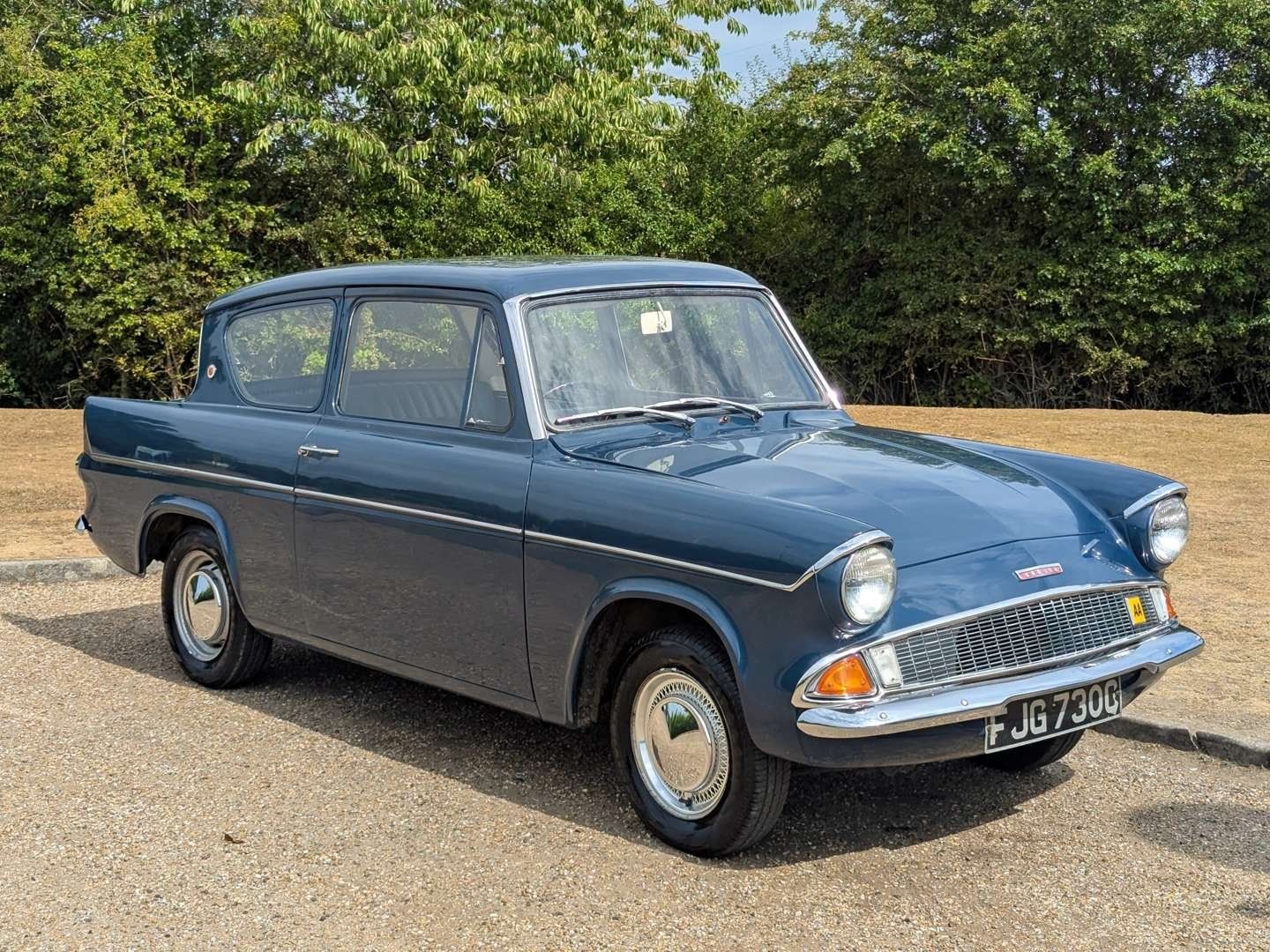
This Ford Anglia auction result suggests there is still plenty of demand for a good example of one of Britain’s best-known 1960s classics. But perhaps the important word there is good. We’ve heard plenty of discussion recently about cars from this era becoming harder to sell. The generation that remembers them when they ...
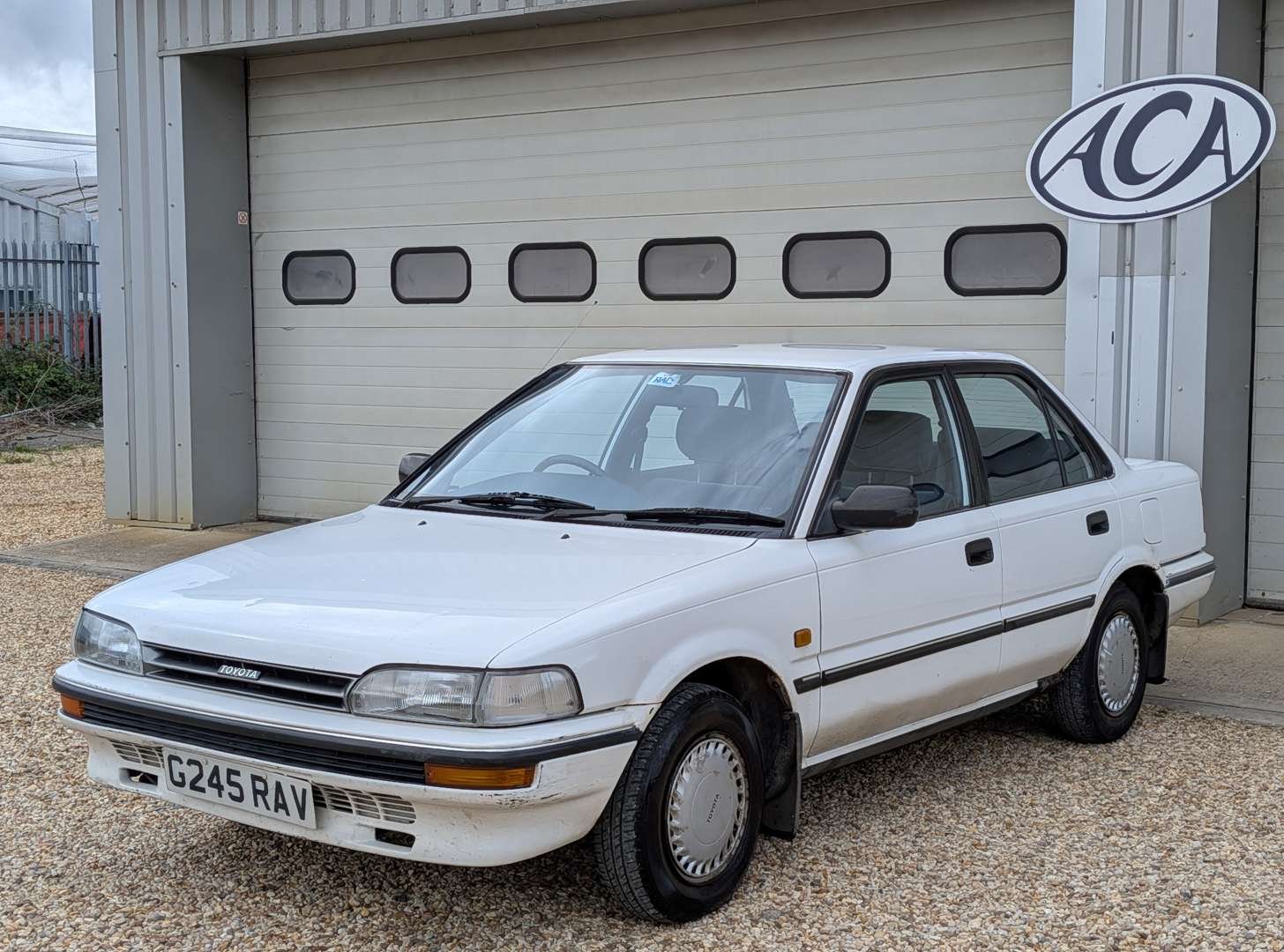
This Toyota Corolla auction result had us wondering whether one-owner provenance still matters when the car itself is far from perfect. Because this wasn’t a GTI. It wasn’t a homologation special. And there was certainly nothing exotic about it. It was a 1990 Toyota Corolla GL four-door saloon. But it had something we’re ...