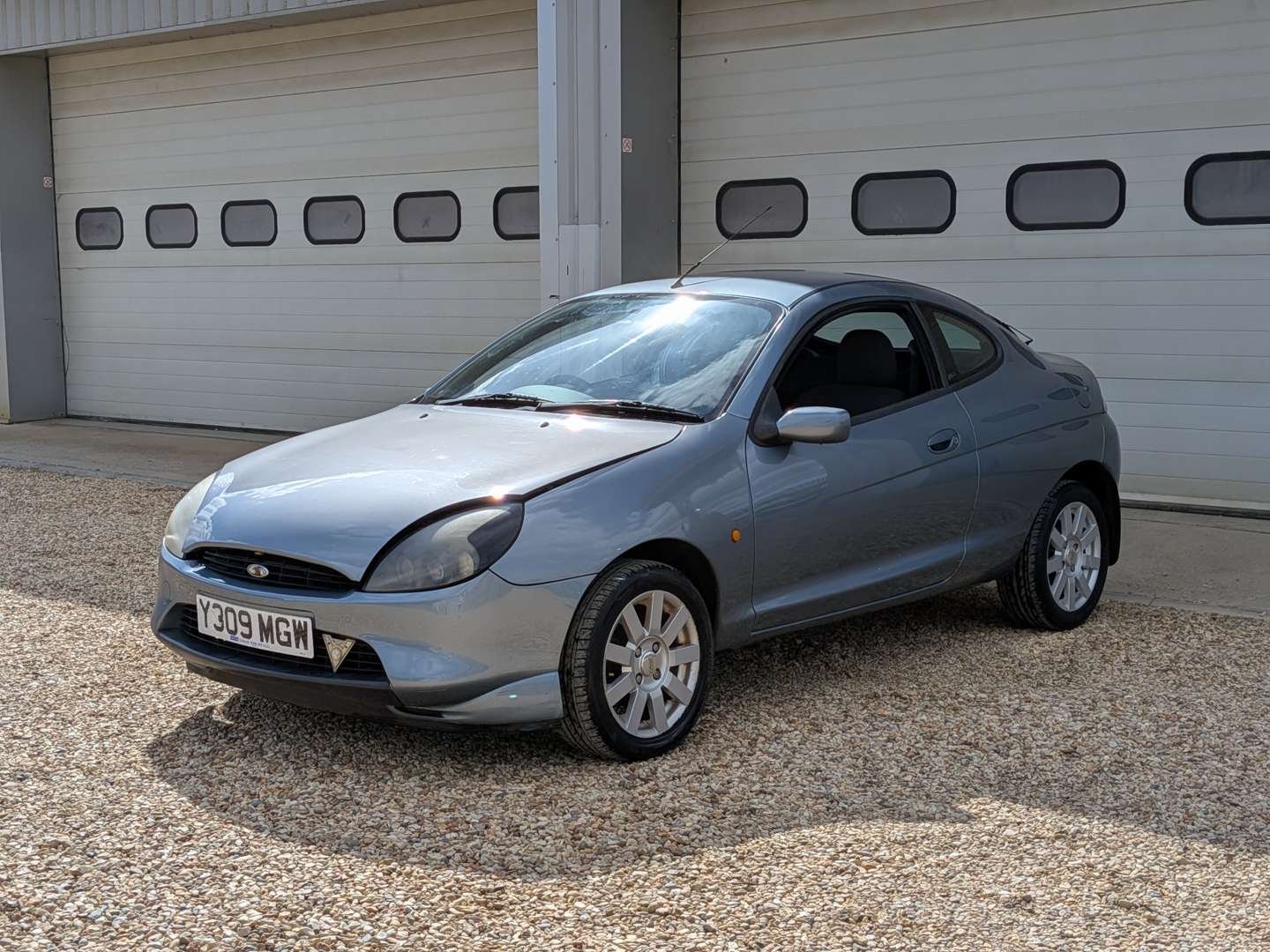
This Ford Puma auction result made us wonder whether one of the best small Fords of the 1990s is still being overlooked.
Although, before we get into that, let’s establish something.
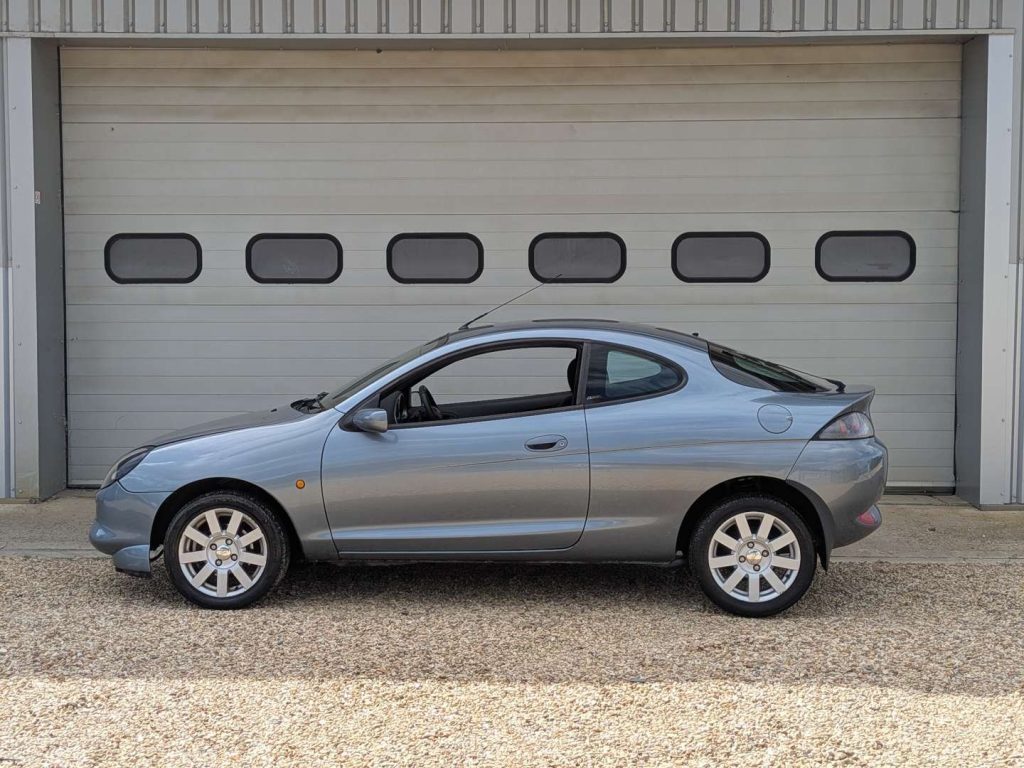
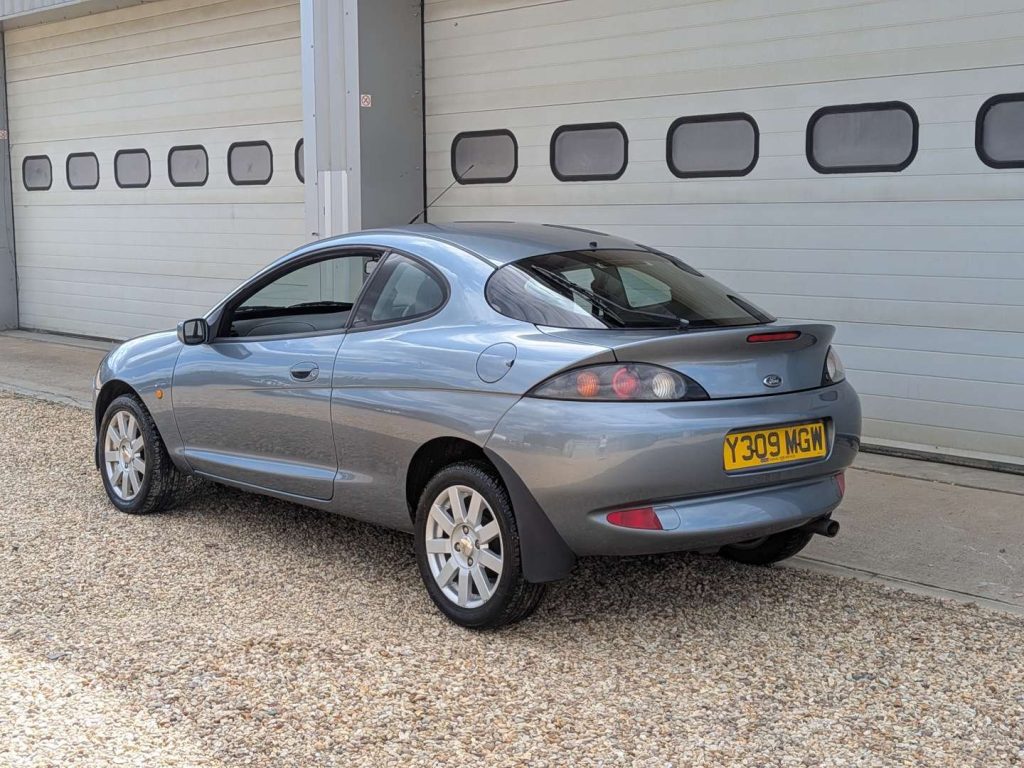
This is what a Ford Puma should look like.
Sorry, Ford.
We’re sure the modern Puma has plenty going for it.
There’s even an electric one now.
But mention “Ford Puma” to us and this is still what comes to mind.
A small, low-slung three-door coupé from an era when Ford seemed to be producing one great driver’s car after another.
And this particular 2001 Puma 1.6 had another thing going for it.
It was being sold with no reserve.
£200 and We’re Off
That’s where the bidding started.
Two hundred pounds.
Then £250.
£300.
And onwards in £50 increments.
There was no reserve waiting somewhere in the background.
Somebody was buying this Puma.
The only question was how much they would have to pay.
And looking through the history beforehand, we thought this one had quite a lot going for it.
85,184 Miles and 25 Service Stamps
The odometer showed 85,184 miles.
That’s hardly delivery mileage, but equally it isn’t frightening for a 25-year-old car.
More interesting was the maintenance history.
The service book contained:
25 service stamps.
And 22 of those were main-dealer stamps.
The most recent recorded service was at 82,229 miles.
That’s an unusually substantial service record for an inexpensive car of this age.
MoT Until June 2027
There was more.
The Puma had an MoT running until 9 June 2027.
It also came with a large collection of previous MoT certificates stretching back to its first test in 2004.
The vendor described the car as original and said that it drove well.
There was a spare key.
The handbook pack was still there.
And the V5C recorded five former keepers.
This wasn’t a freshly unearthed project requiring you to take somebody’s word for everything.
There was a proper history behind it.
The Original Puma Was a Very Different Idea
The first-generation Ford Puma arrived in 1997.
And it was exactly the sort of car manufacturers don’t seem terribly interested in building anymore.
A small, affordable coupé.
It wasn’t based on some exotic bespoke platform.
Underneath was a lot of Ford Fiesta.
That was actually part of the genius of it.
Ford took familiar, relatively inexpensive mechanical ingredients and wrapped them in a completely different body.
Then it made sure the resulting car was genuinely entertaining to drive.
Ford Was on a Roll
It’s worth remembering what was happening at Ford during this period.
The company had rediscovered the importance of making ordinary cars enjoyable.
The Mondeo had arrived earlier in the decade.
Then came the Ka.
The Puma.
And shortly afterwards, the Focus.
These weren’t simply replacements for previous models.
They represented a period when Ford was becoming increasingly adventurous with both styling and chassis development.
The Puma fitted that philosophy beautifully.
Fiesta Underneath, Something Special on Top
The Puma used the contemporary Fiesta as its starting point.
But dismissing it as a Fiesta in a party dress misses the point completely.
Ford altered the suspension and widened the track.
The steering and chassis were tuned to make the car feel sharper and more engaging.
And then there was the body.
More than a quarter of a century later, it still looks distinctive.
Small.
Curvy.
Compact.
And unmistakably a coupé.
It is difficult to confuse an original Puma with anything else.
The Famous 1.7 Isn’t the Only Puma Worth Having
Most enthusiast discussion naturally gravitates towards the 1.7-litre Puma.
Understandably so.
Its 1,679cc VCT engine was developed with Yamaha involvement and produced around 123bhp.
Then, at the top of the tree, there was the much more serious Ford Racing Puma.
But this wasn’t either of those.
This was the later 1.6-litre version.
Introduced in 2000 as a replacement for the earlier 1.4, the 1.6 produced a little over 100bhp.
Not exactly terrifying.
But that misses something important about the Puma.
Power was never the whole point.
A Puma Was About the Chassis
The original Puma earned its reputation because it was fun.
The steering.
The gearshift.
The way it changed direction.
The balance of the chassis.
You didn’t need enormous power to enjoy one.
That is increasingly refreshing in a world where even fairly ordinary modern performance cars can produce figures that would once have belonged to supercars.
There is something to be said for a car you can actually work hard at sensible speeds.
The Puma was very good at that.
And Then There Was That Advert
Anyone of a certain age probably remembers the television advert.
Ford digitally placed Steve McQueen into a Puma and sent him through the streets of San Francisco in a nod to Bullitt.
It was clever.
It was memorable.
And it positioned the little Puma as something rather more interesting than simply another Fiesta derivative.
Even today, mention the original Puma to enthusiasts and that advert tends to come up eventually.
Then Ford Brought the Name Back
Fast-forward to 2019 and Ford revived the Puma name.
Only this time it wasn’t attached to a tiny coupé.
It was a compact crossover.
Commercially, it’s difficult to argue with the decision.
The modern Puma became enormously successful in Britain.
It offers the practicality people now expect and fits the type of car buyers actually purchase in large numbers.
And now Ford offers the fully electric Puma Gen-E too.
But we’re car enthusiasts.
We’re allowed to be irrational.
Give us the little coupé.
Is This What a Ford Puma Should Look Like?
That’s how we started the reel.
And we suspect plenty of you will agree.
The funny thing is that the original Puma was itself a very modern-looking car when it appeared.
It wasn’t retro.
Ford wasn’t trying to recreate something from its past.
It was new.
Distinctive.
And slightly adventurous.
Perhaps that’s part of why the shape has aged so well.
The Problem Is That Pumas Rust
There is, however, a rather large elephant in the room.
Rust.
Original Pumas can suffer badly.
Rear wheelarches are a particularly well-known trouble spot.
Sills and floors can also cause problems, along with other areas of the structure.
And because values have remained relatively low, serious body repairs haven’t always made economic sense.
That’s important.
Cheap cars tend to get scrapped when the repair bill exceeds their value.
Which means the pool of decent survivors can shrink surprisingly quickly.
Cheap Doesn’t Necessarily Mean Plentiful Forever
We’ve seen this happen repeatedly.
A car spends years being worth almost nothing.
Nobody preserves ordinary examples because there appears to be no reason to.
Cars get modified.
Damaged.
Broken for parts.
Written off.
Or simply scrapped when they fail an MoT badly enough.
Then one day people start looking for a good one.
And discover that most of them have disappeared.
That’s often when values begin to change.
Is the Puma There Yet?
Maybe.
Maybe not.
We’re certainly not suggesting that every £750 Puma is about to become a £10,000 car.
That would be ridiculous.
The Racing Puma already occupies a completely different part of the market, and exceptional 1.7-litre cars naturally attract more interest than ordinary versions.
But that doesn’t mean the 1.6 should be ignored.
Especially if the car itself is good.
History Matters More as Cars Get Older
This is what made the ACA car interesting.
Twenty-five service stamps.
Twenty-two from main dealers.
MoT paperwork going back to 2004.
A current MoT until June 2027.
A spare key.
The handbook pack.
The vendor describing it as original and driving well.
On a car worth tens of thousands of pounds, you’d probably expect a substantial history.
On a Puma selling at this end of the market, it’s a lovely thing to find.
One to Tuck Away?
That’s the thought that crossed our mind.
Not necessarily lock it in a heated garage and never drive it again.
Quite the opposite.
Buy it.
Use it.
Maintain it.
Keep on top of the bodywork.
Preserve all that history.
And see where the market goes.
If values rise, lovely.
If they don’t, you’ve still had a small Ford coupé with a reputation for being great fun to drive.
That’s not a terrible outcome.
That’s What Future Classics Should Be About
The phrase “future classic” gets thrown around far too easily.
Sometimes it seems to mean:
“Old car I quite like.”
But there are certain ingredients that help.
Distinctive styling.
A strong reputation when new.
An interesting driving experience.
Enthusiast following.
Increasing rarity.
And some cultural significance.
The original Puma ticks quite a few of those boxes.
The First Marketplace Classics Sale
This car appeared at Anglia Car Auctions’ first Marketplace Classics sale.
We’ve already featured several cars from that auction, and this is exactly the sort of vehicle that makes the format interesting.
The sale brought together affordable classics, modern classics and cars that are only beginning to find an enthusiast following.
Some were expensive.
Some really weren’t.
This Puma was firmly in the latter category.
And There Was No Reserve
That added another element.
There was no £1,500 reserve waiting to stop proceedings.
No provisional result.
No negotiation afterwards.
The highest bidder was taking the car home.
Bidding opened at:
£200.
From there, it climbed in £50 steps.
Slowly but steadily.
Two Internet Bidders Wanted It
As the bidding progressed, it eventually came down to two internet bidders.
Neither was throwing enormous amounts of money around.
They didn’t need to.
At £50 a bid, the price crept upwards.
But that’s what made it interesting.
At what point does a 25-year-old Puma with a long MoT and 25 service stamps stop looking cheap?
£500?
£750?
£1,000?
£1,500?
Where would you stop?
Watch the Puma Go Under the Hammer
Remember what we know.
It’s a 2001 1.6.
85,184 miles showing.
Five former keepers.
Twenty-five service stamps.
Twenty-two of them main dealer.
MoT until June 2027.
And no reserve.
The bidding started at just £200.
Have a guess where it finished before watching the auction below.
£750 Hammer
That’s where it stopped.
£750.
Because the introductory Marketplace Classics buyer’s premium was subject to a £100 plus VAT minimum, the successful bidder’s total was:
£870 including premium.
Eight hundred and seventy pounds.
For a running, MoT’d Ford Puma with that history.
That sounds interesting to us.
Was It a Good Buy?
Potentially.
We need to be sensible here.
An auction description and a service book don’t tell you everything about a 25-year-old car.
We didn’t crawl underneath it with a screwdriver.
And on a Puma, body condition can make the difference between a bargain and something that becomes uneconomical very quickly.
But on the information available?
£870 including premium certainly doesn’t sound frightening.
What Else Does £870 Buy?
That’s always a useful way of looking at inexpensive auction results.
Eight hundred and seventy pounds doesn’t buy much car these days.
Yet here was something distinctive.
A proper little coupé.
A five-speed manual.
A decent maintenance record.
A long MoT.
And a model that is increasingly being talked about as a modern classic.
Even if values never dramatically increase, there is a lot to like at that price.
The 1.6 Might Actually Help
The obvious collector’s choice is the 1.7.
We know that.
And the Racing Puma sits above everything else.
But an ordinary 1.6 has an advantage if your intention is actually to use the car.
You don’t have to treat it as precious.
You don’t need to worry that every mile is damaging some investment value.
You can simply enjoy it for what it is.
Sometimes the cheaper version of an emerging classic is the more enjoyable car to own.
We’d Be Watching the Bodywork
If we were buying one with the intention of keeping it, that would be our priority.
Mechanical consumables can generally be dealt with.
The Fiesta connection also means many service items aren’t exotic.
Rust is different.
Once corrosion takes hold in structural areas, bills can escalate quickly.
So if you find a sound Puma, keeping it sound may prove far more important than chasing tiny improvements elsewhere.
Preservation now could save a great deal of money later.
We May Miss Cars Like This
Small coupés have largely disappeared from mainstream manufacturers.
That makes the Puma interesting beyond its badge.
In the late 1990s and early 2000s you could choose from all sorts of relatively affordable coupés.
Ford Puma.
Vauxhall Tigra.
Toyota Celica.
Hyundai Coupé.
Peugeot 406 Coupé further up the market.
Manufacturers were prepared to build cars partly because they looked good and were fun to own.
Today’s market has moved elsewhere.
Perhaps that’s another reason these cars are starting to feel special.
£870 and a Long MoT
Would we tuck this one away?
Possibly.
But we’d still drive it.
That’s surely the sweet spot with an emerging modern classic.
Buy before values make you frightened of using it.
Look after it properly.
Keep the history together.
Deal with corrosion before it becomes serious.
And enjoy the car while everybody else is still deciding whether it’s a classic.
Is the Original Ford Puma a Future Classic?
We’d argue that the good ones are already modern classics.
They’re more than 20 years old.
They’re distinctive.
They represent an interesting period in Ford’s history.
They were highly regarded when new.
And they’re becoming much less common on the road.
Whether that translates into dramatically higher values is another question entirely.
It doesn’t need to.
A car can be a classic without becoming expensive.
Perhaps That’s the Best Thing About It
We spend a lot of time talking about classic-car prices.
It’s unavoidable.
But sometimes an auction result reminds you that there are still interesting cars available for very little money.
This Puma hammered at £750.
The buyer paid £870 including premium.
It had 25 service stamps and an MoT until June 2027.
And it came from an era when Ford built a small coupé simply because a small, affordable, fun coupé seemed like a good idea.
Maybe the clever move isn’t to buy one because it’ll be worth a fortune.
Maybe it’s to buy one while you can still get a good one cheaply.
Because once they’re gone, they’re gone.
Join our newsletter
Get the best barn finds, projects and classic temptations direct to your inbox.
Related Posts
Discover More Classic Car Stories
Stay updated with the latest barn finds, auction news, and classic car adventures in our 'News & Waffle' section. Dive into rare discoveries, behind-the-scenes stories, and expert insights into the world of classic cars. Whether you’re a seasoned enthusiast or simply intrigued by the tales behind these treasures, this is your hub for all things classic and captivating.
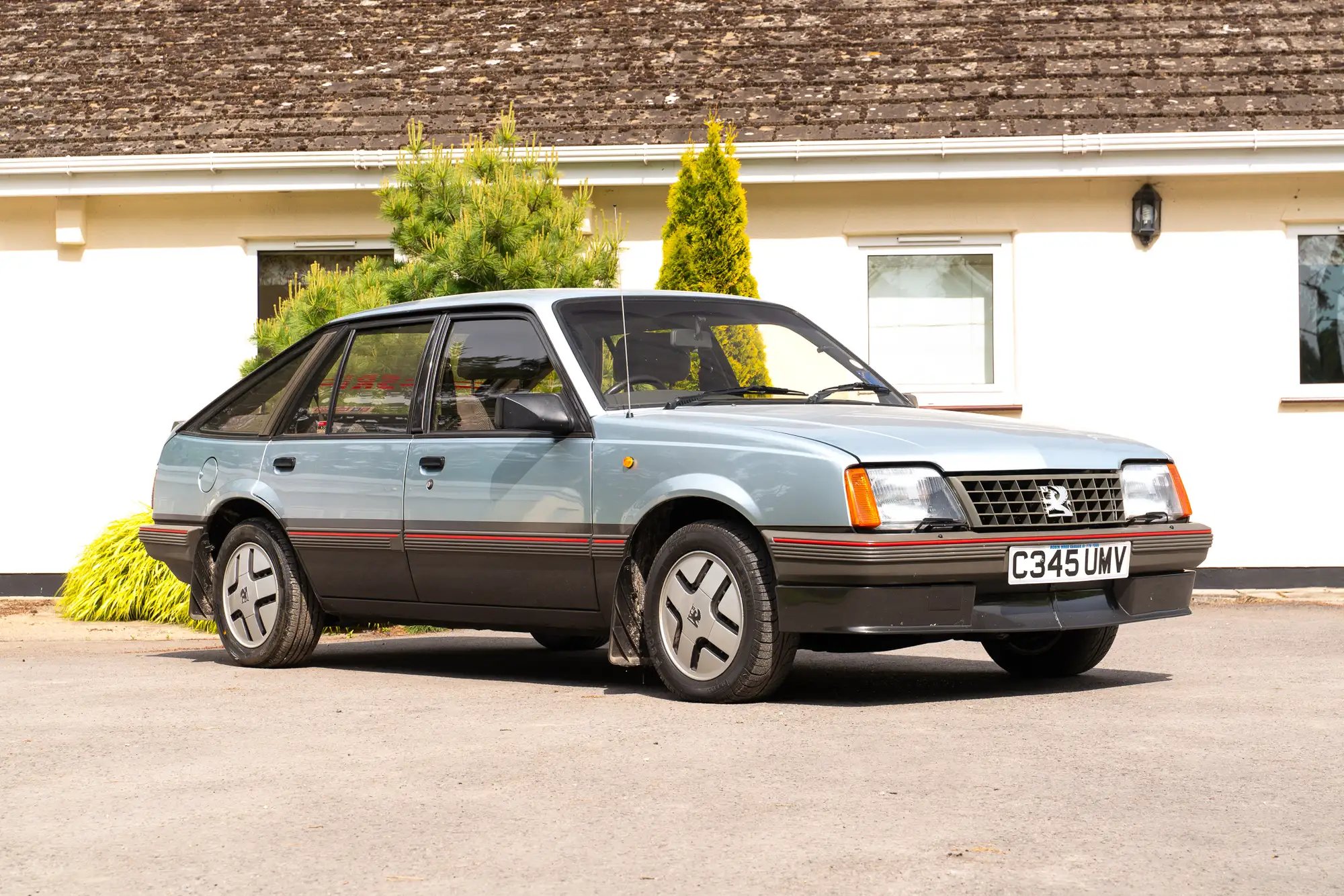
There’s something about a well-preserved 1980s Vauxhall that really takes us back. And this 1986 Cavalier SRi, finished in its original Astral Silver and Anthracite two-tone paintwork, was a particularly appealing example. Just 48,304 miles showing, three previous owners, original dealer details and the distinctive appearance that made the SRi one of Vauxhall’s most recognisable [&...
There was a time when a trip to the local motor spares shop could result in coming home with something you never knew you needed. Perhaps it was a new gear knob. A pair of auxiliary mirrors. One of those little bottles of Feu Orange air freshener. Or a gadget that promised to make driving [&...
We’ve watched thousands of cars go through auction halls over the years, but every now and then something arrives that really catches our attention. This 1993 Ford P100 was one of them. Not because it was particularly rare or expensive. But because of the extraordinary noise it made as it drove through Anglia Car Auctions. [&...