This Ford Anglia auction result suggests there is still plenty of demand for a good example of one of Britain’s best-known 1960s classics.
But perhaps the important word there is good.
We’ve heard plenty of discussion recently about cars from this era becoming harder to sell.
The generation that remembers them when they were new is getting older. The classic-car market is changing. And younger buyers often have their sights set on cars from the 1980s, 1990s and increasingly the 2000s.
So what happens to cars like the Ford Anglia?
This beautifully presented 1965 105E gave us an interesting clue when it went under the hammer at Anglia Car Auctions.
By the time bidding opened to the room, the internet bidders had already been fighting over it.
And they weren’t finished yet.
A Ford Anglia You Could Actually Use
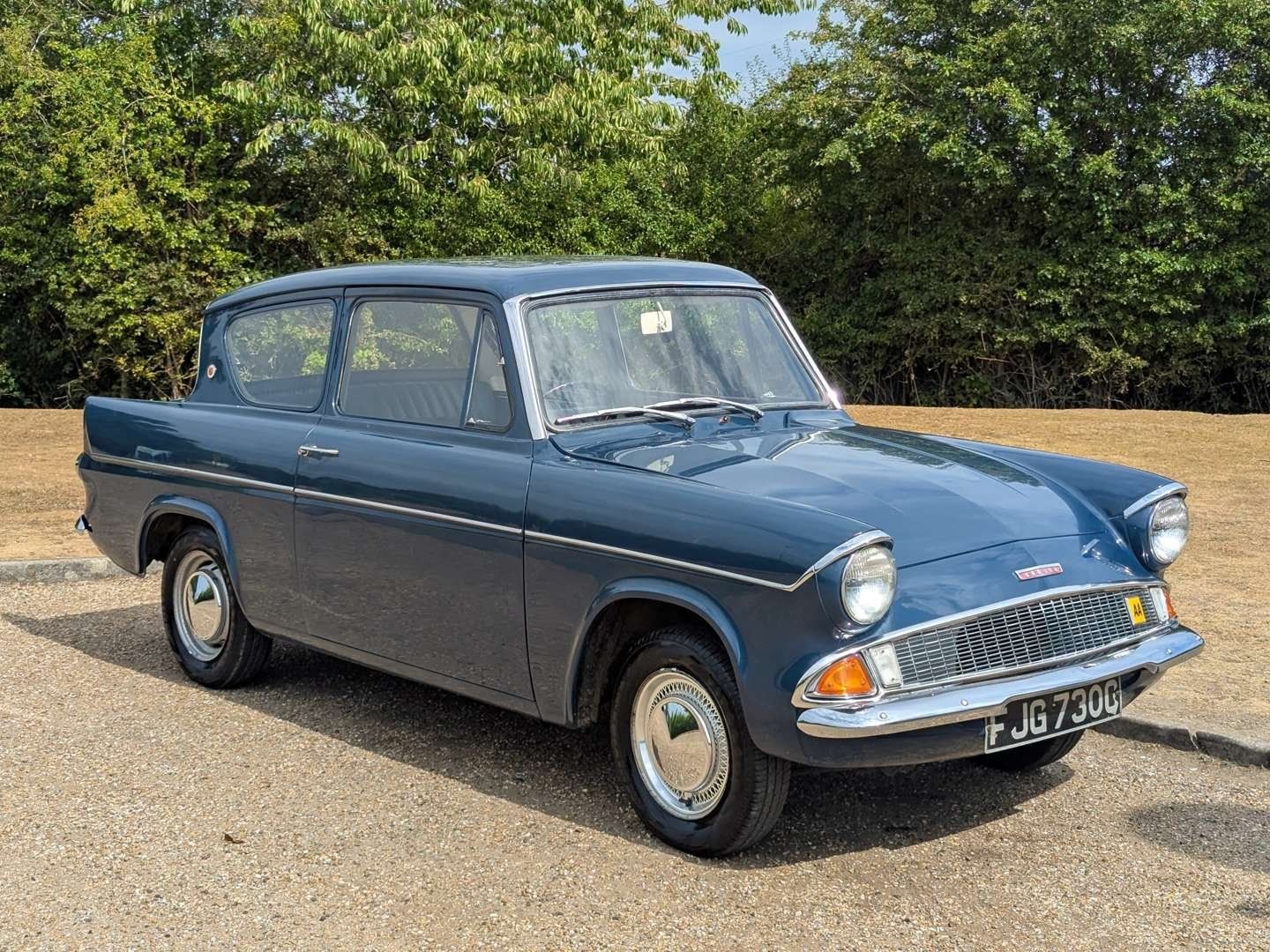
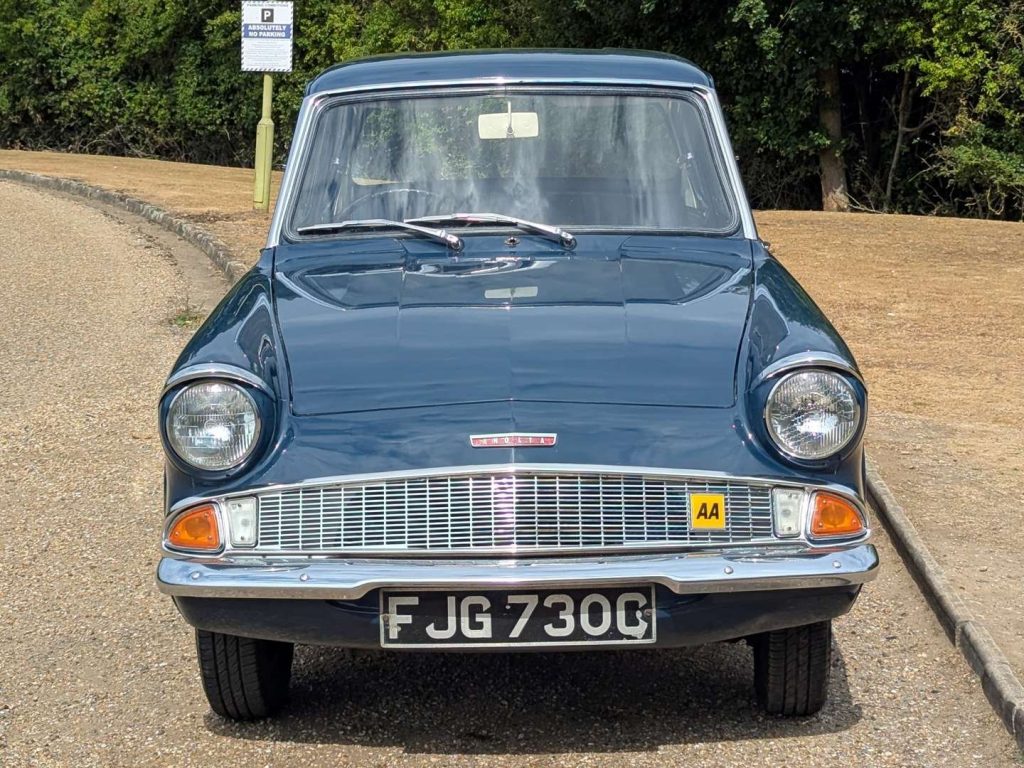
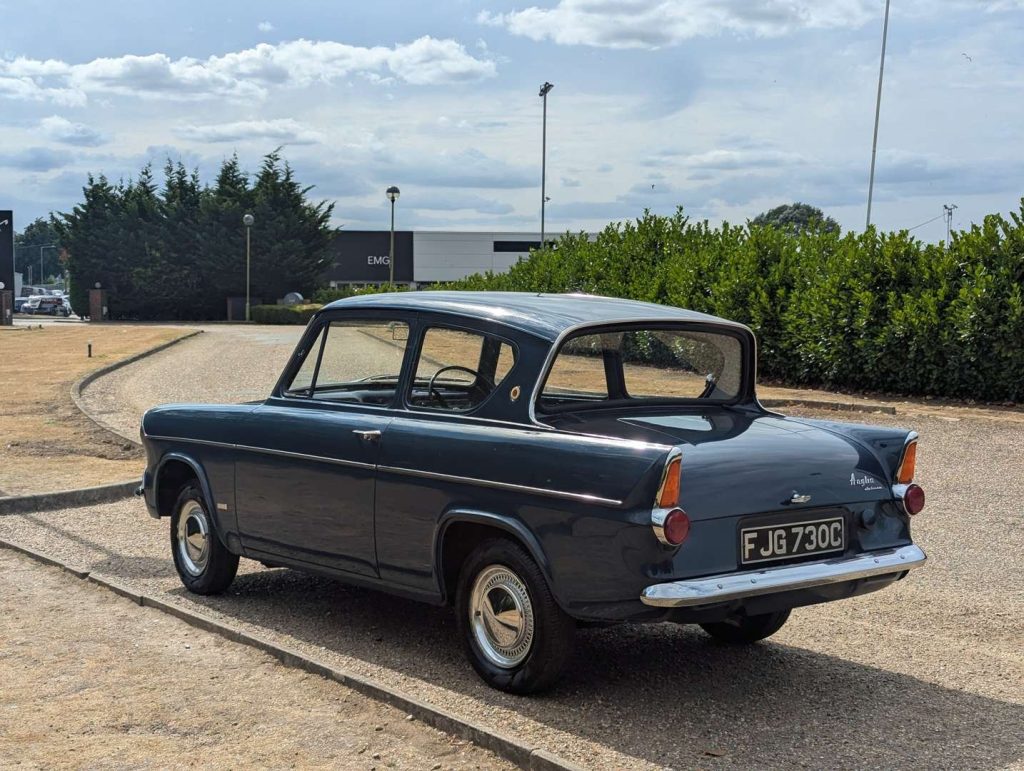
The first thing that struck us about this car was its presentation.
It looked like an Anglia you could buy and enjoy.
The blue bodywork presented well.
The Deluxe-specification brightwork suited it perfectly.
The blue interior complemented the exterior.
And according to the vendor, it was driving well.
That last point may be increasingly important.
There is a world of difference between buying a classic that appears ready to enjoy and buying a project that needs months or years of work before you can use it.
We suspect the market is becoming increasingly aware of that difference.
A 1965 Anglia 105E Deluxe
This particular car was a 1965 Ford Anglia 105E Deluxe.
Under the bonnet was the familiar 997cc engine, coupled to a manual gearbox.
Its odometer showed 29,499 miles, although the auction catalogue did not warrant that figure as the car’s total mileage.
There were five former keepers recorded.
Most interestingly, the third keeper had owned the Anglia for 25 years, from 1987 until 2012.
Long-term ownership like that is always nice to see in a classic’s history.
It Had Already Been Through ACA Before
This wasn’t the Anglia’s first appearance at Anglia Car Auctions.
The vendor had bought it through ACA in 2020.
Since then, it had been used for shows and had even won a Best in Show award.
That tells you something about how it had been regarded and presented during the latest ownership.
This wasn’t an Anglia dragged from a garage and sent straight to auction.
It had been out there being enjoyed.
There Was Plenty of History
The paperwork added to its appeal.
The car came with MoT certificates covering the period from 2000 to 2020.
There was also a substantial collection of old tax discs, a few more recent receipts and a spare key.
Recent work included new windscreen rubbers in 2023.
New door cards followed in 2024, along with new ignition leads.
None of those jobs individually transforms the value of a car.
Together, though, they help build the picture of a classic that somebody has continued to care for.
The Anglia Was a Big Step Forward
It’s easy to look at a Ford Anglia today and see nothing more than a charming little old car.
In 1959, the 105E was much more significant than that.
It replaced the far more traditional Anglia 100E with something that looked radically different.
The styling was heavily influenced by American design.
There were small tail fins.
Hooded headlights.
And, most famously of all, that reverse-raked rear window.
More than 60 years later, you can recognise a 105E from its silhouette alone.
It Wasn’t Just the Styling
Underneath, the 105E represented an important step forward for Ford too.
Its new 997cc overhead-valve engine became the starting point for the famous Kent engine family.
It also gained a four-speed gearbox, a significant improvement for Ford’s small-car range at the time.
The basic recipe remained wonderfully conventional.
Engine at the front.
Drive to the rear wheels.
Simple mechanicals.
Compact body.
That simplicity is a large part of the Anglia’s attraction as a classic today.
More Than a Million Were Built
The Anglia 105E arrived in 1959 and remained in production until 1967.
By the end, Ford had built more than a million of them, excluding the van derivatives.
That means rarity was never really the point.
The Anglia mattered because it was everywhere.
It was family transport.
A first car.
A work car.
Something people modified, raced, repaired and eventually replaced.
Then the Mk1 Escort arrived and began another chapter in Ford’s small-car story.
The Ford Connection Still Matters
Classic Fords occupy an interesting position in the UK market.
There is an enormous enthusiast following surrounding the Blue Oval.
Escorts, Capris, Cortinas, Fiestas and Sierras can all generate remarkable interest in the right specification and condition.
The Anglia belongs to an earlier generation of that story.
It doesn’t have the rallying image of an Escort RS.
It doesn’t have the 1980s hot-hatch appeal of an XR2.
But it is unmistakably part of the same Ford family tree.
And for plenty of enthusiasts, that matters.
Then There’s the Harry Potter Effect
The Anglia also gained an entirely new audience decades after production had ended.
A blue Ford Anglia famously appeared in Harry Potter and the Chamber of Secrets.
For people who grew up with the books and films rather than with 1960s British roads, that may actually be their first association with the model.
It’s quite an achievement for a small family Ford launched in 1959.
One generation remembers seeing Anglias everywhere.
Another knows one because it could fly.
Either way, very few British family cars of the period are quite so instantly recognisable.
Are 1960s Classics Losing Their Audience?
This is where the auction becomes particularly interesting.
There is a genuine conversation taking place around older classics.
The people who remember 1950s and 1960s cars when they were new are inevitably becoming a smaller part of the market.
Meanwhile, enthusiasts who grew up in later decades are often spending their money on the cars that mean something to them.
That’s perfectly natural.
Today’s nostalgia increasingly includes XR3is, Golf GTIs, BMWs, Japanese performance cars and even machinery from the early 2000s.
But does that mean the older cars are finished?
This Anglia suggests the answer is more complicated.
Perhaps Buyers Are Simply Getting Fussier
That’s our suspicion.
The market may not be abandoning cars like the Anglia.
It may simply be becoming less forgiving.
A good car that looks ready to jump into and enjoy still has obvious appeal.
A project is a different proposition.
Restoration costs have risen.
Bodywork isn’t cheap.
Paint isn’t cheap.
Trim isn’t cheap.
And even if you can do much of the work yourself, your time still has value.
A £3,000 project can very easily become a far more expensive car than an £8,000 example that was already sorted.
Projects Need the Right Buyer
We know this particularly well because projects are a huge part of what we do.
There will always be enthusiasts who want to rescue something.
For some people, the restoration itself is the hobby.
They don’t necessarily want a finished car.
But that is a particular type of buyer.
Someone who simply wants a classic for Sunday drives, shows and local events may look at a restoration project and see years of expense and work.
Put a clean, presentable, usable Anglia beside it and the decision becomes very different.
We’d Expect a Project to Be Considerably Cheaper
That’s the distinction this result highlighted for us.
Had this been a rough 105E needing welding, paint, interior work and mechanical recommissioning, would the bidding have behaved the same way?
We very much doubt it.
Our feeling is that the price would have been considerably lower.
That doesn’t mean projects have no market.
It means the gap between projects and good usable cars may be increasingly important.
And perhaps that’s a healthier way to look at the market than simply saying:
“Old cars aren’t selling anymore.”
Some clearly are.
The Estimate Was £6,000 to £8,000
Anglia Car Auctions gave this car an estimate of:
£6,000 to £8,000.
That felt like a useful test.
Would bidders agree?
Would the car struggle because it belonged to an older generation of classics?
Or would its condition, history and usability bring people out?
We didn’t have to wait long for an answer.
The Internet Had Already Been Busy
By the time the auctioneer opened the bidding to people in the room, something interesting had already happened.
The online bidders had been fighting over it.
That’s worth noting.
This wasn’t a situation where an auctioneer had to work hard to coax the first bid out of a quiet room.
There was already competition.
Then the room joined in.
And the Anglia kept climbing.
So Do Good Ford Anglias Still Sell Strongly?
Have a guess before we reveal the result.
The estimate was £6,000 to £8,000.
It was a well-presented Deluxe.
The vendor said it drove well.
It had show history.
And online bidders had already established that more than one person wanted it.
Where would you have stopped?
Watch the auction below before reading any further.
£8,900 Hammer
The hammer eventually came down at:
£8,900.
With buyer’s premium added, the total was:
£9,612.
That’s above the £6,000 to £8,000 estimate.
And, to us, it’s a useful result.
Not because one sale proves the entire market for 1960s classics is booming.
It doesn’t.
But it does show that a good Ford Anglia can still attract proper competition when presented to the right audience.
Condition Was Doing Some Heavy Lifting
Would any 1965 Anglia have achieved £8,900?
Of course not.
That’s precisely the point.
This car looked good.
It had history.
It had been used for shows.
It had won Best in Show.
It was reported to drive well.
And it gave bidders the impression that they could buy it and start enjoying it.
That combination has value.
Ready to Drive Has an Appeal All of Its Own
There is also something refreshing about buying a classic where the first job isn’t stripping it to a bare shell.
You can improve a usable car gradually.
You can attend shows while doing it.
You can drive it on a Sunday.
You can discover what actually needs attention rather than dismantling everything on day one.
For a growing number of buyers, that may be preferable to taking on another long-term restoration.
Particularly if they already have one unfinished project sitting in the garage.
And let’s face it, plenty of us do.
Cheap Projects Aren’t Necessarily Cheap Classics
This is something worth remembering whenever we see an inexpensive project advertised.
The purchase price is only the entrance fee.
Take an Anglia needing welding.
Then add fabrication.
Paint.
Rubbers.
Chrome.
Interior trim.
Brakes.
Tyres.
Suspension.
Engine work.
All the little missing pieces.
Suddenly the supposedly expensive £8,000 or £9,000 usable car can start looking rather sensible.
That doesn’t mean everyone should buy finished cars.
It simply explains why the market may place an increasingly large premium on them.
What About the Next Generation?
There is still a longer-term question.
Will enough younger enthusiasts want cars from the 1960s to support them in another 10 or 20 years?
Nobody can know for certain.
But cars like the Anglia have advantages.
They’re distinctive.
They’re simple.
They’re supported by a huge Ford enthusiast community.
They have cultural recognition beyond the traditional classic-car world.
And, compared with many later classics, they’re mechanically approachable.
That gives the Anglia a fighting chance of continuing to find new owners.
The Anglia Isn’t Just Nostalgia
That’s important too.
You don’t have to remember a car when it was new to enjoy it.
None of us remembers every classic we like from its original showroom days.
Sometimes the design is enough.
Sometimes it’s the driving experience.
Sometimes it’s the engineering.
Sometimes you simply fancy owning something completely different from the cars around you in modern traffic.
A 105E certainly manages that.
A Useful Snapshot of the Market
We wouldn’t use one £8,900 hammer price to declare the market for 1960s classics transformed.
Auction results don’t work like that.
Different cars, different condition, different history and different bidders can produce very different outcomes.
But this one does support something we’ve been noticing.
Quality matters.
Perhaps more than ever.
The days when virtually any old Ford attracted strong money simply because it was an old Ford may be behind us.
But put a good, attractive, usable example in front of enthusiasts and there can still be plenty of competition.
Good Car Versus Project
For us, that’s the real takeaway from this Ford Anglia auction result.
Not that every Anglia is worth £8,900.
Not that the market for 1960s classics is suddenly booming.
And not that projects are unwanted.
It’s that buyers appear prepared to distinguish quite sharply between them.
A project needs the right person, the right skills, the right facilities and often a considerable budget.
A good usable classic needs a key and somewhere to go.
For plenty of people, that’s a very persuasive difference.
So, Do Good Ford Anglias Still Sell Strongly?
This one certainly did.
A £6,000 to £8,000 estimate.
Plenty of internet interest before the room became involved.
More competition once the live bidding got going.
And finally an £8,900 hammer price, or £9,612 including premium.
Perhaps cars of this era aren’t simply falling out of favour.
Perhaps buyers are becoming more selective about which ones they want.
And if that’s the case, this little blue Anglia might be a very good example of where the market is heading.
Buy the best car you can afford, or buy the project cheaply enough to make the work worthwhile.
The difficult bit is everything in between.
Join our newsletter
Get the best barn finds, projects and classic temptations direct to your inbox.
Related Posts
Discover More Classic Car Stories
Stay updated with the latest barn finds, auction news, and classic car adventures in our 'News & Waffle' section. Dive into rare discoveries, behind-the-scenes stories, and expert insights into the world of classic cars. Whether you’re a seasoned enthusiast or simply intrigued by the tales behind these treasures, this is your hub for all things classic and captivating.
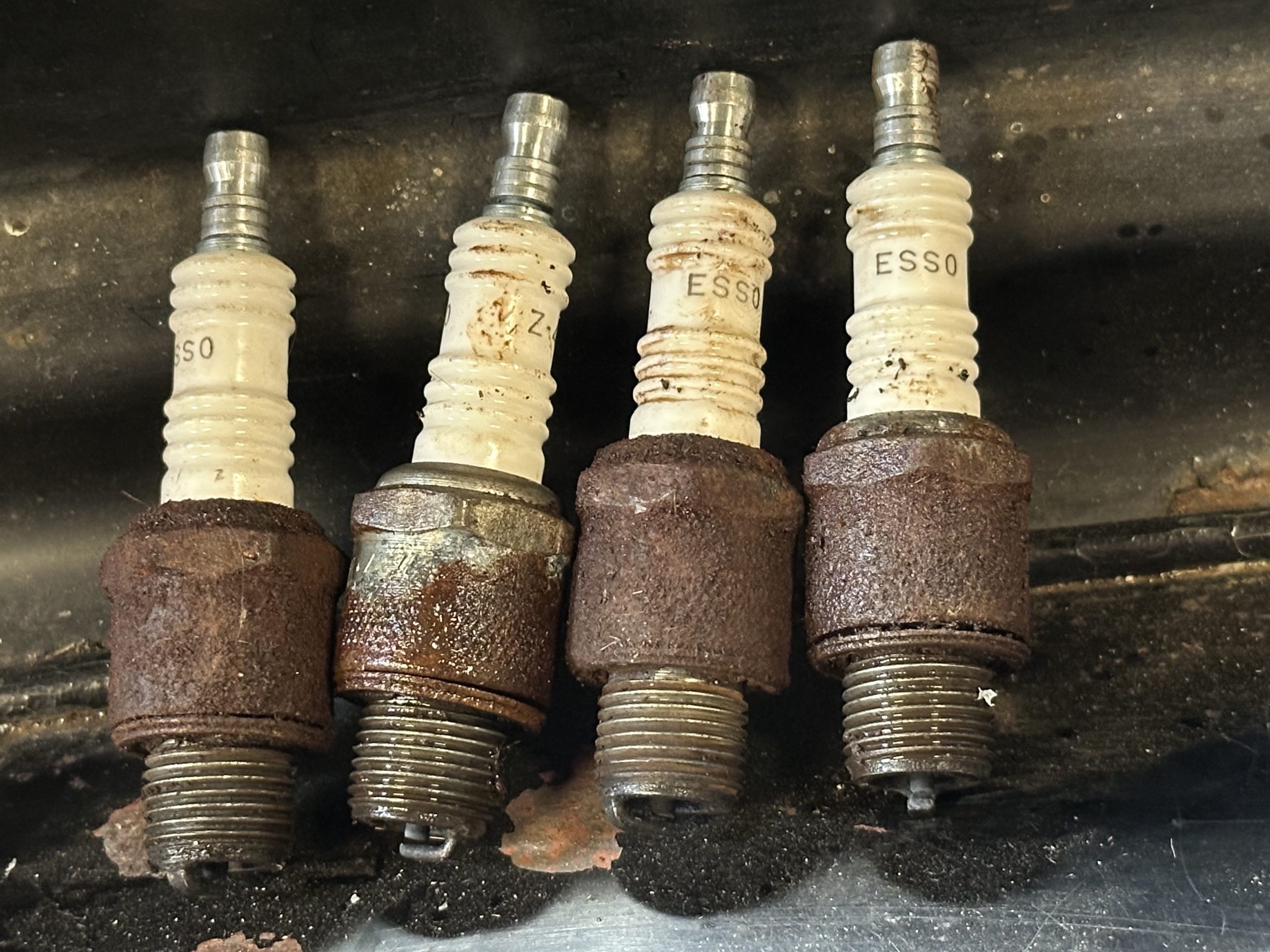
I was today years old when I discovered that Esso once sold spark plugs. We’ve been working on our 1956 Ford Popular and, after removing the four plugs from its little sidevalve engine, something caught our eye. ESSO. Printed clearly around the white ceramic insulators. We’re used to seeing names such as Champion, Lodge, ...
This Ford Puma auction result made us wonder whether one of the best small Fords of the 1990s is still being overlooked. Although, before we get into that, let’s establish something. This is what a Ford Puma should look like. Sorry, Ford. We’re sure the modern Puma has plenty going for it. There’...
This Toyota Corolla auction result had us wondering whether one-owner provenance still matters when the car itself is far from perfect. Because this wasn’t a GTI. It wasn’t a homologation special. And there was certainly nothing exotic about it. It was a 1990 Toyota Corolla GL four-door saloon. But it had something we’re ...