If your classic car, motorcycle or van has just reached 40 years old, there is a good chance you can apply to have it registered in the Historic Vehicle tax class.
For many owners, this is one of those little milestones that makes an old vehicle feel properly recognised. It is no longer just an old car sitting on the driveway or tucked away in a garage. It has officially crossed into historic territory.
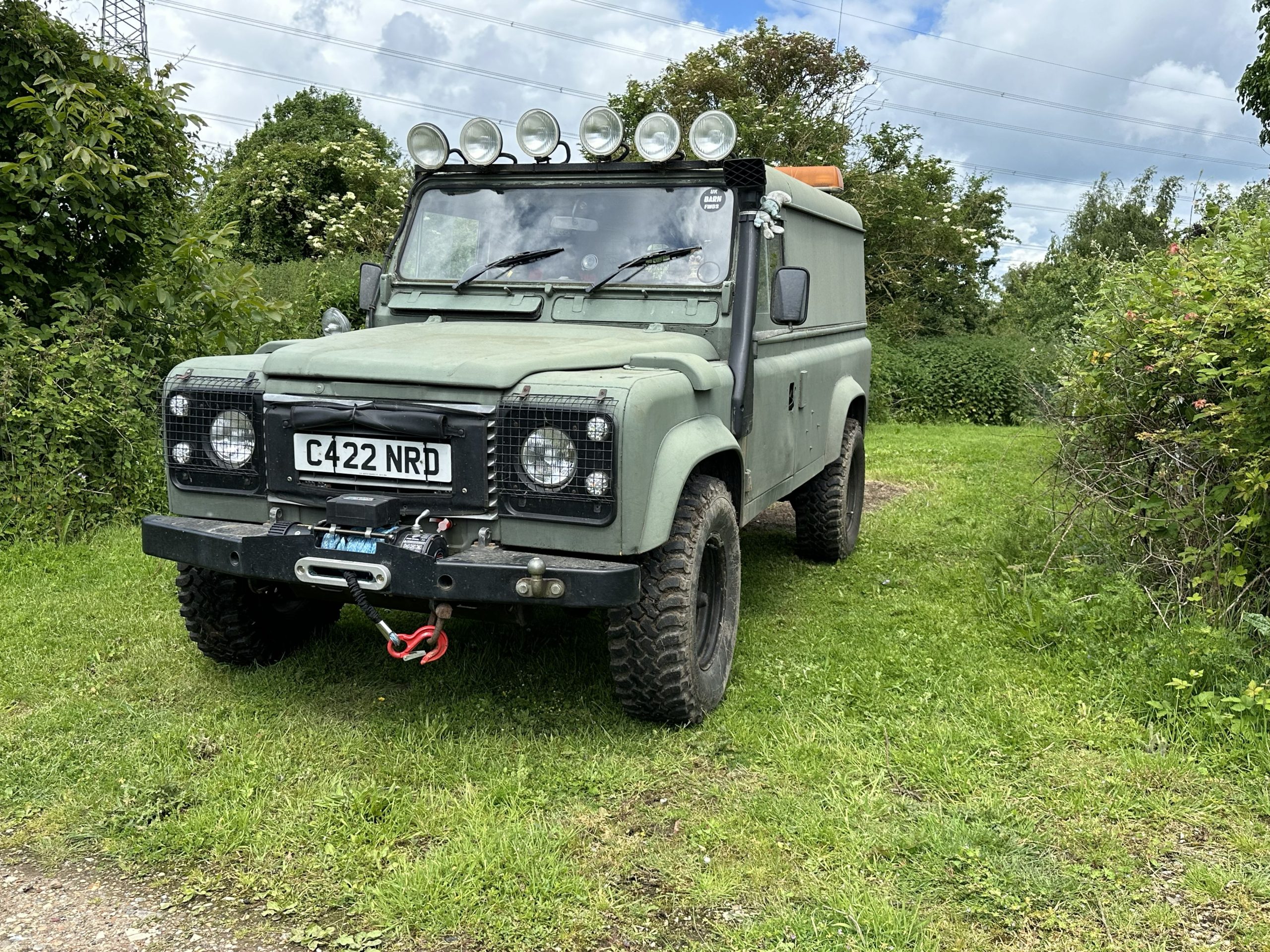
Earlier this year, I registered my 1985 Land Rover 110 as historic, and the whole process was far simpler than I expected.
I took the V5C logbook into a Post Office, along with a completed V112 MOT exemption form. The person behind the counter processed the change, taxed the vehicle as part of the same transaction, and that was basically it.
The whole thing took around 30 seconds.
A short while later, the updated V5C arrived in the post showing the Historic Vehicle tax class. No drama, no lengthy forms at the counter, no inspection and no complicated back-and-forth.
What Is Historic Vehicle Status?
Historic Vehicle status is the UK tax class for vehicles that qualify under the rolling 40-year rule.
Once a vehicle is old enough, you can apply to change its tax class to Historic Vehicle. Once that is done, the vehicle can be taxed at zero cost.
That does not mean you can simply stop taxing it. The vehicle still needs to be taxed, but the amount payable is £0.
This is an important distinction, because a historic vehicle still needs to show as taxed if it is being used or kept on the public road.
When Does A Vehicle Become Historic?
The 40-year rule rolls forward each year.
As a general guide, from 1st April 2026, vehicles built before 1st January 1986 can become eligible for Historic Vehicle tax class.
If you do not know the exact build date, registration date may be used instead under the relevant DVLA guidance.
That rolling cut-off is why a new batch of classics becomes eligible every April. It is also why interest often increases around certain cars as they approach the 40-year point.
A car that was simply an old vehicle one month can suddenly become tax exempt and MOT exempt, provided it meets the rules.
How I Registered My 1985 Land Rover 110 As Historic
My own experience was refreshingly simple.
The Land Rover is a 1985 example, so once it became eligible, I gathered the paperwork and went to a Post Office that deals with vehicle tax.
I took:
The V5C logbook
A completed V112 MOT exemption declaration form
That was all I physically needed on the day.
The vehicle was already insured, which I assume the Post Office system checked automatically as part of the taxing process.
The tax class was changed, the vehicle was taxed during the same process, and the updated V5C arrived later through the post.
It is always worth checking that your local Post Office handles vehicle tax transactions before you go, but if your paperwork is in order, the process itself can be very straightforward.
What Is The V112 Form?
The V112 form is the declaration used when a vehicle is exempt from MOT testing.
You complete the relevant declaration, sign it, and present it as part of the process when required.
The key point is that MOT exemption and Historic Vehicle tax class are related, but not quite the same thing.
Historic tax class affects the vehicle tax.
MOT exemption affects whether the vehicle needs an annual MOT test.
You still need to understand both parts properly.
Does A Historic Vehicle Still Need An MOT?
In many cases, a vehicle over 40 years old does not need an MOT, provided it has not been substantially changed.
That last part matters.
If the vehicle has been heavily modified, altered or changed in a way that affects how it works, it may not qualify for MOT exemption. There is official guidance on what counts as a substantial change, and owners should check that carefully if they are unsure.
This is especially relevant with modified Land Rovers, kit cars, hot rods, engine-swapped classics and heavily altered vehicles.
A standard or lightly preserved classic is usually more straightforward. A vehicle with major structural, chassis, axle, engine or body changes may need more careful consideration.
MOT Exemption Does Not Mean Roadworthiness Exemption
This is the part that sometimes gets lost in online arguments.
Even if a vehicle is MOT exempt, it still has to be roadworthy.
You cannot legally use an unsafe vehicle on the road just because it is old enough to avoid an annual MOT test.
Brakes, tyres, steering, lights, suspension, structure and general mechanical condition still matter. In fact, they arguably matter even more when there is no yearly test forcing the issue.
Personally, I understand both sides of the MOT exemption debate.
Many classic owners maintain their cars, bikes and Land Rovers to an excellent standard. Some are checked far more carefully than modern daily drivers.
Equally, we have all seen old vehicles that really should not be anywhere near a public road without proper inspection.
For that reason, some owners still choose to put their historic vehicles through a voluntary MOT, even when they are legally exempt. It can provide peace of mind, help with insurance, and give buyers confidence if the vehicle is later sold.
Does Historic Vehicle Status Affect Values?
Yes, it can.
Historic Vehicle status does not magically transform a poor car into a valuable one, but it can make an already appealing classic more attractive.
Buyers like the idea of:
£0 vehicle tax
Possible MOT exemption
Official historic recognition
Lower annual running costs
A car that has crossed the 40-year classic threshold
This can be especially noticeable with cars and 4x4s that are just becoming eligible.
Early Land Rover 90s and 110s are a good example. For years, many were simply seen as old utility vehicles. Now, as the earliest examples qualify for Historic Vehicle status, they are increasingly being viewed as proper classics.
The same applies across the market, from 1980s Fords and Volkswagens to Jaguars, Minis, Triumphs, motorcycles and light commercials.
Historic status is not the only thing that drives value, but it is definitely part of the appeal.
Why The 40-Year Rule Matters To Sellers
If you have an old car tucked away in a garage, barn, lock-up or workshop, Historic Vehicle status may make it more interesting to potential buyers.
This is particularly true if the vehicle has been off the road for years.
A car that seems like an awkward non-runner to one person might be exactly the sort of project someone else has been waiting for, especially if it is now old enough to qualify for historic tax class.
We see this all the time at UK Barn Finds.
People often contact us with cars that have been sitting for 10, 20, 30 or even 40 years. Sometimes they are inherited vehicles. Sometimes they are unfinished projects. Sometimes they are cars bought with good intentions that never quite made it back onto the road.
Historic eligibility can be another reason for someone to finally take interest.
What To Take To The Post Office
If your vehicle is eligible and you want to apply for Historic Vehicle tax class, the usual route for the first application is through a Post Office that handles vehicle tax.
You will generally need:
Your V5C logbook
A completed V112 form if declaring MOT exemption
Any supporting information if the age of the vehicle is not clear
Insurance in place if required for taxing the vehicle
The Post Office can then process the tax class change and tax the vehicle.
The updated V5C should follow later in the post.
As with anything DVLA-related, it is worth checking the latest official guidance before you go, especially if your vehicle has been modified, imported or has unusual paperwork.
Should You Still MOT A Historic Vehicle?
Even if your vehicle qualifies for MOT exemption, a voluntary MOT can still be a good idea.
It gives you a fresh set of eyes on the vehicle and can be reassuring if you have only recently bought it, recommissioned it or brought it out of long-term storage.
For sellers, a recent MOT can also make a historic vehicle easier to sell, even if it is technically exempt.
It shows confidence.
It also removes one obvious concern for buyers who may be nervous about old cars, especially if the vehicle has been unused for a long time.
Do You Have A Classic Vehicle Sitting Unused?
Articles like this always make people think of cars, bikes and old 4x4s they have tucked away.
If you have a classic vehicle sitting in a garage, barn, lock-up, driveway or workshop and you are thinking about selling it, we would be very happy to hear from you.
At UK Barn Finds, we buy classic cars, motorcycles, mopeds, Land Rovers, unfinished projects, non-runners, long-term stored vehicles and interesting old automotive collections.
Whether it has been off the road for five years or 40 years, it may still be exactly the sort of thing we love.
You can contact us through the UK Barn Finds website or message us directly on WhatsApp on 07494 851220.
Join our newsletter
Get the best barn finds, projects and classic temptations direct to your inbox.
Related Posts
Discover More Classic Car Stories
Stay updated with the latest barn finds, auction news, and classic car adventures in our 'News & Waffle' section. Dive into rare discoveries, behind-the-scenes stories, and expert insights into the world of classic cars. Whether you’re a seasoned enthusiast or simply intrigued by the tales behind these treasures, this is your hub for all things classic and captivating.
This Ford Prefect auction result left me asking one very simple question. Why didn’t I bid on it? This charming 1958 Ford Prefect came to Anglia Car Auctions with no reserve after its late owner had spent an extraordinary 22 years restoring it. By the time the car finally returned to the road in 2024, […]
This Daihatsu Hi-Jet auction result genuinely surprised us. Not because we didn’t like it. Quite the opposite. We absolutely loved this tiny Japanese 4×4 when we spotted it at Anglia Car Auctions. But with a £9,000 to £11,000 estimate, we wondered whether its sheer quirkiness might make it a difficult thing to value. We were […]
We buy some strange things. Usually they have wheels. This one doesn’t. Today’s purchase is probably one of the more unusual motoring-related objects we’ve brought home: an enormous reproduction of the Rolls-Royce Spirit of Ecstasy. It stands around 77cm tall, sits on a marble plinth and weighs an absolute ton. Well, perhaps ...