There’s something about a well-preserved 1980s Vauxhall that really takes us back.
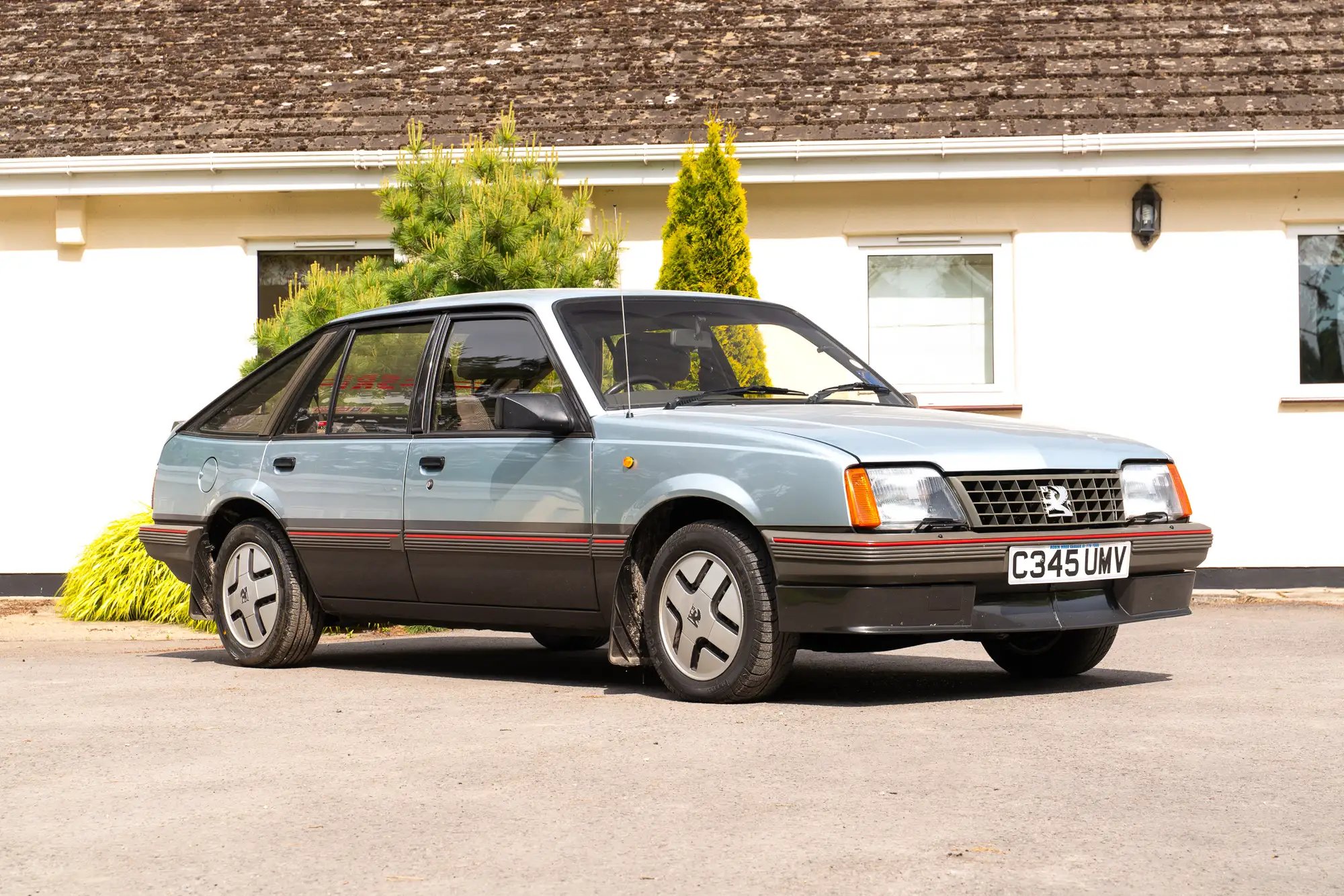
And this 1986 Cavalier SRi, finished in its original Astral Silver and Anthracite two-tone paintwork, was a particularly appealing example.
Just 48,304 miles showing, three previous owners, original dealer details and the distinctive appearance that made the SRi one of Vauxhall’s most recognisable sporting saloons.
It was offered by Classic Car Auctions at CarFest, held at Silverstone on 29 August 2026, with an estimate of £10,000–£12,000.
We were there to film it going through the auction, and what happened reminded us of something we’ve said many times over the years.
If there’s a car you’re genuinely interested in, it’s always worth registering to bid.
Because sometimes an opportunity appears when you least expect it.
The Vauxhall Cavalier SRi – An Eighties Favourite
The second-generation Vauxhall Cavalier arrived in 1981 and quickly established itself as a major player in the British family-car market.
Replacing the rear-wheel-drive Mk1, the new front-wheel-drive Cavalier offered a modern layout, a spacious interior and a range of engines suited to everything from everyday family use to long-distance motorway driving.
It became an enormously familiar sight on British roads.
Company cars, sales representatives, family holidays and motorway service stations – the Cavalier was part of everyday life throughout the 1980s.
But the SRi added something rather more interesting to the range.
With its sporting appearance, upgraded interior and fuel-injected engine, it offered genuine performance without losing the practicality that made the standard Cavalier so popular.
The 1.8-litre SRi produced 115bhp, enough to make it a particularly brisk family saloon by the standards of the day.
It wasn’t simply a car that looked sporty.
It had the performance to match.
The 1.8-Litre Fuel-Injected SRi
Under the bonnet of this 1986 example was Vauxhall’s 1.8-litre fuel-injected four-cylinder engine, producing a quoted 115bhp.
Power was delivered to the front wheels through a five-speed manual gearbox.
These figures might seem modest compared with modern performance cars, but the SRi was an impressively capable machine in its day.
It offered lively acceleration, good road manners and excellent motorway performance.
And it had plenty of appeal for drivers who wanted something more distinctive than an ordinary company Cavalier.
Later versions would introduce the more powerful 2.0-litre SRi 130, but the earlier 1.8-litre cars have plenty of character in their own right.
There is something particularly appealing about the combination of the original 1980s styling, fuel-injected engine and manual gearbox.
Especially when a car has survived with so much of its original specification intact.
Astral Silver, Anthracite and That Red Coachline
One of the most attractive features of this particular Cavalier was its colour scheme.
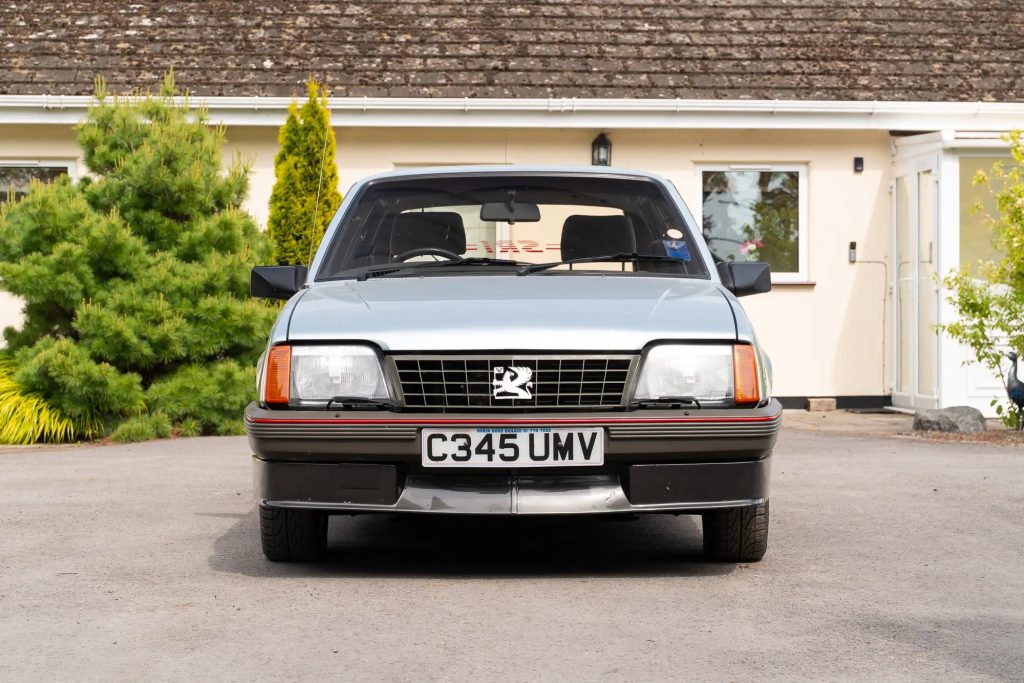
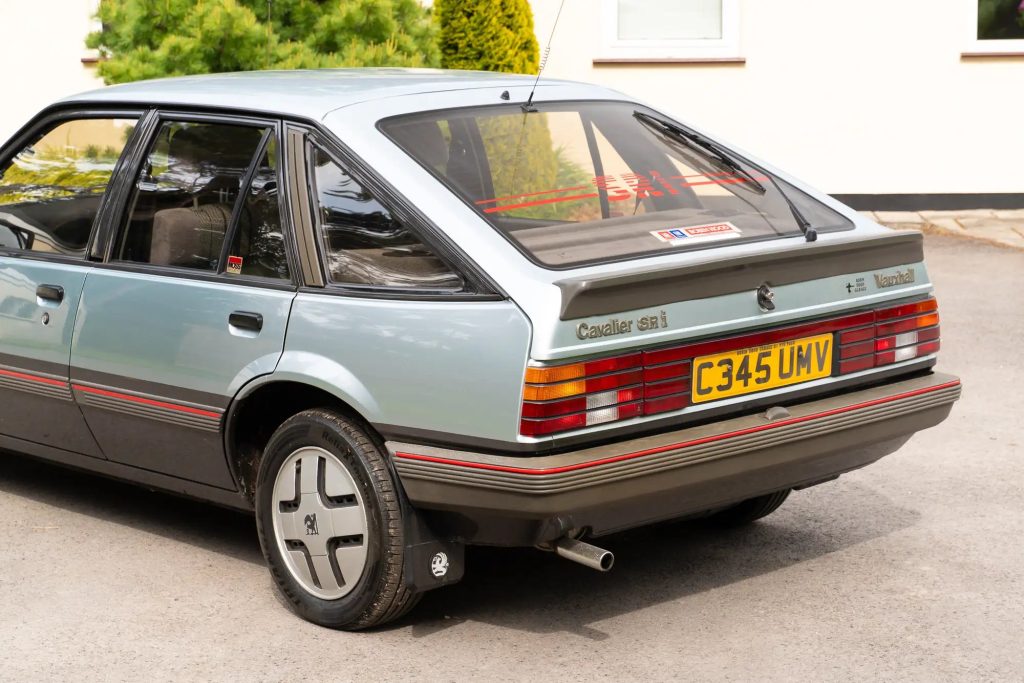
Finished in Astral Silver with Anthracite lower bodywork, it retained the contrasting red coachline and striping across its bumpers and body.
It’s a combination that instantly identifies the car with the 1980s.
The SRi’s sporting appearance was enhanced by its distinctive alloy wheels, spoilers and trim details.
And this example still displayed its original dealer number plates and rear-window sticker.
Those little details can make an enormous difference to the appeal of a surviving car.
They provide a connection to its original life and help tell the story of how it was supplied when new.
For enthusiasts who remember seeing Cavalier SRis on the road when they were everyday cars, it’s the sort of thing that brings the memories flooding back.
Just 48,304 Miles Showing
Registered C345 UMV, this Cavalier was first registered in May 1986 by Robin Hood Garage in Penge, south-east London.
According to the auction catalogue, it had three previous owners.
The most recent keeper had acquired the car approximately five years earlier and subsequently kept it in dry, heated storage.
The odometer displayed 48,304 miles.
Its notably original presentation was supported by a history file containing original handbooks, previous MOT certificates and tax discs.
These are exactly the sorts of details that enthusiasts like to see when examining a well-preserved example of a once-common car.
The Cavalier SRi was designed to be used and enjoyed.
Consequently, many examples accumulated substantial mileages, were modified or simply disappeared as they became older and less valuable.
Finding one that still displays its original colour scheme and so many period details is always pleasing.
And we thought this particular car looked rather special.
A £10,000–£12,000 Guide at CarFest
The Cavalier appeared as Lot 524 in The Classic Sale at CarFest, organised by Classic Car Auctions at Silverstone on Saturday 29 August 2026.
Its pre-sale estimate was £10,000–£12,000.
That reflected the car’s low recorded mileage, appealing specification and original presentation.
Of course, auction estimates are guides rather than guarantees of what a vehicle will achieve.
Some cars attract more competition than expected.
Others find themselves selling with fewer bidders than the catalogue might have suggested.
That’s simply part of the auction process.
And it’s one of the reasons we enjoy attending these sales.
You can have an opinion about what a vehicle might be worth, but ultimately the result comes down to what the participating bidders are prepared to pay on the day.
Why You Should Always Register to Bid
As the Cavalier went through the auction, we watched the bidding develop.
We knew the car had been guided at £10,000–£12,000.
But it became apparent that the bidding wasn’t necessarily going to reach that level.
Now, it’s very easy to look at an estimate and decide that a car is beyond your budget.
You might assume there’s no point registering.
Or you might watch from the sidelines, expecting the bidding to increase.
But occasionally, the opportunity you were hoping for appears.
And if you’re not registered and ready to bid, you may miss it.
We see examples of this somewhere in the classic car auction world virtually every week.
Not every lot attracts the same level of competition, and estimates don’t always predict the eventual result.
That doesn’t mean every car selling below its guide is automatically a bargain.
Condition, history, buyer’s premium and the cost of any future work all need to be considered.
But if you’ve researched a vehicle, inspected it where possible and decided what you’re comfortable paying, being registered gives you the opportunity to act.
You can always choose not to bid.
You can’t necessarily go back and take part once the hammer has fallen.
And this Cavalier was a particularly good illustration of that point.
Watch the Cavalier SRi Go Under the Hammer
We filmed the actual bidding at Silverstone, including the auctioneer’s final call.
And this is one of those occasions where the footage tells the story particularly well.
You can see the bidding develop, hear the auctioneer and experience the moment the hammer falls.
Watch the full auction play out below:
So, How Much Did the 1986 Cavalier SRi Make?
The auctioneer brought the hammer down at £8,700.
And, importantly, he clearly announced that the car was selling.
That’s the result we witnessed and recorded in our footage.
Interestingly, the official auction website currently describes the vehicle as having sold for an undisclosed sum.
We’re therefore reporting the hammer figure we heard at Silverstone, rather than attributing a published price to Classic Car Auctions.
The £8,700 hammer price was below the car’s £10,000–£12,000 estimate.
The buyer’s premium would have been payable in addition.
We felt it was a very appealing purchase at that level, given the Cavalier’s presentation, original features and mileage.
Indeed, we said as much at the end of the video.
But the wider lesson is perhaps more valuable than the difference between the guide and the hammer price.
A guide is not necessarily the minimum figure at which a vehicle can sell.
And opportunities can arise at almost any auction.
A Reminder Not to Rule Yourself Out
Classic car auctions can be unpredictable.
Sometimes an ordinary vehicle attracts an unexpectedly enthusiastic bidding battle.
On another occasion, something genuinely desirable might attract less competition than anticipated.
We’ve seen both situations countless times.
That’s why, when there’s a particular car you’re interested in, we think it’s worth doing the research, studying the terms, establishing your maximum budget and registering to bid.
Even if you suspect the final price will be beyond your reach.
You don’t have to raise your hand.
But at least you’re in a position to do so if the opportunity presents itself.
This 1986 Cavalier SRi was a lovely example of a much-loved sporting Vauxhall, and we were pleased to see it find a new owner.
You can explore the car’s original photographs, specification and catalogue description here:
There’s a lot to like about an original-looking Mk2 Cavalier SRi.
The distinctive two-tone paintwork.
The 115bhp fuel-injected engine.
The unmistakably 1980s interior and exterior detailing.
And, in this case, a recorded mileage of just over 48,000 miles.
We thought £8,700 under the hammer represented an attractive result for the buyer.
But what do you think?
Would you have been tempted to raise your hand for this Cavalier?
Or is there another 1980s sporting Vauxhall you’d rather have in your garage?
We’d be interested to hear from anyone who owned an SRi when these were still a familiar sight on British roads.
Join our newsletter
Get the best barn finds, projects and classic temptations direct to your inbox.
Related Posts
Discover More Classic Car Stories
Stay updated with the latest barn finds, auction news, and classic car adventures in our 'News & Waffle' section. Dive into rare discoveries, behind-the-scenes stories, and expert insights into the world of classic cars. Whether you’re a seasoned enthusiast or simply intrigued by the tales behind these treasures, this is your hub for all things classic and captivating.
There was a time when a trip to the local motor spares shop could result in coming home with something you never knew you needed. Perhaps it was a new gear knob. A pair of auxiliary mirrors. One of those little bottles of Feu Orange air freshener. Or a gadget that promised to make driving [&...
We’ve watched thousands of cars go through auction halls over the years, but every now and then something arrives that really catches our attention. This 1993 Ford P100 was one of them. Not because it was particularly rare or expensive. But because of the extraordinary noise it made as it drove through Anglia Car Auctions. [&...
Britain’s historic motoring world is full of remarkable people. The restorers who spend years bringing forgotten machinery back to life. The volunteers keeping museums and collections running. The enthusiasts organising events, preserving records and making sure our motoring history isn’t lost. And the younger generation finding their own ways into a hobby that ...