We’ve found some unusual things in this collection, but this might be one of the hardest to explain at first glance.
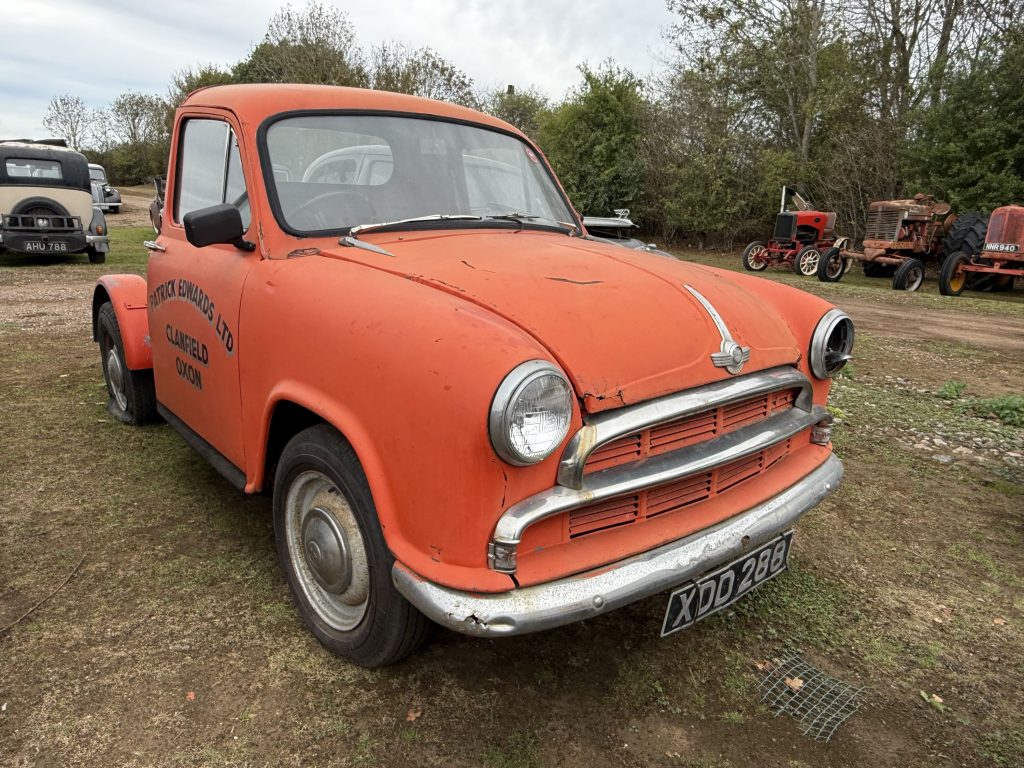
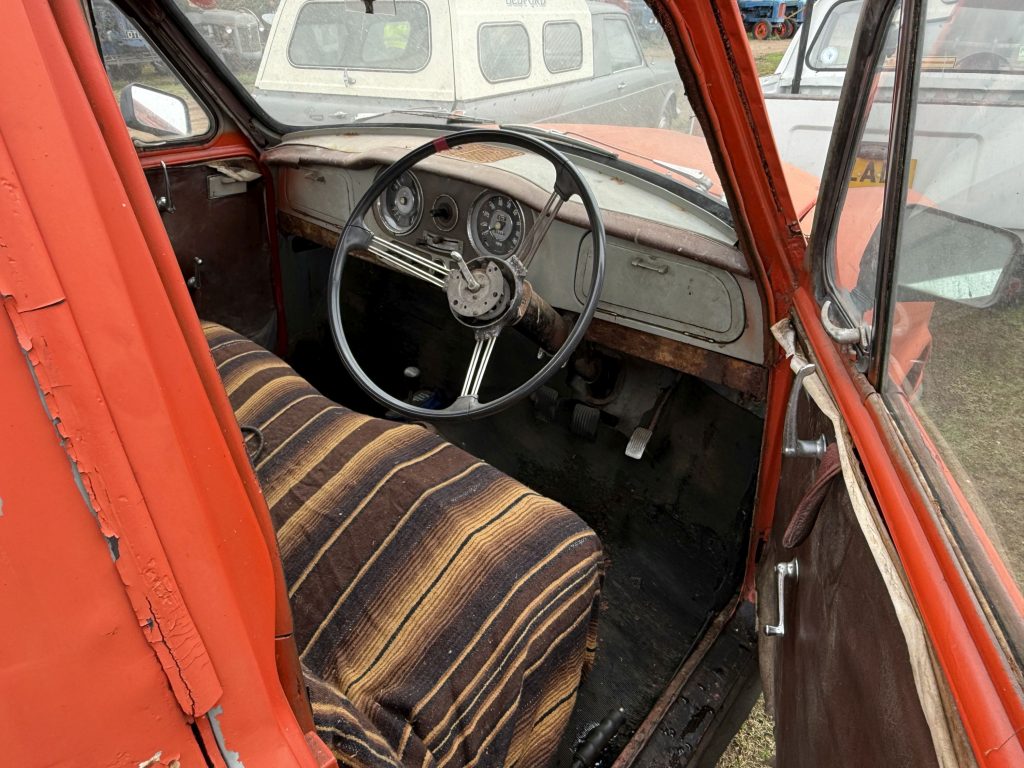
From the front, XDD 288 looks like a slightly careworn late-1950s Morris.
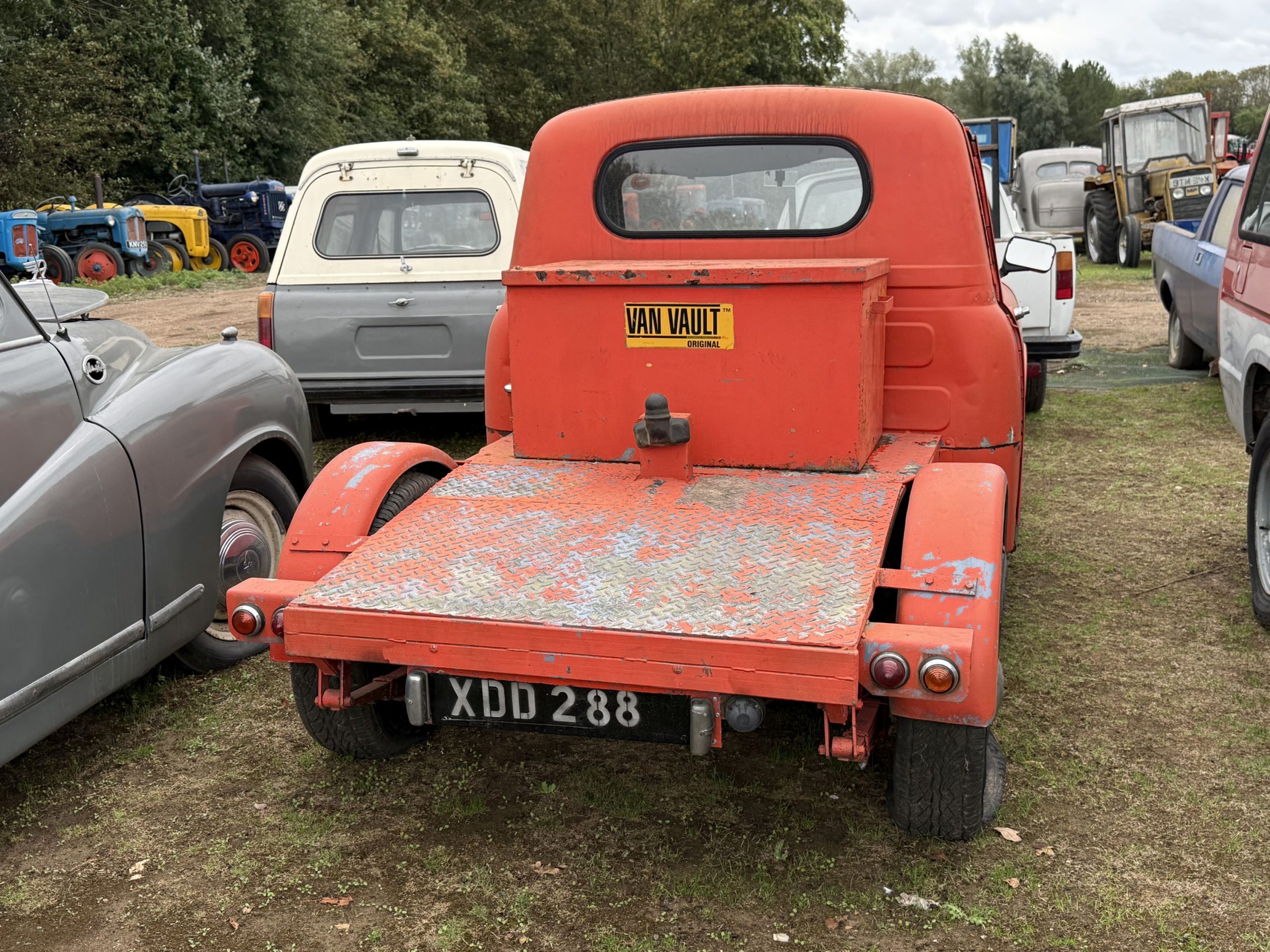
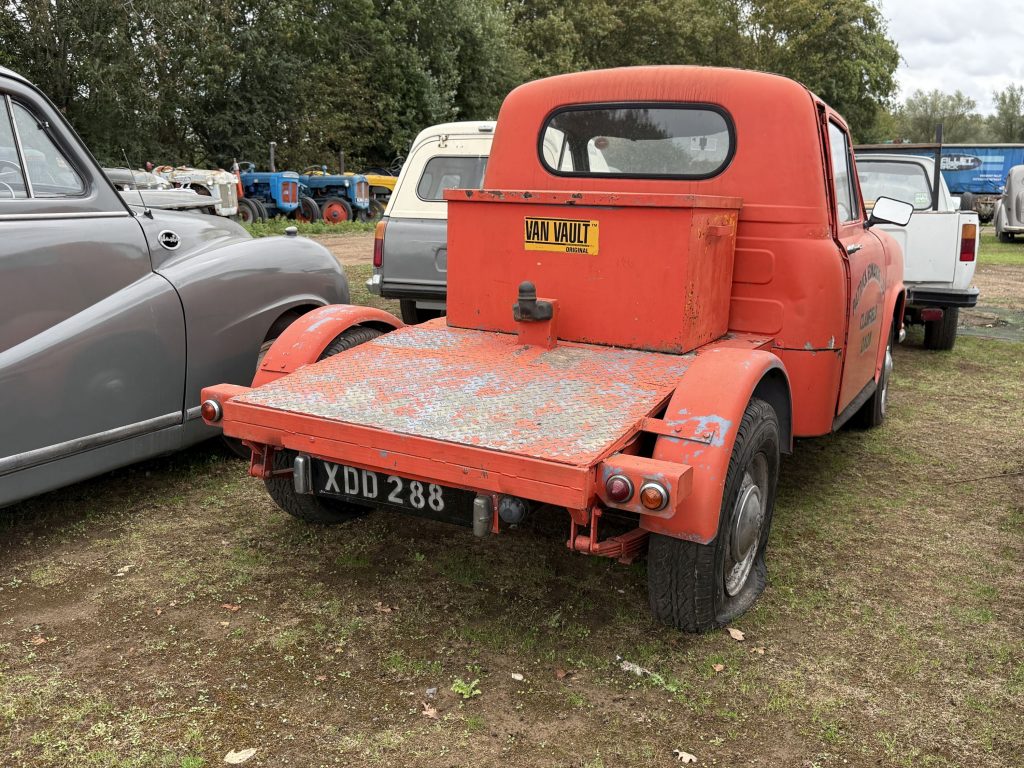
Walk around the back and most of the Morris has disappeared.
Where the rear body once continued, there’s now a shortened working platform, exposed rear axle, toolbox and a coupling positioned immediately behind the cab.
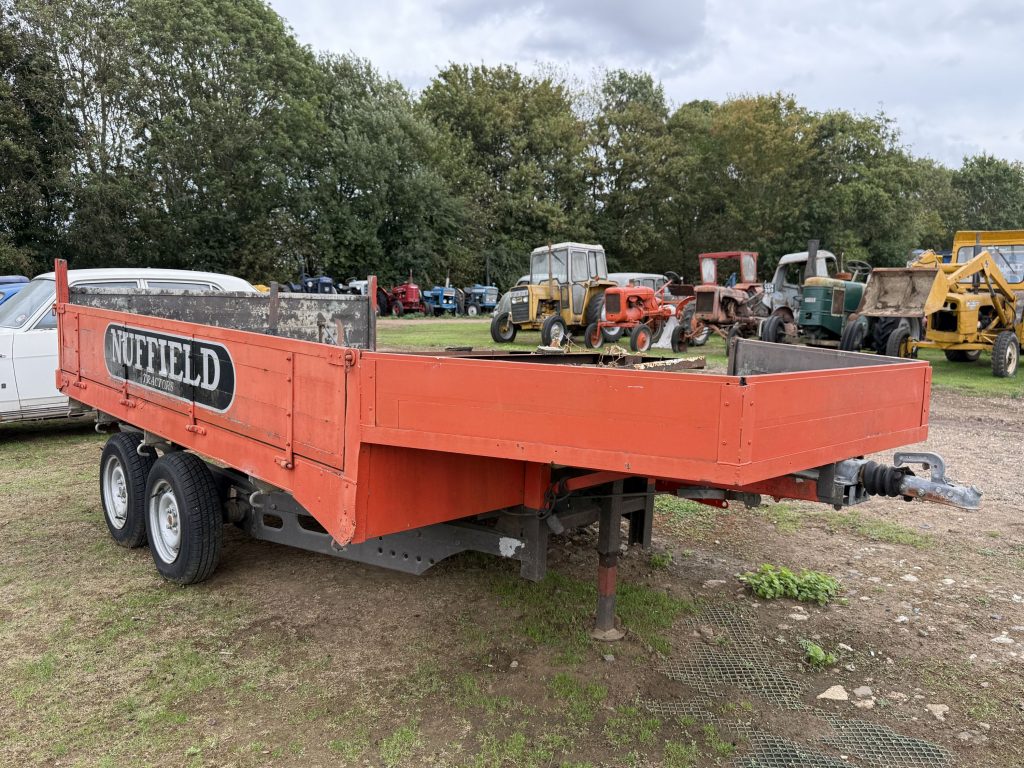
And parked alongside it is the other half of the story: an enormous twin-axle dropside trailer carrying old NUFFIELD TRACTORS signwriting.
Somebody, at some point, appears to have turned a late-1950s Morris commercial into a miniature articulated lorry.
It May Have Started Life As A Morris ½-Ton Series III
Even DVLA isn’t much help with the identity of XDD 288.
Its surviving record describes it simply as a MORRIS, with the model given as UNKNOWN. It was first registered on 9 May 1959, is recorded as petrol-powered and, unusually, no engine capacity is shown.
Our first thought was that the surviving cab and front bodywork pointed towards a Morris Oxford Series III.
However, there is another, and probably more convincing, possibility.
Morris also produced a ½-ton Series III commercial during this period, available as a van, pick-up and chassis-cab. It was closely related to the contemporary Oxford family and shares much of the same unmistakable late-1950s Morris appearance.
After we published the story, a reader who owns a 1958 Morris ½-ton Series III got in touch and suggested XDD 288 may have started life as one of these commercial models, possibly a chassis-cab or pick-up.
Looking again at the proportions and construction of XDD 288, that would certainly make sense. A factory commercial chassis would also provide a much more logical starting point for the extraordinary articulated conversion than an Oxford saloon.
Without a more detailed DVLA record or surviving factory identification confirming exactly what XDD 288 began life as, we can’t be definitive.
For now, though, we think a Morris ½-ton Series III commercial is the strongest possibility.
Registered In 1959
The registration date still adds useful context.
XDD 288 was first registered on 9 May 1959, placing it firmly in the period when Morris was producing the Series III ½-ton commercial range alongside its passenger cars.
If it did begin life as one of those commercial models, the conversion becomes rather easier to understand. A chassis-cab or pick-up would have provided a much more suitable starting point for the sort of substantial rear-end reworking we see here.
What we still don’t know is whether the Morris was converted when relatively new or much later in its working life.
Either way, what survives today is a long way removed from whatever left the factory in 1959.
And Then Somebody Turned It Into This
Exactly when the transformation happened is something the photographs cannot tell us.
But this certainly doesn’t look like someone simply added a towing hitch to an old Morris and called it a day.
The rear of the vehicle has been substantially reworked around its new purpose. There’s a metal platform over the rear axle, separate rear mudguards, auxiliary lighting and a large Van Vault toolbox mounted immediately behind the cab.
Most intriguing is the towing arrangement.
It isn’t a conventional full-size fifth wheel of the type you’d expect to find on an articulated HGV. Instead, the Morris appears to use a towball-type coupling mounted unusually high and very close to the rear axle.
The principle, however, is rather like a variation on a fifth-wheel arrangement: the trailer pivots close to the towing vehicle’s rear axle rather than hanging several feet behind it in the manner of a conventional trailer.
The result is effectively a tiny articulated tractor unit built from a 1959 Morris commercial.
And its trailer is anything but tiny.
Look At The Size Of The Trailer
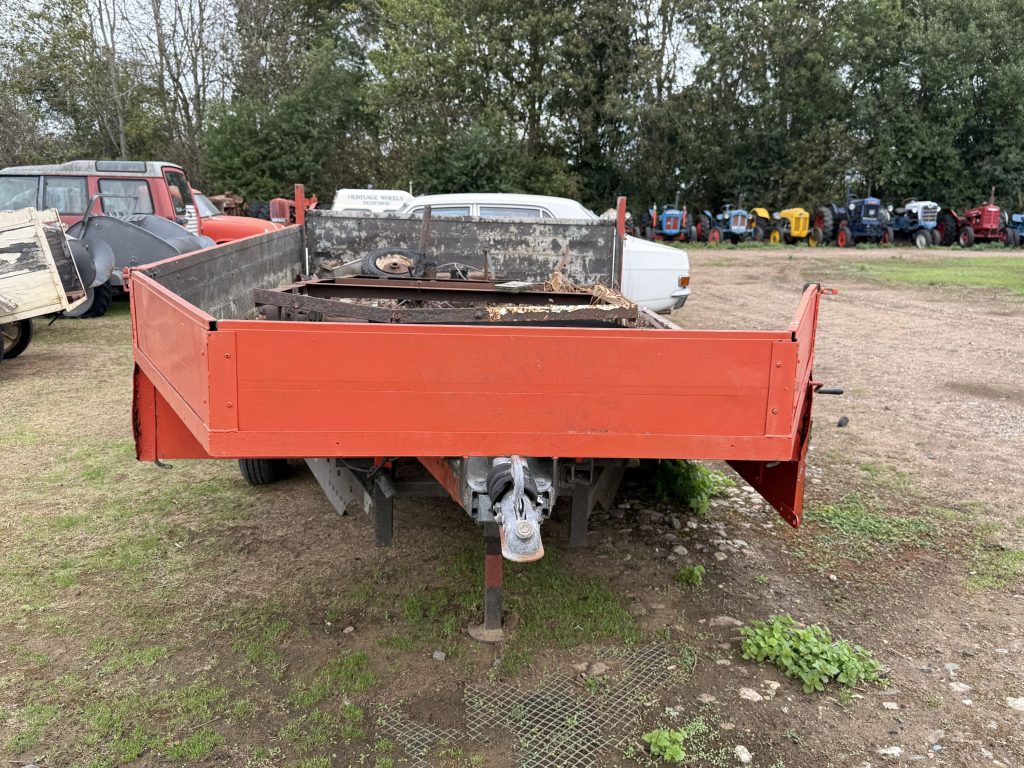
Separated from the Morris, the trailer gives some idea of just how extraordinary the complete outfit must look.
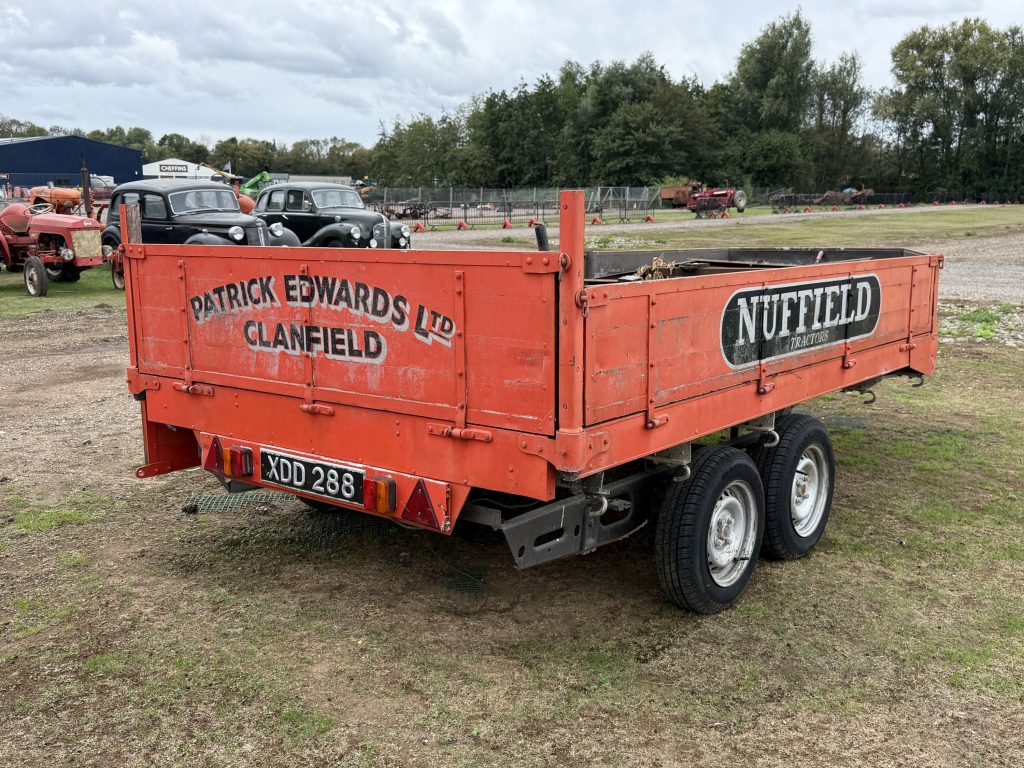
It’s a substantial twin-axle dropside trailer with a long load deck and tall hinged sides. A support leg allows it to stand independently when uncoupled from the Morris.
Against something this size, the little Morris cab looks almost comical.
But the trailer also provides some of our best clues to what the outfit may have done.
Along its side, in huge lettering, are the words:
NUFFIELD TRACTORS
At the rear:
PATRICK EDWARDS LTD CLANFIELD
The same Patrick Edwards Ltd name is signwritten onto the doors of the Morris itself, together with CLANFIELD and OXON.
This certainly appears to have been presented as a working commercial outfit rather than dressed up for show.
Exactly how it was used is another matter.
A Morris Advertising Nuffield Tractors Is Rather Fitting
There’s a pleasing historical connection hidden in that Nuffield signwriting.
Nuffield tractors weren’t an unrelated agricultural brand.
They were created by Morris Motors after the Second World War, with the first Nuffield M3 and M4 tractors entering production in 1948. William Morris had become Lord Nuffield, and the Nuffield name was used for the company’s agricultural machinery.
Morris Motors subsequently became part of BMC, and Nuffield tractor production continued through the 1950s and 1960s before the Nuffield name finally disappeared from new tractors in 1969 in favour of Leyland.
So here we have a Morris commercial, apparently converted into a tiny articulated tractor unit, hauling a trailer emblazoned with the name of a tractor marque which grew out of Morris itself.
Whether whoever built it appreciated that circular bit of history, we have no idea.
But we rather hope they did.
Patrick Edwards Adds Another Piece To The Puzzle
The name painted across the outfit isn’t lost to history either.
Patrick Edwards Ltd still operates in Little Clanfield, Oxfordshire, and describes itself as a tractor business established in 1982.
That date is particularly intriguing when compared with XDD 288’s surviving DVLA record.
The Morris is shown as untaxed, with tax due from 1 January 1988.
We cannot establish from the information available whether Patrick Edwards commissioned the conversion, carried it out, acquired it already converted or simply used it later in its life.
Nor can we prove when the orange/red paint and signwriting were applied.
But the dates at least leave open the possibility that this peculiar Morris outfit was still earning its keep during the 1980s.
The photographs themselves certainly suggest a machine built to do a job rather than simply to amuse people at shows.
Was It Built To Carry Tractors?
The obvious temptation is to look at that huge NUFFIELD TRACTORS sign and conclude that the trailer was built to transport tractors.
It may have been.
But we don’t know that, and there are reasons to be cautious.
Without dimensions, weight information or documentary history, we can’t say what size or type of machinery the combination was designed to carry. Nor can we establish whether it travelled significant distances on the public road or spent part of its life moving equipment around private premises.
What we can say is that agricultural machinery seems to have been central to its story.
And that makes its appearance in this particular collection wonderfully appropriate.
Around 70 Cars – And Around 70 Tractors
XDD 288 is part of the extraordinary deceased-estate collection Cheffins invited UK Barn Finds to see before the auction catalogue went live.
We’ve already shown you a March 1968 Mk1 Ford Escort, a Bedford HA van and a stretched Austin Metro pick-up, among some wonderfully diverse machinery.
But cars are only half of it.
Alongside almost 70 cars and other vehicles are around 70 tractors.
That makes this Nuffield-branded Morris commercial and its trailer feel particularly at home.
The collection is being offered without reserve as part of Cheffins’ October Vintage sale at its Sutton saleground in Cambridgeshire, with the cars going through on Saturday 17 October 2026.
No reserve also makes vehicles like this fascinating to watch.
How do you value something when finding another one to compare it with may be virtually impossible?
Grey According To DVLA
There’s one last little detail in the official record.
DVLA still records XDD 288 as GREY.
It certainly isn’t grey now.
The Morris and trailer wear the same striking orange/red working livery, complete with those wonderfully aged Patrick Edwards and Nuffield markings.
Together with the sparse DVLA information, the old colour record reinforces how much of this Morris’s working life is missing from the paperwork we can currently see.
There are no MOT results returned either.
The tax record reaches back to 1 January 1988, meaning XDD 288 appears to have disappeared from the ordinary road-tax system almost four decades ago.
Yet here it is, still attached to the enormous trailer that makes sense of its extraordinary conversion.
Don’t Restore Away The Best Bit
We’ll leave arguments about mechanical recommissioning to whoever buys it.
But cosmetically?
We’d be very reluctant to make this look new.
The faded Patrick Edwards lettering, huge Nuffield logo, battered trailer boards, worn paint and improvised-looking little Morris tractor unit are precisely what make the outfit interesting.
Restore everything to perfection and you could easily erase much of the character which has survived.
Far more interesting would be discovering where it went, what it carried and who decided that this little 1959 Morris commercial needed to become an articulated tractor unit.
Because somebody looked at an ageing Morris working vehicle and thought:
That needs a trailer.
A VERY big trailer.
And we’re rather glad they did.
Looking To Sell An Interesting Classic?
UK Barn Finds is always interested in unusual cars, motorcycles, collections and motoring artefacts with a story behind them.
If you’ve uncovered something newsworthy in a barn, garage, shed or long-term collection, get in touch with UK Barn Finds. We’d love to hear about it.
Join our newsletter
Get the best barn finds, projects and classic temptations direct to your inbox.
Related Posts
Discover More Classic Car Stories
Stay updated with the latest barn finds, auction news, and classic car adventures in our 'News & Waffle' section. Dive into rare discoveries, behind-the-scenes stories, and expert insights into the world of classic cars. Whether you’re a seasoned enthusiast or simply intrigued by the tales behind these treasures, this is your hub for all things classic and captivating.
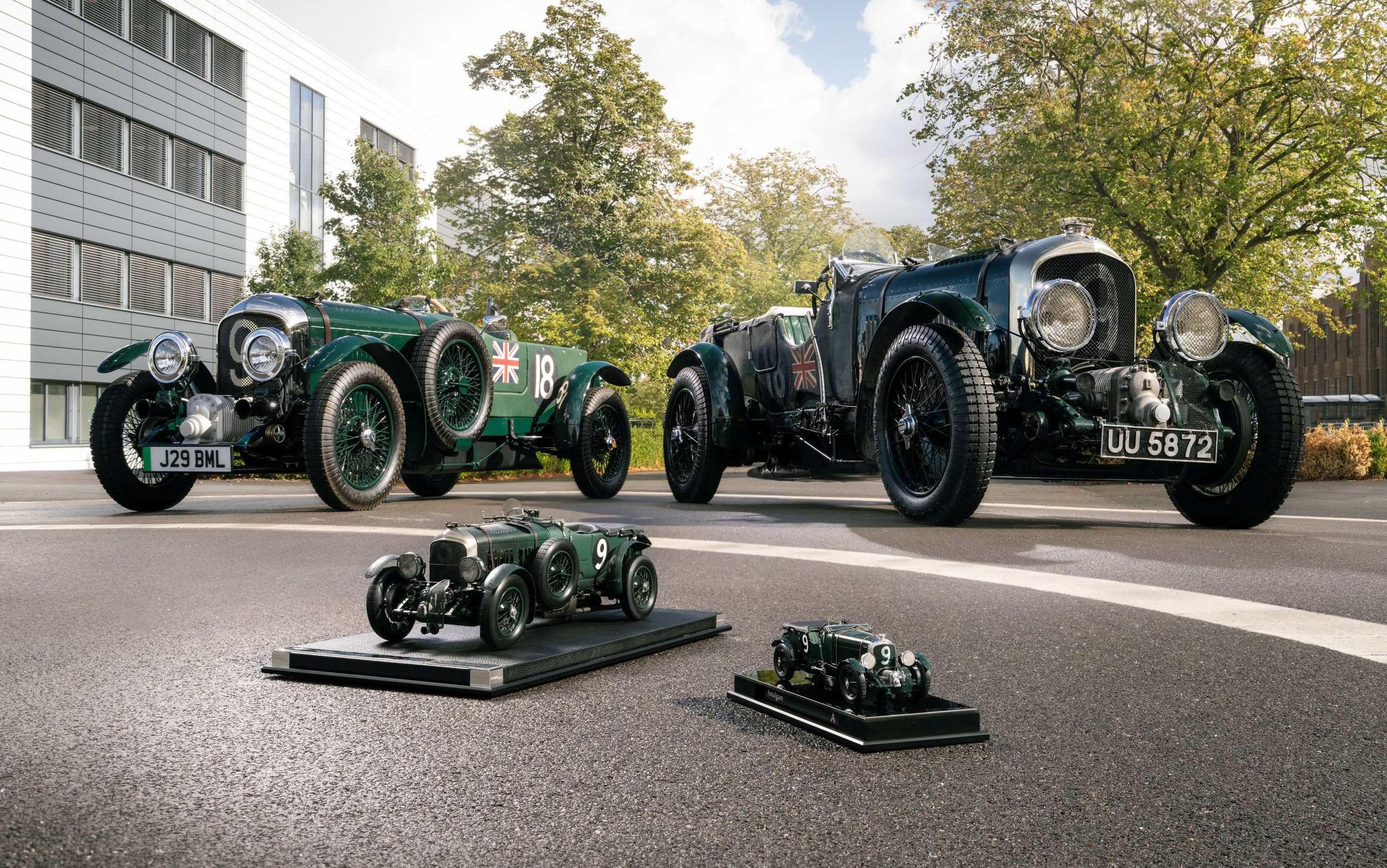
It looks like somebody has been playing with the scale settings. Parked together at Bentley’s headquarters in Crewe are four versions of one of the most famous racing cars ever built. There’s the genuine 1929 Bentley Blower, an enormously important survivor from the Bentley Boys era. Beside it is a slightly smaller interpretation that ...
This Quantum Xtreme auction result left us asking two questions. What exactly is a Quantum Xtreme? And why were so many people bidding on it? Because when this rather unusual-looking little sports car appeared at Anglia Car Auctions, the bidding was already getting lively before the auctioneer even turned his attention to the room. By [&...
Asking prices are one thing, but what are people actually prepared to pay for classic cars? Spend any time browsing classic car adverts and you’ll find some ambitious prices. But it’s when the bidding starts at auction that things can get particularly interesting. We’ve seen immaculate-looking classics struggle to attract buyers, while ...