

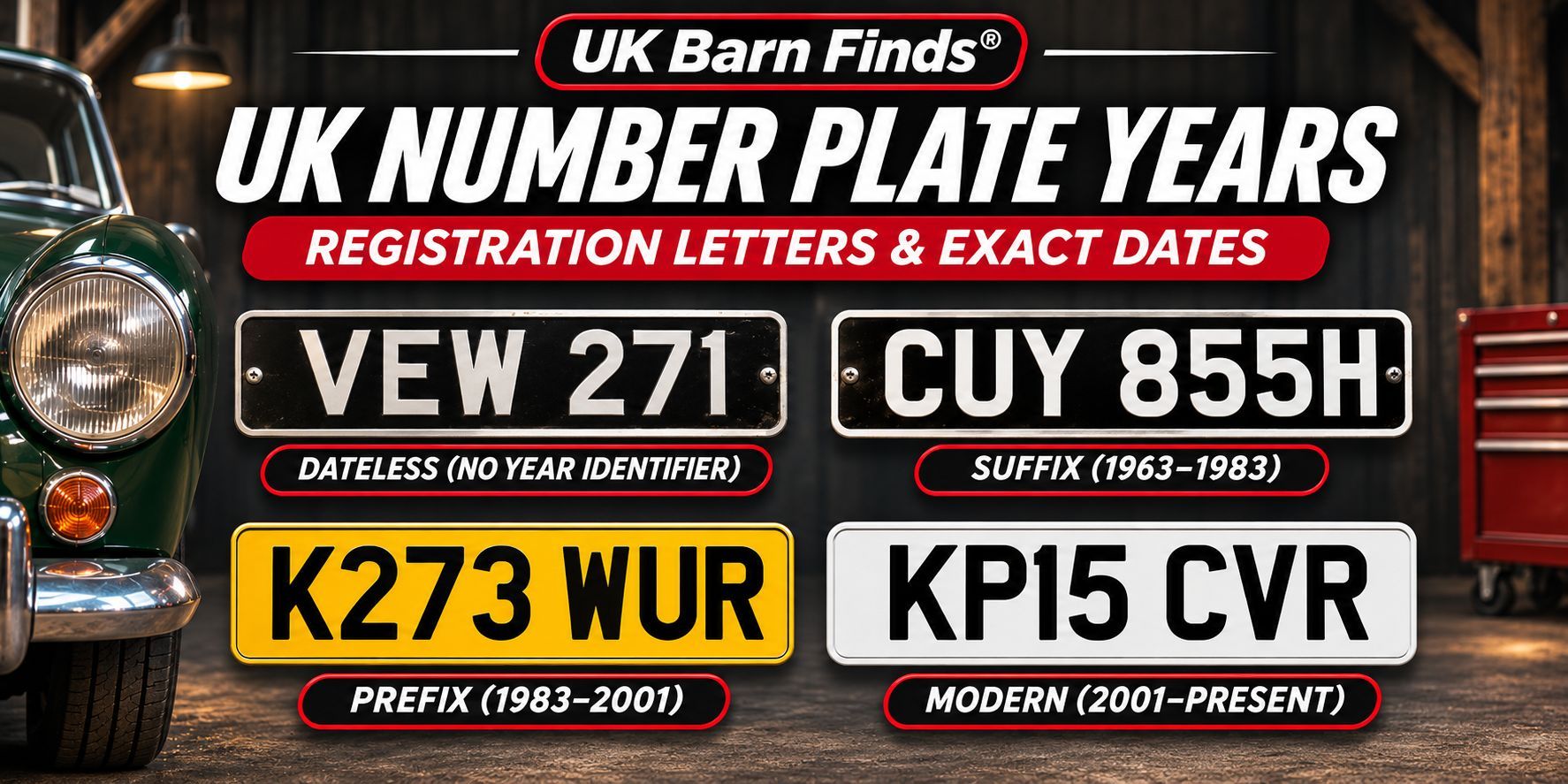
UK Number Plate Years: Registration Letters & Exact Dates
Find out what year a UK number plate was issued, from A-suffix classics to modern registrations. Complete date tables, plus the exceptions that can make a car appear newer than it really is.

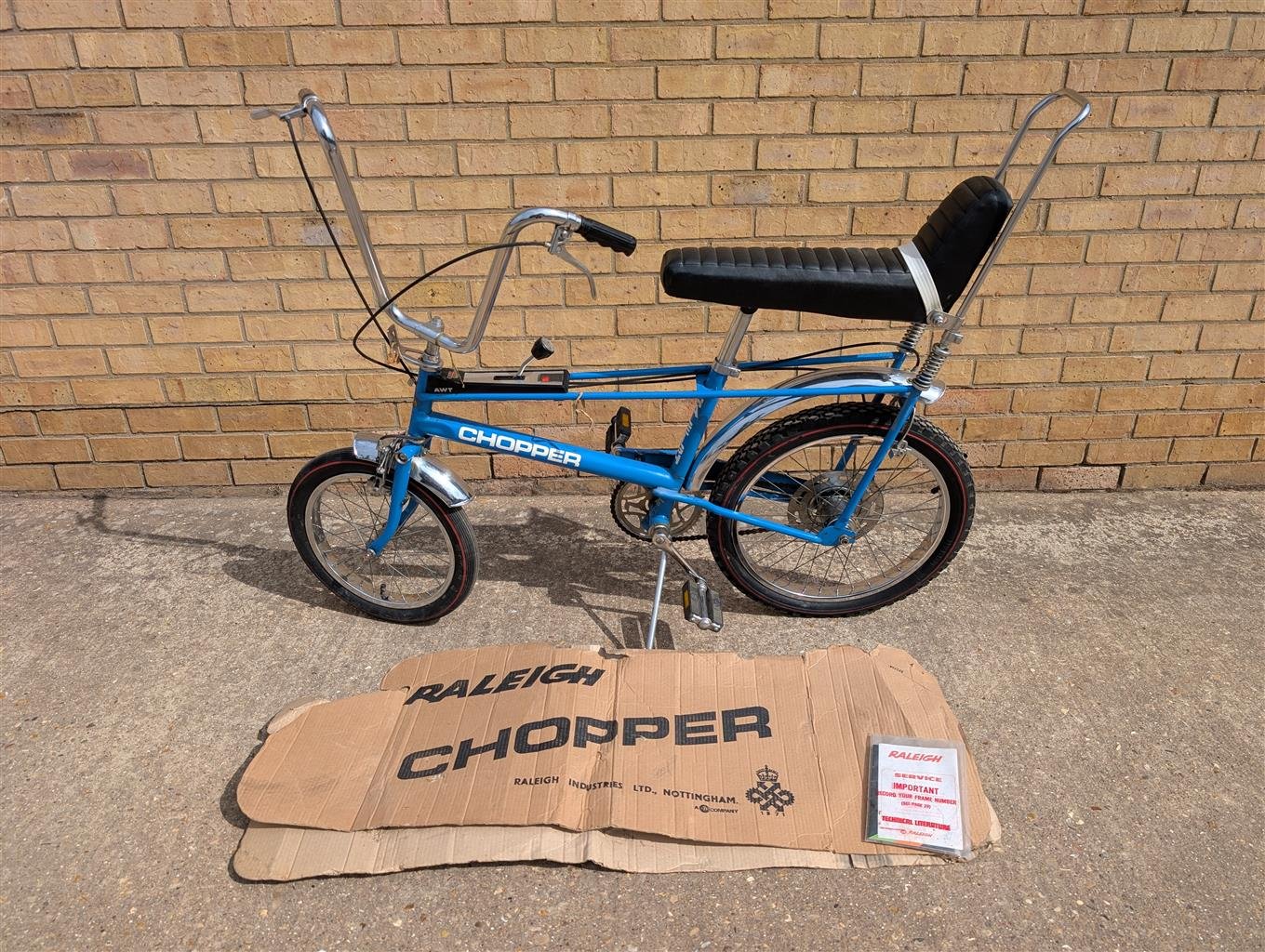
An apparently unused 1972 Raleigh Chopper Mk1, complete with surviving original delivery packaging and paperwork, is heading to auction at Cheffins on Saturday 21 November 2026.
Finished in blue and featuring the unmistakable high-rise handlebars, long saddle and frame-mounted gear selector, the bicycle is immediately recognisable as one of the great icons of 1970s childhood.
But there’s something particularly interesting about this example.
According to Cheffins, it has never been used and comes directly from the estate of a former Raleigh cycles agent. More than half a century after it was manufactured, it still retains its original cardboard delivery shroud, along with an owner’s pack, spanner and a selection of Raleigh sales brochures.
It raises an intriguing possibility. Could this Chopper have remained in the hands of a Raleigh agent without ever being sold to a member of the public?
We don’t know the circumstances of its long-term storage, but its survival makes for a fascinating story.
Offered as Lot 283 in Cheffins’ Automobilia & Advertising Auction, the bicycle is catalogued as a circa 1972 Raleigh Chopper Mk1.
The auctioneers describe it as unused, although they also acknowledge signs of long-term storage affecting parts of the frame and brightwork.
Its Sturmey-Archer gear hub is dated January 1972, providing a useful period reference.
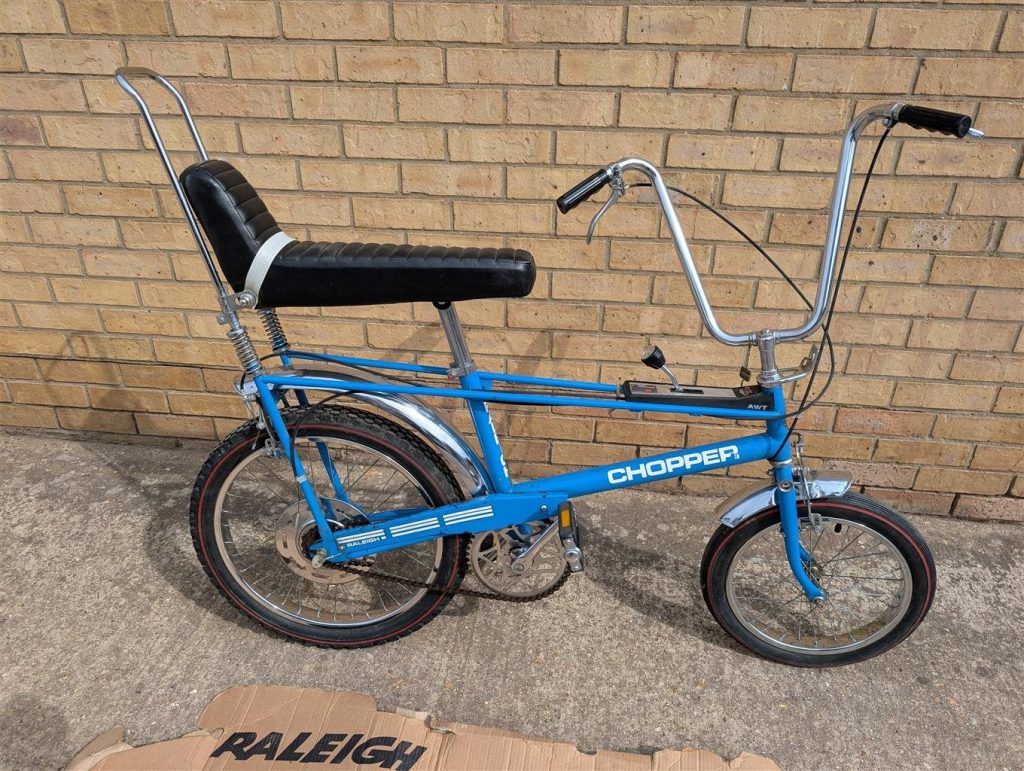
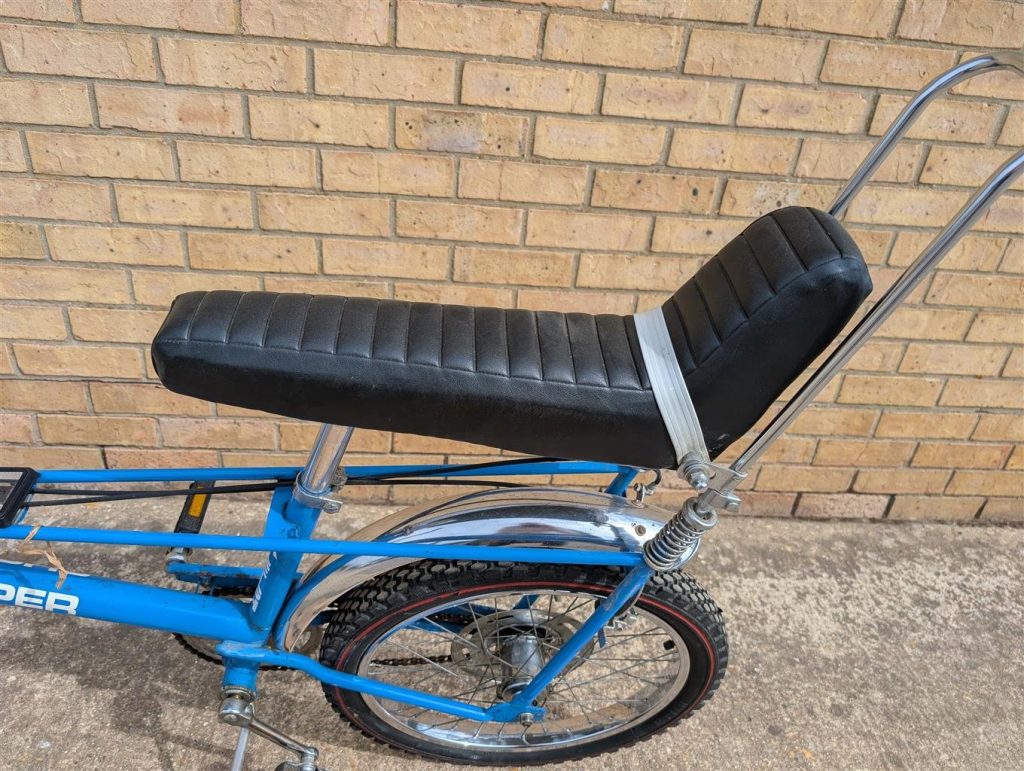
The bicycle retains many of the features that made the original Chopper so distinctive, including its dramatically raised handlebars, black padded saddle with tall backrest, chrome mudguards and contrasting wheel sizes.
Then there’s the gear selector.
Positioned on top of the frame, between the handlebars and saddle, the Chopper’s three-speed gear lever resembled something from a sports car more than a conventional bicycle.
For children growing up in the early 1970s, it was one of the features that made the Chopper so desirable.
Yet perhaps the most remarkable details of this particular example are the things that would ordinarily have disappeared soon after it left the shop.
Among the items accompanying the bicycle is its original cardboard delivery shroud, prominently printed with the Raleigh Chopper name and the company’s Nottingham address.
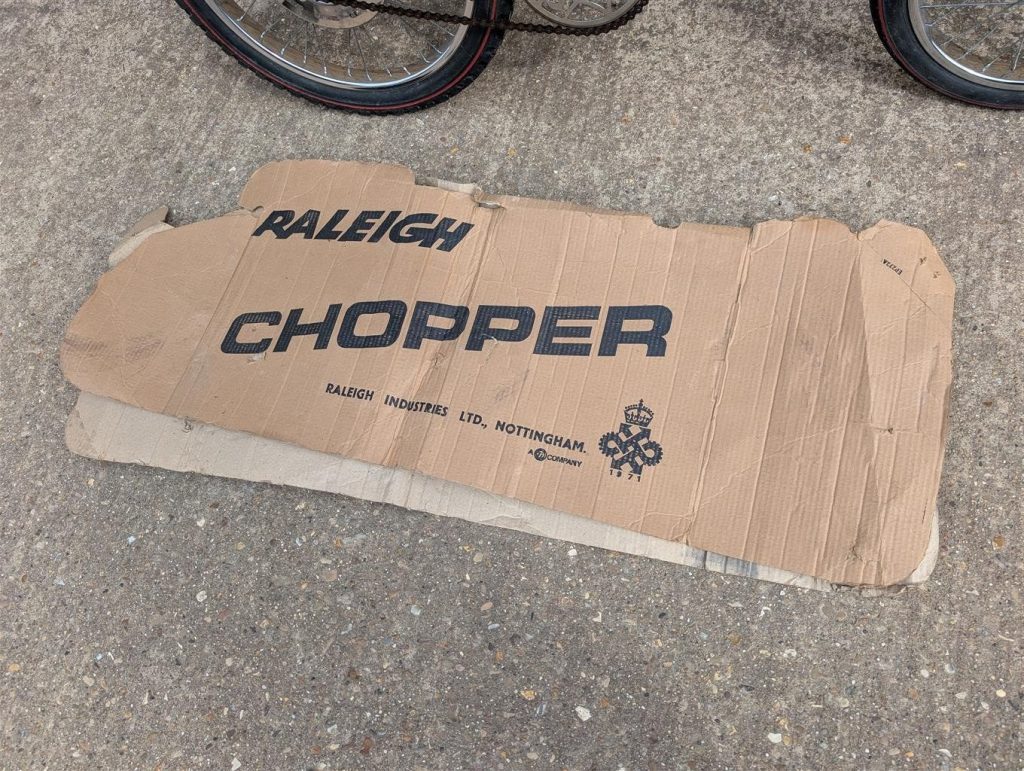
The cardboard has clearly endured more than five decades of storage, but it provides a wonderful reminder of how the bicycle would originally have been supplied.
Also included are a Raleigh owner’s handbook, Chopper-specific care literature, service paperwork and a spanner.
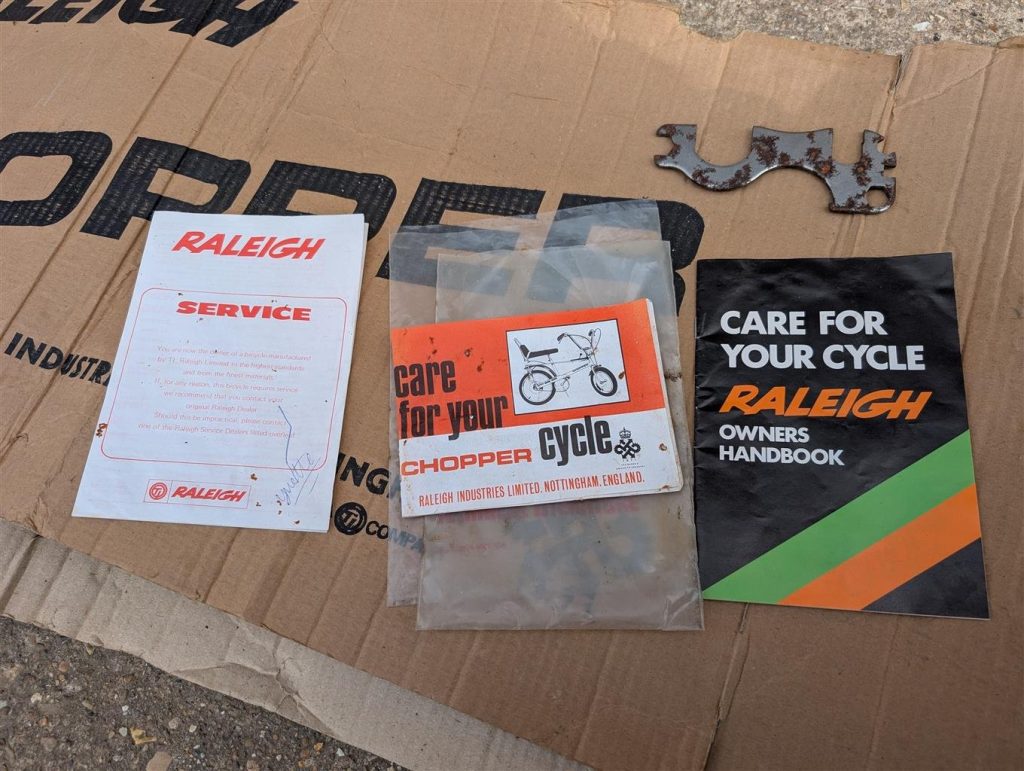
Cheffins also lists a selection of Raleigh sales brochures among the accompanying material.
These items add another dimension to the discovery. Whereas most surviving Choppers have long since been separated from their original packaging and instructions, this one retains some of the material associated with its early life.
Exactly why it was kept remains unknown.
Perhaps it was unsold stock, a bicycle retained by the agent, or simply something that was put aside and never brought into use.
Those are possibilities rather than established facts, but its origins in the estate of a former Raleigh agent make the circumstances particularly interesting.
Introduced in 1969, the Raleigh Chopper was unlike the bicycles most British children had grown up riding.
Its styling drew heavily on American custom motorcycles and dragster culture. The tall handlebars, long saddle, smaller front wheel and larger rear wheel gave it an unmistakable appearance.
It wasn’t designed simply as a practical means of getting from one place to another.
The Chopper was about style, individuality and, above all, being the envy of your friends.
Raleigh’s own history of the Chopper describes how the bicycle became a defining part of 1970s youth culture. The company reports that approximately 1.5 million Choppers were sold during the following decade.
For many children, owning a Chopper was the ultimate cycling ambition. Others had to make do with admiring one belonging to a friend or dreaming of finding one beneath the Christmas tree.
Its unconventional design wasn’t without controversy, however. The Chopper’s handling and the temptation for children to carry passengers prompted safety concerns, leading to changes in the subsequent Mk2.
The Mk1 was the original generation of Raleigh Chopper, preceding the revised Mk2 introduced in the early 1970s.
Among the most recognisable Mk1 features are the longer padded saddle, straight rear frame stays and distinctive frame-mounted gear selector.
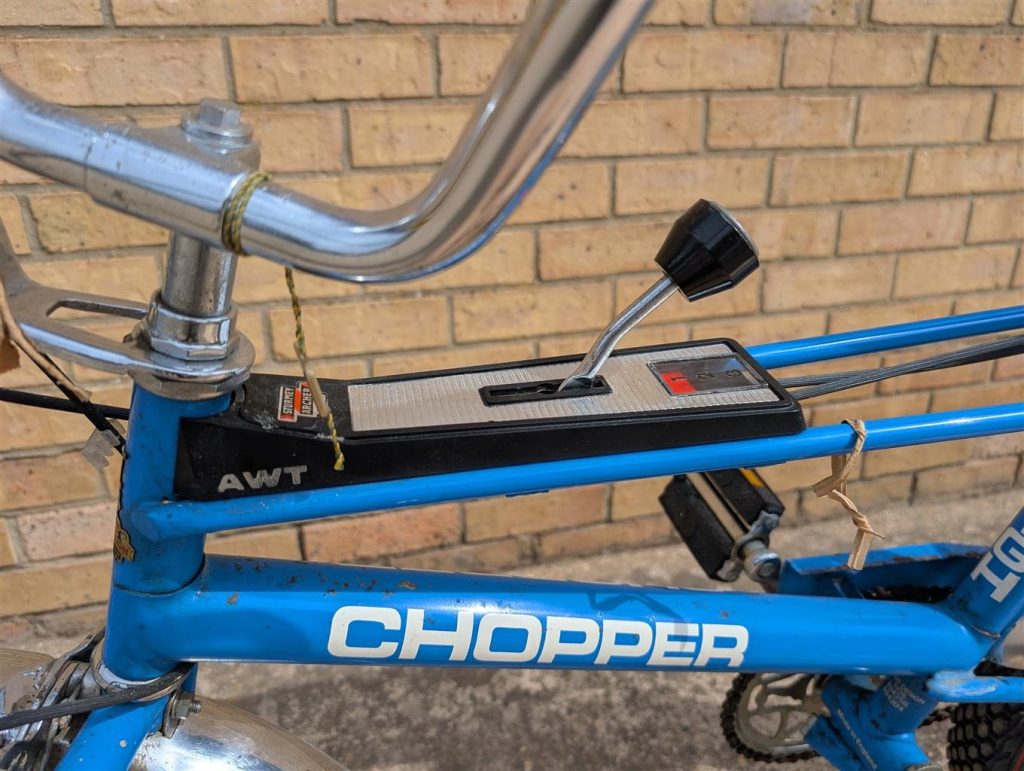
The later Mk2 incorporated changes intended to improve safety, including alterations to the rear frame and a shorter saddle.
The colours also changed as the model developed.
The Horizon Blue colour was available on the Mk1 by 1971, as illustrated in Raleigh’s original catalogue from that year. The specification included a 20-inch rear wheel, 16-inch front wheel and distinctive redline tyres.
These are among the features visible on the Chopper offered by Cheffins.
The Mk1’s place in British design history has been recognised by museums, too. The Science Museum Group preserves an example of the later Mk2 and documents the evolution of the design.
For whoever buys this bicycle, there’s an interesting decision to make.
Do you preserve it exactly as it has survived, complete with the marks of more than 50 years in storage?
Would you carefully clean it, attend to the brightwork and display it as a piece of British cycling history?
Or would you be tempted to take it for a ride?
There is something rather appealing about the idea of finally using a bicycle that may have spent its entire existence waiting for that moment.
On the other hand, its reportedly unused condition, surviving paperwork and original packaging are a significant part of what makes this example so interesting.
It’s a question that collectors and Chopper enthusiasts will undoubtedly have their own opinions about.
The story also raises a wider question about the remarkable things that can survive in garages, storerooms and former dealerships.
New old stock, usually abbreviated to NOS, describes items manufactured years ago but never sold or put into normal use.
Sometimes that means a forgotten box of spare parts. Occasionally, it can mean an entire vehicle or bicycle.
This Raleigh Chopper is a particularly intriguing example because of its connection to a former cycle agent.
If a bicycle like this can emerge after more than half a century, what else might be tucked away in old dealership premises, workshops and private collections?
Perhaps another unused bicycle, a motorcycle still carrying its original delivery labels, or even a car that never made it beyond the supplying dealer.
It’s one of the things that makes documenting old vehicles and their histories so fascinating. Even now, remarkable discoveries continue to emerge.
The unused Raleigh Chopper Mk1 is offered as Lot 283 in Cheffins’ Automobilia & Advertising Auction on Saturday 21 November 2026.
The sale takes place at Cheffins Machinery Saleground in Sutton, Cambridgeshire, beginning at 9am.
Viewing is available on Friday 20 November from 10am until 5pm, and from 8am on the morning of the auction.
The bicycle’s catalogue description, further photographs and bidding information can be found on the official Cheffins Lot 283 listing.
As always, prospective buyers should satisfy themselves about the bicycle’s originality, condition and history before bidding.
We’ll be following the auction with interest and will report back with the result.
But perhaps the most interesting question is what its next owner will do with it. Would you preserve this apparently unused Raleigh Chopper, or would you finally take it for a ride?
Photographs courtesy of Cheffins. Historical information sourced from Raleigh’s published history, its original 1971 catalogue and the Science Museum Group.
Stay updated with the latest barn finds, auction news, and classic car adventures in our 'News & Waffle' section. Dive into rare discoveries, behind-the-scenes stories, and expert insights into the world of classic cars. Whether you’re a seasoned enthusiast or simply intrigued by the tales behind these treasures, this is your hub for all things classic and captivating.
View All Find out what year a UK number plate was issued, from A-suffix classics to modern registrations. Complete date tables, plus the exceptions that can make a car appear newer than it really is.
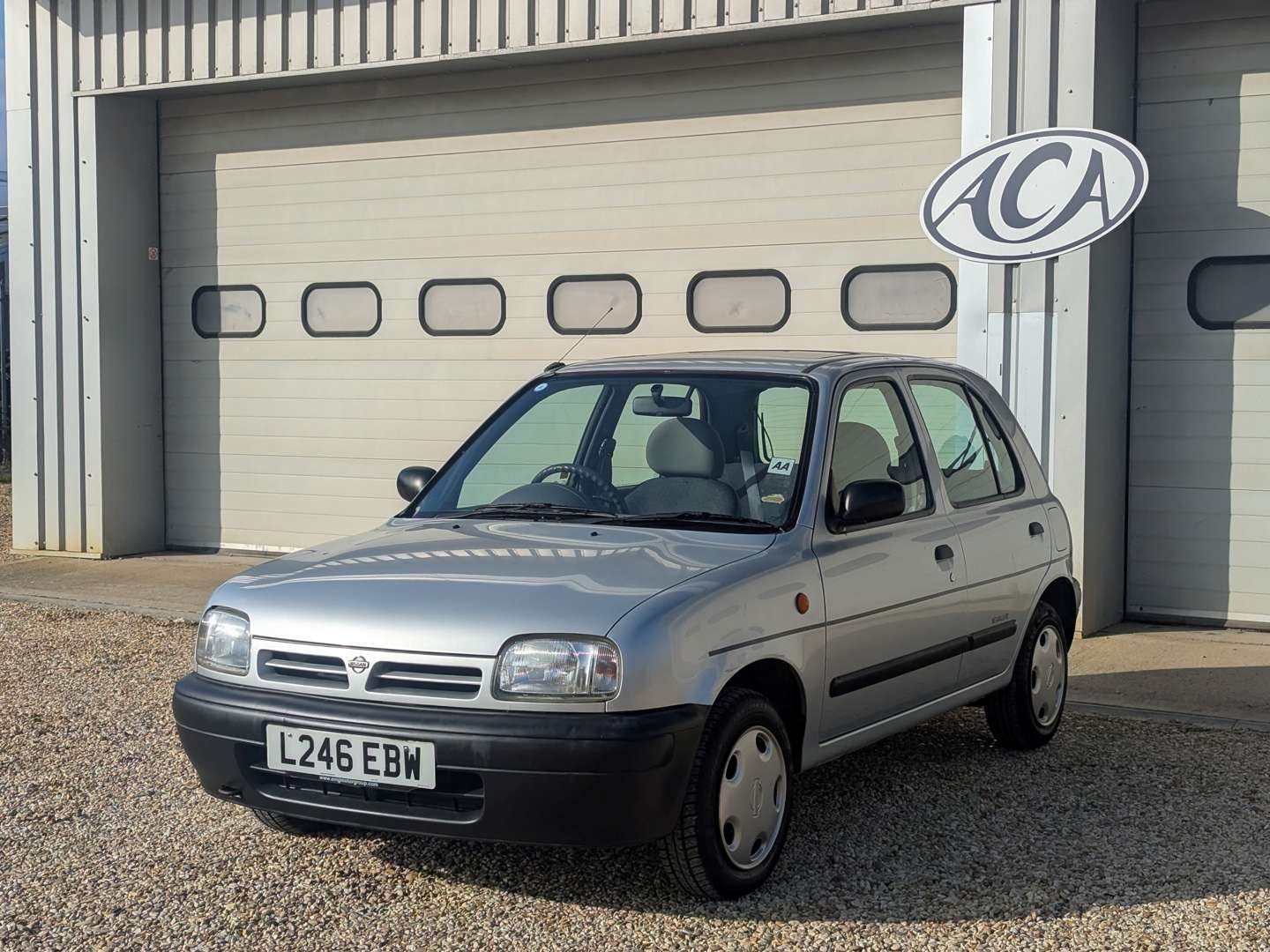
Remember when these were everywhere? The Nissan Micra K11 was once such a familiar sight on British roads that most of us barely gave them a second glance. They were first cars, family runabouts, driving school favourites and dependable everyday transport. But more than three decades after the second-generation Micra arrived, are we beginning to [&...
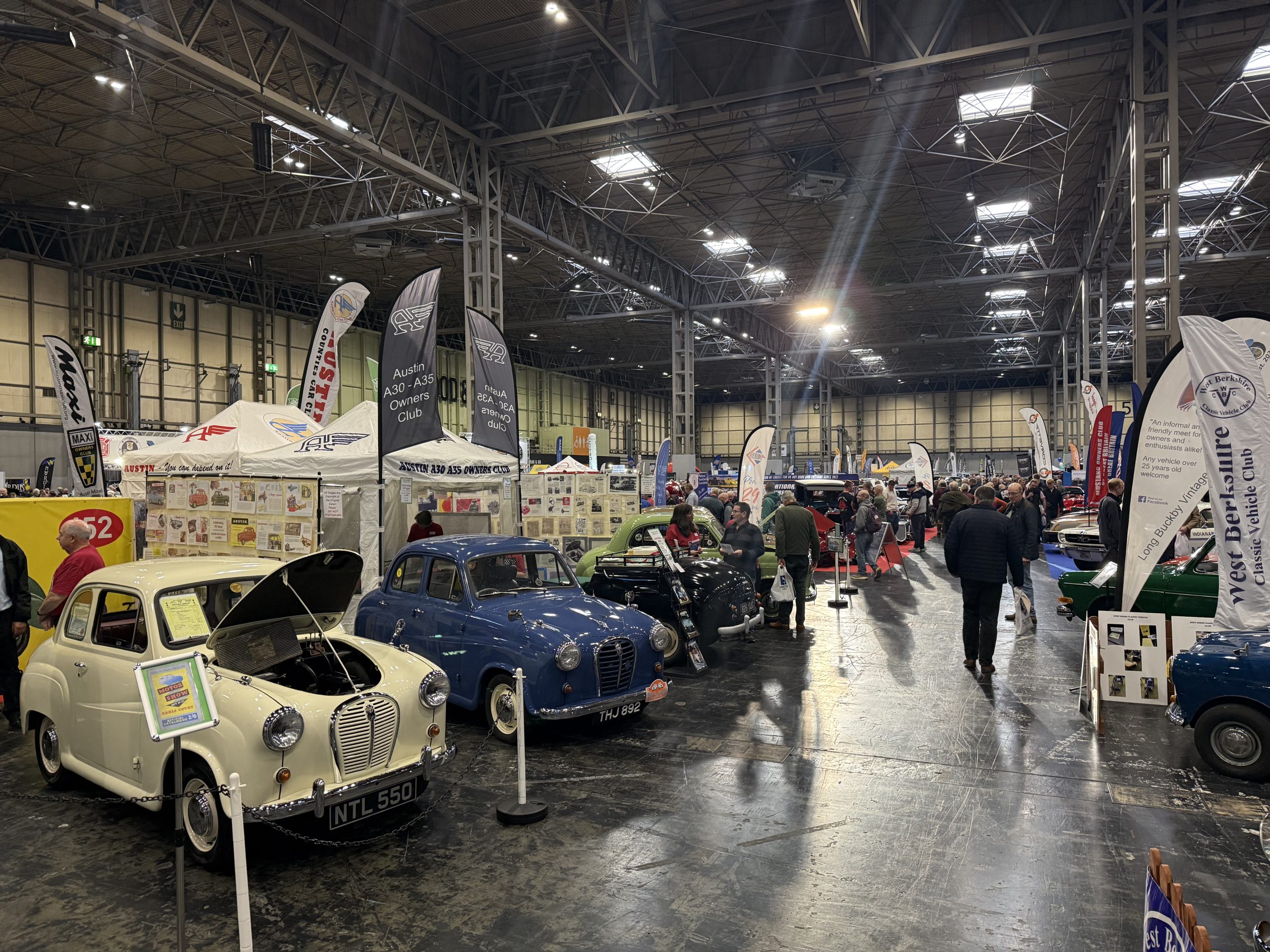
Almost 75,000 visitors attended the 2026 Lancaster Insurance Classic Motor Show at Birmingham’s NEC, with visitor numbers increasing for another year. The three-day event, held from 13–15 November, welcomed 74,894 visitors, compared with 72,738 in 2025, an increase of almost 3%. More than 320 classic car clubs participated, displaying over 3,000 vehicles, while the weekend […]