Hundreds of classic cars. Rows of beautifully restored machinery. Plenty of cars worth serious money.
And what did we come home thinking about?
This.
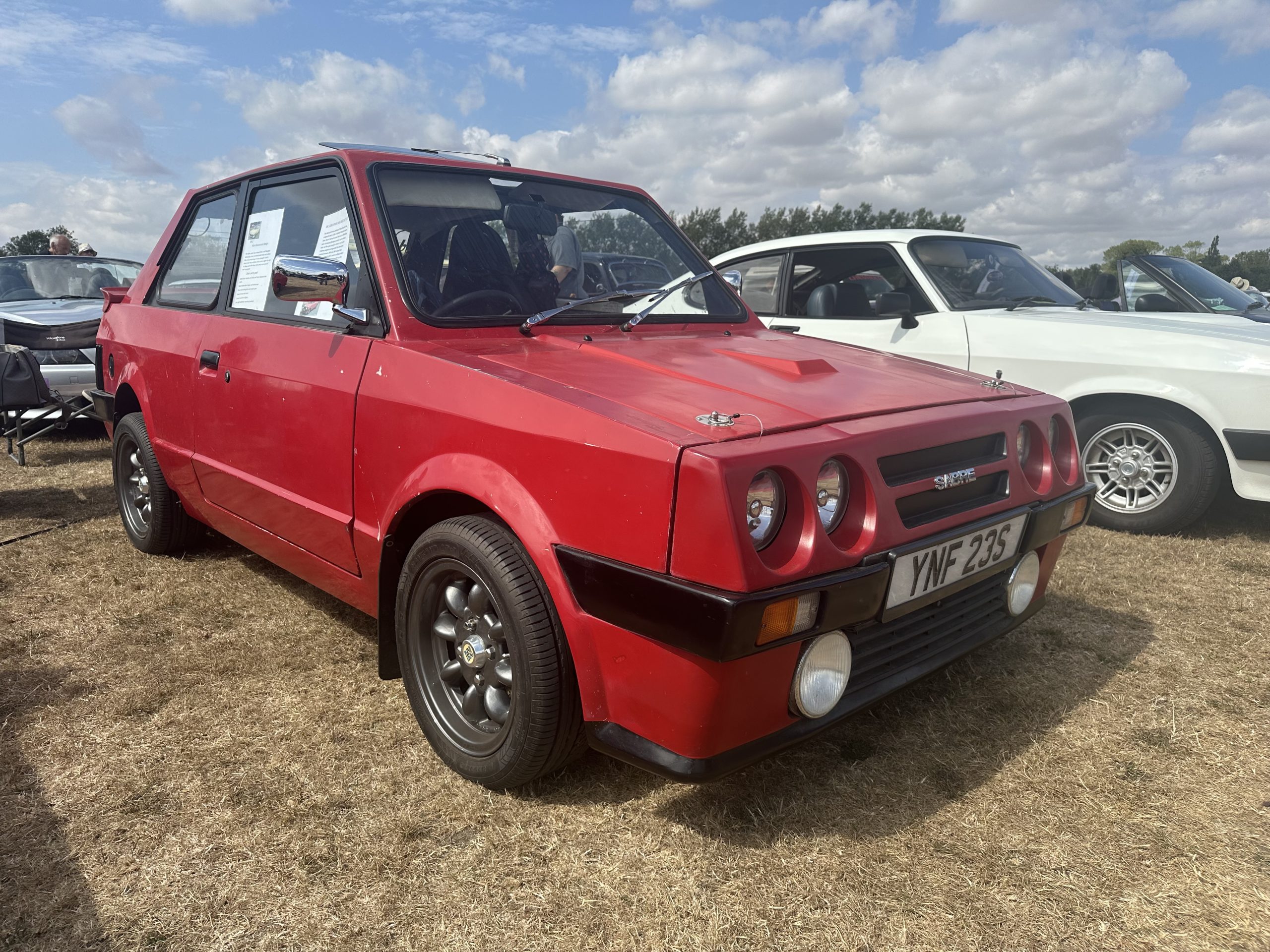
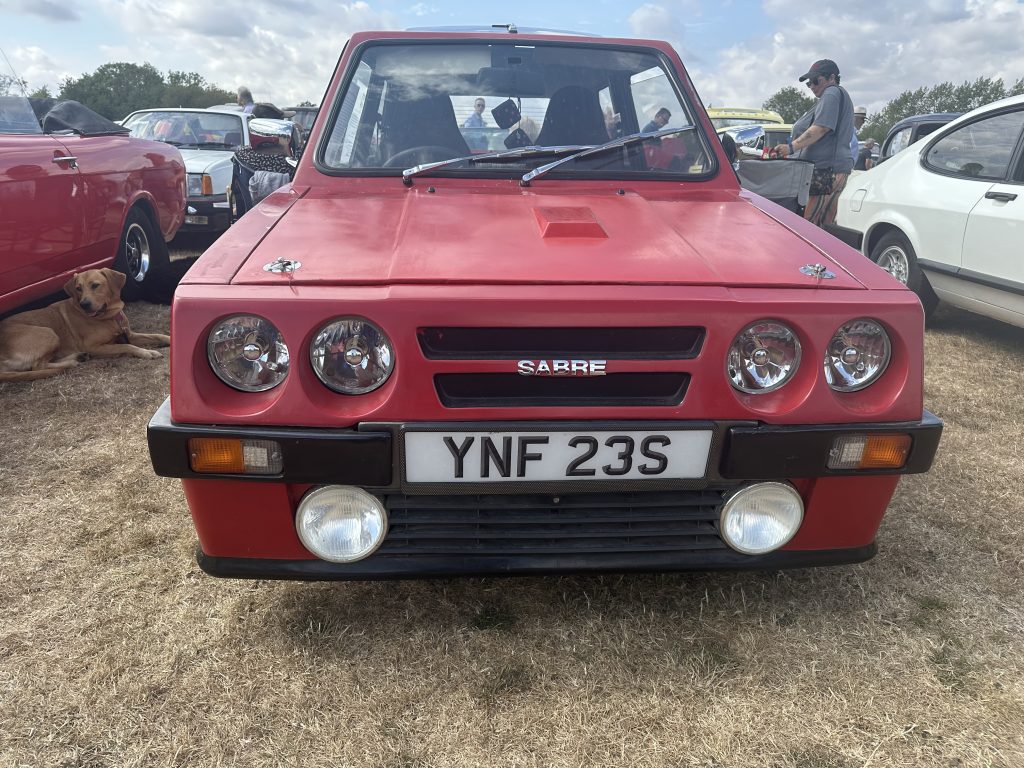
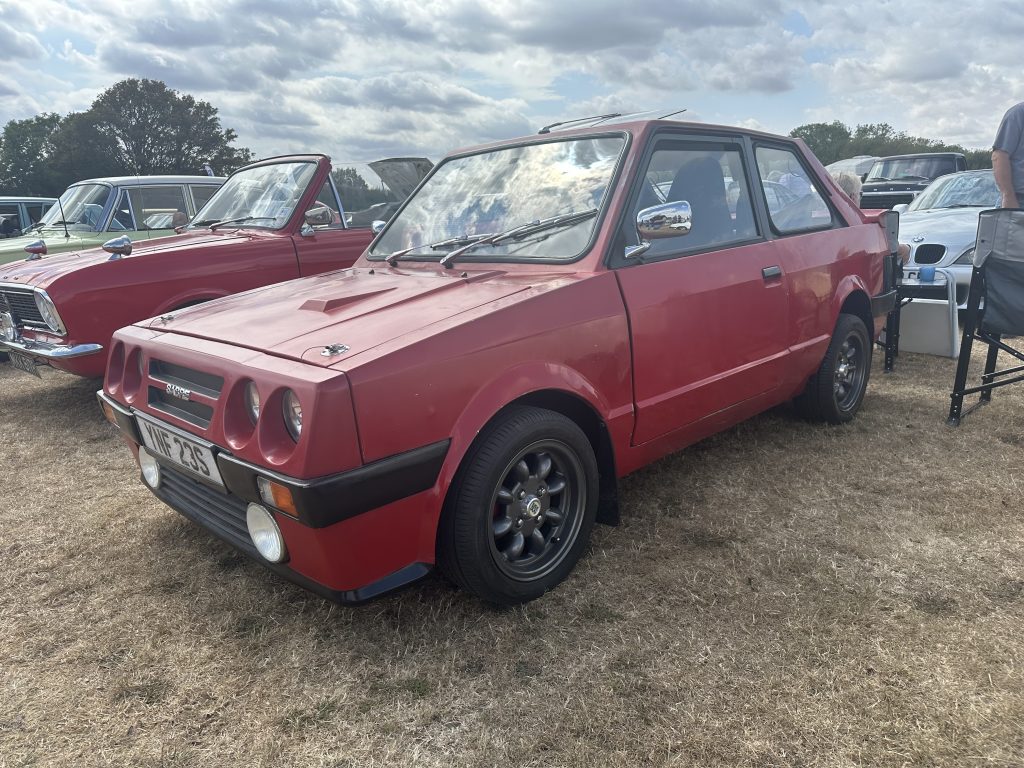
A Sabre Sprint.
If you’re currently wondering what on earth a Sabre Sprint is, you’re probably not alone. Until you find yourself standing in front of one, it looks like something created by putting a Talbot Sunbeam, Mk3 Escort and a handful of 1980s kit-car ideas into a blender.
Which, frankly, is part of the appeal.
We spotted this red example at a huge classic car show at Stonham Barns in Suffolk. There were hundreds of fantastic cars there and every one represented somebody’s time, effort and enthusiasm.
But this was the car that stopped us.
Rare, quirky, unmistakably British and, unlike many genuinely unusual classics, potentially still within reach of an ordinary enthusiast.
So What Exactly Is A Sabre Sprint?
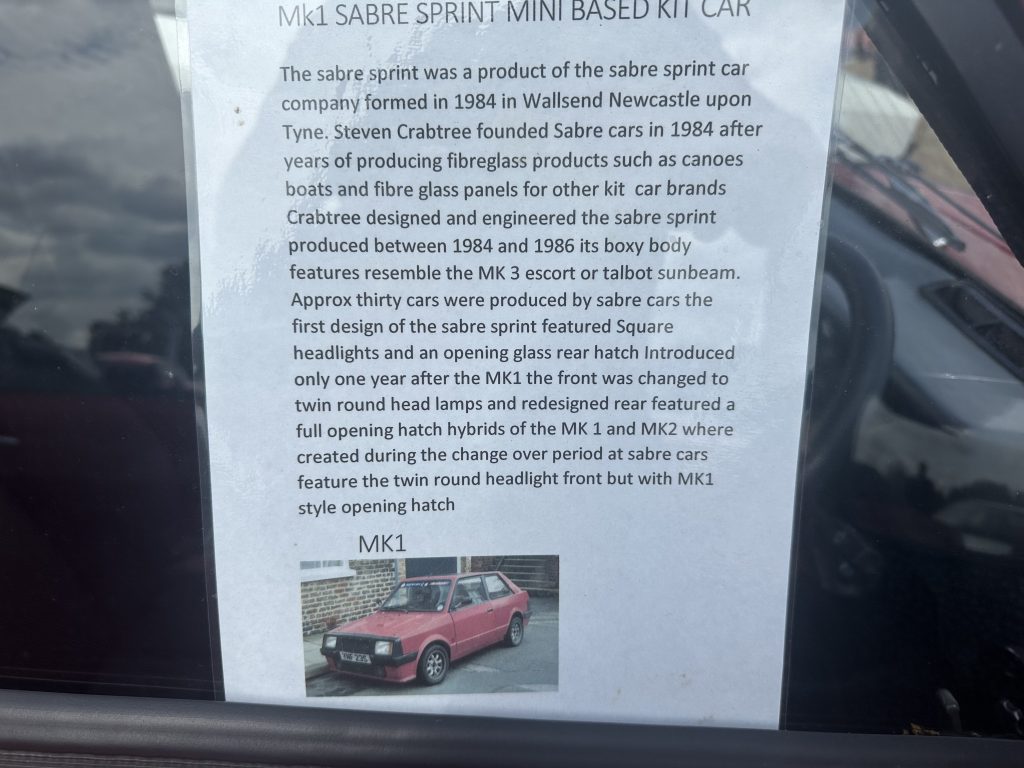
The Sabre Sprint was a Mini-based kit car produced by Sabre Cars in Wallsend, Newcastle upon Tyne during the mid-1980s.
Sabre Cars was founded by Steven Crabtree in 1984, following his experience producing fibreglass products and panels.
Rather than simply creating another sports-car-shaped body to drop over familiar running gear, the Sprint was rather more interesting underneath.
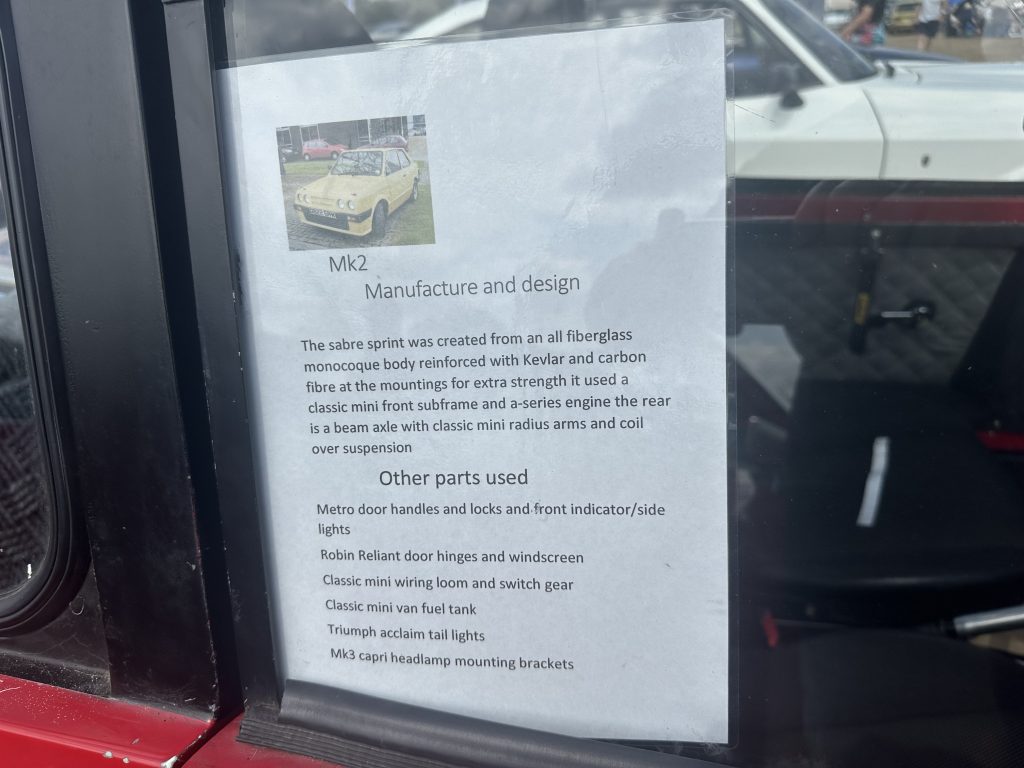
Its main structure was an all-fibreglass monocoque, with reinforcement around important mounting points, while much of the mechanical hardware came from the classic Mini.
At the front sat a Mini subframe and A-Series engine, while the rear used a beam axle arrangement incorporating Mini radius arms and coilover suspension.
So although it looks like a wonderfully obscure Eighties hatchback, there is a lot of very familiar engineering underneath.
And that might actually make owning one less intimidating than the appearance suggests.
A Parts Bin In The Best Possible Way
One of our favourite things about old British kit cars is discovering where all the components came from.
The information displayed alongside this particular car provided a brilliant list.
According to the owner’s display, the Sabre used Metro door handles, locks and front indicator/side lights.
Reliant Robin door hinges and windscreen.
A classic Mini wiring loom and switchgear.
A Mini van fuel tank.
Triumph Acclaim rear lights.
And even Mk3 Ford Capri headlamp mounting brackets.
That is gloriously British.
It also sums up an era when small-volume manufacturers could look around the shelves, work out what fitted and build a car from an assortment of proven components.
You could probably turn identifying every borrowed component into an entire afternoon’s entertainment.
The Styling Is Half The Fun
Then there are the looks.
Nobody is going to mistake a Sabre Sprint for anything else.
The original Mk1 featured square headlights, while later cars gained the much more distinctive round-headlamp treatment seen on the red car we photographed.
There were also cars produced during the changeover period combining features of the different versions, making identification slightly more complicated than simply counting headlights.
And that is before getting into some of the stranger Sabre offshoots.
There was even a Vario version with a removable rear roof section, while historical accounts mention a single Sabre Camper.
The company certainly wasn’t short of ideas.
Our red show car wears four round lamps across its bluff nose, additional spotlights lower down and a wonderfully square profile that could only really have emerged from the 1980s.
Is it beautiful?
Probably not in the traditional sense.
Would we rather spend half an hour looking around this than another immaculate E-Type we’ve seen a hundred times before?
Absolutely.
How Many Sabre Sprints Were Made?
This is where the history becomes less straightforward.
The information displayed with the car at Stonham Barns stated that approximately 30 Sabre Sprints were produced.
Other enthusiast sources over the years have suggested larger totals when the various versions and derivatives are included.
That uncertainty is actually quite typical of small British kit-car manufacturers from the period. Records weren’t always preserved in the same way they would be at a major manufacturer, cars could take years to complete after a kit was purchased, and donor-car identities sometimes muddy the historical picture further.
What seems beyond much argument is that you are unlikely to encounter another Sabre Sprint every time you visit a Sunday car show.
We certainly don’t.
The Mini Connection Makes It Even Better
The Mini connection is probably the detail that makes the Sabre most interesting to us.
There have been dozens of attempts over the decades to take the brilliant mechanical package underneath the classic Mini and wrap it in something completely different.
Some became famous.
Others vanished almost completely.
The Sabre sits firmly in the second category.
Yet beneath all that angular fibreglass is engineering that countless classic-car enthusiasts already understand.
A-Series power, Mini-derived front suspension and brakes, familiar electrical components and various mass-produced parts from other British cars potentially make it a much less frightening proposition than an obscure name might initially suggest.
The fibreglass construction also means the body itself doesn’t suffer from rust in the same way as a conventional steel Mini shell, although obviously the metal mechanical and structural components still require all the normal checks.
It’s essentially a piece of obscure British motoring history that you could potentially maintain using parts from cars everybody has heard of.
There’s something rather appealing about that.
Rare Doesn’t Always Have To Mean Expensive
The classic-car world has developed a slightly unfortunate habit of treating rarity and enormous value as though they must always go together.
They don’t.
Some of the most interesting cars ever made remain relatively affordable precisely because hardly anybody knows what they are.
A Ferrari built in tiny numbers becomes a multimillion-pound collector’s item.
An obscure British kit car built in tiny numbers can result in somebody at a show saying, “What’s that?”
We know which reaction is more interesting.
Historic adverts we found underline just how inexpensive Sabre Sprints have sometimes been compared with the cars whose mechanical parts they borrow. One example advertised through an enthusiast forum in 2013 was asking £1,500, while another archived advert from years ago appeared at just £750.
Those figures obviously have very little relevance to what a good surviving car would be worth today, and with something produced in such small numbers there isn’t enough market activity to quote a meaningful modern value.
But that’s rather the point.
This isn’t a car you buy because a price guide says it has risen 12 per cent in three years.
You buy one because nobody else at the petrol station has got one.
This Is What Classic Car Shows Are For
And that brings us back to Stonham Barns.
There were far more valuable cars there.
Faster cars.
Prettier cars.
Cars carrying badges that would make auction bidders considerably more excited.
But a good classic-car show shouldn’t simply be a competition to find the most expensive thing in the field.
It should be somewhere you discover something.
A car you’ve forgotten.
A model you remember from childhood.
Or, occasionally, something completely unfamiliar that sends you down a rabbit hole when you get home.
For us, the Sabre Sprint did exactly that.
It represents the wonderfully inventive side of the British motor industry that existed beyond Ford, British Leyland and the other giants. Small companies, people with ideas, fibreglass moulds, donor cars and enough determination to put something completely new on the road.
Forty years later, somebody is still caring for this one, taking it to shows and telling people its story.
That deserves celebrating every bit as much as the immaculate and expensive machinery parked around it.
And given the choice between owning something everybody recognises and something that causes people to stop, stare and ask questions?
We’d be very tempted by the Sabre.
Got A Classic Car Or Bike Sitting In The Garage?
Cars like this are exactly why we’re always keen to hear from owners with interesting vehicles tucked away in garages, barns, workshops and outbuildings.
If you’ve got a classic car, motorcycle, unusual kit car, unfinished project or long-stored vehicle that you’re thinking about selling, we’d love to hear from you.
We buy vehicles outright, including non-runners and projects, and can help arrange collection from across the UK.
You can get in touch using our simple online form here:
No pressure, no obligation and no sales pitch, just a straightforward conversation about what you’ve got.
Join our newsletter
Get the best barn finds, projects and classic temptations direct to your inbox.
Related Posts
Discover More Classic Car Stories
Stay updated with the latest barn finds, auction news, and classic car adventures in our 'News & Waffle' section. Dive into rare discoveries, behind-the-scenes stories, and expert insights into the world of classic cars. Whether you’re a seasoned enthusiast or simply intrigued by the tales behind these treasures, this is your hub for all things classic and captivating.
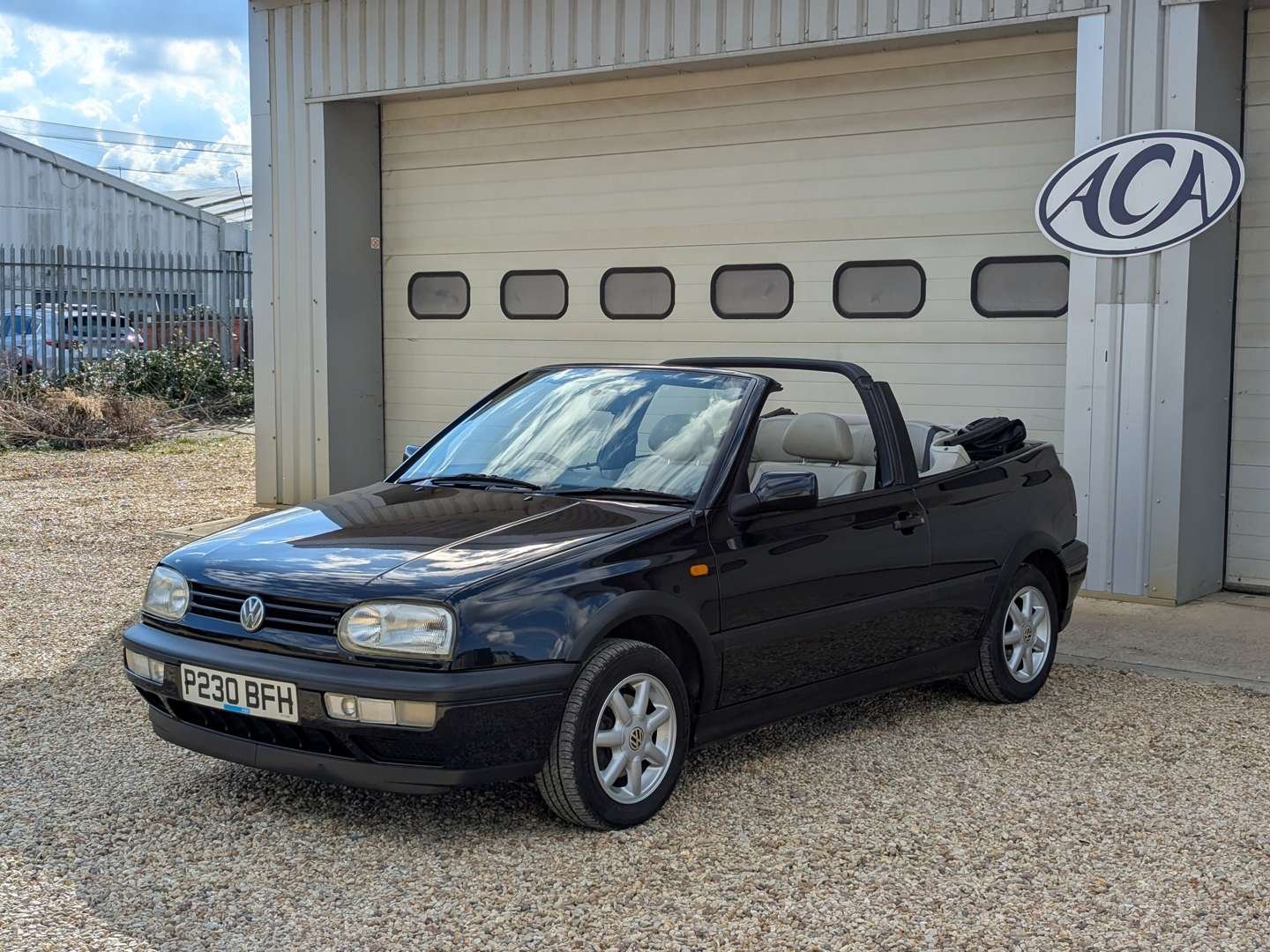
This VW Golf Cabriolet auction result comes with a little bit of history attached to it. Not because the car once belonged to somebody famous. Not because it’s incredibly rare. And not because it broke any auction records. Quite simply, this was: Lot 1. The very first car through the very first Anglia Car Auctions [&...
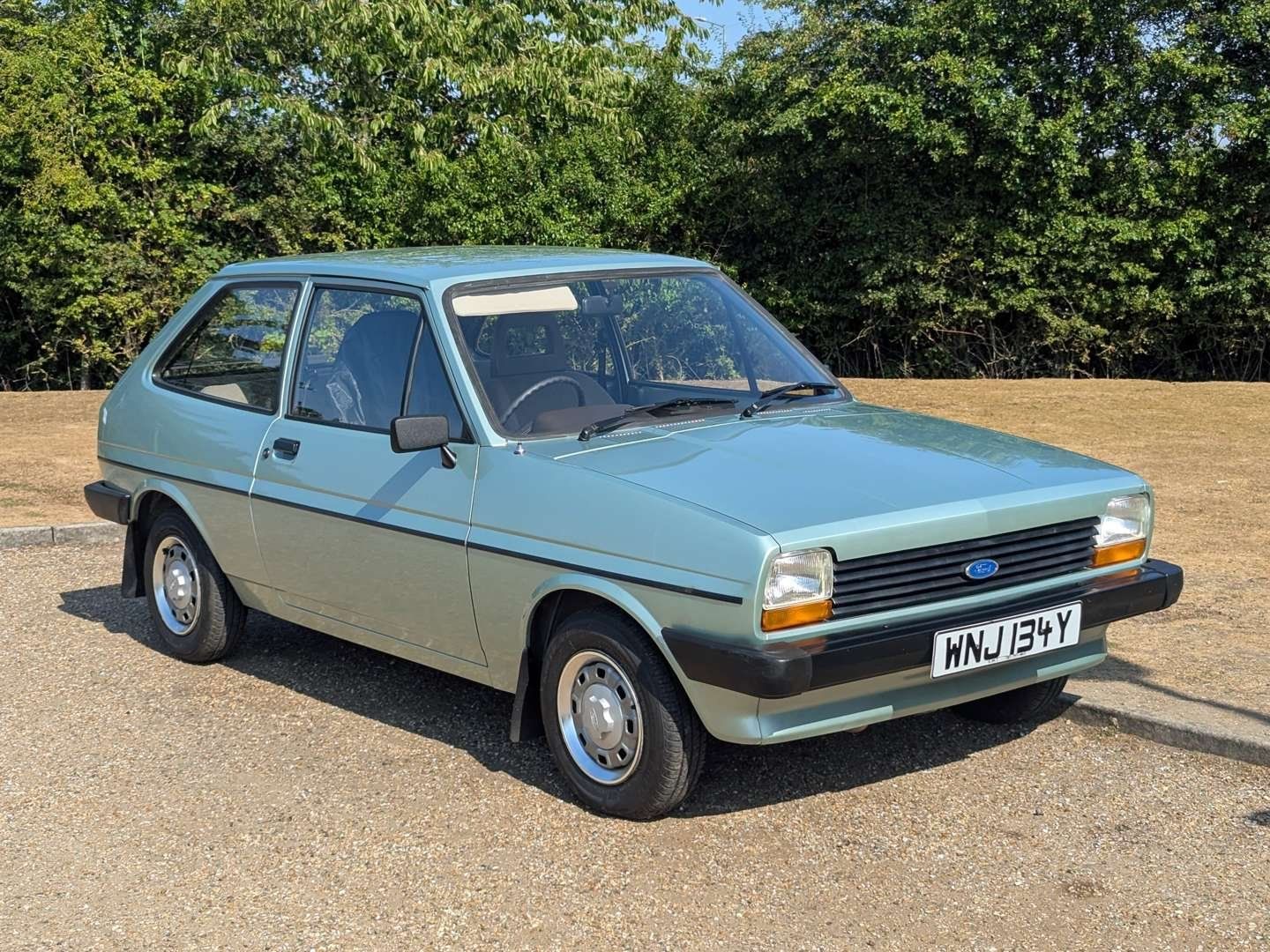
This Ford Fiesta auction result raises a question we’ve been thinking about quite a lot recently. Do quality classic cars still sell well? There’s no shortage of gloomy talk around the classic-car market. Prices are down. Projects are harder to sell. Some cars that would once have attracted a queue of bidders are ...
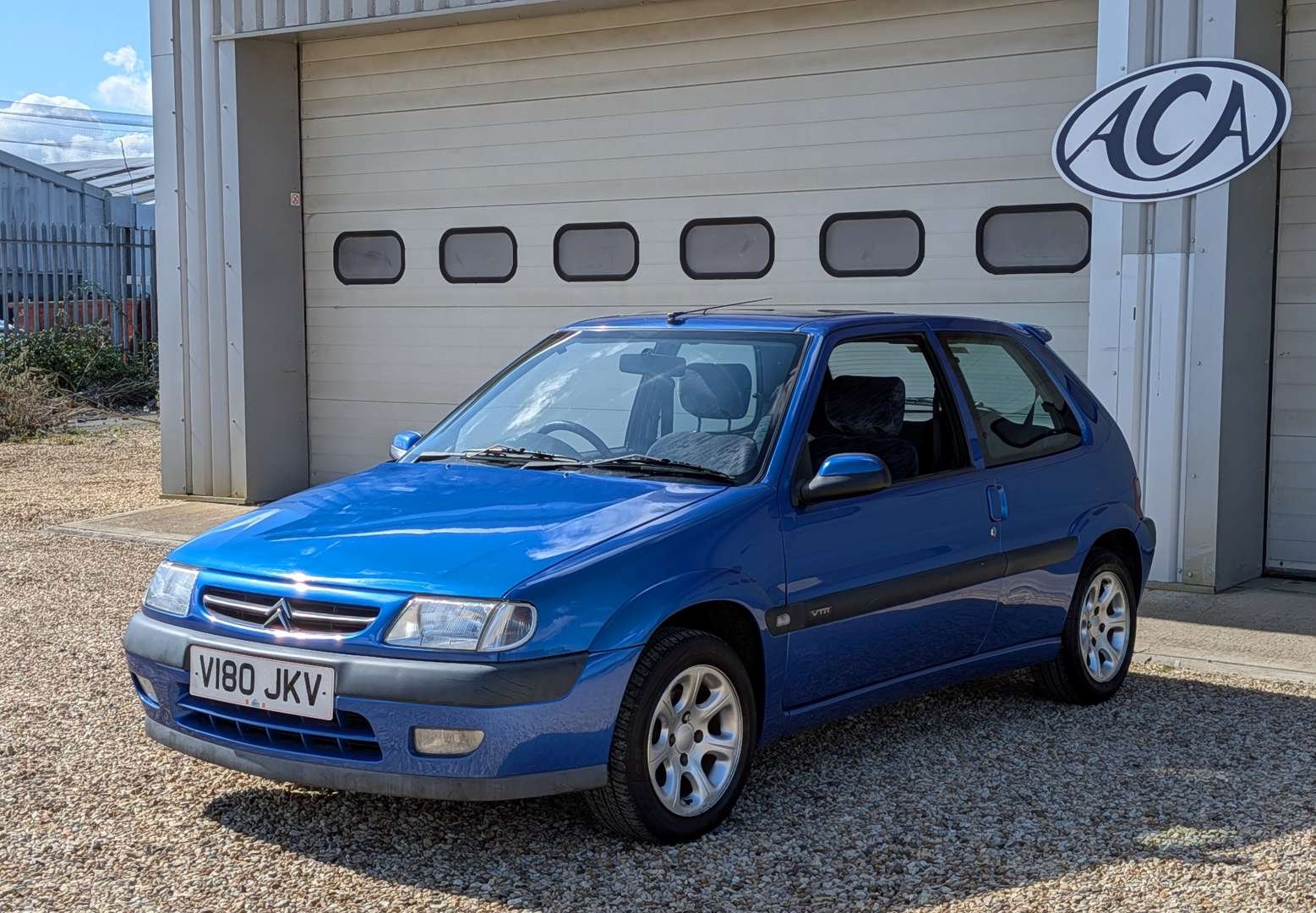
This Citroën Saxo VTR auction result sent us into a part of the modern-classic world we’re still learning about. Because I’ll admit it. This era is slightly outside my comfort zone. Give me an old Ford, a British Leyland product or something that’s spent 30 years disappearing into a hedge and I’...