Some links in this article are affiliate links and may earn UK Barn Finds a commission.
Every barn find starts with a question.
Will it run?
That is usually somewhere in our minds from the moment somebody first contacts us about an old car that has been sitting in a garage, barn, shed or garden for years.
Sometimes decades.
We might know when it was last taxed.
We might know when it last passed an MOT.
Occasionally the owner can remember roughly when it last moved under its own power.
But until we actually start working through the basics, nobody really knows what is waiting under the bonnet.
And once we have established that an engine is safe to turn, one of the first things we want to know is whether we have any ignition.
That is where one of the cheapest tools in our armoury becomes surprisingly important.
The Laser Tools 2780 HT Lead Ignition Spark Tester.
We use these regularly on barn finds, garage finds and long-dormant classics, both on camera and when nobody is watching.
For the money, they have proved absolutely invaluable.
What Is The Laser Tools 2780 Spark Tester?
The Laser Tools 2780 is a set of four simple in-line ignition testers designed for conventional petrol ignition systems using separate HT leads.
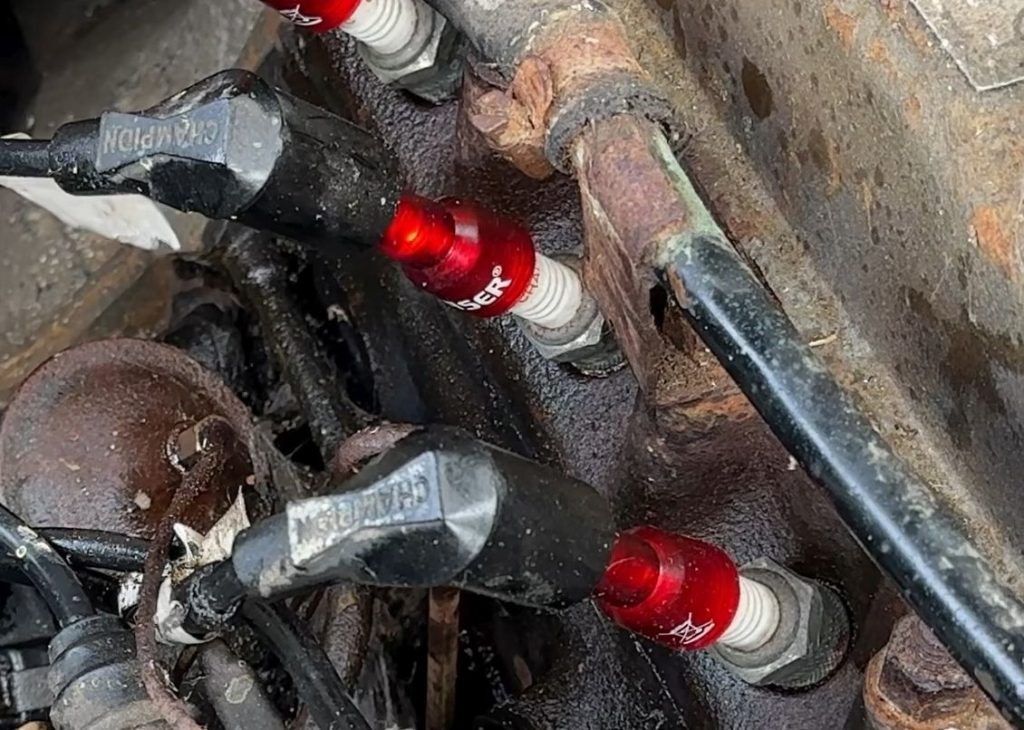
Each tester fits between a spark plug and its HT lead.
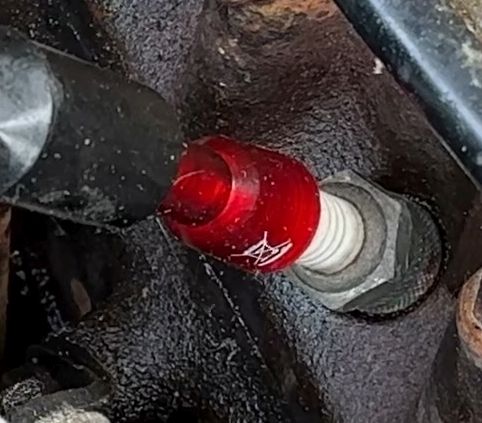
When the engine is cranked or running, the tester gives a visible flash as the high-tension ignition pulse passes through that part of the system.
That makes it a wonderfully quick way of establishing whether ignition activity is reaching each cylinder.
There are four testers in the pack, which is particularly handy for us because so many of the old cars we deal with have four-cylinder engines.
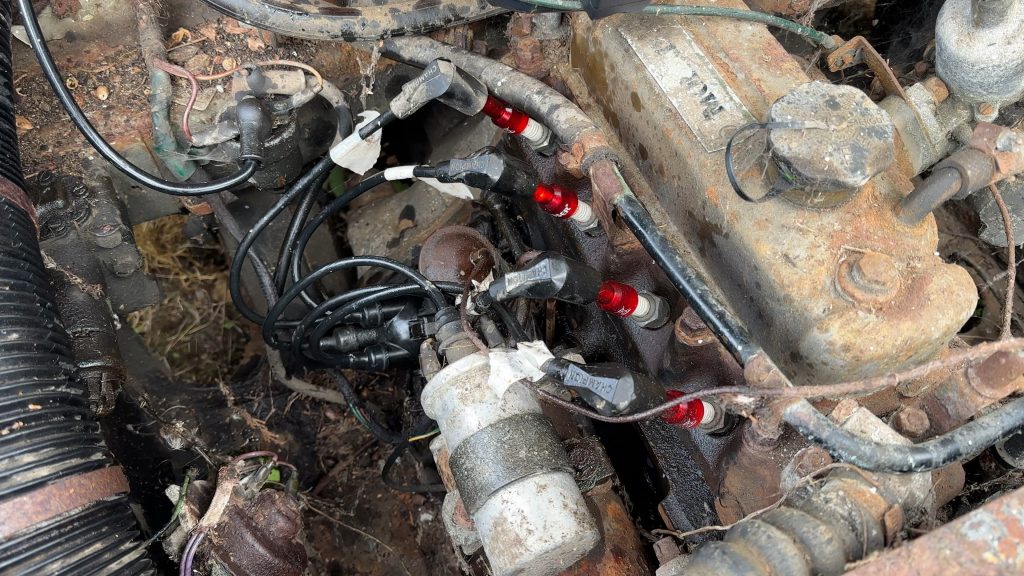
Rather than checking one lead, moving a tester and repeating the process, we can connect all four and see what is happening across the engine at the same time.
If you fancy adding the same set to your own toolbox, you can see the Laser Tools 2780 spark testers currently for sale on eBay here:
A petrol engine fundamentally needs fuel, compression and a correctly timed ignition source before it has much chance of running.
Simple enough.
But when a car has been sitting for 20, 30, 40 or even 50 years, there are plenty of places for an old ignition system to go wrong.
Points can corrode.
Condensers can fail.
Coils can deteriorate.
Distributor caps can crack or develop tracking.
Rotor arms can give trouble.
Connections can corrode.
HT leads can break down.
Spark plugs themselves can be fouled, damaged or simply past their best.
So when a dormant engine cranks but shows no enthusiasm for actually starting, it helps enormously to establish whether the ignition system is doing anything at all.
These little testers give us a very quick visual clue.
That Little Red Flash
There is something disproportionately satisfying about seeing them light up.
You can be looking into an engine bay that appears not to have been disturbed for decades.
Everything is dusty.
The wiring looks elderly.
The engine has been silent for longer than some of us have been alive.
Then someone turns the key.
The engine begins to crank.
And those little red flashes start appearing.
It is a tiny thing, but on a car which has effectively been asleep for decades it feels significant.
There is life in the ignition system.
It certainly does not mean the engine is guaranteed to start.
It does not prove that the ignition timing is correct.
It does not prove that the spark plugs themselves are firing perfectly inside the cylinders under compression.
And it does not tell us anything about fuel delivery or compression.
But it gives us a very useful piece of the puzzle.
And when you know you may be the first person in decades to make that old ignition system come alive again, it is remarkably satisfying.
What Do The Spark Testers Actually Tell Us?
This is where it is important not to ask a simple tool to tell us more than it really can.
The Laser 2780 is a diagnostic aid.
It is not a magic fault finder.
If none of the four testers flashes when an engine is cranking, that tells us to start looking further back through the ignition system.
Depending on the car, that might mean investigating the coil, points, condenser, distributor, power supply, earths or associated wiring.
If three testers are flashing and one remains dead, the fault is much more localised.
At that point we know which ignition path deserves attention.
The HT lead, distributor-cap terminal and connections become obvious things to inspect, while the plug itself can then be checked separately.
The important point is that the tester helps narrow the search.
It does not tell you automatically which individual component has failed.
That distinction matters.
A visible flash tells us that high-tension ignition activity is reaching that part of the circuit.
It does not guarantee that the spark plug is producing a healthy spark inside the combustion chamber.
For us, though, that is exactly why these things are useful.
They take a broad question such as “have we actually got any ignition?” and give us a very quick answer.
Four Testers At Once Makes A Big Difference
There are plenty of single-cylinder spark testers available and they can do the job perfectly well.
But for the sort of cars we deal with, having four connected at once is much more useful.
On a four-cylinder engine you can immediately see whether all four HT circuits are showing ignition activity.
If all four are flashing, that is encouraging.
If three are flashing and one remains completely dead, you immediately have somewhere sensible to concentrate your attention.
That can save a surprising amount of head-scratching.
And that is really what these testers are best at.
They turn a vague “why won’t it start?” problem into something much more manageable.
You Can See Them In Use
These little testers have appeared in plenty of UK Barn Finds videos over the years because they make something normally hidden inside the ignition system immediately visible.
One good example is our The Car That Refused To Die video, where we use the Laser 2780 testers as part of the process of bringing a long-dormant engine back to life.
It is a good example of why we keep reaching for them.
They do not tell us everything, but within seconds they show whether ignition activity is reaching the plugs and help point us towards the next thing to investigate.
And when an engine has been silent for decades, seeing those little red flashes is one of the first encouraging signs that it might be about to wake up.
They Feature In A Lot Of Our Barn Find Videos
Anyone who has watched enough UK Barn Finds videos has probably seen these little testers glowing away underneath a bonnet.
We use them on camera because they make the ignition system visible.
The viewer can see exactly what we can see.
But they are not a prop we only bring out for filming.
We use them off camera too.
If we are in the workshop trying to wake up another old engine, these are often among the tools we reach for.
That is probably the best recommendation we can give them.
There are plenty of tools that spend most of their lives looking impressive in a toolbox.
These actually get used.
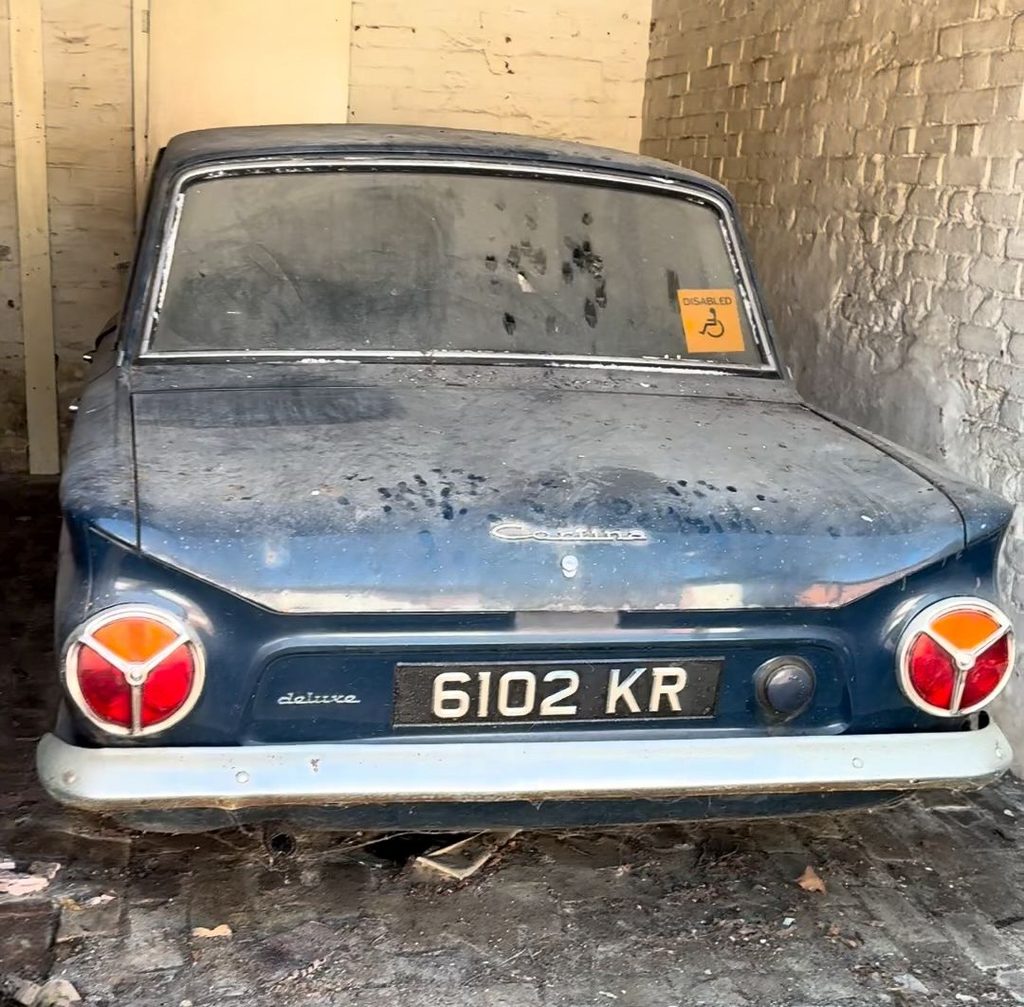
When Somebody Contacts Us About A Garage Find
This is where the tool becomes part of a much bigger story.
Somebody gets in touch with UK Barn Finds about a car.
Perhaps it belonged to a parent or grandparent.
Perhaps it was parked in the garage in 1985 and nobody ever quite got around to doing anything with it.
Perhaps it was going to be restored one day.
Perhaps circumstances simply changed.
Sometimes we are sent photographs of a car almost completely buried behind boxes and household belongings.
Sometimes it is sitting in a barn with flat tyres and seized brakes.
Sometimes nobody knows whether the engine turns.
And sometimes nobody alive can confidently remember the last time it ran.
That uncertainty is a huge part of what attracts us to these cars.
When we buy a barn find or garage-find car, there eventually comes a point where it stops simply being an object that has sat motionless for decades and starts becoming a machine again.
The first time the engine turns.
The first signs that the electrical system still works.
The first indication of oil pressure.
The first fuel reaching the carburettor.
The first flashes from the ignition testers.
And, if everything goes our way, the moment the engine finally fires.
That process never really gets old.
You Do Not Need To Get A Barn Find Running Before Selling It
This is worth mentioning because people sometimes assume the opposite.
If you have an old car sitting in a garage and are thinking about contacting us, please do not feel that you need to get it running first.
In many cases, we would rather see the car exactly as it has been found.
There is little point spending money replacing random ignition components, fitting a new battery or trying to coax an engine into life simply because you think it will make the car more attractive to us.
A non-runner does not frighten us.
It is what we deal with.
Indeed, discovering whether an old car will run again is often one of the most enjoyable parts of the whole process.
The Priceless Tools Are Often The Cheap Ones
Workshop equipment can become very expensive very quickly.
Welders, compressors, lifts, diagnostic equipment, pullers and specialist tools can all cost serious money.
But some of the things we would least like to be without are remarkably inexpensive.
A decent multimeter.
A test light.
A compression tester.
A magnetic pick-up tool.
And these little Laser spark testers.
They are not glamorous.
They are not particularly sophisticated.
But they answer a question we need answered again and again.
In our game, that makes them one of those almost priceless bits of kit.
Money very well spent.
A Couple Of Practical Limitations
The Laser 2780 set is intended for conventional ignition systems using accessible spark plugs and separate HT leads.
That makes it particularly well suited to the sort of older cars we spend so much time working on.
Laser notes that the testers are unsuitable for deeply recessed spark plugs.
That is straightforward enough: if the tester and lead cannot physically reach the plug properly, it is the wrong tool for the application.
Laser also refers to spark plugs with removable terminal nuts.
Many traditional spark plugs have a threaded terminal onto which a small terminal nut or cap screws.
In workshop practice, if the correct terminal nut is missing, fitting one gives the lead and tester the normal solid terminal connection they are designed to work with.
Anyone who has been messing around with old cars for years probably has a few old spark plugs and terminal nuts lurking in a drawer somewhere.
The important thing is simply to make sure the HT connection is sound and secure.
Modern coil-on-plug ignition systems are a different proposition and need different test equipment and diagnostic methods.
And regardless of the system, these testers only tell you part of the story.
A flashing tester does not prove that the ignition timing is correct.
It does not prove that the plug gap is right.
It does not prove that the spark is strong enough under cylinder pressure.
What it does tell you very quickly is that high-tension ignition activity is reaching that part of the ignition circuit.
Often, that is exactly what we need to know.
Want A Set For Your Own Toolbox?
We use the Laser Tools 2780 set regularly and have done for years.
If you spend time recommissioning old cars, chasing ignition faults or trying to bring long-dormant engines back to life, they are one of those simple tools that can save a surprising amount of time.
You can see the Laser Tools 2780 spark testers currently available on eBay here:
And plenty of independent tool suppliers stock them too, so it is worth comparing prices.
Got A Car That Has Been Sitting For Years?
This is where so many UK Barn Finds stories begin.
A car parked in a garage.
Something pushed into a barn decades ago.
A vehicle inherited from a relative.
A project that never quite got finished.
Maybe it has not run since the 1970s.
Maybe nobody actually knows.
That is fine.
We buy cars in exactly the condition they are found in.
Running or not.
Clean or filthy.
Complete or surrounded by decades of accumulated garage clutter.
If you have an old car that has been sitting for years and you are thinking about selling it, send us a few photographs and tell us whatever you know about it.
You certainly do not need to get it running for us first.
And if we do end up bringing it home, there is every chance that sooner or later four little red lights will appear underneath its bonnet.
Hopefully followed by the sound we have been waiting for.
Affiliate Disclosure
When you click on links to various merchants on this site and make a purchase, we may earn a commission. Our affiliate partnerships include, but are not limited to, the eBay Partner Network and Amazon.
Join our newsletter
Get the best barn finds, projects and classic temptations direct to your inbox.
Related Posts
Discover More Classic Car Stories
Stay updated with the latest barn finds, auction news, and classic car adventures in our 'News & Waffle' section. Dive into rare discoveries, behind-the-scenes stories, and expert insights into the world of classic cars. Whether you’re a seasoned enthusiast or simply intrigued by the tales behind these treasures, this is your hub for all things classic and captivating.
This Porsche Cayman S auction result raises a question that would have sounded rather strange a few years ago. When did Porsches get this cheap? Because we’re not talking about a tired old Porsche 924 that’s been sitting in somebody’s garden for 20 years. This is a 2008 Porsche Cayman S. A proper mid-engined, six-cylinder [&...
This Ford Fiesta Ghia X auction result took us straight back to the days when a cheap first car really could be cheap. Who had one of these? Or perhaps more importantly, who had something like this as their first car? Because for an enormous number of British drivers, a Ford Fiesta was where it [&...
Some military vehicles are instantly recognised. Others quietly did the jobs that kept everything moving. This Standard Series UV Light Utility is one of the latter. Better known simply as a “Tilly”, it was part of a generation of small British military utility vehicles created during the Second World War by adapting civilian car designs [&...