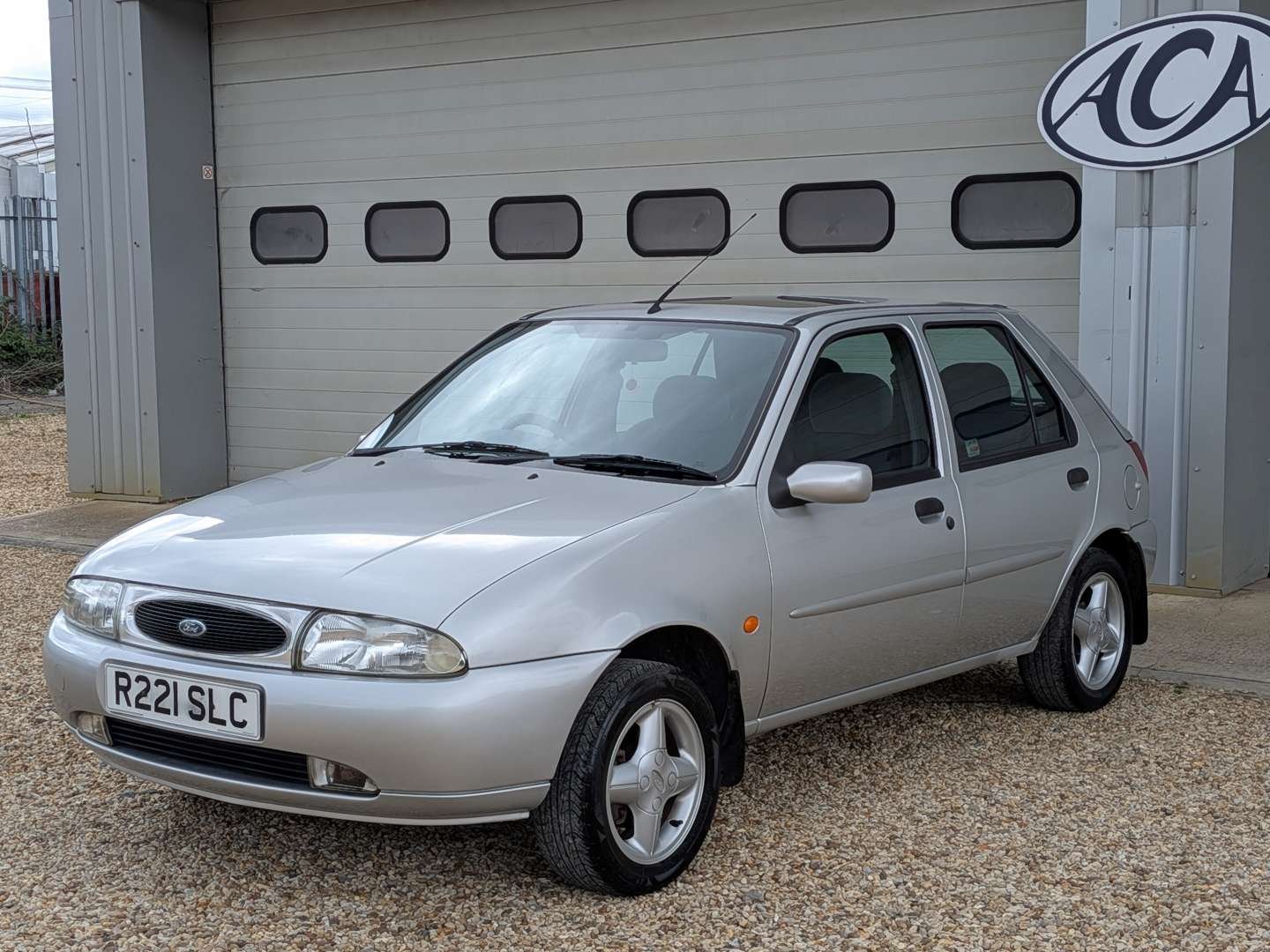
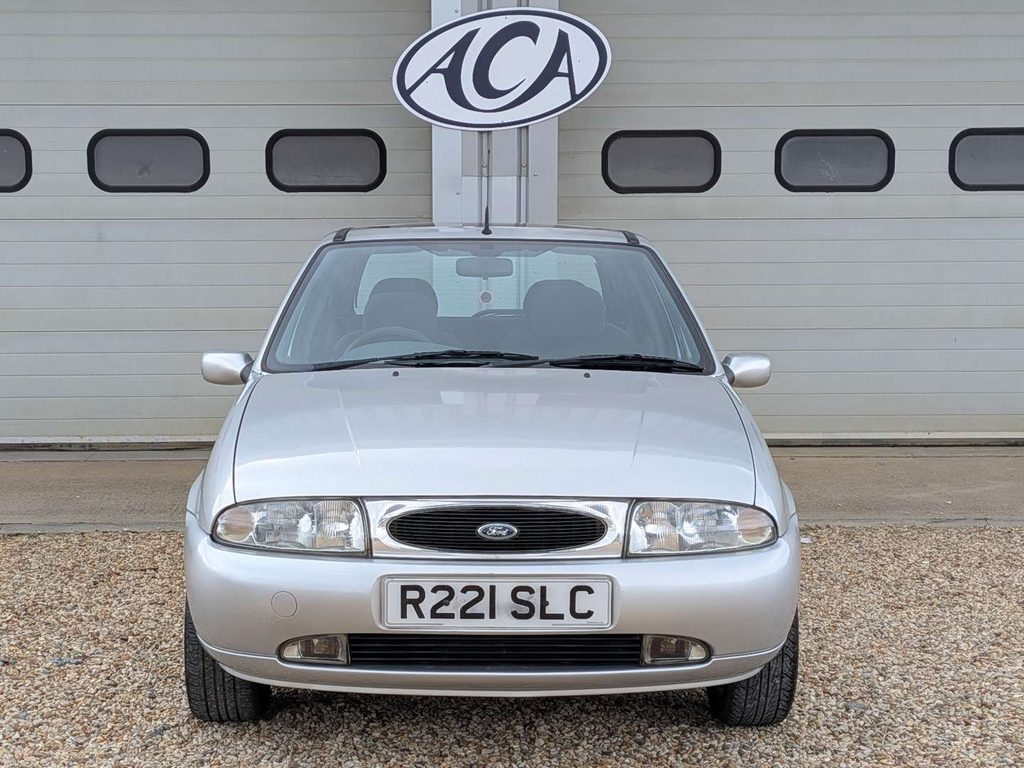
This Ford Fiesta Ghia X auction result took us straight back to the days when a cheap first car really could be cheap.
Who had one of these?
Or perhaps more importantly, who had something like this as their first car?
Because for an enormous number of British drivers, a Ford Fiesta was where it all started.
Driving lessons.
First taste of independence.
First breakdown.
First insurance bill.
First questionable modification.
And quite possibly the first time you discovered just how expensive a tiny scrape could be once your dad saw it.
But this particular 1998 Fiesta gave us another question.
Was your first car cheaper than this?
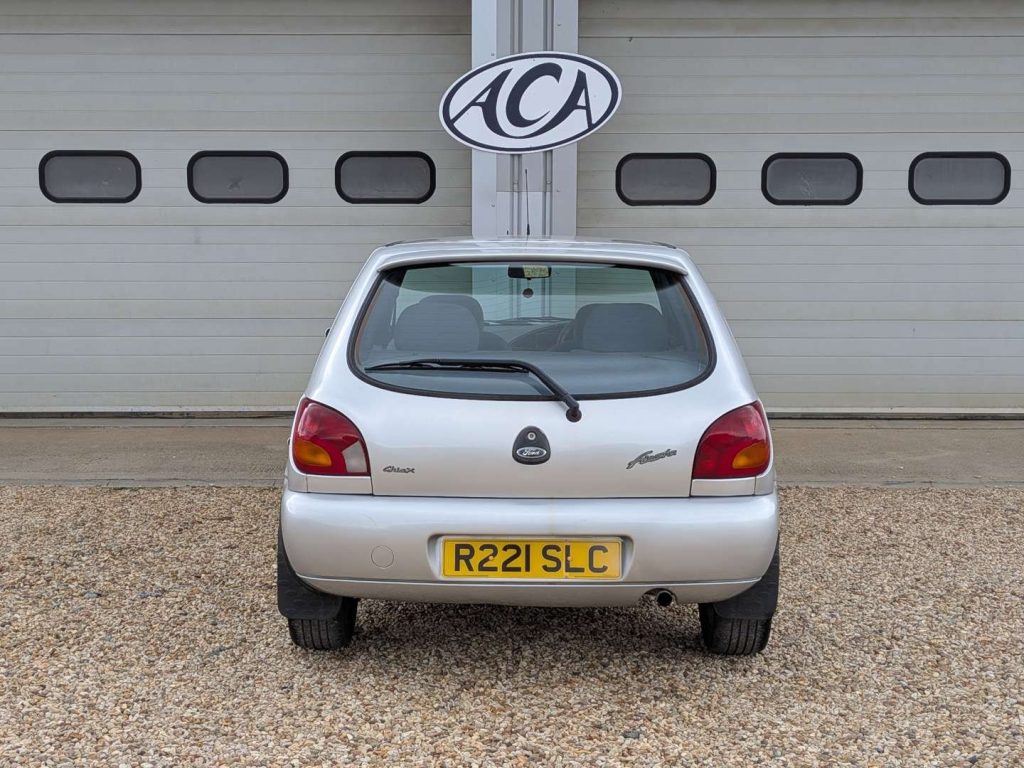
A 1998 Ford Fiesta Ghia X
This Fiesta went through Anglia Car Auctions’ first Marketplace Classics sale in September 2026.
It’s a five-door Ghia X with a 1,388cc petrol engine and five-speed manual gearbox.
The mileage was recorded at 89,041.
There had been just three registered owners from new.
And despite being off the road for around 18 months, the vendor advised ACA that it drove well apart from an exhaust leak.
So far, that sounds like a fairly ordinary old Fiesta.
But there’s something important about those two little badges on the back.
Ghia X.
This Was the Posh Fiesta
It’s easy to forget just how much trim levels mattered in the 1990s.
You didn’t simply buy a Fiesta.
You bought an Encore.
An LX.
An Si.
A Ghia.
Or, if you were feeling particularly flush, a Ghia X.
The Ghia X arrived as the range-topping version of the Mk4 Fiesta.
So while we’re looking at it today as a cheap old Ford, somebody once walked into a Ford dealership and bought the fancy one.
And there was something wonderfully 1990s about a small hatchback wearing a Ghia badge.
Ghia Meant Something
For decades, Ford used the Ghia name on its more luxurious models.
It appeared on everything from Fiestas and Escorts to Sierras, Granadas and Scorpios.
If your dad’s company car was the Ghia, he’d done well.
If it was a Ghia X?
Even better.
It usually meant extra equipment, nicer trim and a few details to remind everybody that you hadn’t bought the basic model.
There was a hierarchy to these things.
And people noticed.
The Mk4 Fiesta Arrived in 1995
Ford launched this generation of Fiesta in Britain in 1995.
Although much of its basic architecture could be traced back to the previous generation, Ford made substantial changes.
The styling became softer and more rounded.
The interior was completely different.
The suspension and chassis received considerable attention.
And importantly, new Zetec-SE petrol engines arrived in 1.25 and 1.4-litre forms.
The result was a Fiesta that developed a reputation for being genuinely enjoyable to drive.
Ford Was Getting Very Good at Chassis
This was an important period for Ford.
During the second half of the 1990s, the company produced a run of cars that were remarkably good to drive.
The Mk4 Fiesta was part of that transformation.
Then came the Puma.
Then the Focus.
Even fairly ordinary versions were praised for the way they steered and handled.
And there was a direct connection between two of those cars.
The Ford Puma launched in 1997 using the Fiesta’s underpinnings.
So underneath its rather more exotic-looking coupé body was a close relative of the humble Fiesta.
And Britain Bought Millions of Fiestas
The Fiesta had already been part of British life for two decades by the time this generation arrived.
The original had appeared in 1976.
By the 1990s, the sight of a Fiesta parked outside almost every school, supermarket, office and housing estate was completely normal.
The Mk4 continued that success and became Britain’s best-selling car during the second half of the decade.
Which creates an interesting problem today.
Cars that were absolutely everywhere rarely feel worth saving when they’re simply old cars.
There’s always another one.
Until suddenly there isn’t.
That’s How Ordinary Cars Disappear
We’ve seen this repeatedly.
Escorts were everywhere.
Sierras were everywhere.
Cortinas were everywhere.
Early Fiestas were everywhere.
Nobody looked at a slightly tired example and thought:
“We’d better preserve that for future generations.”
It was simply an old car.
It got traded in.
Scrapped.
Used as a cheap first car.
Modified.
Raced.
Broken for parts.
Or driven until the repair bill exceeded its value.
Then, 20 or 30 years later, everybody starts asking where they went.
This Fiesta Is Now 28 Years Old
That’s the slightly alarming part.
1998 doesn’t necessarily feel like classic-car territory to some of us.
But it was 28 years ago.
This Fiesta is older now than plenty of cars we regarded as unquestionable classics when this one was new.
And the world it came from has disappeared.
You can’t walk into a Ford dealership and order a new Fiesta anymore.
Ford ended Fiesta production in 2023 after 47 years.
That inevitably changes the way we look at surviving examples.
Especially the Unusual Survivors
An XR2 will always attract attention.
So will an RS Turbo.
Sporting Fiestas were desirable when new and people understood fairly early that they were worth preserving.
A Ghia X is different.
It’s interesting precisely because it wasn’t the performance model.
It was the luxurious one.
The sort of car that might have been bought by somebody who wanted a small Ford but didn’t particularly want a basic small car.
And we’d argue survivors like this are becoming interesting in their own right.
Who Had One as a First Car?
That’s what I asked while filming this one.
Because Fiestas were such a rite of passage.
For some people it’ll have been a Mk1 or Mk2.
Others started in a Mk3.
And by the time this generation became an inexpensive used car, plenty of younger drivers ended up in one of these.
Maybe yours cost £1,500.
Perhaps £800.
Maybe you found one for £500.
Or perhaps you’re old enough to remember when £100 bought something with an MoT and enough petrol to get home.
Which brings us neatly to this car.
Three Registered Owners From New
For such an inexpensive car, the basic history was quite encouraging.
ACA recorded just three registered owners from new.
The mileage stood at:
89,041 miles.
It came with its V5C and an MoT history printout.
There wasn’t a huge history file accompanying it, so this wasn’t one of those extraordinary time-capsule cars with every invoice from new.
But neither was it presented as one.
This was simply an old Fiesta looking for another owner.
It Had Been Off the Road
The last MoT was in 2024.
ACA stated that the car had been off the road for around 18 months.
That obviously means it shouldn’t be treated as a jump-in-and-drive-away proposition without checking it properly.
Any car that’s been standing can need recommissioning.
Brakes.
Tyres.
Fluids.
Rubber components.
Battery.
And all the other little things that can turn a cheap car into a slightly less cheap car.
There Was an Exhaust Leak
The vendor also advised ACA that the Fiesta had an exhaust leak.
But importantly, they said that apart from that, it drove well.
Again, that’s the vendor’s description rather than our own mechanical assessment.
At auction, it’s always down to the bidder to inspect a car and decide what they’re prepared to take on.
But this wasn’t being presented as a completely dead project dragged out of a field.
It sounded more like a straightforward old Fiesta that had been sitting and needed bringing back into regular use.
And There Was No Reserve
This is where it became interesting.
There was no estimate.
No minimum figure that had to be achieved.
It was simply:
No Reserve.
Once the bidding started, somebody was going to own this Fiesta.
And when you’re standing in an auction watching an entire car being offered for the sort of money normally associated with a decent set of tyres, things become very tempting indeed.
I’m Not Used to Cars Selling This Cheap
Unless I’m selling them, obviously.
Then they seem perfectly capable of discovering entirely new depths of affordability.
But watching somebody else’s car?
That’s different.
As the bidding developed, it became apparent that this Fiesta really was going to be cheap.
Very cheap.
So have a think before watching the result.
What does a 1998 Fiesta Ghia X with 89,041 miles and three registered owners actually buy at auction in 2026?
£1,000?
£750?
£500?
Surely not less?
Watch the Auction
And this is where our opening question becomes rather important.
Was your first car cheaper than this?
Have your number in mind before the hammer falls.
£250
That’s it.
The hammer fell at:
£250.
Two hundred and fifty pounds.
For an entire 1998 Ford Fiesta Ghia X.
At that level, ACA’s minimum Marketplace Classics buyer’s premium applied, adding £125 plus VAT.
That means the successful bidder paid:
£400 including premium.
Four hundred quid.
For a car.
In 2026.
What Does £400 Buy These Days?
Not very much.
A decent service and a couple of repairs can swallow £400 remarkably quickly.
A set of tyres can cost more.
A monthly payment on a modern car can cost more.
Yet somebody left Anglia Car Auctions owning a complete 1998 Ford Fiesta Ghia X for £400 including the buyer’s premium.
Obviously, that isn’t the end of the spending.
It had no current MoT.
It had been standing for around 18 months.
It had an exhaust leak.
And it would be extremely optimistic to assume that a 28-year-old £250 auction car won’t find a few other jobs for its new owner.
But even allowing for all of that…
£250 hammer.
Is It Worth Saving?
We think so.
Not because we expect every Mk4 Fiesta Ghia X suddenly to become worth thousands of pounds.
That’s not really the point.
This is exactly the sort of ordinary car that disappears while nobody is paying attention.
And once they’re gone, they’re surprisingly difficult to replace.
If this Fiesta is fundamentally solid enough to justify recommissioning, we’d love to see it back on the road.
Imagine Taking It to a Show
There’s also something increasingly appealing about turning up at a classic-car event in a car like this.
Park a Ferrari in a field and everybody knows why it’s interesting.
Park an immaculate late-1990s Fiesta Ghia X there and something completely different happens.
People stop.
They remember.
“My mum had one of those.”
“That was my first car.”
“My grandad had the Ghia.”
“I haven’t seen one for years.”
That’s the power ordinary cars eventually acquire.
They’re memory machines.
The Ghia X Makes It Better
And we’d particularly want to preserve the higher-specification versions.
The Ghia X was only part of the Mk4 range for a relatively short period.
It represented the top of the Fiesta range before Ford revised the line-up.
That doesn’t automatically make every surviving Ghia X enormously valuable.
But it does make one more interesting than its £250 hammer price might suggest.
It’s a particular little snapshot of Ford in the late 1990s.
This Was Britain’s Everyday Car
That’s probably why the result feels so strange.
This isn’t some obscure model nobody remembers.
It’s a Ford Fiesta.
For decades, they were woven into everyday British life.
People learned to drive in them.
Went to work in them.
Took their children to school in them.
Bought them as first cars.
Passed them down through families.
And eventually scrapped them when something expensive went wrong.
They were disposable because there were so many.
Now there aren’t.
Would We Have Bought It?
At £250 hammer?
It would certainly have been difficult not to.
You’d still need to inspect it.
You’d need to budget for recommissioning.
You’d need to remember that a £250 car can very easily require £1,000 or more spending before you’re happy with it.
Transport alone can make the economics look rather different.
But if the structure was decent and the problems manageable, the purchase price leaves an awful lot of room.
And it’s hard to imagine many complete 1990s Fords becoming significantly cheaper than this.
The Cheapest Classics Can Be the Most Fun
There’s something refreshing about this end of the market.
No investment spreadsheets.
No worrying that adding 2,000 miles will knock thousands off the value.
No fear of getting caught in the rain.
Just an old car that needs a bit of attention and could hopefully be put back into use.
That’s what affordable classic motoring used to be about.
And perhaps Marketplace Classics results like this prove that opportunities still exist.
Was Your First Car Cheaper?
That’s the question we’re most interested in.
Because £250 sounds absurdly cheap in 2026.
But we know plenty of you will have stories.
£150 Escorts.
£100 Minis.
£50 Cortinas.
Cars bought from neighbours.
Cars rescued from pub car parks.
Cars that came with six months’ tax and were therefore arguably worth more with the car than without it.
So let’s hear them.
What was your first car?
What year did you buy it?
And most importantly…
Did it cost less than this £250 Fiesta?
Because somehow, in 2026, somebody has just bought a 1998 Ford Fiesta Ghia X at auction for less than the price of many people’s monthly car payment.
And we’re still not entirely sure whether that’s brilliant, slightly depressing…
Or both.
Join our newsletter
Get the best barn finds, projects and classic temptations direct to your inbox.
Related Posts
Discover More Classic Car Stories
Stay updated with the latest barn finds, auction news, and classic car adventures in our 'News & Waffle' section. Dive into rare discoveries, behind-the-scenes stories, and expert insights into the world of classic cars. Whether you’re a seasoned enthusiast or simply intrigued by the tales behind these treasures, this is your hub for all things classic and captivating.
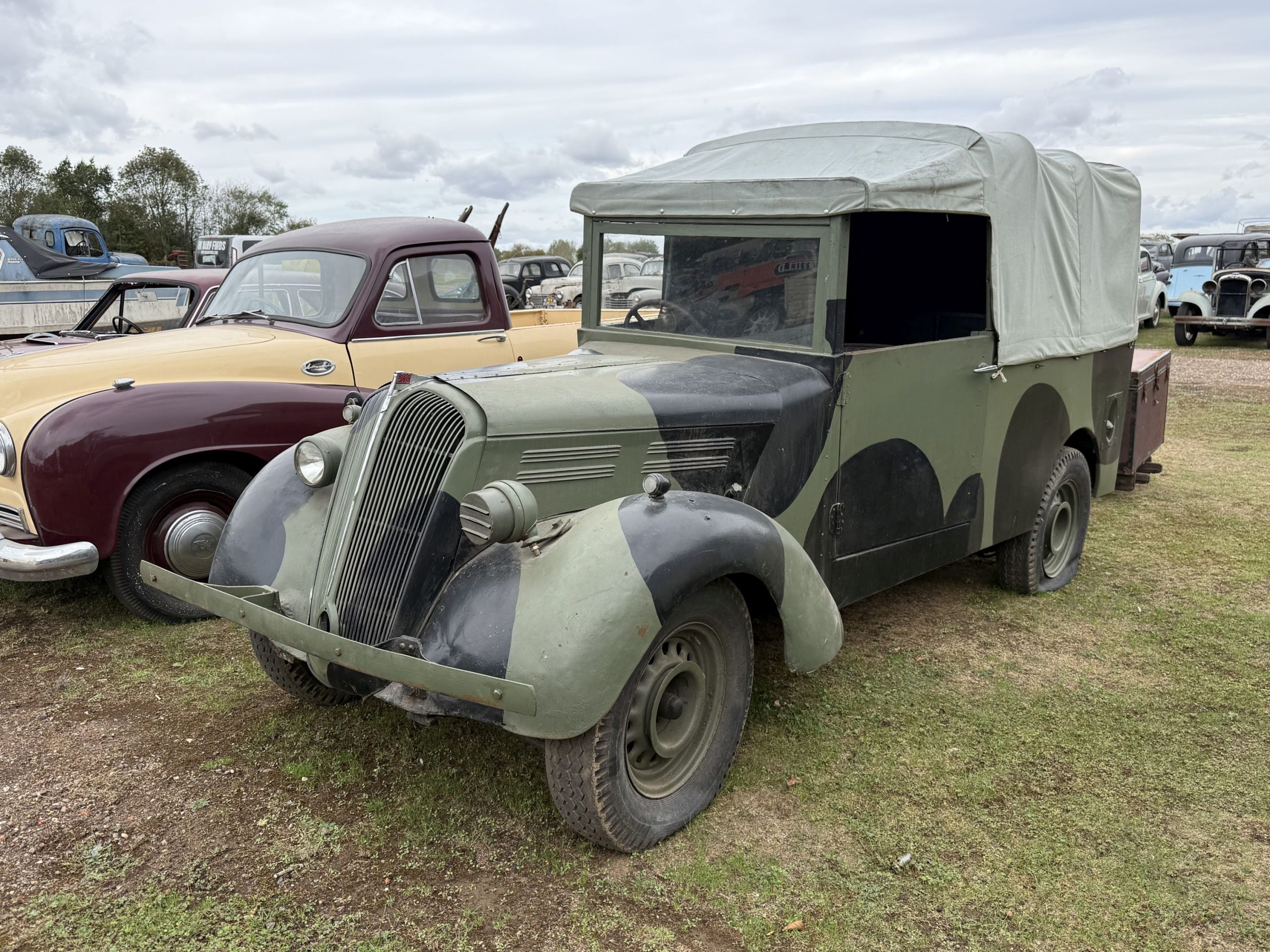
Some military vehicles are instantly recognised. Others quietly did the jobs that kept everything moving. This Standard Series UV Light Utility is one of the latter. Better known simply as a “Tilly”, it was part of a generation of small British military utility vehicles created during the Second World War by adapting civilian car designs [&...
The latest H&H Classics Kelham Hall auction results include a remarkably original Aston Martin DB5 selling for £365,625. The 1963 car was one of five lots to break the six-figure mark during a busy sale which saw 176 classic, collector and performance cars offered alongside 72 lots of automobilia. In total, 112 cars found new […]
There probably aren’t many three-wheelers in Britain more instantly recognisable than this. APL 911H is a 1969 Reliant Regal Supervan III dressed in the familiar yellow Trotters Independent Trading Co livery from Only Fools and Horses. And unlike many of the Reliants associated with the programme over the years, this one has a particularly strong [&...