The car is desirable, the estimate looks sensible, the bidders know what they’re buying and the hammer falls somewhere around the expected figure.
And sometimes you get an auction like this.
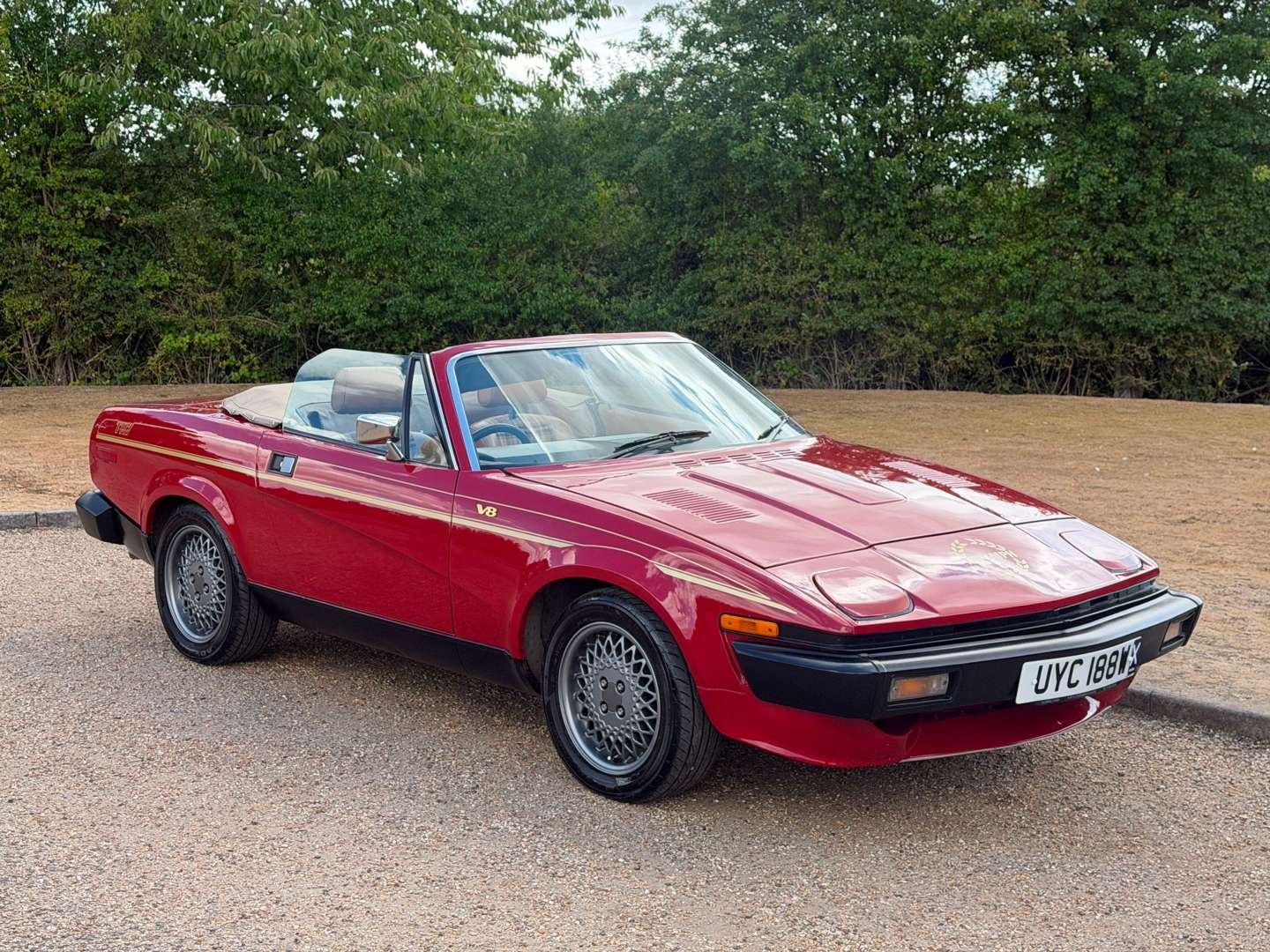
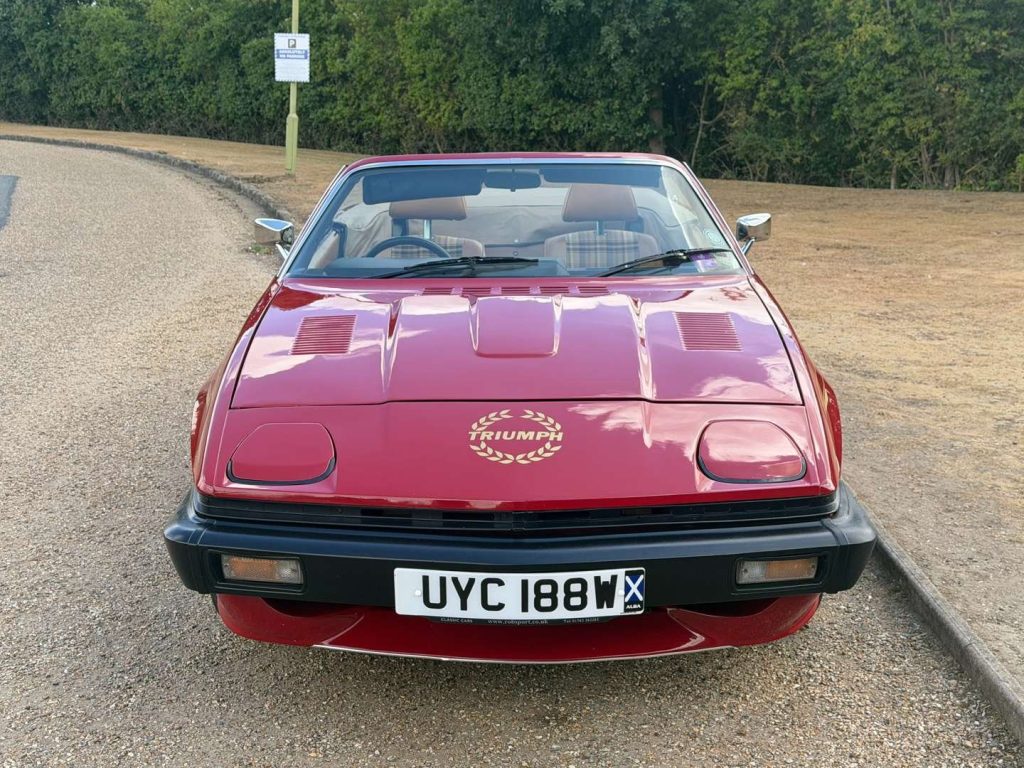
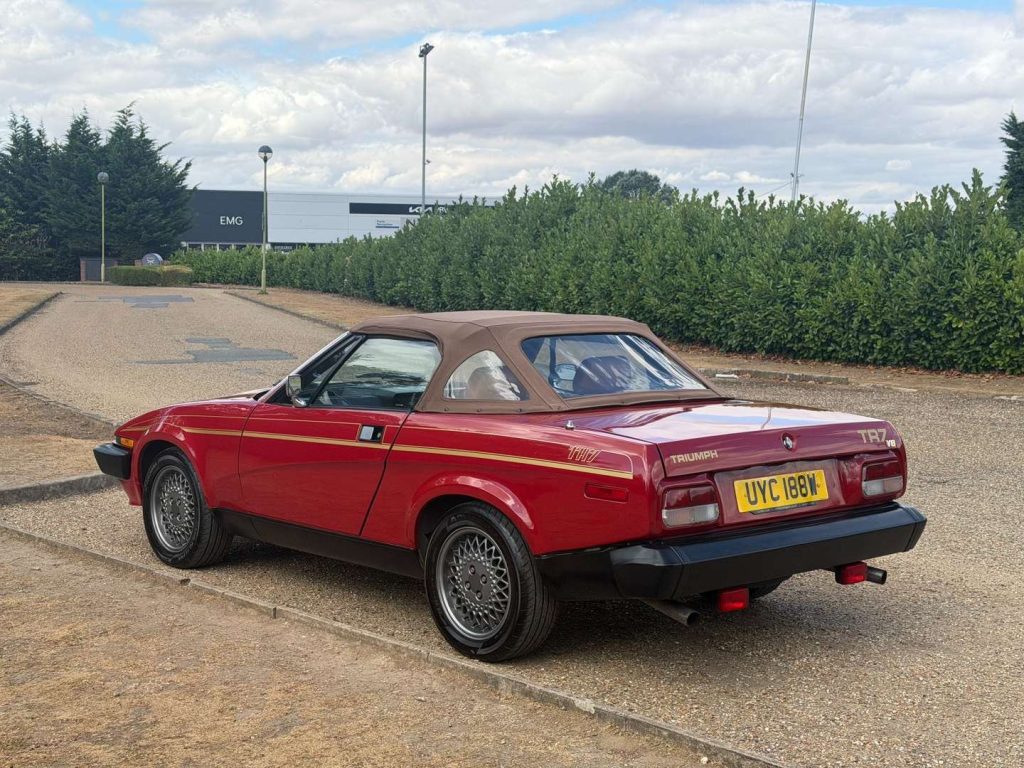
A striking 1980 Triumph TR7 Convertible, professionally converted to V8 power, arrived at Anglia Car Auctions with a guide price of just £3,500 to £4,500.
It wasn’t a factory-built TR8. It wasn’t a concours-original collector’s car. And, as with almost any extensively modified classic, putting a value on it wasn’t particularly straightforward.
But two bidders clearly saw something they wanted.
We filmed the auction as a determined bidder in the room repeatedly challenged the internet, creating one of the most fascinating contests we’ve witnessed at the rostrum.
And when that bidder finally walked away, the result told quite a story.
More Than Just a TR7 With a V8
The standard Triumph TR7 remains one of the more distinctive British sports cars of the 1970s and early 1980s.
Its dramatic wedge-shaped styling was a considerable departure from the traditional TRs that came before it, and it has divided opinion ever since.
But there’s something rather appealing about the shape today, particularly in open-top form.
The original TR7 used a 2.0-litre four-cylinder engine. The V8-powered TR8, developed primarily with the North American market in mind, offered a very different driving experience.
And that combination of TR7 styling and Rover-derived V8 power has inspired conversions for decades.
Some have been fairly straightforward engine swaps.
Others have been much more comprehensive, involving changes to the drivetrain, suspension, braking system and supporting components.
This particular car belonged firmly in the latter category.
According to the auction catalogue, its restoration began back in 1999, and it was running again by 2016.
The work didn’t stop there.
The vendor described a programme of continuing improvements intended to produce a reliable, properly executed conversion to TR8 specification.
That distinction matters.
What Had Actually Been Changed?
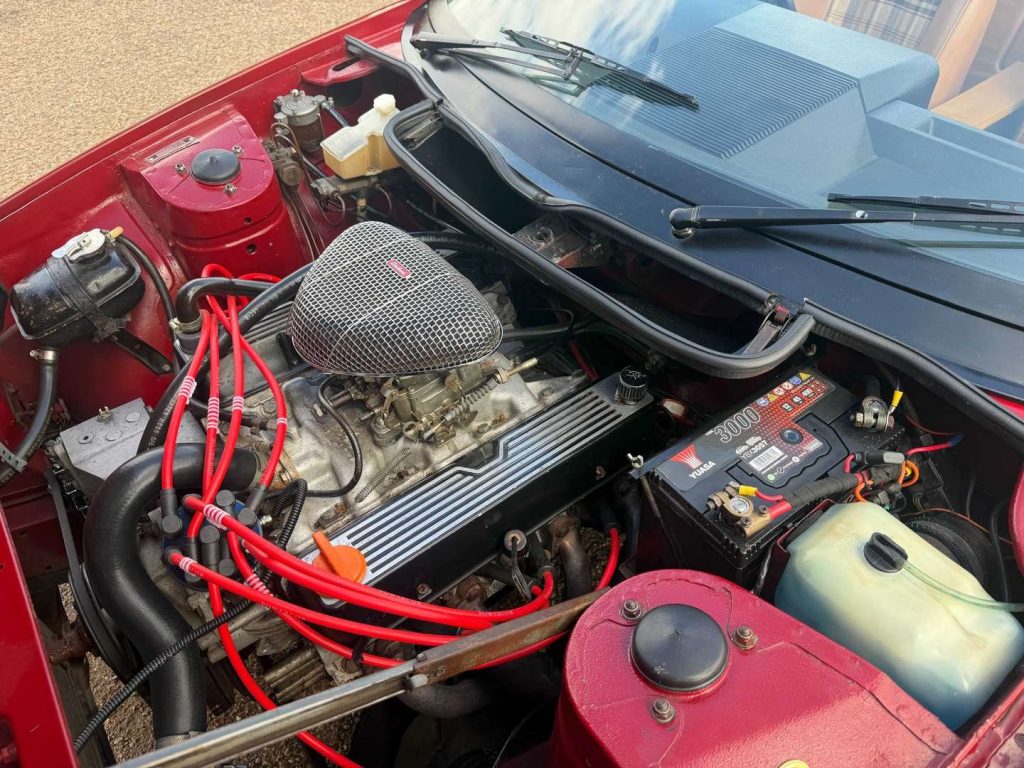
At the heart of the conversion was a 3.5-litre Rover V8 engine, coupled to a manual gearbox.
But the modifications extended beyond the engine bay.
The auction description specifically mentioned a V8 differential and rev counter, together with mechanical upgrades to the engine, brakes and suspension.
The interior also received considerable attention, including new seating and wool carpets throughout.
A new windscreen was fitted, while the boot was carpeted and equipped with a fire extinguisher.
Photographs and invoices accompanying the car documented the extent of the rebuild.
The vendor purchased it from Triumph specialist Robsport in 2023 and subsequently used it for club outings around East Anglia.
He described it as a very reliable car.
Further maintenance included a major service in summer 2024, rebuilding the brake master cylinder and skimming the brake discs.
The most recent MOT had been passed without advisories, although that certificate expired in 2025. As a qualifying historic vehicle, the Triumph was exempt from compulsory MOT testing.
Its paperwork included a Heritage Certificate, previous MOT certificates, invoices, a V5C recording six former keepers, workshop manuals and a spare key.
Taken together, it sounded like a car that had benefited from considerably more time, money and attention than the modest guide price might initially suggest.
Of course, an auction catalogue cannot replace a detailed personal inspection, and the extent or quality of any restoration must ultimately be judged on the individual vehicle.
But there was certainly plenty for prospective bidders to investigate.
Why Was the Guide So Low?
This is where the story becomes particularly interesting.
How do you value a heavily restored, professionally converted Triumph TR7 V8?
You can’t simply look up the market value of an ordinary TR7 Convertible.
But neither can you automatically apply the value of a genuine factory-built TR8.
The two may offer a similar driving experience, yet their provenance and appeal to collectors are different.
A factory TR8 has its own identity, production history and originality to consider.
A converted TR7 is much more dependent on the quality of the work, its specification, documentation and the preferences of individual buyers.
And those preferences can vary enormously.
One enthusiast might see a beautifully prepared V8 Triumph with the performance and character they always wanted.
Another might prefer an original four-cylinder TR7, regardless of how well the conversion has been carried out.
A third might insist on a genuine TR8.
That’s what makes modified classics so difficult to estimate.
There are fewer directly comparable sales, and the amount spent on a restoration doesn’t necessarily translate into an equivalent increase in market value.
In fact, the cost of building a car like this from scratch could be substantially greater than its eventual resale value.
The £3,500–£4,500 guide therefore looked remarkably tempting, particularly given the restoration history.
But was it simply a conservative estimate designed to attract bidders, or had the market genuinely been difficult to judge?
We can’t know the auction house’s reasoning from the published catalogue alone.
What we can say is that the bidders were about to provide a very different indication of the car’s value.
A Battle Between the Room and the Internet
We were filming as the Triumph crossed the block at Anglia Car Auctions’ August 2026 sale.
Almost immediately, it became clear that this wasn’t going to be an ordinary auction.
One bidder in the room seemed particularly determined to take the car home.
He was involved from early in the bidding, repeatedly returning to the contest as internet bids came in.
The atmosphere became increasingly interesting as the price climbed.
There was a real sense of two people wanting the same car, neither quite ready to concede.
And that is one of the things we enjoy most about filming classic car auctions.
You can study the catalogue, examine the photographs and form an opinion about what a vehicle ought to be worth.
But until the bidding starts, nobody knows exactly how much the people who actually want it are prepared to pay.
This was a particularly good example.
Eventually, the bidder in the room offered £8,200.
Almost immediately, the internet countered with £8,300.
And that was the moment he decided he’d had enough.
He physically walked away.
It was a wonderfully human moment, captured in our footage, and a reminder that every bidder has a limit, however much they might want the car.
Watch the auction unfold below.
So, What Did the Triumph TR7 V8 Sell For?
The Triumph sold for £8,300 on the hammer, equivalent to £8,964 including the buyer’s premium.
Against a guide of £3,500–£4,500, that’s a remarkable result.
The hammer price was £3,800 above the upper estimate, approximately 84% higher than the top of the guide.
Put another way, the successful bidder paid more than twice the bottom estimate before fees.
And the final result raises an interesting question.
Was the estimate too low, or did the auction simply bring together two people who both recognised the appeal of a particularly well-executed V8 conversion?
There isn’t necessarily a single correct answer.
The result demonstrates what this individual Triumph was worth to the bidders competing for it on that particular day.
It doesn’t automatically establish a new market value for every converted TR7.
But it certainly suggests that a well-presented, documented V8 conversion can attract serious interest when the right buyers are in the room, or online.
Restoration Costs and Auction Values Rarely Agree
There’s another important lesson here for anyone restoring or modifying a classic car.
The money spent on a restoration is not the same thing as the car’s market value.
A project involving an engine conversion, drivetrain upgrades, suspension work, brakes, upholstery, paintwork and years of improvements can absorb an extraordinary amount of money.
Yet a prospective buyer may judge the finished vehicle against other cars available for similar money, rather than adding up the invoices.
That can make heavily restored or modified classics particularly attractive purchases.
Someone else has already dealt with the expense, effort and inevitable complications of building the car.
The next owner gets to enjoy the result.
Of course, the reverse can also happen.
A modification that appeals strongly to one enthusiast might narrow the market among buyers who value originality.
The challenge for an auction house is finding a guide price that reflects all those competing considerations.
And sometimes the bidders make a mockery of even the most carefully considered estimate.
Would You Have Kept Bidding?
We found this auction particularly memorable, not simply because of the price, but because of the determined bidder who came so close to taking the Triumph home.
He clearly wanted it.
He kept returning to the contest.
But when the internet countered his £8,200 bid, he finally decided that was enough.
There’s something admirable about knowing when to stop, particularly when the car you’ve set your heart on is right there in front of you.
Equally, the successful internet bidder may well have felt that £8,300 represented good value for a carefully restored V8 Triumph.
And perhaps both were right.
That’s the beauty of a live auction.
Two people can look at the same car, understand exactly what it is, and still arrive at very different ideas of what they’re prepared to pay.
For us, this was a fascinating example of how an apparently modestly guided classic can generate an extraordinary bidding battle.
Would you have paid £8,300 for this converted Triumph TR7 V8, or would you have walked away too?
Join our newsletter
Get the best barn finds, projects and classic temptations direct to your inbox.
Related Posts
Discover More Classic Car Stories
Stay updated with the latest barn finds, auction news, and classic car adventures in our 'News & Waffle' section. Dive into rare discoveries, behind-the-scenes stories, and expert insights into the world of classic cars. Whether you’re a seasoned enthusiast or simply intrigued by the tales behind these treasures, this is your hub for all things classic and captivating.
Imagine driving from London to Edinburgh in 1911. The roads are rough, punctures are a constant possibility and motoring remains an expensive adventure rather than an everyday activity. Now imagine making that journey without changing gear. That’s precisely the sort of challenge Rolls-Royce undertook to demonstrate just how remarkable its motor cars had become. And [&...
Four Ford Capris, four very different cars and four opportunities to discover what buyers are actually prepared to pay. From an early Mk1 restoration project to a beautifully restored 3.0 S, the results offer a fascinating look at the classic Ford market. We’ve brought together four examples from our original auction footage, filmed at Anglia [&...
It’s not every day that a classic Aston Martin can claim to have helped shape the future of the motor car, only to return to its original six-cylinder petrol engine. But that’s exactly what happened to this remarkable 1970 Aston Martin DB6 Mk2 Volante. One of just 38 examples built, it was selected by Aston [&...